
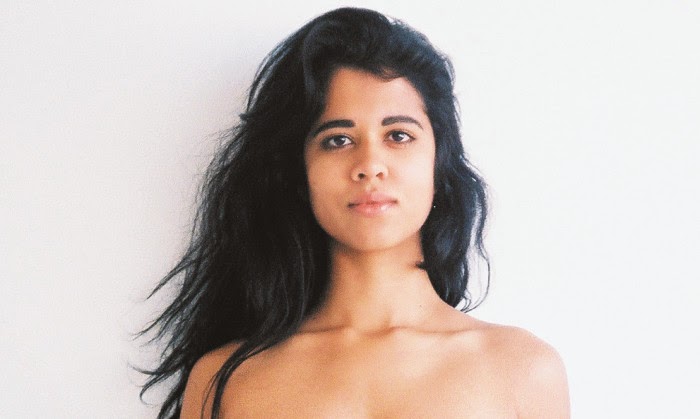
One thing the New York Times and the liberals forgot. The sex maniac exploited an young Bangladeshi girl supposedly to draw attention to the fact that AA was paying americans to make clothes, not some sweatshop in Bangladesh. This was seen by many as an insult to islamic traditions (see Rezwana Manjur opinion below). Finally it did not take into account the fact that such sweat-shop work has created some real opportunities for Bangali women to the point where the social indicators in BD lag only behind Sri Lanka in the sub-continent.
Conservative Bangalis who were outraged at American Apparel must be saying their thanks in their daily prayers. Good riddance to sex maniacs who take advantage of the power they hold to take advantage of young powerless people.
Only one small point remains. The people who felt insulted by Dov Charney must also remember the dead young women (and men) who were victims of deliberate negligence of garment manufacturers in Bangladesh. Dov Charney is indeed a criminal, but those people are monsters. Justice must be served, even if cold.
……..
against American Apparel founder and CEO Dov Charney—and countless
brazen media appearances where he copped to soliciting sexual favors
from employees and embraced his “dirty guy” persona—Charney was finally
axed by his company’s board. What took so long? Today, the New York Times parses the factors behind the board’s decision. It was a little bit about harassment. But it was mostly about money.
On the surface, the board’s decision was directly sparked by a sexual
harassment finding against Charney. American Apparel forces its
employees to bring claims against the company in private arbitration,
not in the courts.
That means that the results of any sexual harassment
allegations were kept secret and, in many cases, ended in settlement
agreements even before the arbitrator could determine whether Charney
was at fault. (In one case, Charney’s lawyers offered a former employee
who claims she was sexually harassed by Charney $1.3 million to agree to
allow him to publicly announce that he was found innocent of her
charges; the arrangement hit the press after the employee backed out of
the deal).
The process left the company’s board with “very little in the
way of established legal fact,” the Times reports. But this
year, one of these arbitrated disputes finally resulted in a firm ruling
against Charney: An arbitrator found Charney responsible for
“defamation for failing to stop the publication of naked photographs of a
former employee.” She was awarded about $700,000, and the board finally
had the ammunition to fire its CEO.
But in the background, it was flagging profits that forced the board
to act. In 2007, shares of American Apparel were worth $15; last year,
they plummeted to a low of 47 cents a share. The company lost $106
million in 2013, and as it scrambled to secure more capital, interest
rates on its loans spiked to 20 percent…..
…
In years past, even if the board had good reason to fire Charney
based on his behavior alone, “it did not have the appetite to remove the
company’s driving creative force,” the Times reports…..Charney’s
practices only caught up to him when they stopped being bankable—just
like other moneymakers with harassing reputations. Given the history,
it seems doubtful that the board was really moved by the sexual
harassment allegations. Sex sells until it’s bad for business.
……
American Apparel has made headlines again with another controversial ad.
The brand, which famously featured 62-year-old Jacky O’Shaughnessy as its lingerie model, revealed its latest campaign with a bare-chested Bangladeshi model.
Posted on its retailer’s website, it identifies the model as Maks who is a Bangladesh-born merchandiser and has been with the brand since 2010.
The description under the ad then reads: “She doesn’t feel the
need to identify herself as an American or a Bengali and is not content
to fit her life into anyone else’s conventional narrative.”
This I personally find ironic because labelled across her chest, by American Apparel, are the words: “Made in Bangladesh.”
…..
I’m forced to question: If Maks did not wish to be identified as of a
particular nationality, why pose for a picture that boldly proclaims:
“Made in Bangladesh”?
Having my own roots tied to Bangladesh, I can attest that in the
largely Muslim nation, an ad such as this would be highly inappropriate
and unfathomable.
….
American Apparel told Marketing it was not commenting on the commercial.
Check the image out here: http://www.americanapparel.net/presscenter/ads/images/a9000/type3/9826_MAKS_AD_040314_LG.jpg
….
Here’s the full text that came along with the image:
She is a merchandiser who has been with American Apparel since
2010. Born in Dhaka, the capital of Bangladesh, Maks vividly remembers
attending mosque as a child alongside her conservative Muslim parents.
At age four, her family made a life-changing move to Marina Del Rey,
California. Although she suddenly found herself a world away from Dhaka,
she continued following her parent’s religious traditions and sustained
her Islamic faith throughout her childhood. Upon entering high school,
Maks began to feel the need to forge her own identity and ultimately
distanced herself from Islamic traditions. A woman continuously in
search of new creative outlets, Maks unreservedly embraced this photo
shoot.
She has found some elements of southern California culture to be
immediately appealing, but is striving to explore what lies beyond the
city’s superficial pleasures. She doesn’t feel the need to identify
herself as an American or a Bengali and is not content to fit her life
into anyone else’s conventional narrative. That’s what makes her
essential to the mosaic that is Los Angeles, and unequivocally, a
distinct figure in the ever-expanding American Apparel family. Maks was
photographed in the High Waist Jeans, a garment manufactured by 23
skilled American workers in downtown Los Angeles, all of whom are paid a
fair wage and have access to basic benefits such as healthcare.
…..
In my opinion, the ad is also borderline disrespectful to the
conservative religion of Islam where women are encouraged to stay
covered. Under her topless figure, the ad describes Maks as “vividly
remembering attending mosque as a child alongside her conservative
Muslim parents”. In fact, it was her parents’ traditional ways that
helped “sustain her Islamic faith throughout her childhood”. I am not sure how going into such depth about her Islamic upbringing
is necessary to pointing out that one can build his or her own identity.
Was this simply a sly move for the retailer to take a jab at the
conservativeness of Islam? I wonder.
And if you can actually grab your eyeballs away from her naked chest,
you will see Maks wearing a pair of high-waisted jeans, which according
to the garment manufacturer were made by “23 skilled American workers
in downtown Los Angeles, all of whom are paid a fair wage and have
access to basic benefits such as healthcare”.
….
Even if this was actually an attempt to raise awareness on the 2013 Rana Plaza factory collapse and make a balanced stand for the issue, I
feel that an ad with a bare-chested Bangladeshi youth does absolutely
nothing for the three million women in the Bangladesh garments industry
slaving away.
……
Link (2): http://www.marketing-interactive.com/did-american-apparel-go-too-far-ad/
……
regards