
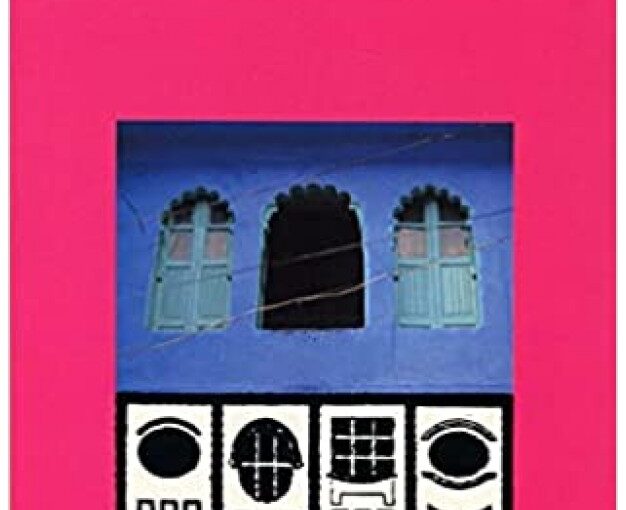
[Tom Stoppard passed away yesterday (November 29) at the age of 88. In that context, I’m cross-posting this essay I wrote on his play Indian Ink which had a major impact on me]
Flora: You are an Indian artist, aren’t you? Stick up for yourself. Why do you like everything English?
Das: I do not like everything English.
Flora: Yes, you do. You’re enthralled. Chelsea, Bloomsbury, Oliver Twist, Goldflake cigarettes, Winsor and Newton… even painting in oils, that’s not Indian. You’re trying to paint me from my point of view instead of yours—what you think is my point of view. You deserve the bloody Empire!
(Tom Stoppard, Indian Ink, pg. 43)
Great works of art often reveal insights about history in ways that are more accessible than academic historical accounts. One work that was especially powerful in doing so for me is Tom Stoppard’s play Indian Ink. Ever since I first read this play some years ago, it has provoked me to think about the colonial experience in India as well as issues of identity and nationalism more generally.
In the tradition of Forster’s A Passage to India and Scott’s The Raj Quartet, Indian Ink examines the colonial experience through focusing on the relationship between one particular couple. Set in two time periods (1930s India and 1980s England), the play tells the story of Flora Crewe, an English poet visiting India, and Nirad Das, an Indian artist who is painting her portrait. Over the course of the play, Flora and Nirad’s relationship changes from a formal, distant one to a more intimate one. However, their relationship also reveals major points of tension and of culture clash. Nirad constantly feels the need to impress Flora with his knowledge of England and of English culture, while Flora wants him to be himself. As the quote that I started this post with shows, she wants him to paint her from his own point of view. He eventually does so, painting a nude portrait of her in the style of a Rajput miniature. Flora recognizes that he is working in his own tradition and has stopped trying to ape the English. She tells him “This one is for yourself… I’m pleased. It has rasa” (74).
The play also makes interesting points about the reinterpretation of history, something that is a part of national and ethnic conflicts even today, both in South Asia and in other parts of the world. For example, in the modern portion of the play, Anish (Nirad’s son) and Mrs. Swan (Flora’s sister) discuss the events of 1857, which Anish refers to as “the first War of Independence” and Mrs. Swan insists on calling the Mutiny (17). History is written by the victors and later reinterpreted by various political groups to suit their own agendas. For example, in modern India, the BJP reinterprets the Mughals as a foreign occupying force, religiously motivated by their negative feelings towards Hinduism. Other historians argue that this perspective is not an appropriate way to view the Mughals, many of whom assimilated and became “Indian.” History remains a powerful force that can be used for various politically motivated ends. Stoppard’s play forces the audience to question the truth of any of these interpretations.
One of the most interesting aspects of the play is that Stoppard does not take sides. He is not arguing whether Empire was a positive or negative experience for India. Rather, he is using his play to stage a debate between conflicting points of view. Stoppard himself lived in India for a few years as a child, after his family fled the Nazi invasion of Czechoslovakia. In an interview with The Guardian in 2008, he stated that for him India was “a lost domain of uninterrupted happiness… what meant most to me was the physical India—chapatis cooking over a camel-dung fire. I haven’t ever stopped dreaming about it.” Returning to India in his 40s, Stoppard recalled meeting “elderly Indian people who had regret for the days of the Raj. So I’ve always been very divided about empire being a Bad Thing.”
The play eloquently presents both points of view. Anish argues that when the British came to India, it already boasted a highly developed culture and civilization. He says: “Even when you discovered India in the age of Shakespeare, we already had our Shakespeares. And our science—architecture—our literature and art, we had a culture older and more splendid, we were rich! After all, that’s why you came.”
Mrs. Swan presents the opposite point of view, arguing “We made you a proper country! And when we left you fell straight to pieces like Humpty Dumpty! Look at the map!” (17-18). Yet even Mrs. Swan is a complicated, three-dimensional character. She tells Anish “In India we had pictures of coaching inns, and foxhunting, and now I’ve landed up in Shepperton I’ve got elephants and prayer wheels cluttering up the window ledges, and the tea-tray is Nepalese brass” (25).
Stoppard similarly complicates the character of Nirad by revealing that he was imprisoned for anti-Raj actions but at the same time he loved English literature. Thus, the play makes us see the complexities of the colonial experience and its effect on both colonizer and colonized. In this respect, it is different from the work of Forster and Scott, both of whose works seem to take a more negative view of the Raj era.
Overall, Indian Ink is a fascinating and thought-provoking play. It has provided me with a new sense of the complexities of the colonial experience and of our modern South Asian identities.

Kabir even if you are reposting try to add one new paragraph for every 3 paragraphs posted.
The context is that Tom Stoppard just passed away.
“Tom Stoppard and the India he Kept”
By Nikhil Kumar
https://thewire.in/culture/tom-stoppard-and-the-india-he-kept
feels a tad orientalist
I don’t think that’s fair. Stoppard doesn’t take a position on whether Empire was a good thing or not. Mrs. Swan argues one point of view but Anish argues the other.
Nirad Das does paint Flora in a Rajasthani style.
This article in “The Wire” discusses in great depth the fact that Stoppard lived in India as a child (after his family fled Czechoslovakia and then Singapore). He recalled his period in India as one of the happiest times in his childhood. It was there that his mother met and married Major Stoppard.
I was talking about the complexities of writing about foreign lands etc.
I don’t think one can tell a playwright (or any other intellectual) what they can or cannot write about.
In any case, Stoppard lived in India as a child. The play comes out of those memories as well as of course historical research. He wasn’t even alive at the period that the play is set (early 1930s).
saw a clip from Shakespeare in Love
The Jewel in the Crown is a 1984 British television serial about the final days of the British Raj in India during and after World War II, based on British author Paul Scott’s Raj Quartet novels.
Is a on YouTube
The Jewel in the Crown – E01 – Crossing the River
https://youtu.be/dBJu2LdRB_Y
Yes, I’m very familiar with both The Raj Quartet and The Jewel in the Crown.
When I directed a scene from Indian Ink during my undergrad, I used The Jewel in the Crown as inspiration.
u directed a play?
I directed a scene. It was part of my coursework. My major in undergrad was Dramatic Literature.
I never watch such things generally
For insights into life in Ceylon in 16th Century
Knox was captured by the Kandyan King and was kept for 20 years. Escaped and wrote about life in the Hill Country. Supposed to have inspired Defoes, Robinson Crusoe
Robert Knox (1681) “An historical relation of the Island Ceylon in the East Indies”
Excerpt from CHAP. VII. Of their Lodging, Bedding, Whoredom, Marriages, and Children.
So that youth are bred up to Whoredom. Indeed here are no Publick Whores allowed by Authority. In the City some that have followed that Trade, have oftentimes by the King’s order been severely punished by Whipping, and having their Earsand Hair cut off. But in private few or none can exempt themselves. And for the matter of being with Child, which many of them do not desire, they very exquisitely can prevent the same.
They are guilty of the thing, but love not the name.Indeed the Publick Trade would be bad, and hardly maintain them that exercised it, the private one being so great. And tho I think they be all Whores, yet they abhor the Name of Vesou, which is Whore. Neither do they in their anger reproach one another with it, unless they should lay with a Man of an inferior quality to themselves, And the Woman reckons her self as much obliged to the Man for his Company, as he does to her for hers.
Free PDF
https://archive.org/details/in.ernet.dli.2015.107116
the context?
This is a review written by Gopal Gandhi of the original 1995 production.
“An Indian view of ‘Indian Ink'”
https://www.independent.co.uk/arts-entertainment/an-indian-view-of-indian-ink-1616784.html
hmm why can’t Indians find out who they are
Gopal Gandhi is criticizing Flora Crewe’s insistence that Nirad Das be “Indian”. That’s why he calls the play “second tier Stoppard”.
As you said earlier, the play can come off as somewhat Orientalist. I don’t think that was Stoppard’s intention but it’s certainly a valid criticism.
I like the anecdote about the suited St Stephen’s graduate saying that Indians should be allowed to read the Bible, the Gita or neither if they so wish.
Amazing as always. We have our own Shakespeares — reminded me of Iqbal’s poem on Shakespeare.
The flowing river mirrors the red glow of dawn,
The quiet of the evening mirrors the evening song,
The rose‐leaf mirrors spring’s beautiful cheek;
The chamber of the cup mirrors the beauty of the wine;
Beauty mirrors Truth, the heart mirrors Beauty;
The beauty of your speech mirrors the heart of man.
Life finds perfection in your sky‐soaring thought.
Was your luminous nature the goal of existence?
When the eye wished to see you, and looked,
It saw the sun hidden in its own brilliance.
You were hidden from the eyes of the world,
But with your own eyes you saw the world exposed and bare.
Nature guards its secrets so jealously—
It will never again create one who knows so many secrets.
https://iqbalurdu.blogspot.com/2011/04/bang-e-dra-156-shakespeare.html
how was it in Urdu?