
Thirty years ago, Saeed Akhtar Mirza made his final feature film, Naseem, about an aging Urdu poet, played by Kaifi Azmi, and set in the days preceding the demolition of the Babri Masjid. The film opened with a title card which said, “That one act of demolition wrote the epitaph of an age that has passed, perhaps never to return!” “ The Babri Masjid epitomized the final collapse, you know, of an idea of India, of a sovereign, secular, democratic republic, equal for all, equality and justice. You saw it collapse in front of your eyes.” He said. “I was in despair but I was also angry when I made the film,” Mirza said in a podcast conversation with Sidharth Bhatia. He has not made any feature film since, though he still makes documentaries and has written two books. Mirza spoke about how the “Hindu-Muslim binary was stupid” and said that those who promoted it hadn’t read any history. Their idea of history is “fundamentally flawed” he said.
Month: November 2025
Authors, please dont post against each other
It makes no sense to write posts against each other here. Just do what you want in the comments (and the author can moderate those).
We will recover from this. I just deleted several posts and I hope the authors will not start it up again 🙂
And Kabir, please, try to limit yourself to one post a day. Educational and informative ones are better than daily “RSS is coming” warnings 🙂
Thomas Blom Hansen, Qurban Ali & Harsh Mander on the RSS’s role in communal violence
Note: Whoever keeps deleting this post must know that I will keep re-posting it. Non-interference in other people’s threads is a sacred principle on BP.
In this episode of Saffron Siege, the anthropologist Thomas Blom Hansen and journalist Qurban Ali join Harsh Mander to examine how the RSS has triggered, enabled and executed riots, targeted communal attacks and other forms of communal violence in India over the 100 years of its existence. Qurban Ali who has reported on many of these incidents on the ground documents how many commissions have found the RSS culpable in riots dating back to Sholapur in 1967. Hansen talks about how violence is a central thesis of the RSS not only as a physical act but as a state of mind.
Does India need more Radhakrishnans? Is it getting them?
This opinion piece on the Print’s website lays out a familiar argument about shifting academic focus towards Indic heritage against excessive hagiographic obeisance at the altars of ‘western’ scholarship. But apart from the standard diatribes, the name Sarvepalli Radhakrishnan jumped out for me.
Where are the Radhakrishnans of our time?
Sri Kumari my Late Partner
YouTube link
This is a video of a Adivasi dance. I watch it often. One of my partners (late) looks like the tall woman on the left. The video
My partner Kumari of about 10 years passed before she got to 50. Diabetic complications
Her name Dona Chitrangani Sri Kumari
Sri Kumari another name for Kali.
Name was given because her parents made a vow at Muneshwaram Kovil to Kali get a child.
Her parents were killed by the LTTE when she was about 14 (1990 or so). When Kumari and I came here to this village, it was only then Kumari realized her parents had been killed by the LTTE nearby
Kumari was tall for a Sri Lankan woman, about 5’7″
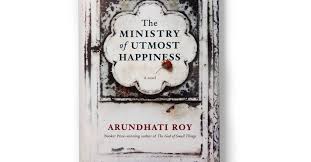
The Ministry of Utmost Happiness: A Look into the Underbelly of Modern India
[Note: I have absolutely no issue with Sairav moderating his posts the way he sees fit–this is the right of all BP authors. However, he doesn’t have the right to cast aspersions on other authors. Comments from others that I’ve “faked my degrees” are also ridiculous. I frankly have no interest in interacting with Sairav so you all are free to discuss among yourselves. Similarly, I will be deleting any comments Sairav makes on my posts.]
From my Substack:
This review originally appeared on The South Asian Idea in June 2017.
Ever since The God of Small Things was published to great acclaim in 1997, Arundhati Roy’s fans have been eagerly awaiting her next novel. It was a long wait—two decades—as Roy transitioned from being a novelist to being an activist and a non-fiction writer. Now, the wait has finally ended with the publication of The Ministry of Utmost Happiness.
The novel focuses on several characters, most of whom are outcasts from the new rising India. They include a hijra named Anjum, a Kashmiri separatist (or freedom fighter) named Musa and Tilottama, the Malayali woman who loves him. Over the course of the novel, these disparate characters encounter one another and their stories intersect, sometimes in surprising ways.
Much of the novel is set in the Kashmir Valley during the 1990s—at the height of the insurgency against the Indian state—viewed by many Kashmiris as an occupying force. Musa’s wife and daughter are killed in crossfire between the Indian Army and Kashmiri militants. Tilo herself is harshly interrogated by the Indian Army and is only let go because of her connections to an old college friend, who is high up in the Intelligence Bureau. In this section of the novel, Roy evocatively describes the brutality of life in Kashmir and the impact it has on those on both sides of the ideological struggle.
Those who have followed Roy’s non-fiction will find many resonances in this novel. Asides from the Kashmir conflict, the plot touches on rising Hindutva, the Maoist struggle in the forests of central India, and Dalit assertion against upper-caste violence. One consequence of such a large canvas is a certain fracturing of the narrative. For example, when the narrative moves to Kashmir, Anjum has to be abandoned in Delhi. Although Roy convincingly brings the characters together at the end, there is a sense of disconnect while reading the story. Continue reading The Ministry of Utmost Happiness: A Look into the Underbelly of Modern India
Economies of UP and Bihar
In the rankings of major Indian states based on per capita income, UP and Bihar have been occupying the last two places for quite a while. Their per capita incomes are approximately half and one third of the national average, which has sparked considerable discussion lately. While most people focus on usual suspects like overpopulation and corruption, some argue that the absence of coastlines also plays a significant role. This idea has appeared in this blog several times, and I will offer my two cents.
On the surface, the argument seems reasonable, given that both Bihar and UP are non-coastal states and many coastal states are doing extremely well. However, a closer look reveals a lack of empirical evidence to support this claim. To begin with, the correlation between higher per capita income and having a coastline is relatively new. Back in 1990, of the eight major coastal states, only Maharashtra was performing exceptionally well. Gujarat was above average, while Karnataka, Kerala, Tamil Nadu, Andhra Pradesh, and Bengal were either average or slightly below. Orissa, on the other hand, was quite poor. This suggests that it was economic liberalization, rather than the mere presence of coastlines, that primarily fueled the growth in South India.
The correlation between coastal status and economic performance appears even more spurious when we examine other non-coastal states. There are eight large non-coastal states with populations exceeding 20 million, excluding UP and Bihar. Their combined per capita income is almost same as the national average. In fact, two of these states, Telangana and Haryana, rank among the top three. If being landlocked is indeed such a significant disadvantage, why doesn’t it similarly impact these other non-coastal states?
Let’s explore the coastline related industries further. India’s blue economy, which includes sectors like coastal tourism, fisheries, shipping, and offshore energy, constitutes only about 4 percent of the country’s GDP. Given that coastal states account for 55 percent of India’s GDP, it’s evident that coastlines aren’t as impactful economically as one might assume. The transport sector in India represents roughly 5 percent of the GDP, but a significant part of this involves passenger and local freight transport. The part consisting of transport between port and non-coastal states is relatively small, and the extra burden is equivalent to a tax of less than 5 percent on all imported or exported goods.
So one could probably argue that if UP and Bihar were coastal, their per capita incomes might be 5-10 percent higher. However, this doesn’t change the big picture.
Why Do BJP and Narendra Modi Keep Winning? Why Do Congress and Rahul Gandhi Keep Losing?
Why do BJP and Narendra Modi keep winning? Why do Congress and Rahul Gandhi keep losing?: Yogendra Yadav, National Convenor, Bharat Jodo Abhiyan, a former political analyst & psephologist, answers in an interview to Karan Thapar
Also adding this video (in Hindi):
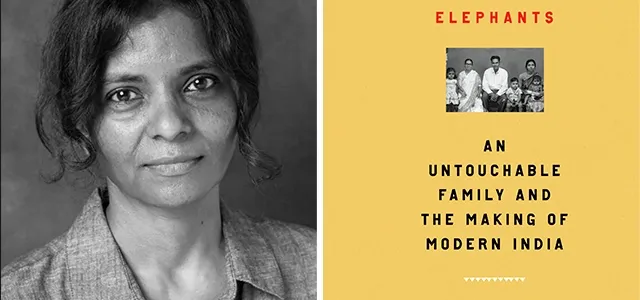
Ants Among Elephants: A Portrait of Untouchability in India
Since we are discussing caste, this post from my Substack seems relevant. This review was originally published on “The South Asian Idea” in January 2018.
One of the frequent topics of debate among those interested in South Asia is the caste system and whether it is unique to Hinduism or features in other South Asian religions as well. Hindu society has traditionally been divided into four castes (or varnas): Brahmins (priests), Kshatriyas (rulers, administrators and warriors), Vaishyas (merchants and tradesmen), and Shudras (artisans, farmers and laboring classes). A fifth group consists of those who do not fit into this hierarchy at all and are considered “untouchable”. What separates caste from other systems of social stratification are the aspects of purity and ascribed status. Upper-castes consider lower castes to be “impure” and have rigid rules about the kind of social interaction they can have with them. For example, upper castes will not accept food from those of a lower caste, while lower castes will accept food from those above them. Caste status is also ascribed at birth and has nothing to do with an individual’s achievements. A Brahmin peasant remains a Brahmin while an “untouchable” engineer is still an “untouchable”. This system persists in India today, though the government does provide affirmative action in order to uplift members of “backward” castes.
Coming from a Pakistani background, I was not familiar with the operation of the caste system in daily life. Though Pakistan is a highly socially stratified society, this system has no religious sanction. In Islam, all believers are considered equal in the eyes of Allah. Unlike in India, where until recently, “untouchables” could not go into several temples, all social classes pray together in the same mosques. This fact is highlighted in one of the famous couplets from Allama Iqbal’s poem “Shikwa” (the complaint) which states: “Ek hi saf mein khare ho gaye Mahmood-o-Ayaz/ Na koi banda raha aur na koi banda nawaz” (Mahmood the king and slave Ayaz, in line as equals stood arrayed/ The lord was no more lord to slave: while both to the One Master prayed). At least in religious terms, one Muslim is not better than any other, no matter what his social status. Of course, this does not mean that social stratification ceases to exist. To this day, rich Pakistani families have separate utensils in their homes which are to be used by the servants. Punjabi Christians who engage in janitorial work are still known as “chuhras”, a derogatory reference to their pre-conversion caste status as “untouchables”. However, unlike the Hindu caste system, social class in Pakistan is not based on ascribed status. If someone from a low socio-economic background attains an education and a well-paying job, he or she will no longer be treated as belonging to their previous socioeconomic group. This is a major difference from India, where one’s caste remains salient, no matter one’s economic status.
A first hand account of caste in India is given in Sujatha Gidla’s recent book “Ants Among Elephants: An Untouchable Family and the Making of Modern India”. Gidla was born into an “untouchable” family in the southern Indian state of Andra Pradesh. Through the story of her ancestors, she presents a portrait of India from the end of British rule to the 1990s. It is particularly interesting to note that while her family is Christian (a religion in which there is technically no caste), they are still considered “untouchable” in Hindu society. Gidla writes: “Christians, untouchables—it came to the same thing. All Christians in India were untouchables, as far as I knew (though only a small minority of all untouchables are Christian.) I knew no Christian who did not turn servile in the presence of a Hindu. I knew no Hindu who did not look right through a Christian man standing in front of him as if he did not exist. I accepted this. No questions asked” (Gidla 5). Caste is so pervasive in India that it applies even to those groups whose religions formally believe in equality. Continue reading Ants Among Elephants: A Portrait of Untouchability in India
BP may have just jumped the shark
In the never-ending saga of BP, we may have just hit one of the more outlandish claims:
“Like I said, I’m not defending his comments. I wouldn’t have made them.
Regardless of any provocation, calling someone ‘subhuman’ and ‘neanderthal’ is not on—especially when those words are used by a Brahmin. It’s casteist.”
I’m fully in favour of interrogating caste. But the idea that the twice-born must exercise an extra layer of self-censorship before using a generic insult is excessive. An insult is an insult; attaching caste-specific moral disclaimers to ordinary online behaviour doesn’t clarify anything. It just adds ritual guilt where none is needed.
I support the critique of caste bias, but my fundamental sympathies are with Dharmic civilisation; precisely because Dharma is pluralistic enough to allow a hundred flowers to bloom. That pluralism should extend to how we discuss caste, not collapse into moral policing tied to someone’s birth category.