The Broken Compact

Why the India, and American, Dream No Longer Holds

It was Dr V’s birthday this weekend, and we found ourselves in the Great English countryside; those great undulating fields and hedgerows that still whisper of an older order. There’s something about England’s pastoral stillness that throws modern anxiety into relief. The calm of inherited hierarchy, the sense that everything has already been decided, makes you think of those of us who were told that nothing was fixed, that we could climb forever if we just kept studying, working and performing.

The Dreams Continue reading The Broken Compact

Mamdani and India — A Strategic Moment

The Desi Mayor and the Mirror of India: What Zohran Mamdani’s Victory in New York Means for a 2050 India

by Amb Manav Sachdeva

When Zohran Mamdani — the 34-year-old Indian-heritage, Muslim-American democratic socialist — clinched the victorius count for the mayoralty of New York City, it was more than an American political event. It was a global inflection point. For the first time in history, the world’s most influential city is poised to be led by a man who not only traces his lineage to India but proudly identifies himself as desi — as an inheritor of South Asian pluralism, Muslim humanism, and diasporic imagination.

For India, Mamdani’s win ought not to be filtered merely through the lenses of political affinity or ideological tension. Nor should it be reduced to whether he has praised or criticized Narendra Modi. It must be read as a civilizational opportunity — a chance to reflect on how India sees itself through the mirror of its far-flung children, and how it chooses to relate to a diaspora that has become not just prosperous, but powerful.

From Symbolism to Strategy Continue reading Mamdani and India — A Strategic Moment

Why Ladakh is angry with the Modi government

On the latest episode of Scroll Adda, Sajjad Kargili–one of Ladakh’s most popular leaders and a part of the delegation that is negotiating with the Modi government–speaks to Shoaib Daniyal to explain why Ladakhis are so angry with Delhi.  Sajjad speaks about the “colonial treatement” that Ladakh is receiving from Delhi.

Sajjad notes that Muslims are 46% of Ladakh’s population while Buddhists are 40%.  Muslims are concentrated in  Kargil district while Buddhists are concentrated in Leh district.

Islam the Religion of Peace part ii

Samir Zitouni, a 48-year-old rail worker, is in critical condition after stepping between a knife-wielding attacker and passengers on a Doncaster–London train. Witnesses say he blocked the assailant from stabbing a girl and was slashed across the head and neck.

He has worked for LNER for more than twenty years. His managers call his actions “nothing short of heroic.” The attacker, Anthony Williams, has been charged with ten counts of attempted murder.

A Muslim man (most likely Algerian origin) from the Midlands saw people in danger and acted without hesitation.


Open Thread

The boycott has made Brown Pundits quieter, almost peaceful. I don’t mind it. Every few years the site reaches this point; it grows, gains noise, and starts to feel less like a hobby and more like an obligation. Then it falls back to something smaller and saner.

I’ve also realised that the Indo-Pak frame doesn’t really fit my life anymore. It was useful once because that’s where the conversation was; it gave the blog an audience. But most of that talk is stale now; the same arguments, just louder.

What interests me instead are the wider patterns: how post-colonial societies move in a world that is no longer unipolar. The Gulf’s rise, Africa’s experiments, China’s reach, India’s own breadth. How old hierarchies break down, and new ones form.

I don’t like following the news. So perhaps BP will drift in that direction. Fewer posts, less noise, more reflection. A space for thinking about what comes after the post-colonial age, when the world starts to finally balance itself again.

The growing Pakistan-Afghan Conflict. What next?

Most of us keeping up with news from the sub-continent are aware by now of the recent escalation in the long-simmering friction between Pakistan and Afghanistan.  The historical ‘divide’ regarding the Durand Line is something that never really went away as much as the Pakistani state attempted to pretend that its a fait accompli.  And now with the Tehreek e Taliban Pakistan managing to to challenge the Pakistani state’s writ, and inflicting ever increasing costs on PakMil, the threats to punish Afghanistan further are flowing thick and fast from Islamabad.

Pakistan, obviously enjoys a military supremacy over Afghanistan in multiple orders of magnitude. But as we have seen in Ukraine, or even in Afghanistan over the last few decades, the underdog can inflict some serious costs. And keep it going.

Question is, where does Pakistan go from here? With the growing reported rapprochement between the Taliban and New Delhi, there’s every chance that the Afghan air defenses may be quickly ramped up from non-existent, to at least some level of deterrent.  Rumors are rife on the internet about Indian supply planes landing at Bagram.  And simply bombing Afghan border posts has diminishing returns.  The Taliban do not appear to be in any conciliatory mood.

In many ways, this has many parallels to India’s experience with Pakistan backed jihadi groups in the 30+ years starting from the late 1980s.  Its almost impossible to deter and defend against insurgency in mountainous terrain.  Especially when the insurgents find succor in the local populace.

So, what next for “Khyber Pakhtunkhwa” and Pakistan? How realistic is the possibility that the Pakistani military will be able to succeed “this time” when it has already ‘failed’ a few times post-9/11, and had to make repeated ‘peace’ deals with the TTP or its predecessors in the past?

The shooting war seems to have gone a bit quiet for now, but the war of words is quickly escalating.  It seems like the Taliban are being ‘good students’ of the ISI and have adopted the tactic of releasing catchy music videos to make propaganda points.


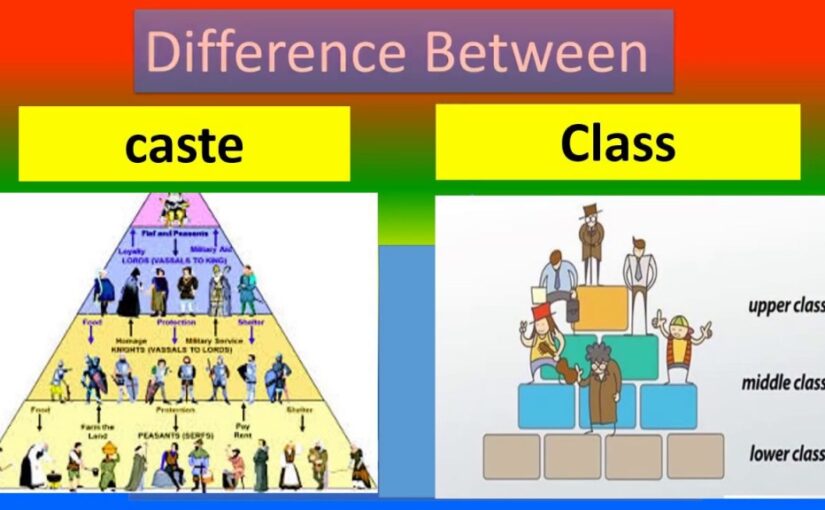
Caste, Civilisation, and the Courage to Own It

Kabir suggested that I apologise but for what, exactly? Why should Saffroniate be considered offensive? Own it. I don’t see anything inherently wrong with the idea of Akhand Bharat; the concept of a broader Dharmic civilisation makes eminent sense to me.

Likewise, I don’t understand why questioning caste identities provokes such sensitivity. Again, own it because the more caste is repressed, the more likely it is to resurface.

At heart, I’m a reformist, not a revolutionary. I believe in improving and refining what exists, not erasing it. Cultural features should only be abolished when they are truly harmful or deleterious, not simply because they make us uncomfortable.

Mahabharata war and Yuga cycles

Anyone who is slightly familiar with Hindu mythology or Hindu cosmology knows that ancient Indians were fond of extremely large time periods. According to traditionalists the war of Mahabharata happened more than 5000 years ago (3102 BCE). A Yuga is supposed to last for 1.08 million years. A Yuga cycle, consisting of 4 Yugas, is 4.32 million years long. Who came up with these numbers ?

The story behind these numbers is quite interesting. Although the word Yuga goes back to Vedic age, Vedic texts do not mention these numbers. The specific numbers were first introduced by Aryabhata, who was born in 476 CE. According to his definition a new Yuga begins whenever all five visible planets along with the Sun and the Moon have zero celestial longitude (we are using the current terminology here, Aryabhata used the word Yugapda to denote a Yuga). The first verse of Aryabhatia, his only surviving work, states the following :

Aryabhatia 1.1 : In a yuga cycle the revolutions of the Sun are 4,320,000, of the Moon 57,753,336, of the Earth eastward 1,582,237,500, of Saturn 146,564, of Jupiter 364224, of Mars 2,296,824, of Mercury and Venus the same as those of the Sun.

The accuracy levels of these estimates are reasonably high, ranging from 99.9 percent (period of Saturn) to 99.999 percent (period of Earth’s rotation). It is possible to get this level of accuracy from 20-30 years of naked eye observations. Not surprisingly, the exact numbers are all wrong. Assuming an error margin of 0.3 degrees for an observation, one needs 3600 years of sky watching to count the exact numbers of revolutions in 1.08 million years. Aryabhata definitely knew this but he also accepted the traditional view that the current Yuga started during the war of Mahabharata (Aryabhatia 1.3). Seven astronomical objects having celestial longitudes close to zero is a very strong condition, and the initial estimates he obtained from 20-30 years of observations were good enough to rule out all years in the past few thousand years except 3102 BCE. So he concluded that the beginning of the current Yuga and Mahabharata war happened in in 3102 BCE.

Aryabhatia 3.10 : When three Yugas and sixty times sixty years had elapsed (from the beginning of the Yuga cycle) then twenty three years of my life had passed.

Since he could directly see the positions of the celestial objects during 499 CE vernal equinox, the assumption that they all had zero longitude in 3102 BCE meant having observations separated by 3600 years. This allowed him to make extremely precise claims about their periods. At the same time he was forced to increase the length of a Yuga to 1.08 million years to ensure that all the celestial objects make complete revolutions.

Why did he come up with the concept of Yuga cycle and how did he know that we are in the fourth Yuga of the current Yuga cycle ? This is related to two abstract points corresponding to apsidal and nodal precession of Moon’s orbit. Aryabhata wanted to include them in the list of celestial objects but his initial estimates showed that their celestial longitudes were closer to -270 degrees and 180 degrees in 3102 BCE. So he introduced a 4.32 million years long Yuga cycle and assumed that we are in the fourth Yuga.

How do we know all these details ? As remarked earlier, Aryabhata’s model was not accurate enough to go 3600 years in the past and detect a Yuga changing moment. However if we calculate the positions during 499 CE equinox using modern technology and apply Aryabhata’s model to go back another 3600 years, then celestial longitudes of the first seven objects become close to zero. The probability of this being a pure coincidence is less than one in a billion. The only logical conclusion is that Aryabhata was born in 476 CE and his definitions and methods were as described above.

What is Akhand Bharat ?

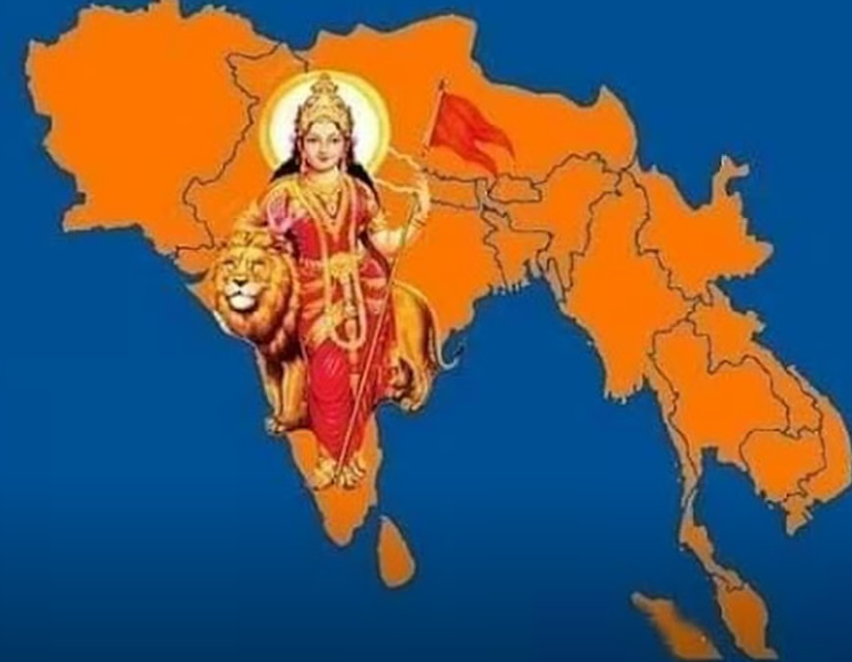
Anyone who is aware of the Hindutva project would have seen this picture (Commentators from outside India might not have seen this).

RSS and other Hindutvavadi organizations use this image or similar images for conveying the message of Akhand Bharat. As the extend of this image appear ludicrous, I would like to pose the question here – What would be the fair boundaries of “Akhand” Bharat from history?

What were the boundaries of Indian civilization? Where the Muslim kingdoms of medieval times part of this civilization? What qualifies a kingdom or area to be part of the Indian/Hindu civilization? or any other civilization for that matter.

@500 CE / 1000CE & 1500CE respectively?

Or to put it more correctively –

The post I am thinking of writing in the month of November will have a lot to do with this.

The issue i have with this thought is that due to its extravagant claim is that it can be refuted without much thought or effort like done here :

From Hindu Ocean to Sindhu Sea: Here’s what RSS-backed schools are teaching children about history


Brown Pundits