
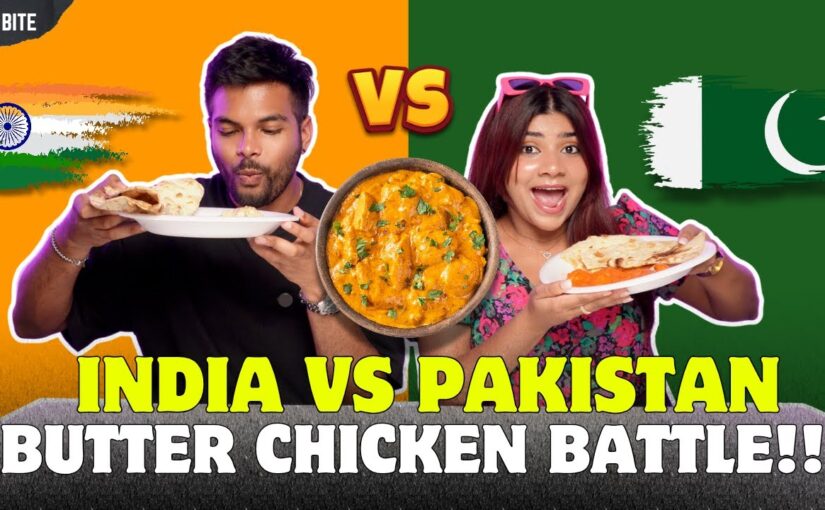
Two comments are worth picking up on, and one claim worth interrogating.
N disagrees that contact ameliorates ties. EK suggests the only Islamicate voices the Indian RW respects are those who have “debased their own civilizational integrity.” We do not know who he is shadow-tweeting. It could be us, the Founders of this blog, who are Islamicate by heritage and recognisably friendly to Hindu right-wing readings. Either way, the framing is off. And then there is Q, on the thread as we write, claiming Pakistanis “will eventually take over the Islamicate world.“
The cost of distance
The dominant idea of the last decade is that less contact means more security. Fewer visas. Less trade. No cricket. No artistic exchange. Reduced diplomatic warmth. This is sold as realism. It is, in large part, self-harm.
Distance does not produce clarity. It produces mythology. When people stop meeting one another, they begin imagining one another. The imagined neighbour is always simpler, darker, and easier to hate than the real one.
He is also, as Dhurandhar showed, sexier. Hatred and desire run on the same current. The more villainous the Pakistani on screen, the more the Indian audience leans in.
Civility is built by proximity. Not sainthood. Habituation. When people share space, study, trade, marriage, and culture, the room for fantasy narrows. One can still dislike the other side. But one dislikes actual people, not cartoons.
N’s response to this is that contact theory is “akin to blaming a victim for not engaging with the perpetrator.” That feels like the Israeli security story applied to the Indian Sub-continent. It assumes Pakistanis are a permanent terror-source requiring permanent counter-violence.
Pakistan obliges the narrative by behaving badly enough often enough to keep it alive. India obliges the frame by treating every bad actor as the median Pakistani. Both governments are now invested in the loop.
Pakistanis no longer defend hybrid Islamicate culture
They defend an Islam that has no Hindu in it. That is a different project, and a smaller one.
We are relearning Urdu from a Persian base. The asymmetry is immediate. Persian has no grammatical gender. Urdu has gender everywhere. The days of the week in Urdu come from Hindu names. The signs of the zodiac come from Hindu names. Khariboli, the substrate of modern Urdu, emerged around Delhi. Urdu is an Indian language with a Persian-Arabic vocabulary overlay. To pretend otherwise is to deny the body while praising the clothing.
Pakistani Islamicate culture is hybrid by construction. The denial of that hybridity does not strengthen it. It hollows it out. This is Pakistan’s error, and it is self-inflicted.
Q’s leadership thesis is fiction
The Persians were called fire-worshippers when Islam arrived. They became the cardinal subject race of the religion, and they did not Arabise. They went a different way and adopted Shiism. Shiism is roughly 30 to 42 per cent of the population of the Middle East. Iranians are roughly 30 to 42 per cent of all Shias. The Persian Gulf is historically Shia with Sunni emirates layered on top. A consolidated Shia state of the Gulf, were it ever to exist, would be the richest country on the planet (stay tuned).
Pakistan is not in this story. Pakistan is a Sunni state on the eastern margin of the Muslim world, with no claim on the religion’s classical metropoles, no claim on its theological centres, and a hybrid Indian substrate it has chosen to resent rather than mobilise. It is also not coded as a first-rate Islamicate people from the ME perspective. Urdu is read there as an Indian tongue. Biryani is Indian. The whole Islamicate inheritance is Indian. The Taj Mahal looks Muslim from inside India and unmistakeably Indian from outside it.
The leadership claim, on the data, is a bedtime story.
Indians and Pakistanis do not know each other
When BB writes about Pakistan, it is the work of someone who reads about Pakistan from the outside. The analytic frame is wrong, and that mistake reproduces itself at the level of the Indian state. India has made strategic missteps because it does not understand Pakistani psychology.
This is what makes BP interesting. The Islamicate founders of this blog understand Muslim psychology from the inside and have crossed into a different civilisational matrix, Western or Hindu or some hybrid. That dual standpoint is rare. It is why the comment thread occasionally generates more light than the average op-ed page.
The lost public sphere
Bollywood once functioned as a common emotional market. Pakistani households watched Indian films, quoted the songs, followed the stars, and treated Bombay’s output as partly theirs. Indian popular culture travelled west not as foreign export but as shared inheritance.
Soft power is strongest when the audience feels ownership. It is weakest when it feels patronised. That shared sphere has narrowed. Pakistanis still watch Bollywood. They no longer own it. Had new Khans (Mahira or a Fawad) risen through Bombay over the last fifteen years, the Aam Aadmi in Lahore would by now treat any cut-off from Indian culture as a personal affront. That option is closed. No missile system replaces cultural intimacy.
Pakistan is Prussia, not Wilhelmine Germany
India is the natural hegemon of South Asia. India borders every SAARC nation except Afghanistan. Every neighbour, by virtue of geography, ends up in some posture of adjustment toward Delhi.
Pakistan’s structural advantage is the inverse. It cannot dominate anybody, so it becomes the friend of everybody who feels crowded by India. Sri Lanka. Bangladesh. The Maldives. Nepal at moments. Iran at moments. Pakistan is in its Bismarckian Prussia phase: tightly defined, master of its narrow neighbourhood, no further. The Wilhelmine phase, the grandiose imperial overreach, was 1971, and that ended badly.
A Bismarckian Pakistan is more dangerous to India than a Wilhelmine one. The Wilhelmine version invites coalitional response. The Bismarckian version quietly aggregates the discontent of every smaller state India has ever pressured. India is not winning that competition. It does not seem to have noticed it is happening.
Both wings have left
Both wings of the old India have psychologically departed. Pakistan obviously. Bangladesh more interestingly. The 1971 revolution sits in Indian memory as a victory over Pakistan. In Bangladeshi memory, the threat that has organised national identity since the 1990s is India, not Pakistan. The Sinhalese feel similarly. So do significant constituencies in Nepal, the Maldives, and now Bhutan. Pakistan does not have to do anything to benefit from this. The structure does the work.
India is now larger and stronger than ever, and emotionally smaller than the civilisation from which it emerged.
A note on the diaspora-elite distortion
The Pakistani commentators on this blog are, almost without exception, diaspora or domestic elite. They will cheerfully make their own masses eat dust for the sake of their own civilisational grandiosity. The Pakistani peasant is not on this comment thread, and he is not particularly interested in leading the Muslim world. Hold this in mind when reading any sentence that begins “Pakistanis believe.“
India has the inverse problem in a useful form. The argument there is constant, public, reflective, occasionally brilliant. The argument is the system working. Pakistan does not have this. That is not a sign of unity. It is a sign of an elite that sings the tune of a Pied Piper.
The way out is the way in
There is no glamorous solution. No grand treaty. No sudden fraternity. More visas. More students. More trade. More artists. More flights. More cricket. More Urdu studied honestly. More Sanskrit in her Home River. More Pakistanis in Mumbai. More Indians in Lahore. Proximity before harmony. That is how normality is built.
The close
India risks mistaking size for strategy. Pakistan risks mistaking negation for identity. Both mistakes are expensive. N is wrong about contact. EK is fishing. Q’s leadership claim is a bedtime story. The subcontinent was not made to live as two sealed camps glaring across a fence. Until both states relearn that, they will keep doing what they have been doing for decades: injuring each other, limiting themselves, and calling it victory.
Good post.
I agree that people to people contact is the only way to lessen hostility. Both ruling regimes are against it for precisely that reason.
Urdu is obviously an “Indian” language–though it doesn’t belong only to the current Indian nation-state.
There is some truth in what El Khawaja is saying. I’ve noticed this on this blog for months (particularly from BB and RNJ). The only “good Pakistani” is the one that accepts India’s hegemony. Pakistanis are “Indians gone astray”. Sorry, but these arguments are non-starters and actually incredibly offensive to most Pakistanis.
Anyway, lots to think about in this post.
thanks Kabir – we were reflecting just now how similar secular Persian and Indian (Hindu) culture is.
for instance in Persian now, they refer to doggo as “bacchaha” instead of “sag”. Hindugram is basically VERY caninephilic.
We’d wage 90% of the Persian diaspora is secular, 70% within Iran are secular. It’s precisely because we have this Westernised Persian frame that we can blend so well with Hindu culture.
It’s Pakistan that’s intentionally traditional (even Secularistanis will mouth traditional norms) where even the traditional in Hindu & Persian space yield to the Seculars.
so it’s a real culture & value clash on a fundamental level.
Pakistani identity is fundamentally based on Islam. This is understandable because Pakistan was created due to a Partition from a non-Muslim country.
Iran didn’t go through this experience.
Also I just have to clarify (because this constantly comes up on this forum): While I obviously dislike the Republic of India as a nation-state, I love Indian culture (Hindustani classical music, Indian English literature etc). Where I differ from others on BP is that I refuse to concede that all this culture belongs solely to the Republic of India.
Let me re-phrase. I don’t think Indian disengagement at the people to people nor govt levels has any impact on how Pakistanis / Pakistan perceive India / Indians.
I say this since there’s a pre and post comparison. Peak Aman ki Asha coincided with the worst terrorist attacks (26/11 amongst others), border skirmishes, Kashmir unrest and of course the Kargil war. Contrast this with no talks if terror continues. Far greater peace in India with fewer terrorist attacks (mainly Kashmir targeted) which also came down dramatically post 370 abrogation.
So what are the lessons for India? Tighten the screw else its business as usual for Pakistan: superficial camaraderie alongside death with a thousand cuts for India. A faux camaraderie between the elites while the rest of India bleeds.
Kasab was an ordinary Pakistani, yet the animus he harbored against India was 10x of the “liberal” Pakistani despite the “Aman ki Asha” nonsense.
So as a counter claim I say this: Hinduphobia is ingrained at a molecular level in the average Pakistani, talks or no talks. So why should India bother to engage?
If India doesn’t want to talk to Pakistan, that’s fine. But then the status quo will remain. And please remember that Pakistan’s establishment is quite capable of sustaining this status quo. I’m trying to be as non-provocative as possible.
If not now, then after the BJP leaves power, there will have to be some resumption of a diplomatic process. Whether we like it or not, we cannot wish away the fact that we are neighbors.
If you were in our shoes which option would you choose?
1. Talks with continued terror and a feel-good fuzzy feeling amongst elites on both sides
2. No talks no terror
As you’re well aware, the third option talks and no terror haven’t really worked; so what choice are we really left with?
It is immaterial which govt comes to power since Op Sindoor has effectively re-drawn the red lines of any future engagement.
And before we get into proof etc etc of Pakistani state / non-state actors in India terror attacks; that too was tried but failed.
So effectively, there’s nothing left for India to do anymore except disengage entirely and carry on. Which is not a bad option, isn’t it? Neighbours by geography and destiny but mutually disinterested and disengaged by choice.
This way atleast each goes their own separate way and is perhaps for the best.
And India is the country that is “okay” with the status quo.
It is Pakistan who is the revisionist state.
It is like US & Israel; a country of 1.7bn people simply can’t get tripped over terrorism when there are much important issues at stake.
Poverty, pollution, traffic, education, health etc.
The geopolitics are very good distractions alas.
It’s interest just how jewelled an island Sri Lanka is, that doesn’t suffer the same pathologies.
It is like US & Israel; a country of 1.7bn people simply can’t get tripped over terrorism when there are much important issues at stake.
This is offensive at worst and facetious at best. Not very different argument from the kumbaya types who think the world should just stop fighting and investing in defence so we can divert those resources to healthcare and education. Real life just doesn’t work that way.
Terrorism, by definition, is an act that is supposed to force the state to act because of how it impacts the psyche of a society. A society that cannot trust its govt to provide safety cannot trust it to do anything at all.
Perhaps easy for you to say since you haven’t lived through what most ordinary Indians lived through in the late 90s and 2000s. Thousands of people were killed each year. A Pahalgam like massacre was relatively easy pickings for Pakistanis on an almost yearly basis. No state can choose to ignore that.
It’s interest just how jewelled an island Sri Lanka is, that doesn’t suffer the same pathologies.
It did. The LTTE was orders of magnitude worse than the Kashmir insurgency but i guess it is SL’s good fortune that it doesn’t share a border with an Islamist state.
Ignoring the lived reality of suffering through multiple decades of terrorism by Indians, is a massive obstacle. Overcoming this is a pre-requisite for meaningful interaction between Indians and Pakistanis.
And there is simply no way around this without Pakistanis coming to terms with the facts of the historical record – Their government unleashed murder and mayhem all across India, on defenseless civilians, for years and years. And the bitter reality is although the Pakistani governments were not elected, this policy choice did have support.
The pattern is consistent, Pakistanis attempting to engage with Indians either handwave dismissively at the history and trauma of terrorism as ‘just politics’, or attempt the ‘Kalbooshan’ (sic) gambit by trying to pretend that ‘both sides are guilty of it’. When this simply is not true. Because even if we assume the worst of the unsubstantiated allegations about Indian involvement in terrorism incidents in Pakistan are true, the fact remains that proven Pakistani sponsored terrorism in India is still orders of magnitude larger and worse.
I can understand why admitting this fact is extremely inconvenient and uncomfortable for Pakistanis, but this is the Gordian knot that stands between eventual Ind-Pak rapprochement. Not just at the government level, but even at the individual level.
It did. The LTTE was orders of magnitude worse than the Kashmir insurgency but i guess it is SL’s good fortune that it doesn’t share a border with an Islamist state.
India trained and funded the LTTE insurgency. It was when India started killing Tamils that the LTTE turned against India. The LTTE had principles.
Guilty, as charged. That was easily one of the worst decisions taken by Indian leadership. The difference between Pakistan and India though is that India realized its mistake and self-corrected by not interfering when SL finally decided to go scorched earth on the LTTE; Pakistan on the other hand, doubled down.
India realized its mistake and self-corrected by not interfering when SL finally decided to go scorched earth on the LTTE;
India realized its mistake after the LTTE assassinated Rajiv in 1991
It was in 2005 that the new Rajapakse govt ignored the west to negotiate, got arms from the Chinese and went full scale against the LTTE.
It was not the SL Govt that went scorched earth it was the retreating LTTE They took civilians and destroyed infrastructure so that they could not live there.
After the war was over the in 2009, the Rajapakse second term rebuilt pretty much every thing
This is…….revisionist history. Its the 21st century. Patriotic desires aside, the scorched earth tactics deployed by SL to decimate LTTE are all too well-known.
No, I disagree. There is a very high cost to constantly bear as far as terror is concerned. The economic and mental burden of sustaining talks while simultaneously accounting for loss of lives (security and civilian), property etc is too high a price to pay. Mitigating those costs has allowed India to instead funnel funds towards security needs, infrastructure needs and peace of mind (priceless imo).
Poverty, pollution, education, health, burden of disease etc can be managed effectively through good policies and governance (getting there at a snail’s pace) in tandem with a disciplined population (which we are not).
These are strategically prudent even if selfish (at a moral level) decisions. One may call them transactional, but then real politik is just that.
It should go without saying that I do not believe that Pakistan should conduct a proxy war against India. But I apparently have to say it.
However, no proof was presented to the International Community of Pakistani involvement in Pahalgam. Indians may choose to uncritically believe their government but the rest of the world doesn’t have to.
Unfortunately–whether you like it or not– we are neighbors and we will have to have a diplomatic process at some point. Climate change (for example) knows no borders.
“Operation Sindoor” cannot be repeated. The Pakistan Army is fully prepared to deter any Indian misadventures on our soil. I’m trying to be as non-provocative as possible but our national security is first and foremost.
“Proof for Pahalgam” is a red herring and an apologia for continued refusal to acknowledge Indian blood on the hands of the Pakistani state.
26/11.
Parliament Attack.
Red fort.
The IC 814 hijack.
These are but a handful of literally dozens upon dozens of proven terror attacks that murdered Indian civilians, conclusively linked to Pakistani terror organizations – if the supposed ‘lack of proof’ is the issue with Pahalgam, why did the Pakistani state refuse to act on these other cases?
To this day, the perpetrators of 26/11 and other attacks are provided succor instead of prosecution by the Pakistani state.
Talk of ‘neighbors’ and diplomacy is meaningless unless this ‘status quo’ changes.
Its a crying shame that apparently educated, literate, allegedly centrist and ‘liberal’ Pakistanis can’t even acknowledge this simple situation.
You have expressed support for PML(N) and Nawaz Sharif in the BP comment threads. Surely you are aware that Nawaz was ousted and persecuted by the kleptocratic Zamindars who pose as Prussian protectors of the Pakistani state, for daring to discuss the stalled prosecution of 26/11 attackers?
And yet here you are, repeatedly expressing undying patriotic “fooool sappport” for Pak phaujj. Attempting to shift the onus for ‘resumption’ of diplomatic dialogue onto India instead of the long-pending house cleaning and introspection that Pakistanis need to start with.
yet again I get sucked into another meaningless back and forth with Kabir.
But such discussions and seeing Pakistanis express disregard for the tragedies and violence suffered by Indians due to Pakistani terrorism – it is gaslighting and poking at the scabs of deep trauma. It is disrespectful to basic norms of humanity.
It is incredibly challenging to not get provoked when faced with such rhetoric.
When did I defend General Musharraf’s coup against Mian Sahab?
I’m not reading the rest of this blather. “Kleptocratic” is triggering to Pakistanis. You have been asked to desist.
I don’t take kindly to insults to the Fauj, Many of my mother’s relatives served in senior positions in Pak Fauj.
This isn’t an individual opinion debate. We are debating the state’s pov. Facts are what they are whether you like it or not.
Yes, neighbours we are but that doesn’t not deter India from buffering / isolating herself from Pakistan. Sure, the bare minimum diplomatic facade is still in place but it has been rendered largely redundant. This point is moot.
I don’t want to get into Op Sindoor details, but again red lines were drawn and the escalation matrix moved up a few notches. So in terms of cost benefit analysis for Pakistan, the price tag of terror just got way steeper and possibly untenable.
Suffice it to say that if India repeats “Operation Sindoor”, Pak Fauj will respond in no uncertain terms. You don’t want to play this game.
Khawaja Asif has repeatedly mentioned our missiles are capable of reaching Calcutta.
Do you believe what he says? Serious question.
Missiles are theoretically capable.
But in reality there is a thing called Air Defense and the missiles if launched will plop down impotently near the border, like it did last May.
The point is don’t underestimate the Islamic Republic of Pakistan.
I do hope India will not repeat “Sindoor”, but if you do there will be a massive response from Pak Fauj–as there should be. Nothing and no one is above the national security of the Islamic Republic of Pakistan.
Until and unless, Pakistan and to a large extent Bangladesh, unlearn the Islamic revivalism that see a large hybridity as a cause of their failure and backwardness, these conflict will continue to persist.
I usually dont like to apply tit-for-tat reasoning but here a large reason why our relations with Pakistan have collapsed and are harder with Bangladesh is because the above described worldview keeps on sabotaging any attempt at normalisation and peace.
Why does Pakistan’s national identity bother India so much?
Anyway, the best way to lessen the impact of the TNT is to stop with the hard Hindutva rhetoric at home. Those two political ideologies feed on each other.
On Bangladesh: I believe the issue is that India propped up Sheikh Hasina’s dictatorial rule. Awami League was seen as Indian client regime. Constantly referring to Bangladeshis as “infiltrators” and “termites” is also clearly counterproductive.
//Anyway, the best way to lessen the impact of the TNT is to stop with the hard Hindutva rhetoric at home. Those two political ideologies feed on each other.//
Had we not had so many wars with Pakistan or gone through partition, neither TNT nor Hindutva would be as prominent as they are.
These along with missteps by muslims in India are why Hindutva is so popular presently
Furthermore Indians dont care about Pakistans national identity, except this national identity has a serious hinduphobic component that constantly pushes the state to fight against India through proxies and cross border terrorism. India and Indians only care about Pakistans identity because this identity has component that push the state and society into conflict with India.
This fact is something that is apparently incredibly tough to swallow for Pakistanis – that they actually do not matter that much to Indians beyond the terrorism nuisance. Its a Muhammed Ali-esque right hook to the old ego.
Took the words out of my mouth! What Pakistanis and hardliner Muslims in India don’t realize is that Modi would’ve never ascended to power had it not been for their own actions but then again, honest introspection is perhaps too much to expect.
It is also worth stating that a lot of the swing voters in India were swayed by Modi’s hardline stance precisely because of events like the Parliament attacks and 26/11, both of which are introconvertibly acts of the Pakistani state.
Any Indian with half a brain knows that majoritarianism is not an option for a country of the size, scale and diversity of India’s. Criticisms of Hindutva feeding their actions are as hollow as their economy and morals.
interesting.. wonderful comment
The state is not fighting against India except in the Disupted Territory of Kashmir.
The Kashmir Dispute is the “unfinished business of Partition”. This is the official Pakistani view.
I’m not going to belabor this since it has been discussed on BP ad nauseum.
By the way, my family is ethnically Kashmiri Muslim.
//The state is not fighting against India except in the Disupted Territory of Kashmir.//
What was 26/11 then?
And is Pakistan willing to accept the LOC as an international border? Is it willing to go after the terrorist camps in its own part of Kashmir? The terrorist camps were not there in 1947 so I dont know how these concerns can be handwoven away.
great questions..
We all know the answer to this question, including the so-called ‘centrist’ Pakistani commenters on BP.
The fact remains that terror organizations like JeM and LeT continue to exist and even thrive in Pakistan and that is impossible without the patronage of the Kleptocratic PakMil. Politicians can be ousted from the PM’s chair, exiled or imprisoned, but the jihadis who murder Indians can’t be touched. The entire ‘Dawnleaks’ fiasco was used as a figleaf by PakMil to illegally sack Nawaz Sharif because the man dared to attempt peace with India, and had the temerity to mention 26/11 prosecution in an interview.
These are choices made by the Pakistani state, and the fact that Pakistani ‘centrists’ are so reluctant to disavow them, and choose to provide rhetorical ‘covering fire’ instead, speaks volumes.
How dare you use such offensive language against PakFauj! This is passive aggressive bullying and needs to be moderated out.
such sarcasm is passive aggressive. This is conclusive evidence of Hindooootva anti-Pakistan bias. I have many black friends and I even listen to jazz, hence it is impossible for me to be racist.
You clearly haven’t gotten the memo on passive aggression.
Remember that XTM made that a precedent post.
Nawaz Sharif is the only Pakistani politician who is somewhat decent.
Tried peace in both his terms.
As a businessman he realizes the prosperity that can be bestowed to Pakistanis with peace.
Remember, Pakistan still has “load shedding” in their capital and biggest cities.
Wanted to add, that somehow its the burden on Indians to consider as ‘centrist’, folks who refuse to acknowledge the lack of action by the Pakistani state against perpetrators of terrorism against India, its quite…something.
And if you have the audacity to bring up this festering wound and trauma of Pakistani terror, somehow you get accused of being either a ‘Hindoooootva’ or anti-Pakistan.
Galling really.
Thing is when bombs go off, it impacts all Indians not just “Hindutvavadis”.
If Pakistanis think that Congress coming to power will lead to pappi jhappi they are very much mistaken. Modi has shifted the overton window. No government no matter what party will shift it to the left considering the backlash that will come. In fact, Congress in power might go even above and beyond to prove patriotism.
And remember, it was Rahul Gandhi’s great grandfather who took Kashmir and Hyderabad and half of Punjab/Bengal away from Pakistan. And then his grandmother who took away the other half of Bengal.
I remember how Pakistanis wanted Taliban in power in 2021 too.
The Musharraf-Manmohan plan would have left the international borders where they are. That’s the best deal India will ever get from Pakistan.
India will never get AJK and GB.
But even to convert the ceasefire line into an international border requires India to admit that there is a Kashmir Dispute and to negotiate with Pakistan.
Wasn’t it cross border terrorism and pakistans lack of action on the terrorist groups that did the plan in?
And do you mean to say that India should have considered holding a plebiscite at that time in Kashmir?
Because even the home ministry and army probably don’t wsnt Gilgit Baltistan especially given that the population itself does not want to be part of India, no matter whst their rhetoric says.
India has no interest in AJK/GB.
Kashmir was resolved in 48. Like Bengal and Punjab, it was partitioned in neat lines.
Pakistanis might claim Kashmir valley but Kashmiris under the National Conference fought AGAINST Pakistan.
India maintains the claims on AJK/GB because Pakistan maintains theirs but unlike Pakistan in 65 and 98, India have never initiated an attack on AJK/GB.
Funny thing is due to 71 war, India actually got a sliver of GB. There are villages in Kargil which were once under Pakistani control.
There are actual people there who were once Pakistani but are now Indian.
https://en.wikipedia.org/wiki/Battle_of_Turtuk
According to the UN resolutions, the plebiscite must be held.
However, the Musharraf-Manmohan Plan doesn’t call for that. It calls for the LOC to be made into an international border and internal autonomy for Kashmiris. Like I said, it’s the best deal India will ever get from Pakistan.
If the Home Ministry doesn’t want GB, then I guess you all can stop calling it “Pakistan Occupied Kashmir”. Anyway, the Muslims of GB and AJK will never accept being part of a Hindu-majority country.
This is a strawman, Pakistan’s national identity does not matter to India, or at a minimum, it matters orders of magnitude less than the delusional aspirations of landgrab and the terrorism that accompanies it.
In the absence of terrorism and diplomatic trash-talking, I think a majority of Indians, and its government – regardless of political party – would be totally fine with normalization on trade, tourism etc. Which would be an undeniably massive benefit to the ordinary Pakistani.
But of course, the sliver of Pakistani elites would rather continue cut their own citizen’s noses. It is what it is.
Well, if you refuse to solve the Kashmir Dispute, Pakistan is well able to sustain the status quo.
It takes two to tango.
“status quo”.
Amazing euphemism used by a self-identified liberal to justify murder and terrorism.
Such terrorism apologia may be espoused by the “center” in Pakistan, but in the rest of the literate and civilized world, is rightly considered right-wing and extreme.
I’d say it’d be a Far-Right position in most of the rest of the world. If they weren’t a client state, their behaviour would be considered worse than Russian actions in Eastern Ukraine.
oh it is. Just that blunt harsh reality is that the world simply does not care that much when its Indian blood being shed. It is Indians who have to care, and its their government that has to take ownership of protection and deterrence.
Uncle Sam, Uncle Cheen and the rest of them, will continue to utilize and ‘rent’ the services of PakMil for their agendas, with varying degrees of side effects or direct effects.
Can you read?
That’s not what I meant by “status quo”. The status quo means “cold war” with periods of kinetic action.
As for you accusing me of being right-wing: You literally defended the mob destruction of a minority place of worship on the other thread. You are a right-wing Indian. So look in a mirror before calling me a right-wing Pakistani.
You are doubling down on an outright lie that’s already been proven. Your mala fide intent is naked here.
Oh yes, I’m sorry! You technically only defended the construction of a temple where the mosque used to be.
A truly secular state would reconstruct that mosque exactly where it was.
Look in a mirror. You are a right-wing Indian. Where do you get off calling me right-wing?
This is slightly unrelated but in the absence of an “Open Thread”:
In the latest “Peshawar Review” Furqan Ali (who used to write for BP) has interviewed author Changez Jan.
https://thepeshawarreview.substack.com/p/historys-rhymes-and-silences
Changez Jan, a graduate of the London School of Economics, is an amateur historian who has authored two books – Forgotten Kings: The Story of the Hindu Sahi Dynasty and Warrior Poet: The Life, Times and Legacy of Khushal Khan Khattak. In addition, he has written two books on Pushtun folklore – The Legend of Adam Khan and Durkhanai and The Ballad of Yousuf Khan and Sher Bano.
“The Peshawar Review” is always looking for submissions. We are a literary magazine and are generally non-political. Our brief is fiction, poetry and translations into English from South Asian languages. I myself translated an Urdu short story into English.
Confirmed Israel wanted the Iran War
It is pretty low when some Iranians want enemy Zionist Israel to bomb their home country
To give the LTTE credit though they took support from India to fight the Sri Lankan State they never wanted India to bomb their own people.
we were against any invasions or incursions as a general rule
we were against any invasions
You keep saying WE. Who is this we,
But were you and Iranians aligned with Israel against the bombing of Iran
Pakistanis need to realize India is very happy with the status quo on Kashmir.
It is they who think it is “unresolved” and push to change stuff.
“J&K” was anyways an artificial entity and it got partitioned according to desired lines.
Remember in 48, Kashmiri Muslims of the valley under the National Conference fought on the side of India AGAINST Pakistan unlike Muslim Conference in Western Jammu or the Gilgit Scouts.
What other issues Kashmiri Muslims have with the Indian government is between them and the government. Pakistan has no space here. If Pakistan tries to make space, India will make space in Balochistan.
And being ethnically Kashmiri Muslim means jack.
Are Punjabi Hindus of Delhi going to dictate Lahore politics now?
Urdu descended from Sauresani Prakrit, but a study I read few years ago showed that more than 52% of the total vocabulary in modern usage and more than 90% of the nouns it used in common parlance are Perso-Arabic. Common Hindi spoken in Delhi has about 40-45% of total vocabulary from Perso-Arabic, although its Perso-Arabic noun usage is much lower.
I am a native Urdu speaker and I find it very funny when Hindutva leaning Indians claim (to somehow one-up Pakitsanis) that Urdu is an Indian language.
The claim that Urdu is an Indian language is fast turning out to be a parody now, since its becoming harder to find anyone in India speak proper Urdu (outside of some old boomer Muslim circles in Lucknow). Most Indians cannot pronounce most Urdu words properly, including the Urdu word for ‘Butter chicken’ the title of this post. 😀 All of this is deliberate sabotage by Hindu nationalists who have deliberately destroyed this language in India.
It is obviously Indian; remember we are learning it from Persian and it looks feels and sounds Indian – Hindu to us.
Looks and feels are not objective.
Dari sounds like a different language family to me than Tehrooni Farsi.
We know in reality it’s the same language, just different accent.
English is a ”Germanic language”, with about 45% French vocabulary. As an English speaker, its easier to learn French than it is German.
Are you a Persian speaker?
No, which is why my comment about Dari and Tehrooni is authentic. They sound completely different languages to a non-speaker like me.
But we know sounds and feels don’t matter.
It’s not “Indian” in the sense of the nation-state.
Otherwise, I agree it’s an Indian language.
That’s not how things work.
It is an Indian language. It will always be an Indian language even if no one in India speaks it.
Its origins don’t change.
The US has more English speakers than England. Brazil more Portuguese speakers than Portugal.
Doesn’t change that those two are European and not “American” languages.
And Urdu is still widely spoken in India, maybe not by Hindus but India has millions of Urdu speaking Muslims and Urdu is still an official language in Delhi, UP, Bihar, West Bengal and Telangana.
World’s largest Urdu festival is also in India.
And why should “most” Indians be able to speak Urdu when they are not Urdu speakers?
India doesn’t believe in imposing Urdu on anyone.
Didn’t really work out well for Pakistan in 71, did it?
There was no ‘India’ when Urdu originated. By that logic, IVC is a Pakistani civilization and Vedic Hinduism and its holy language Sanskrit is too.
These types of characterization are stupid. Urdu will go extinct in India in 50 years.. most people today cannot speak it, pronounce it or enunciate it properly and there is barely any Urdu literature or art coming out of India nowadays, it’s all Hindified. Language festivals for some langauge just means it’s dying there and efforts are being made by boomers to protect it. You don’t need Urdu festivals in Pakistan because it’s a live langauge.
Even Hindutva movies like Dhurandar have to resort to stealing Pakistani Urdu songs since they cannot produce much Urdu content. Too bad.
that is a good point that Pakistan doesn’t need an Urdu fest
Karachi has literature festivals, but I think this is more for networking rather than need. Urdu books, magazines, newspapers are sold everywhere, TV media is 90% Urdu. We don’t need to protect it because it’s not in danger of getting wiped out.
Naah, the Republic of India is the successor state of “India” – all the kingdoms that fell within it.
Using your logic – there was no “China” pre 1949 and no “Russia” pre 1971.
Sanskrit and Vedic Hinduism weren’t just there in “Pakistan” but if Pakistanis want to claim it and Vedic Hinduism and the IVC – go ahead. They have a stronger claim on it than Urdu and the Mughals.
As far as Urdu in modern India – this Hindified “Urdu” IS Urdu evolved. You don’t tell the descendants of the older speakers what THEIR language is.
Just because modern day Brits do not talk in “Ye Olde” Language and use words like “innit”, “guv’nor” etc does not mean it is not English.
And Dhurandhar stole no songs. The performers were paid for it. Pakistanis took money to put their songs in a “Hindutva” movie.
Complete rentier mentality. Reason they are running security detail for Israel in Gaza.
Russia 1992.
1971 automatically comes to my mind lol.
Admin Note; don’t lecture us on Persia
yeah you should accept you made a false assertion following a false premise
India is the ‘pretend’ hegemon of South Asia. Just like they pretend to have a border with Afghanistan, they can pretend to dominate South Asia, except none of their neighbours like them and none of them are getting dominated by them. China has even stolen away Nepal from them, if that doesn’t tell you where things lie, what else will?
Yes the great battle of 1971 when Pakistan split India into 2..
So now India is dealing with 2 Pakistans instead of 1. Is Bangladesh part of India? It’s their problem now.
Bangladesh only sends hard working labor across the border. They don’t send the likes of Masood Azhar or Ajmal Kasab.
How is Bangladesh a Pakistan when it has actively worked with India to fight against the Northeastern insurgencies, doesn’t send terrorists across and post the elections have normalized relations.
Also have resolved a lot of border issues very peacefully.
Remember the glee in Pakistani circles about getting Bangladesh in their sphere when the PM made a roundabout and called Pakistanis colonial occupiers lol.
Unlike Pakistanis, other countries know who’s the boss of the subcontinent.
To your point, whatever the recent hiccups in Ind-Bangladesh relations, they are unlikely to go totally off track. They are able to create cooperative frameworks together. Travelling between the countries is not that complicated; India and East Pakistan have made a lasting peace. Just about every other SAARC country, from Maldives, SL, Bhutan, Afghanistan and Nepal have frequent travelers and expat communities in India. So the Ind-Pak thing is of a totally different nature, its not just big vs small, or muslim vs non-muslim. Its debatable, but i hold that its competing imperialisms with a contested core on the delhi-lahore axis, with kashmir as an imagined winter capital. The Indian periphery is taking over now, the indian part of that core is increasingly marginal, and this will redefine the pak relationship in the future. This doesn’t mean it will get friendlier, but perhaps less emotional, more hard-headed and calculating.
India’s relations with all the other countries go up and down but it will never break because it is mutually beneficial for them to have relationships.
It is Pakistanis with their sense of misplaced ego has jeopardized their own country.
Lol 😆
Neighbours don’t like hegemons. That’s the nature of a hegemon.
And all of them are being dominated by India, including Pakistan who is impotently seeing dams built on its headwaters while running from pillar and post trying to stop it.
I think that tells where things lie.
China increasingly sees itself as a stakeholder in the Indus Waters Treaty, too. Chinese media narratives have framed India as the aggressor in the dispute, warning of the danger of using “water as a weapon” and noting that the source of the Indus River lies in China’s Western Tibet region.
https://theconversation.com/chinas-insertion-into-india-pakistan-waters-dispute-adds-a-further-ripple-in-south-asia-258891
China has no locus to lecture India when it is the one that started water rivalries by building on the Brahmaputra. Of course, it sees itself as a stakeholder in IWT – vassals have to be made to feel like they have patronage.
And what exactly is China going to do?
Build dams on the Indus which will hurt Pakistan more?
India is building dams on mostly the Chenab and the Jhelum which originate from India.
BB: “What other issues Kashmiri Muslims have with the Indian government is between them and the government. Pakistan has no space here. If Pakistan tries to make space, India will make space in Balochistan.”
Remember the precedent thread on Kashmir is not Balochistan?
The more people like BB go on about India “making space” in Balochistan the more they lend credence to the Pakistani establishment’s assertions of India engaging in proxy war in Balochistan just as Pakistan engages in proxy war in Kashmir.
Balochistan is not a Disputed Territory. It is unequivocally part of Pakistan. Pakistan is a nuclear power and we will not allow hostile nations to break the Islamic Republic. This is a non-starter.
Their Balochistan proxies have been decimated, they can try hard but I think with their surrender of Chahbahar port, they don’t have much leverage. Any future support to BLA is going to be coming from UAE and Israel, not India. If the Iran war ends today, Iran will replace Pakistan with India from a strategic perspective. I also expect the Iran oil pipeline to be completed once the sanctions are lifted.
Yes true the Persianate Reign will begin.
Yeah, Pakistan is going to buy Iranian oil with their nonexistent forex reserves and their inability to refine Iranian crude.
The Pakistan-Iran pipeline is a pipe dream which according to Pak nationalists have been “around the corner” since a long time.
Sanctions are not getting lifted. Iranian oil is not coming to Pakistan. Pakistan will remain an energy starved country with “load shedding”.
Guess which subcontinental country is buying Iranian oil CURRENTLY despite sanctions and has the capacity to refine it?
Iranians, unlike Pakistanis know who the big dog is so there is going to be no “replacing from a strategic perspective”.
And “Balochistan proxies” literally caused havoc a few months ago?
If they are decimated, why not play a few PSL games in Quetta? Quetta Gladiators have never played a single home game there in the history of the PSL.
Of course Pak Fauj is fully capable of dealing with India’s proxies in Balochistan. Not an inch of the Islamic Republic will be lost.
Good point about India’s loss of Chahbahar.
Btw, my maternal great-grandfather’s last name was also Qureishi. General Rashid Qureshi is my mother’s cousin (mamuzad bhai). Pervaiz Mehdi Qureshi is also our relative.
Kabir: “Remember the precedent thread on Kashmir is not Balochistan?”
Well, I don’t think Indian government and intelligence really cares about that or it not being a “disputed” territory.
I don’t think Balochistan can be broken away (just like Kashmir cannot) because of geography/demographics but plenty of pain can be inflicted as has been over the last few years.
The day Dhurandhar released on Netflix, BLA caused massive havoc in Balochistan I recall.
BB: “The day Dhurandhar released on Netflix, BLA caused massive havoc in Balochistan I recall.”
Celebrating the deaths of Pakistanis is not acceptable. Your anti-Pakistan animus is obvious to everyone.
The more you talk about India “inflicting pain” in Balochistan, the more you justify Pakistan “inflicting pain” in Kashmir–which is actually a Disputed Territory.
You’re not helping your case.
If Pakistan was so safe, and Indian/Afghan “proxies” in Pakistan had been “decimated” why is the PSL being held behind closed doors in two cities far away from the conflict areas?
Why have the Peshawar and Quetta teams played ZERO games in history in Peshawar and Quetta in 10 years of the PSL?
IPL is meanwhile going on all over India, with full crowds including in Assam and Punjab, places where terrorists/separatists have actually been “decimated”.
Again I want to clarify: at no point am I advocating for violence in Pakistan.
But if Pak Fauj try mischief in Kashmir, India has levers to pull.
If Pakistan doesn’t interfere with India, India won’t.
And both BLA/TTP have huge local components. Calling them “Indian proxies” is taking the easy way out.
It’s quite funny the Cresceniate and Saffroniate commentators are obsessed with the other but blame it on the other.
It’s the definition of a toxic relationship.
Interesting post, which I disagree with in many places.
As others have stated, the whole argument that more people-to-people contact would solve India-Pak problems is erroneously false. The one actor whose views India needs to change is the Pakistan military-jihadi complex (https://www.nitinpai.in/2011/04/19/pax-indica-understanding-pakistans-military-jihadi-complex).
Also a slight quibble – not sure you can call Pakistan Bismarckian without first naming who its Bismarck would be here?
I prefer to use the term Prussian, which is more accurate. Bismarck was a once-in-a-generation statesman, who ran a brilliant foreign policy, and got the borders he wanted by winning 3 wars in quick succession. I don’t see Pakistan displaying that level of dexterity.
> A Bismarckian Pakistan is more dangerous to India than a Wilhelmine one. The Wilhelmine version invites coalitional response. The Bismarckian version quietly aggregates the discontent of every smaller state India has ever pressured.
This is just plain wrong. Simply by virtue of requiring India to form a coalition to deal with it, a Wilhelmine Pakistan is more dangerous than a Bismarckian one. A Wilhelmine state is one which undergoes rapid economic growth and industrialization, and then builds a fearsome military which would steamroll each of its neighbors in a 1v1 confrontation(Germany did all this). The modern state that this describes is China. Lo and behold, India is part of a coalition to balance China – the Quad!
A Wilhelmine Pakistan – economically robust, industrially advanced, and capable of projecting conventional power – is a nightmare because it creates a true bipolarity in South Asia. If Pakistan could offer a superior trade market to Dhaka or Colombo, India’s regional hegemony would effectively end.
> The Bismarckian version quietly aggregates the discontent of every smaller state India has ever pressured.
I’d be interested to hear more about how this version would use all this discontent to harm India. I think you often overindex on likeability and sentiments, and discount the role of hard power, aggregated in all domains.
at the end of the day, the prussian state was abolished.
Yes, after two destructive world wars. I’d rather get there without all that.