
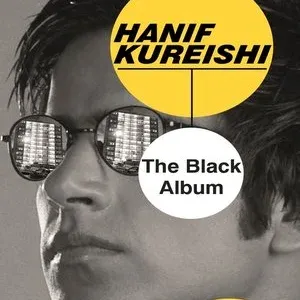
In the context of the recent debate about feminism and liberalism in Pakistan, I am taking the liberty of excerpting from an essay I wrote about Hanif Kureishi’s novel The Black Album. This novel remains relevant many years after it was initially published.
Living in Pakistan post September 11th, it is impossible to get away from debates about the increasing “Talibanization” of society. The comment sections of online English-language newspapers are filled with what passes for discussion among those who advocate for the secularization of society and those who advocate for a return to “Islamic values”. This “discussion” usually consists of nothing more than one side calling the other “liberal fascists” and the other side responding by calling their opponents “Taliban apologists”. The same “discussions” occur on social media such as Facebook. Pakistani novelists too have attempted to tackle the issue of Pakistan’s involvement in the US-led “global war on terror” and the increasing religiosity of urban middle-class “educated” youth. For example, this theme forms much of the narrative of Mohsin Hamid’s 2007 bestseller The Reluctant Fundamentalist, recently made into a film. However, in my opinion, the best novel to examine the dialectic between liberalism and fundamentalism and the struggle in one man’s soul between these two polar opposites, was actually written long before 9/11. This novel, published in 1995, is Hanif Kureishi’s The Black Album.
And:
As a novel of ideas, The Black Album is a fascinating study of the struggle in one British Pakistani young man’s heart between loyalty to his “culture” (as defined by Islam) versus loyalty to the ideals of his adopted homeland. Though much of the novel is specifically about the Rushdie affair, the debates about free expression and whether it should be limited or not—and if so, how much—are still current around the world. The book burning protest against The Satanic Verses can be compared to the violent protests against the recent YouTube film Innocence of Muslims and the riots that occurred on “Love the Prophet (PBUH) Day” in Pakistan on September 21st 2012. It is the strength of Literature that it enables us to see events, through the experiences and dilemmas of individuals, in a way that journalism or current affairs pieces don’t allow us to. No recent novel about fundamentalism has been able to capture the struggle that takes place in the hearts and minds of many Muslim adolescents as effectively as Kureishi was able to do in The Black Album.
The whole essay can be read here
