Open Thread – Brown Pundits

How are things in India right now? As many Indians now read this weblog as Americans (33% each). Mostly curious about the post-coronavirus world.

New podcast with Abhinav Prakash. More suggestions for podcast guests welcome.

One thing I had a mild disagreement with is the use of the term “genocide” in relation to what the Turkic Muslims did in the subcontinent to the Hindus. I agree that killings occurred, some of great brutality. But I am more and more convinced that the true obliteration was the cultural evisceration of public monuments and the repression of history. Perhaps a more accurate or precise term would be “cultural genocide.”

My wife suggested that we rename the Browncast the “Browncaste.” I nixed that.

Happy Birthday America!

Chariots and Aryans


Readers know I do not like to watch YouTubes, but Mukunda is a member in-good-standing of the community, and a great host of the Browncast, so I did watch it.

My general reaction is “OK.” I don’t see how it changes my own views much at all. We know that the arrival of Kurgan people into Europe between 3000 and 2500 BC was not accompanied by the “light chariot.” Rather, they arrived in wagons. As it happens, the steppe people replaced 50-75% of the ancestry in Northern Europe, and 25-50% in Southern Europe. Contrary to I’ve been led to believe from Hollywood films apparently the primary utility of the chariot is as a transport vehicle, especially on flat ground. The light war chariot is presumably a major improvement on the cart, but the difference was presumably quantitative not qualitative.

Mukunda says that another foundation has been ripped from the Aryan migration/invasion theory. I don’t see it that way at all, because I don’t really know that this theory has too many detailed foundations. Mukunda’s response is pretty common, and I think some of the discordances here is that Indians have been educated in a way where many specific elements of the theory are presented as definitively and finally true. On the whole of course, real science does not work that way.

Here is what I know as a geneticist and have seen in the data.

– Genetic ancestry related to Corded Ware/Sintashta people of Eastern Europe and Central Asia contributes about 10-30% of the ancestry in Pakistan and Northern India (depending on the population)

– Y chromosomal lineage R1a1a-Z93 is ~15-25% of the subcontinental haplogroups. This lineage was discovered first in the “forest-steppe” of Europe’s southeast fringe with Central Asia and the Caucasus

– There are very few (though there are some) mtDNA haplogroups in South Asia that are found in Sintashta-Andronovo graves

The Sintashta seem to date from 2400 to 1800 BC as a culture. Additionally, the evidence from Turan and Khorasan in the ancient DNA does not indicate much steppe ancestry before 2000 BC.

To be frank, without genetic data I would not find a population admixture of 10-30% from a steppe group into the northwest subcontinent plausible on the face of it. Perhaps 1-3%. But the data are what they are, and we need to accept them. It is also plausible to me that the initial waves of migration into South Asia were not quite as male-biased as we think, as the proto-Indo-Aryans may have mixed with eastern Iranian/Indus periphery populations before arriving into Punjab. This would mean the population displacement is actually higher in demographic terms. The figures above only give percentages of “steppe”, and assumes pure admixture, which seems unlikely to me.

One hypothesis is that the IVC people already spoke Indo-Aryan languages. Perhaps the newcomers from the steppe assimilated into the local substrate, taking positions at the top of the caste hierarchy? I am skeptical of this. The Indo-European languages don’t exhibit the right structure for this model, as the European ones don’t form a natural closely related clade against the Iranian-South Asian ones. Rather, Indo-Aryan and Iranian seem closer to the Slavic clade.

As for all the rest, the details are interesting to me, but I don’t rest my inference on that. To be frank, some of the claims remind me of arguments I had with Creationists twenty years ago. It seems that they thought I had a very specific idea of what evolution is in all its details, so refuting one element refuted the theory. But that wasn’t it at all. Evolution is a broader framework, and many of the details have to be worked out.

That’s my general attitude to the Indo-Aryan migration into the subcontinent. It’s probably the right model. And we’ve pegged some details down. But a lot remains mysterious. Could the “Out of India” theory be right? The probability is definitely higher for that than that evolution is wrong. But on the whole, I am skeptical.


Open Thread – Brown Pundits

I did an episode on Big Brown Army a few days ago. The conversation revolved around being Christian (evangelical) and Indian, as well as what wokeness is doing to Christianity and Indians. The host of BBA, Decruz, is someone who I’ve known on and off for 15 years. We’ve both changed a lot, but stayed fundamentally similar.

Please remember to subscribe to ABCD Politics, the new podcast that I am doing with Surya Yalamanchilli.

I’m surprised how much you guys can be invested in Kashmir! That being said, the blow-up of the comments every week indicates perhaps Twitter is no longer so fun? I mean, 300+ comments on open threads are some serious discussion. Are blogs coming back?

What’s the best history of India you guys have read? I know some people will get mad, but Romilla Thapar’s stuff is some of the most accessible and well-written in English. Tell me what’s better.

Maharashtra genetics

Novel insights on demographic history of tribal and caste groups from West Maharashtra (India) using genome-wide data (OA):

The South Asian subcontinent is characterized by a complex history of human migrations and population interactions. In this study, we used genome-wide data to provide novel insights on the demographic history and population relationships of six Indo-European populations from the Indian State of West Maharashtra. The samples correspond to two castes (Deshastha Brahmins and Kunbi Marathas) and four tribal groups (Kokana, Warli, Bhil and Pawara). We show that tribal groups have had much smaller effective population sizes than castes, and that genetic drift has had a higher impact in tribal populations. We also show clear affinities between the Bhil and Pawara tribes, and to a lesser extent, between the Warli and Kokana tribes. Our comparisons with available modern and ancient DNA datasets from South Asia indicate that the Brahmin caste has higher Ancient Iranian and Steppe pastoralist contributions than the Kunbi Marathas caste. Additionally, in contrast to the two castes, tribal groups have very high Ancient Ancestral South Indian (AASI) contributions. Indo-European tribal groups tend to have higher Steppe contributions than Dravidian tribal groups, providing further support for the hypothesis that Steppe pastoralists were the source of Indo-European languages in South Asia, as well as Europe.

Resilience in the face of religious change

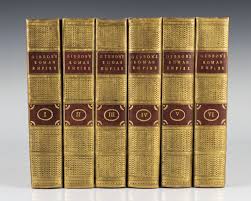
Recently my friend Josiah Neely mentioned offhand how in The Decline and Fall of the Roman Empire Gibbon argued that one reason paganism couldn’t reverse the tide of Christianity is that once a society or individual became Christian and ceased pagan practice, there wasn’t a good roadmap on how to reembrace the old traditions. In contrast, Christianity’s ideological content meant that even if there was a period of apostasy or public cessation of practice, ideological continuity could be maintained.

To be more explicit and extend the argument, I think the key is that there was a class of religious professionals who were devoted in a deep way to the ideological content of Christianity. If, as occurred in Britain and the Balkans, Christianity collapsed, they would endeavor to reconvert the populace, as they did.

There are other cases of this. Han Yu was a Confucian scholar who denounced Buddhism in the year 800 A.D. during the Tang dynasty. This period, between 600 and 900 A.D. was the “high water” point of public state Buddhism in China. But there always remained an alternative tradition of Chinese scholars and officials who were expositors Confucianism. Eventually, these people “recaptured” China during the Song dynasty for Confucianism, and Buddhism became a religion of the popular people and not the state.

As I said elsewhere, this may explain the persistence of Hinduism. Hinduism, like Greco-Roman paganism, is diverse and variegated. But unlike Greco-Roman paganism, there seems to have been a dynamic and reciprocal tension between philosophy and folk religion, mediated by Brahmins. Greco-Roman paganism was fundamentally an expression of ethnicity and identity. Tradition and custom. Greco-Roman metaphysics was the purview of secular philosophers. Hinduism is arguably more fused, and this may have given it more robustness.

Browncast Episode 107: Kushal Mehra on religion

Another BP Podcast is up. You can listen on Libsyn, Apple, Spotify,  and Stitcher (and a variety of other platforms). Probably the easiest way to keep up the podcast since we don’t have a regular schedule is to subscribe to one of the links above!

You can also support the podcast as a patron. The primary benefit now is that you get the podcasts considerably earlier than everyone else. This website isn’t about shaking the cup, but I have noticed that the number of patrons plateaued a long time ago.

In this episode Razib talks to Kushal Mehra about their views on religion. Kushal discusses his transition from being a New Atheist to a Carvaka, and the differences between Dharmic and Abrahamic religions in his view.

Open Thread – Brown Pundits

Talk about whatever you want.

One thing: most of your comments on “OIT” end up making me more skeptical of “OIT” (sometimes blog contributor JR is an exception insofar as he tends to present his arguments more tightly and offer plausible hypotheses). Half the time is spent in arguments that I don’t even necessarily hold. Anyway, just had to be honest about this.

Brown Pundits