Browncast Ep 40: Wael Taji on the Topology of Privilege

Another BP Podcast is up. You can listen on LibsyniTunesSpotify,  and Stitcher. Probably the easiest way to keep up the podcast since we don’t have a regular schedule is to subscribe at one of the links above.

You can also support the podcast as a patron (the primary benefit now is that you get the podcasts considerably earlier than everyone else…).

(as of this posting there are two postings on the patron page that probably won’t see the light of day until next month; one on Game of Throne and another a discussion with an Indian American on his impending arranged marriage)

On this episode, I talk to Wael Taji, a graduate student in behavioral economics and neuroscience at Peking University, in China. Wael is from an ethnically European background but converted to Islam at one point, before becoming a Coptic Christian (listen to the podcast for details!).

We talk about privilege, race relations, or lack thereof, in modern China. Wael has been living in China for two years, and first visited in 2013. He offered his own views on the changes in China’s view of the world and its place geopolitically.

Wael also offers a pessimistic take on Western academia (his undergraduate background was as a student at Cambridge University). His comparative assessment of intellectual prospects in China and the West were published in Palladium Magazine.

We would definitely appreciate more positive reviews. Many of you listen to us, but don’t leave any reviews!

Browncast Ep 39: Carl Zha, Pakistan, and China’s demographic crisis

Another BP Podcast is up. You can listen onĀ Libsyn,Ā iTunes,Ā Spotify,Ā  andĀ Stitcher. Probably the easiest way to keep up the podcast since we don’t have a regular schedule is toĀ subscribeĀ at one of the links above.

You can also support the podcast as aĀ patronĀ (the primary benefit now is that you get the podcasts considerably earlier than everyone else…).

This episode we talk to Carl Zha (a return guest) about the Pakistani bride controversy and China. A lot of the discussion involves general demographic concerns about Chinese society.

Also, I know that some listeners consider Carl to be a Chinese government operative or plant (at least on Twitter). In which case, we present here a representative here of the Chinese government!

Ultimately the key point for me is to get someone on who can watch the Chinese media, which is totally opaque to me.

We would definitely appreciate moreĀ positiveĀ reviews. Many of you listen to us, but don’t leave any reviews!
Addendum: This podcast, along with one other, has been on the patron page for several days. There are cases where the latency is very short due to the timeliness, but in other cases, it can be as long as a week or more.

Genetic variation across many South Asian communities

Someone in the comments posted the results from The Genomic Formation of South and Central Asia. I put the percentages with a few ratios in a Google doc. I don’t know what a lot of these groups are. Can readers illuminate? We need to be careful about the sample size, but I think there are a lot of interesting patterns in there.

Remember that “Steppe”, “Indus Periphery” and “Onge” are populations artifacts within a model. The way I explain it to people is that rather than focusing on the percentage, look at how the populations vary across the parameters. That is a pretty robust result. No matter what outgroups you’re going to use, Brahmins in most of South Asia seem to have more “West Eurasian” type ancestry than other populations (except in the NW). Because “Indus Periphery” has a minority of “Ancient Ancestral South Indians” (AASI) as part of its ancestry, the “Onge” fraction should be seen as a floor on AASI ancestry (the Onge ancestors diverged from the AASI ~40,000 years ago, so it’s a very large difference).

Continue reading Genetic variation across many South Asian communities

Browncast Ep 36: Karl Smith, Communist to neoliberal

Another BP Podcast is up. You can listen onĀ Libsyn,Ā iTunes,Ā Spotify,Ā  andĀ Stitcher. Probably the easiest way to keep up the podcast since we don’t have a regular schedule is toĀ subscribeĀ at one of the links above.

You can also support the podcast as aĀ patronĀ (the primary benefit now is that you get the podcasts considerably earlier than everyone else…).

On this episode, I talk to Karl Smith. A former economist, Smith is now a columnist at Bloomberg. Smith’s style is that of a nonpartisan neoliberal driven by empirical considerations, but he actually has a very interesting background as someone who came out of an orthodox Marxist family. He was raised, quite literally, as a Bolshevik.

We also talk about his experiences being a relatively heterodox black American public intellectual, and how both of us see how racism has played out in our lives and in the country at large.

Finally, we discuss what we see in store for the United States in the future on the global stage.

We would definitely appreciate moreĀ positiveĀ reviews. Many of you listen to us, but don’t leave any reviews!

Lord Indra was a tan man

An angel of the Christian Era

I get a fair amount of email related to questions about Indian genetics, as well as calls for me to adjudicate various controversies. A major problem with any “Aryan invasion theory” or its descendants, which posit non-trivial gene flow from the Eurasian steppe, is the possibility that the Indo-Aryan ancestors of nearly all South Asians (albeit, in extremely varied proportions) were a thousand men with the bright faces, azure eyes, and flaxen locks. Paul Bettany times a thousand astride chariots.

The anachronistic neocolonialism obviously makes Indians uncomfortable. Or that’s my psychoanalysis. I don’t care much either way. What does Lord Indra’s scion care? We are the unbroken lineage, grasping Eurasia’s heart, from the Baltic to the Bay of Bengal!

The flip side of this is people of European ancestry, some of whom are white nationalists, do come close to making this claim. That is, that the Aryans were white Nordic people. The genetics from the Sintashta and Andronovo cultural complexes do indicate that they resemble many of the contemporaneous European populations. Their ultimate locus of origin probably is the Pontic steppe, which is in the geographic boundaries of Europe, as such. Finally, these steppe peoples exhibit genetic signatures of reflux from Europe. That is, they’re not just Yamna-descendants but derived from Yamna-like people who moved west, mixed with local indigenous Europeans, and moved back east along the Eurasian steppe corridor.

Lord Indra’s face? NO!

Looking at some of the ancient forensic DNA some of these individuals have suggested that I must admit that the Indo-Aryans were genetically like Europeans, and phenotypically like Europeans as well. They know that I won’t lie like some people, and just want me to admit this.

Continue reading Lord Indra was a tan man

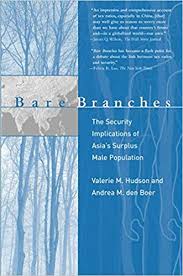
China’s demographic disaster impacts Pakistan

The AP has a long and sad story out, Pakistani Christian girls trafficked to China as brides. One must be careful of sensational stories that hit a lot of our emotional buttons, but it seems deeply reported, and names names.

Because of the surplus of men in China, there has been a recent tendency of “importing” girls and women from poorer East Asian countries. A milder form of this has occurred in South Korea, and earlier Japan. Generally, the men and families who have to make recourse to this are poorer and less attractive on the Chinese marriage market. Some of the same has occurred, to a lesser extent, in South Asia, with Punjabi farmers obtaining wives from eastern India and Bangladesh.

The fact that Chinese men are seeking wives from Pakistan is probably a function of the reality that Vietnam is getting too prosperous, and Laos is not particularly populous (I don’t know the situation in North Korea,Ā  though with the nationalistic nature of that regime I don’t see that as being a sustainable option). And obviously, Pakistan’s alliance with China matters a great deal.

The fact that these are poor Christian women helps as well. To be frank, I suspect that the Pakistani elite does not see their traffic as a matter of honor due to a lack of identification for reasons of class and religion. Additionally, it is far more plausible for a Chinese groom to contend that they are converts to Christianity than they are converts to Islam (there are much stronger cultural conflicts between being Han and Muslim than being Han and Christian).

With 1.4 billion people, it is hard for Chinese matters not to impact its neighbors…

Pleistocene rock art in Maharashtra

Ancient Rock Art in the Plains of India-Two amateur sleuths have uncovered a collection of mysterious rock carvings on the Indian coastal plain south of Mumbai:

In the evening breeze on a stony hilltop a day’s drive south of Mumbai, Sudhir Risbud tramped from one rock carving to another, pointing out the hull of a boat, birds, a shark, human figures and two life-size tigers.

ā€œThey’re male,ā€ he said with a smile, noting that the carver had taken pains to make the genitalia too obvious to ignore. He was doing a brief tour of about two dozen figures, a sampling of 100 or so all etched into a hard, pitted rock called laterite that is common on the coastal plain that borders the Arabian Sea.

The carvings are only a sample of 1,200 figures that Mr. Risbud and Dhananjay Marathe, engineers and dedicated naturalists, have uncovered since they set out on a quest in 2012. The two men are part of a long tradition of amateur archaeologists, according to Tejas Garge, the head of the Directorate of Archaeology and Museums for the state of Maharashtra, and the petroglyphs they have uncovered amount to a trove of international significance.

There are no depictions of bulls, so it is pre-agricultural. Additionally, some of the animals depicted disappeared from the area in the later Pleistocene. That means the carvings could date to people who lived in the area between 40,000 and 20,000 years ago, right up to the Last Glacial Maximum.

2019 Brown Pundits Reader survey

“I am human, and I think nothingĀ human is alien to me.”

-Terrence

One of the strange things is the comments on this weblog make it seem like many more of the readers are South Asian than is really case (or care about the India-Pakistan conflict). I wish more of you would speak. I’m brown, but I speak on Chinese history. It’s my history too. In a cosmopolitan post-national world the global chattering class should consider Terrence’s insights and be less bashful.

Continue reading 2019 Brown Pundits Reader survey

Brown Pundits