Open Thread – 04/14/2023 – Brown Pundits

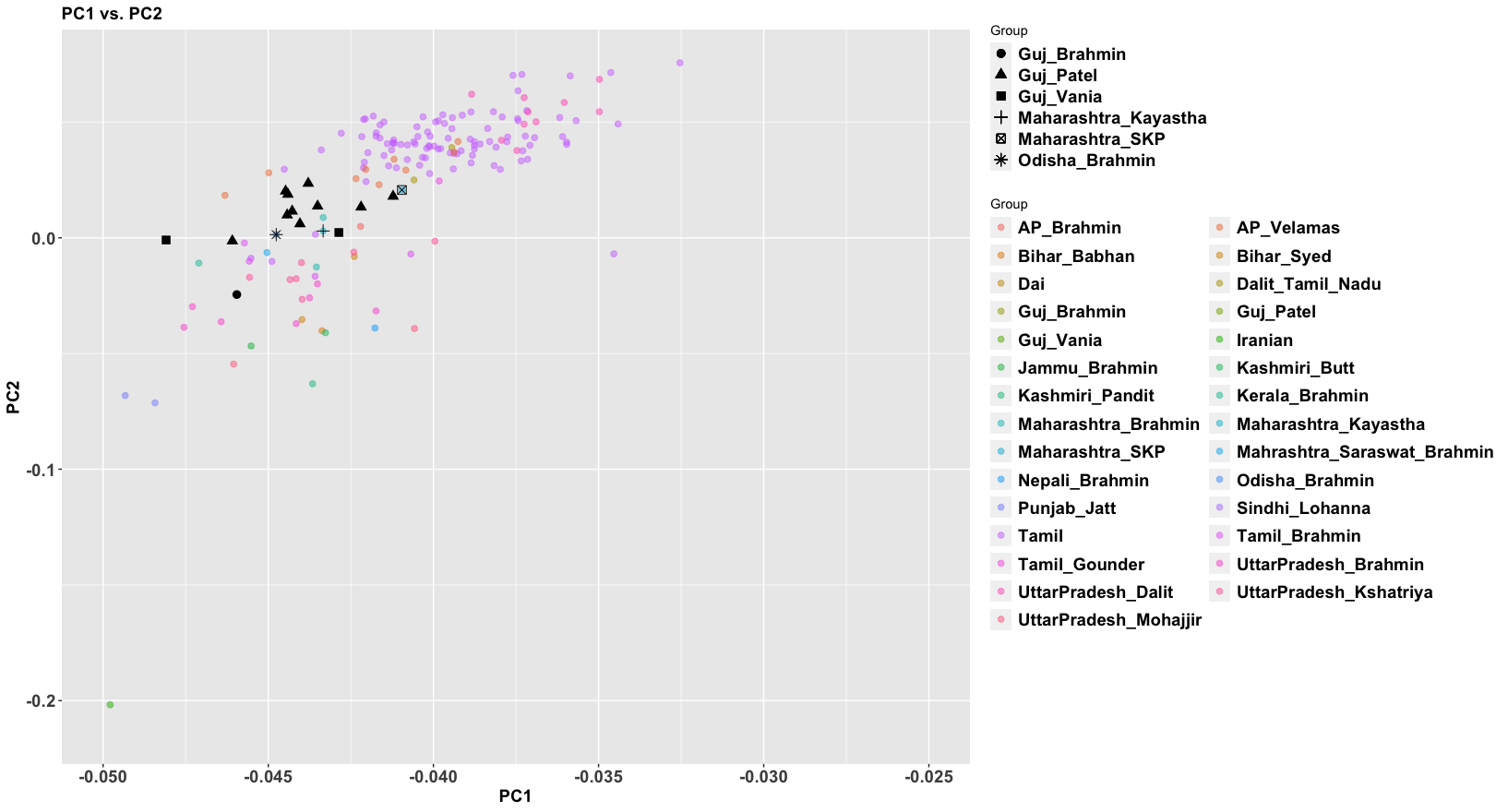
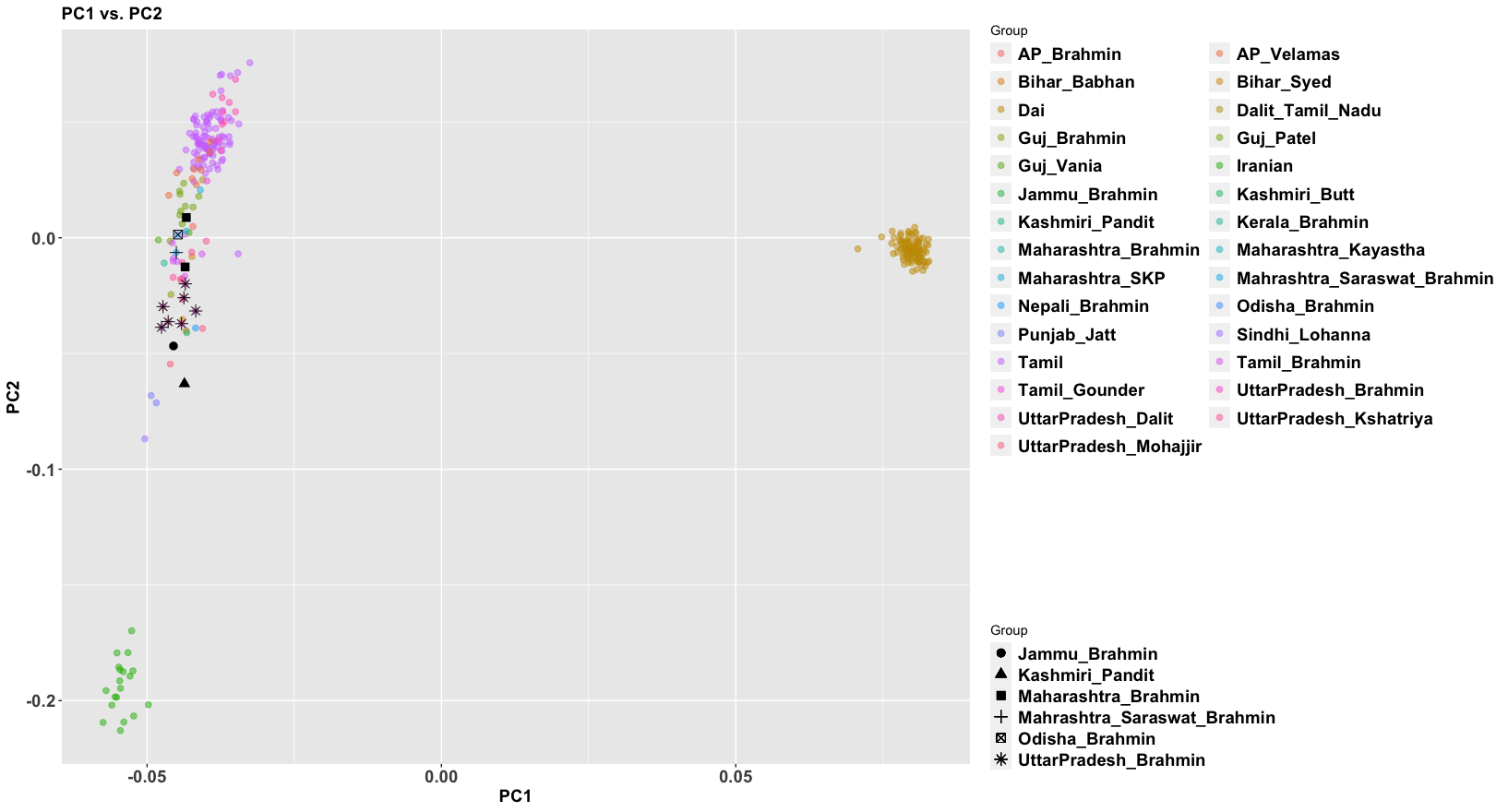
Since Pandits and Kamboj always ask me if it’s true if they’re Iranian, Iran through the ages: civilization’s eternal crossroads and Pre-Persian Iran: from the invention of agriculture to the Aryan onslaught. Part 3 and 4 will land next week.

I have a post (right now at 5,500 words) that I’m working on relating to caste, the CISCO case, and the US, for my Substack. I want it to be my “last word” on the topic…but basically, the issue here is that Leftist-prog types who believe in the total malleability of culture somehow also believe that Indian Americans are moving their society in toto to the US without modification. This is obviously false. You can speculate why this is happening, but it’s just a fact.

Also, Saagar Enjeti is asked about his caste on Red Scare. It’s kind of a joke, as the hosts are pro-Indian (especially Dasha). I am hopefully going to on Red Scare in the next six months to talk about genetics (last time I was in New York Anna K. was out of town).

Cousin marriage in Bangladesh


This piece arguing for the end to cousin marriage in the UK in The Times (driven by Pakistanis) took me to a paper in PLOS One, Genetic and reproductive consequences of consanguineous marriage in Bangladesh:

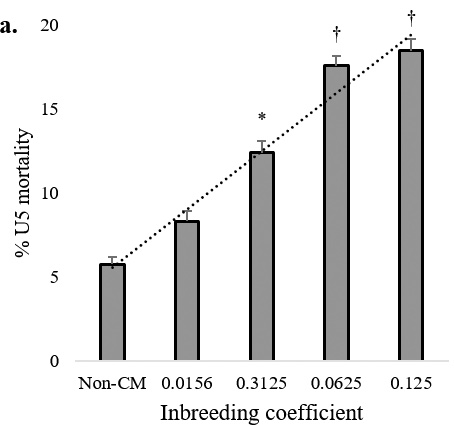
The mean prevalence of CM in our studied population was 6.64%. Gross fertility was higher among CM families, as compared to the non-CM families (p < 0.05). The rate of under-5 child (U5) mortality was significantly higher among CM families (16.6%) in comparison with the non-CM families (5.8%) (p < 0.01). We observed a persuasive rise of abortion/miscarriage and U5 mortality rates with the increasing level of inbreeding. The value of lethal equivalents per gamete found elevated for autosomal inheritances as compared to sex-linked inheritance. CM was associated with the incidence of several single-gene and multifactorial diseases, and congenital malformations, including bronchial asthma, hearing defect, heart diseases, sickle cell anemia (p < 0.05). The general attitude and perception toward CM were rather indifferent, and very few people were concerned about its genetic burden.

A rate around 5% is in line with my intuition and what I’ve seen elsewhere, though there is wide variance by locality. The best thing about the paper is the chart above, the offspring of first cousin marriage have mortality rates 3 times greater than non-cousin marriages. There are other numbers relating to disease, etc. The paper is good because it’s from a developing country without world-class healthcare (though no longer a total basketcase) so you can see disease risk plainly.

More generally in relation to “cousin marriage”

– I have seen “outbred” Pakistani genomes that look like the product of cousin marriage due to the practice’s frequently earlier on in the pedigree

– This is comparable to some Indian caste groups that practice exogamy (North Indian) on the jati level. The jati has been endogamous so long that everyone has become a second cousin…

Intellectual Brown Web

Sarah Haider, Shadi Hamid, myself and Murtaza Hussain recorded an impromptu podcast that we titled the “Intellectual Brown Web.” These are basically people I know well (I am good friends with both Sarah and Shadi) or who got involved in Twitter threads repeatedly (Murtaza). But there is no “Hindo-origin person.” Since I don’t give a shit about representation or affirmative action I don’t care too much…but this got me thinking, what based Hindu Americans would you have on? I know plenty of based Hindus from India…but most Hindu Indian Americans are Rho Khanna at the most based.

I mean think about this: why the fuck am I having to write long pieces about how the anti-caste discrimination stuff is bullshit? I’m just a tech entrepreneur who isn’t even from a Hindu background. Suhag at HAF does stuff and others, but where are the big hitters? Instead you have public Hindu Americans proudly pushing this stuff.

Note: there are plenty of based Hindu Americans who are doctors, engineers and business people. They just aren’t public people. Which is fine, but if you don’t speak for yourself, at some point Razib Khan is going to get tired of doing so.

Open Thread, 2/17/2023, Brown Pundits

Nimrata Nikki Haley is running for President of the United States of American.

1) She’s a donor-class wet dream and a throwback to the pre-Trump Republican party. I don’t think this is going to work, but who knows?

2) It’s America, you do what you want, but not going to lie; Bobby Jindal was always a bit too unctuous in his urge to emphasize his American bonafides. Haley’s biography strikes me as more natural and relatable.

3) I think she may be tapped for VP on identity politics grounds by the Republican party. Interesting VP debate with Kamala Devi Harris.

American University in Delhi?

India might open to foreign universities. That could be a game-changer:

And India’s higher education system badly needs shaking up. Setting aside issues of quality (as if those can be set aside), India does not come close to providing sufficient seats to those aspiring to higher education — a glaring shortcoming as India’s burgeoning middle class strives to prepare their children for the opportunities of the future.

India’s system has its successes, of course, but they are narrow. Just nine Indian higher education institutions made the top 500 of the most recent QS World University Rankings. The top one — the Indian Institute of Science (at 155) — is a highly specialized institution focused on postgraduate studies and research in the sciences. The other eight are part of the well-known Indian Institutes of Technology, which specialize in engineering. The highest-ranked comprehensive university was the University of Delhi, falling in the 520s.

That is simply not good enough. All told, India has just over 1,000 institutions of higher learning. China, with a similar population, has three times that. The United States, with a much smaller population, has four times as many.

This all sounds find, but India will replicate some of the US’s pathologies in the education sector. The “consumer model” of higher education has been causing serious problems here over the past few decades. The op-ed even states that “Private universities, too, are overly regulated and cannot operate for profit. That deters the best entrepreneurs from entering the sector.” Entrepreneurs entering the sector was a disaster, and for-profit colleges were a way to absorb student loans from the public fisc.

But I wish India well.

Hindenburg vs. Adnani

Don’t know much about this, but I noticed it hit WSJ today, India’s Adani Group Fails to Halt Short-Seller Driven Decline:

A giant Indian conglomerate couldn’t stop the freefall in its shares and bonds set off by an American short seller in what has grown into a bitter fight over the empire created by one of India’s richest and most politically connected businesspeople.

Adani Group, an energy and infrastructure company, released its 413-page rebuttal to the short seller’s claims just as the trading week began in Asia. Investors weren’t convinced and dumped shares of the company on Monday, bringing the total value lost to $64 billion since last week.

The fight could have wide implications for India’s power industry and for its transition to clean energy. It has also caused billions of dollars in losses for Indian investors who have helped drive up the company’s share price to stratospheric levels.

You can find the Hindenburg Ressearch Report here. This part jumped out at me:

Most large companies hire credible, well-known external auditing firms in order to give investors confidence that their financials are being independently reviewed by a capable team.

Given the complexity of Adani Total Gas and, particularly, Adani Enterprises, with 156 subsidiaries and many more affiliates and joint ventures, one would expect a large, highly experienced team to be monitoring its labyrinthian corporate structure.[62]

But Adani Group has apparently shunned this approach, choosing a tiny auditor named Shah Dhandharia to oversee the audits for these two public companies.

Shah Dhandharia’s website has gone offline during our investigation and now appears to have no website. Archived versions of the website as of February 2020 show that the firm was comprised of only 4 audit partners and 7 support staff.[63]

Of the partners featured on its team page, we found that 3 were in their 20s – hardly the level of experience or seniority needed to seriously scrutinize one of the world’s wealthiest and most powerful businessmen.

Apparently, the Adani group has a 413-page rebuttal to the short-sellers. Rebuttals often take more time/space…but I not going to lie, I am not surprised at the length here…

(though some short-sellers have done sketchy things, my own view is short-sellers are an essential part of af functioning market and discourage crony-capitalism)

Open Thread, 1/27/2023, Brown Pundits

Some stuff from my Substack: Genetic history with Chinese characteristics – How two Bronze-Age tribes became the world’s 1.3 billion Han (without even changing much genetically) and Venerable Ancestors: untangling the Chinese people’s hybrid Pleistocene origins origins – More than 40,000 years of human evolution in East Asia. I’ve written more about India because it’s super genetically variable, unlike China. But China has more written history.

Also, if anyone wants to know what I’ve been doing with most of my time the last few years, I founded a tech startup, GenRAIT.

Brown Pundits