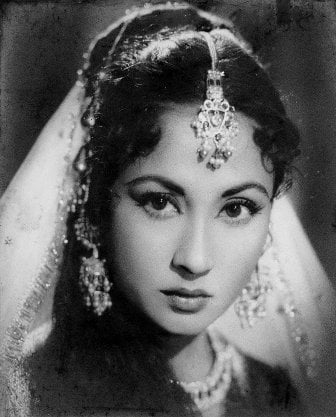
She simply raises an eyebrow, twirls a finger, twinkles her eyes — and the screen goes ablaze. I wanted to join the front-benchers screaming with delight when, pre-interval, she naughtily murmurs, philhaal is guftagu se thak gaye hain hum.
We went to watch Kalank starring Alia Bhat and Varun Dhawan last night. I don’t have much to add to the film reviews, who’ve done a pretty fine job in pointing out both the strengths and the weaknesses.
Karan Johar and his runaway success straddles both new and old Bollywood. One of the reviews chimed in perfectly with what I felt; that Karan is all about “more is more.”
It detracts from the essence of the film and Bollywood is now the inverse of Pakistani dramas. Pakistani dramas convey exceptionally powerful stories on shoestring budgets (Hum Safar was shot on 5,000 USD and it, along with Dastan, revitalised the Pakistani Drama industry).
One of Vidhi’s podcast suggestions is asking why Bollywood doesn’t garner the same level of international respect as Persian Cinema. We’re iA going to explore it in a future podcast but the splintering of a Unified India’s High Culture, where Pakistan got the Mughal bits and India the rest, has had some lasting damage.
Kalank also descends into a farce because it’s as realistic about Hira Mandi and pre-Partition Punjab as Aladdin is about “Arabia.” I enjoyed the performances all around but they lacked that raw intensity of the Khans.
Madhuri Dixit stole the show but even she had to navigate the difficult corners of the script. One reviewer touched on various influences on the film (Pakeezah, Raazi) but what came to mind is that this was supposed to be the Desi Titanic.
Partition is a painful and difficult subject; the cumulative and untold trauma can spin a thousand romances and tragedies. Like most psychic wounds it can be mined for great art but if KJo wants to pioneer Urdu cinema (Ae Dil Eh Mushkil) he has to first learn that the language of love is spoken with the heart.
It’s what powers the great Pakistani plays and initially I was surprised that the screen play was by Abhishek Varman, the language used was so elegaic and chaste (I thought more Urdufied than Urdu but that is to quibble over little details) but then I heard in one of the reviews that the writer was a Muslim.
In the end though I appreciated the nod towards Urdu culture though I found one line rather offensive, which roughly translated, “her face was Irani but her dress was Indian.” Self-respect starts at home.