
I assume you are following me on Clubhouse? I’ll be doing a session on Indian genetics and history in a few hours.
Category: Razib Khan
“too many Indian names”
This story should be known to all brown people just to make it clear “where we stand” in these United States, The Vaccine Had to Be Used. He Used It. He Was Fired.Ten doses of the Covid-19 vaccine would expire within hours, so a Houston doctor gave it to people with medical conditions, including his wife. What followed was “the lowest moment in my life,” Dr. Hasan Gokal said:
The officials maintained that he had violated protocol and should have returned the remaining doses to the office or thrown them away, the doctor recalled. He also said that one of the officials startled him by questioning the lack of “equity” among those he had vaccinated.
“Are you suggesting that there were too many Indian names in that group?” Dr. Gokal said he asked.
Exactly, he said he was told.
…
On Jan. 21, about two weeks after the doctor’s termination, a friend called to say that a local reporter had just tweeted about him. At that very moment, one of his three children answered the door to bright lights and a thrust microphone. Shaken, the 16-year-old boy closed the door and said, “Dad, there are people out there with cameras.”
This was how Dr. Gokal learned that he had been charged with stealing vaccine doses.
Harris County’s district attorney, Kim Ogg, had just issued a news release that afternoon with the headline: “Fired Harris County Health Doctor Charged With Stealing Vial Of Covid-19 Vaccine.”
There is a lot of debate and argument on this weblog about Pakistan and India and the like. That’s because more than half the traffic on this site now comes from India. But this began as a Diasporic weblog, and in the Diaspora, especially in the USA, the gap between Pakistanis and Indians is much smaller. Dr. Gokal is viewed as “Indian.”
The second issue I think one might note is that these lawyers, with a passion for racial justice, ended up pinning something that was pretty invidious on this doctor driven by the moral panics of the era. As a conservative brown-skinned person I am on the receiving end of a lot of insults from woke white people. Many of my white friends, who observe the nature and the persistence of the insults, suspect that some of the attacks are probably driven by sublimated racial animus.
Where are we as “Asian Americans” in this country? The ruling elite of this country thinks we have “bad personalities“, all the better to exclude us from their institutions of power. There has long been a pattern of what are obviously “hate” crimes (mostly for fun and kicks, to be frank) against Asian Americans, in particular older ones, in urban areas. The perpetrators of these crimes are usually not white, and so the media and the cultural elite have not focused much energy on them. And now they are trying to blame COVID-19 and the Trump administration.
To brown Americans: we are not victims. Never forget. But, we are also outsiders. Never forget.
The Genetics of India Cloubhouse Event – Friday 9 PM CDT
 I am hosting a Clubhouse room this Friday, 9 PM CDT (8:30 AM in India on Saturday). The topic will be the genetics of India, and I’ll be talking about my two posts on Substack:
– The Stark Truth About Aryans
– The Stark Truth About Humans
It’s basically going to be an interactive discussion. My friend David Mittelman will help me moderate (probably others too).
You have to have a Clubhouse account (iPhone only). If you want to follow me on Clubhouse, I’m @razibkhan just like on Twitter.
Why Scythians, Sakas, and Kushanas, are NOT the source of “steppe” ancestry
This is a common question/assertion in the comments pretty much every other week: why couldn’t the documented incursions of nomadic people in the first millennium A.D. be responsible for the steppe ancestry? There is actually a good explanation in The formation of human populations in South and Central Asia, so I’ll quote it:
By the Late Bronze Age, ESHG-related admixture became ubiquitous, as documented by our time transect from Kazakhstan
and ancient DNA data from the Iron Age and from later periods in Turan and the Central Steppe, including Scythians, Sarmatians, Kushans, and Huns (29, 52). Thus, these first millennium BCE to first millennium CE archaeological cultures with documented cultural and political impacts on South Asia cannot be important sources for the Steppe pastoralist–related ancestry widespread in South Asia today (because present-day South Asians have too little East Asian–related ancestry to be consistent with deriving from these groups), providing an example of how genetic data can rule out scenarios that are plausible on the basis of the archaeological and historical evidence alone (13) (fig. S52). Instead, our analysis shows that the only plausible source for the Steppe ancestry is Steppe Middle to Late Bronze Age groups, who not only fit as a source for South Asia but who we also document as having spread into Turan and mixed with BMAC-related individuals at sites in Kazakhstan in this period. Taken together, these results identify a narrow time window (first half of the second millennium BCE) when the Steppe ancestry that is widespread today in South Asia must have arrived.
There is now a large database of Scythian, etc., ancient DNA, thanks to the preservation conditions on the Eurasian steppe. Most of their ancestry derives from the same broad group as the Andronovo horizon of which the Sintashta were part. But, unlike the earlier steppe populations, these groups are highly variable in ancestry, as well as usually having substantial minority East Asian components. The Indian groups with a lot of steppes, such as Jatts and Northern Brahmins, lack this.
There are two objections. The weaker one is that they didn’t have statistical power to detect the admixture. I haven’t run simulations, but I’m sure they have. If you have Jatts who are perhaps more than 30% steppe they would have detected trace East Asian (as you can find in many Muslim individuals from Pakistan).
The stronger objection is that there is unsampled structure on the steppe, and groups without East Asian admixture that are direct descendants of the Sintashta without dilution. This is not entirely unreasonable or implausible, though at this point I’d say this is unlikely for two reasons:
- Central Eurasia is pretty well sampled due to interest and conditions
- The steppe ancestry in South Asia is pretty widespread. Hard to imagine it percolating so far in 1,500 years
Also, the statistical tests I’ve done show Bengalis got East Asian admixture 1,500 years ago. 10-20% of the ancestry. The steppe percentage in Bengalis is 10-15%. But I never get any hits using older less sensitive methods of admixture. That means that it has to be way older a mix than 500 AD.
Stark Truth About Aryans: a story of India (part 1)
My Substack piece is up, Stark Truth About Aryans: a story of India. I’m pretty proud of this, as it wasn’t a single-sitting blog post, but something I worked over several times. Since it’s for paid subscribers I’ll post the first few paragraphs below, with an infographic that I think illustrates a lot of what’s going on.
Continue reading Stark Truth About Aryans: a story of India (part 1)
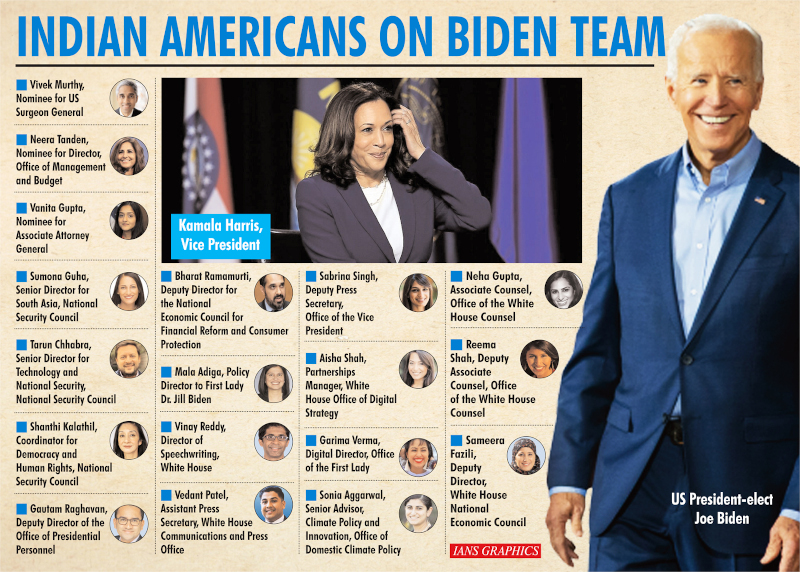
Brown in the Whitehouse
The Sindhi homeland of the “Dravidians”
 Peter Bellwood in First Farmers presents a hypothesis for the expansion of the Dravidian languages into southern India in the late Neolithic through the spread of an agro-pastoralist lifestyle through the western Deccan, pushing southward along the Arabian sea fringe. At the time I was skeptical, but now I am modestly confident that this is close to the reality.
There is always talk about “steppe” ancestry on this weblog. But there are groups that seem “enriched” from IVC ancestry, as judged by the Indus Periphery samples. The confidence is lower since we don’t have nearly as good a sample coverage…but I think I can pass on what we’ve seen so far: groups in southern Pakistan, non-Brahmin elites in South India, and some Sudra groups in Gujarat and Maharashtra, seem to be relatively enriched for IVC-like ancestry. Then there is the supposed existence of Dravidian toponyms in Sindh, Gujarat, and Maharashtra. And, their total absence in the Gangetic plain.
There have been decades of debate about Brahui. I’ve looked closely at Brahui genetics, and they are no different from the Baloch. Combined with evidence from Y chromosomes (the Baloch and Brahui have some of the highest frequencies of haplogroups found in IVC-related ancient DNA), I doubt the thesis they are medieval intruders (if they are, their distinctive genes were totally replaced).
Genetically, we know that some southern tribes, such as the Pulliyar, have some IVC-related ancestry. But other groups, such as Reddy in Andhra Pradesh, have a lot more. How does this cline emerge? My conjecture is that there were several movements of “Dravidian” people from Sindh and Gujarat into southern India, simultaneous with the expansion of Vedic Aryans to the north into the Gangetic plain. The region the Vedic Aryans intruded upon, Punjab, was not inhabited by Dravidian speakers. Like Mesopotamia, the Indus Valley Civilization was probably multi-lingual, despite broad cultural affinities developed over time.
The scions of the priest kings
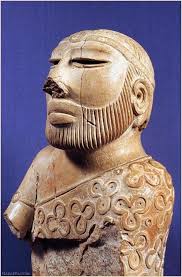 I was talking to a person of South Indian Brahmin origin today about their genetics. Over the course of the conversation, he showed me Y and mtDNA haplogroup types amongst his jati. The vast majority of the Y haplogroups were not R1a.
Brahmin groups in India seem to be about 15% to 30% steppe in their overall genome. But their Y chromosomes are usually 50% or so R1a1a-Z93. The lineage associated with Indo-Iranian pastoralists.
So what’s going on with the other haplogroups? For example, J2, L, C, G, and H?
From what I can see J2 and L are the next most frequent haplogroups after R1a1a-Z93. This tells us something. These are haplogroups found in ancient “Indus Periphery” samples. And, these two haplogroups are found at high concentrations in the northwest of the subcontinent.
It doesn’t take a {{{Brahmin}}} to connect the dots here. Some of the gotra as early as the Vedic period were almost certainly derived from high-status individuals in the post-IVC society. Warriors and priests in the fallen civilization of the IVC, which had likely degraded itself to a level of barbarism by the time the Indo-Aryans became ascendant.
I like to make jokes about “sons of Indra.” But let’s give the dasyu credit where it’s due: those Indians carrying J2 and L almost certainly descend from the men who build the great cities of yore. Their dominion was lost when their civilization fell, but they integrated themselves into the new order.
Open Thread – 1/16/2021 – Brown Pundits
What’s going on?
I have a 6000-word piece on Indian genetics coming out on my Substak in the next few days (waiting on some maps that were commissioned).
Update: The pieces (had to break into two) are ready to go. Part 1 today and part 2 tomorrow. I commissioned some simple maps and created an infographic. Since these will be “paid” (you have to subscribe), I’ll post the infographic for people here:
The material wages of caste
 When perusing Twitter I occasionally see arguments between the troll Araingang and contributors to this weblog on various topics. Many times I don’t really what the argument is about because I feel it’s deeply semantic.
So, for example, caste, varna, and jati. I know the dictionary definition of all this stuff and the various arguments. As an atheist, and someone who has “no caste” or varna or jati, I’m not very interested in theological arguments as to the origin of these concepts, their validity, and their application. Muslims for example can write 1,000-page books on Tawhid. I don’t care. What I care about is the application of Shariah law upon dhimmis and the heterodox. The rest is commentary.
In the 2000’s I read books such as Nicholas Dirks’ Castes of Mind: Colonialism and the Making of Modern India. The argument and evidence marshaled suggest that the raw materials of the caste system predate the British, but their system of manipulation, organization, and rationalization was critical.
Then, in the period after 2010, I began reading and analyze the genetic data. I was shocked at how clear and distinct varna and jati differences were. My friend Surya Yalamanchili sent me his DNA last year, and I asked him if he was Kamma. He had no idea what that meant, but the genetic evidence seemed persuasive to me from other people he clustered within my private data. He asked his mother, and she said “yes.” He was shocked. I was not.
The conclusion I draw from this, along with patterns such as higher steppe ancestry in “higher varna,” is that there are deep roots and structures to the inequality we see across the Indian subcontinent. It is possible that in fact, the jatis were “separate but equal.” But I doubt that just as I doubt the “peace” Islam imposed upon dhimmis was welcomed on the whole (in some cases, yes). Dalits in particular have very small effective populations. That means their genes show evidence of high levels of inbreeding because of incredibly small marriage networks.
This post is less about what I believe, then trying to understand what you know and believe. The genetic data is something I am familiar with. I work with it. The historical evidence I do not know. Were there Dalit kings? Were there long periods where Brahmins were subordinate as menial servants to Sudra jatis?
I understand that Hindus of a more progressive bent are uncomfortable with the association between caste and their religion and identity. Religion is what man makes it, and so I do not see its connection to Hinduism as necessary, ineluctable, and eternal. But, the impact of caste is so strongly stamped on the genes of so many Indians I cannot brush it away as a detail of history.