The memes reflected in our genes

One of the major findings from Narasimhan et al. is that when it comes to total ancestry, Brahmin groups are enriched in the groups which have more “steppe” ancestry than you’d expect (West Eurasian ancestry is a function of steppe + IVC). That being said, Narasimhan et al. could not find evidence that Brahmins are a monophyletic clade. What this means is that Brahmins do not descend from a common group of founders, but a heterogeneous ancestral population.

How can we reconcile the consistently higher steppe ancestry with the fact that Brahmins seem to have diverse origins?

I think the answer has to do with the social ecology of India and the Brahmin role within that ecology.

In the period between 2,000 to 3,500 years ago, there was considerable genetic and cultural heterogeneity within India. This heterogeneity and population structure were “broken” and reconfigured through significant admixture. For example, where Brahmins in Uttar Pradesh have 25-30% steppe ancestry, Dalits in Uttar Pradesh are closer to 5-10%. In South India castes such as Reddys also have steppe ancestry, in the range of 5% or so. This is indicative of the spread and admixture of steppe enriched people all across the subcontinent.

But the flip side of the spread of steppe ancestry is that steppe people themselves mixed with local groups. ~25% of the ancestry of Uttar Pradesh Brahmins is from indigenous “Ancient Ancestral South Indians.” This is above and beyond the AASI ancestry from the Indus Valley population (in contrast, the Jat Rors are ~10% AASI, and well above ~30% steppe). Brahmins in Bengal and Tamil Nadu are very distinctive from non-Brahmin populations, and in their overall genome more like Uttar Pradesh Brahmins, but, both populations clearly have ancestry from local groups (~25% of the ancestry).

The reasons for why populations lose their distinctiveness are straightforward. Endogamy is not perfect. But, I would hold that the cultural customs of endogamy are going to be more persistent and strict among ritual priestly castes. My hypothesis that the original Indo-Aryan populations were invariant in terms of ancestry fraction (steppe, IVC, AASI). But the non-priestly castes would not enforce endogamy so strongly, because their status was accrued and obtained through other means than ritual purity. For the Kshatriyas, for example, status is obtained through power and domination. For Vaishyas, it is through primary and secondary production. Both these groups intermarried with local people who were militarily and economically of high status. In contrast, there were no equivalents for the Brahmins, who were spreading a particular ideological self-conception.

This is not a universal explanation. That is one reason I allude to Jat Rors. But, I think it gets at why Brahmins stand out as being steppe enriched.

Extraction, a Bangladeshi view

A good review of the film Extraction by a Bangladeshi. The author perceives a pro-Indian and anti-Bangladeshi bias, which I didn’t really see, but your mileage may vary. But this part is of interest to me:

Extraction carries all the elements of the racist Islamophobic mindset: Muslims cannot run the state, they have many children, their economy is a criminal shambles, their country is uninhabitable, their leaders are outlaws, there is no human dignity anywhere. The colours of this Bangladesh are as yellow as the desert. In contrast, the views of Mumbai are full of turquoise light – neat, beautiful, and luxurious. Mumbai’s mafia child is capable of love; Tyler too is mourning the death of his child. Even villainous Saju has a beautiful family. These spices create empathy towards cruel protagonists.

Extraction was not Islamophobic. In fact, extraction seems to exist in a world where religion does not exist. Too often cultural criticism “fits” art into preexistent analytic frames. Some of the elements of Extraction are perfectly aligned with well-known motifs. Chris Hemsworth is a “Mighty Whitey” par excellence. But a Western watcher of the film would have no idea that Indians are mostly Hindu and Bangladeshis are mostly Muslim, and in fact, a Western watcher would not even know that these are religious people.

If I had to make an analogy, the Bangladesh depicted in the film seems most like the 1990s gangster-dominated Russia, with the aesthetic of 1990s Mogadishu.

The fundamental problem with a lot of modern criticism and analysis is to the fallback upon common arguments and analytic structures, which add nothing familiar, and simply reinforce the familiar.

Browncast Episode 99: Carl Zha on the new Cold War, and marrying a Hindu

Another BP Podcast is up. You can listen on LibsynAppleSpotify,  and Stitcher (and a variety of other platforms). Probably the easiest way to keep up with the podcast since we don’t have a regular schedule is to subscribe to one of the links above!

Since we started the Brown Pundits Browncast we’ve seen significant listener growth. This is really a hobby and labor of love, so I’m pretty pleased with how it turned out. Though it’s by the Brown Pundits, the topic isn’t always “brown.” That being said, there is a significant number of listeners in India (especially with the topic is more Indocentric).

Due to the costs of both recording software and storage space, I would appreciate if you could also support the podcast as a patron. The primary benefit now is that you get the podcasts considerably earlier than everyone else. It also compensates me for my admittedly mediocre editing (I’m a data scientist/geneticist). If we get more patrons I have reached out to have someone professional edit…but really we don’t have the funds now.

If you can’t give (in these times may cannot!), I would appreciate more positive reviews!

In this episode, I talk to Carl Zha, repeat guest on the Browncast, and host of the Silk and Steel podcast.

Since we’ve been having Carl on he has kind of become “a thing.” His Twitter account has shot up in followers, and Carl has gotten himself into multiple controversies. One of the major ones is whether Carl is an agent of Chinese intelligence. I ask him about this accusation.

Additionally, we talk about his new life in Bali, and the fact that he’s basically left the United States indefinitely. Carl is now marrying a Balinese woman, and he mentions that his mother-in-law was worried about his religion (since his grandmother was Buddhist his mother-in-law was mollified).

Finally, we discuss extensively the new “Cold War” that has begun over the past few months. A fun and serious conversation.

People of Indian ancestry need to learn things outside of India or they will sound stupid

At my other blog, The Decline Of Genocide And The Rise Of Rents. One of the comments is from someone with an Indian name:

The problem with the whitewashing of the islamic invasions of India is that first, nobody does that with the christian invasions of sub saharan Africa and even more so, central and South America and secondly, the genocides did not stop in the past.

I wonder how much of what the author wrote applied to the European conquests of central and south america where the aim was clearly to slaughter and convert.

Since the commenter is parochial, they don’t know about the Spanish Black Legend, which was an Anglo-Protestant propaganda effort to argue that the Catholic Spaniards were particularly cruel and evil. The reality is that the aim was to convert, but, it was also to turn the indigenous peasantry into sources of rents for the Spaniards, who were keen on living like aristocrats in the New World. The demographic collapse of the indigenous population prevented some of that and necessitated the importation of African slaves.

Why was there a demographic collapse? It wasn’t really the Spaniards killing the native people in large numbers (in fact, the conquest of America occurred with the large-scale cooperation of indigenous allies). Rather, it was disease, as outlined in Charles C. Mann’s 1491.  If you look at the comment about, you will notice a peculiar contradiction in the idea that one would want to “slaughter and convert.” Winning souls usually entails keeping them alive!

Henry Kamen’s Empire: How Spain Became a World Power, 1492-1763, the author outlines the contrasting case of what has become the Phillippines. Here Spaniards and mestizos were a tiny minority, and the indigenous peoples were the overwhelming majority, with a large number of Chinese engaging in trade. Why the difference? Because the Spaniards did not bring disease that were particularly impactful on the people of the Phillippines, and on the contrary, tropical climates in Asia were not healthful for Europeans. The mortality rate for the Dutch East India Company in Batavia was incredibly high, as Southeast Asia served as a great mortality maw for young men from the Netherlands and Germany for generations.

The contrast with Africa is the most extreme. Fatal disease meant that the European presence in Sub-Saharan Africa was constrained to isolated fortifications and trading center on the coast for centuries. The reason Africa was “dark” was that even after all this time much of it was unexplored into the 19th century. If you look at biographies of the “Arab slave traders” from this period you will observe that many were of predominant black African ancestry. The primary, but not exclusive, reason for this difficulty of conquest and domination was malaria. The introduction of quinine opened up the continent to Europeans and resulted in the scramble for Africa.

Though some European missionaries did come to continent with colonialism, in most places mass Christianization occurred after the end of European rule. It was driven by native Christians and often spread fastest among groups that were located adjacent to Muslims. Christianity was seen as a bulwark of the native culture against Islam,* which Vodun and other indigenous beliefs exhibited little resistance (it is a peculiar fact that “public paganism” persists in West Africa, but not in East Africa, where tribal religions are much more rural and marginal phenomenon).

What can this tell us about India? As I have posted at length, it testifies to the power and strength of native Indian religious ideas and systems. Though Hindus say they are “pagan”, they are not pagan like African pagans. Or pagans like the people of highland Southeast Asia, or the New World. Or Classical Antiquity. Muslim rulers dominated the region around Delhi from 1200 to 1770, but 80-90% of the people in the region remained non-Muslim at the end of this period!

And yet 30% of subcontinental people are now Muslim. They are concentrated on the margins, in the far west and far east. What does this tell us?

A standard model presented is that slaughter and mass-killings resulted in the shift of religion at the point of the sword. Were Muslims particularly brutal in the west and the east? More brutal in eastern Bengal than western Bengal? More brutal in southeast East Bengal than northern East Bengal?

The idea of an exceptionally violent and brutal occupation is promoted and encouraged by many factors. First, many Muslims in the past and even actually like the idea that the Turks and Mughals were particularly vicious and zealous. The Turks themselves had an interest in portraying themselves as such ghazis converting pagans at the point of the sword. For Hindus, the conversion of marginal, liminal, and low caste communities to Islam of their own free will is not something one would want to address, because it points to “push” factors within Hindu society. Defection says something about the group from which you defect.

Finally, there is the reality that the Muslims did engage in forms of cultural genocide. The destruction of temples, the selective targeting of the religious, the imposition of an alien Persian high culture, are all true things that occurred in a Hindu India.

Note: I may just delete a lot of comments on this post if they don’t meet my standard. Just warning.

* The attraction of highland Southeast Asians to Christianity has the same tendency: they see it as a bulwark against absorption into lowland Buddhist culture.

AASI Y chromosomal lineage: haplogroup C


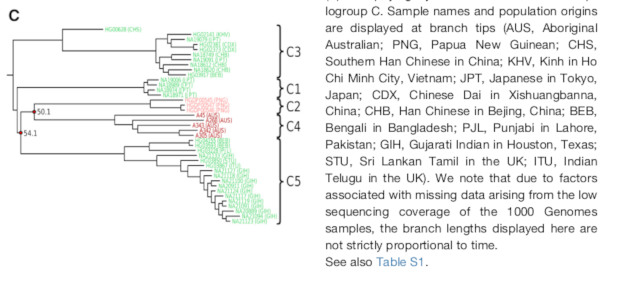
There was a conversation in the comments about which Y chromosomal lineages clearly descend from “Ancient Ancestral South Indians,” the people who have strong affinities to the eastern wave out of Africa. Though Y chromosomal lineage H is strongly localized to South Asia, it seems to have deep Pleistocene connections to West Asia, so that is not a clear candidate. Many “eastern” Y haplogroups have connections to East Asians, so it is not often clear which of the others might be AASI.

Reading a paper on Australian Aboriginal genetics clarified things. Many South Asian groups with no East Asian ancestry carry Y haplogroup C (e.g., Patels), which diversified 50,000 years ago between Australian/Papuans and Indians. This is clearly a reflection of deep-time connections across southern Eurasia and into Oceania.

Browncast Episode 98: Covid-19 India status update, May 5th

Another BP Podcast is up. You can listen on LibsynAppleSpotify,  and Stitcher (and a variety of other platforms). Probably the easiest way to keep up with the podcast since we don’t have a regular schedule is to subscribe to one of the links above!

Since we started the Brown Pundits Browncast we’ve seen significant listener growth. This is really a hobby and labor of love, so I’m pretty pleased with how it turned out. Though it’s by the Brown Pundits, the topic isn’t always “brown.” That being said, there is a significant number of listeners in India (especially with the topic is more Indocentric).

Due to the costs of both recording software and storage space, I would appreciate if you could also support the podcast as a patron. The primary benefit now is that you get the podcasts considerably earlier than everyone else. It also compensates me for my admittedly mediocre editing (I’m a data scientist/geneticist). If we get more patrons I have reached out to have someone professional edit…but really we don’t have the funds now.

If you can’t give (in these times may cannot!), I would appreciate more positive reviews!

In this episode, I talk to Kushal Mehra, the Carvaka, about what’s going on in India.

The Persian captivity

I have long suggested to readers of this weblog to inform themselves of the histories of peoples outside of the Indian subcontinent to understand better broader human dynamics and get out of the box of parochialism. But, the comments of this weblog don’t suggest that many are taking me up that advice.

Let’s start with the depredations of nomadic Central Asian peoples that the Indian subcontinent has been subject to, starting with the Indo-Aryans, down to the Afghan invasions of the 19th century. There is an attitude that this is sui generis in some fashion. But it’s not. Most of Eurasia has been subject to the predations of the pastoralist peoples. In Strange Parallels: Volume 2, Mainland Mirrors: Europe, Japan, China, South Asia, and the Islands: Southeast Asia in Global Context, c.800–1830, the author argues that Southeast Asia, Japan, and Western Europe were protected from these incursions due to their geography, and so were allowed a cultural continuity which was ideal for the formation of nation-states.

This is in sharp contrast with the Islamic world. Though I am skeptical of the idea that the first Arabs conquerors of the Near East were nomads (I think they were residents of the cities of the Levantine liminal fringe), the Turks definitely were. Arriving as slave soldiers in the 9th century, after 1000 AD Turkic dynasties were dominant through the Muslim world for nearly 1,000 years. Reza Shah Pahlavi’s ascension in the 20th century broke the long history of the rule of Iran by men who were not Iranians of Iran.

And yet the spread of rule by Turkic dynasties was associated with the spread of Persian high culture, not its diminishment. As outlined in The Persianate World: The Frontiers of a Eurasian Lingua Franca, the three early modern Muslim polities of the Ottomans, Safavids, and Mughals, were ethnically Turkic in their self-conception but patronized and facilitated Farsi as a language of administration and culture.

They came, they conquered, & they were swallowed

A reader sent me a post they wrote, The Aryans were Invasive to India:

The Aryan Migration into India was invasive; characterized by violent conquest, rape, racism, and religious supremacy. This was not a unique phenomenon in the premodern era, but a relatively standard episode that would ensue when two different tribes had to struggle over the same resources.

The Sanskrit-Vedic culture spread over India by Aryan conquest was likely not significantly influenced by native Indian traditions. That being said, Indian traditions certainly did work their way into later expressions of Hinduism, particularly after the rise of Buddhism, and the resulting reformations the latter faith affected in the former.
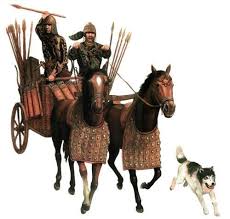
They asked for my opinion. I agree with many of the aspects of the piece. There is something of an attempt, in my opinion, to downplay the coercion and violence that were part of the expansion of many Y chromosomal lineages, groups of males, ~4,000 years ago. In fact, the author of the above piece probably overestimates the fraction of Aryan mtDNA in India; most West Eurasian lineages in South Asia are probably from West Asian, not the Sintashta.

The violent conquest and rape are probably correct. There are details though that need to be clarified. I suspect the violent conquest was of the shadows and ruins of the Indus Valley societies. The Aryans were barbarians who arrived in a barbarized world. As far as rape goes, modern Americans would define the act of killing a woman’s brothers and fathers and taking her as a bride rape, but it was quite normal in the ancient world. The dramatic arc of Achille’s sulking in the Iliad is triggered by the fact that Agamemnon took his sex slave.

But I think racism and religious supremacy are terms I would avoid. The reason is that there is generic racism, which is pretty typical, and historically contingent, embedded and systematized racism developed in the 19th century in the West. This is what casts a shadow over us today. But racism in the premodern world was different. It is well known that in early Anglo-Saxon England the local British population were second class citizens. We know this because the fine for killing a Briton was less than a fine for killing a Saxon of the same class. But, we also know genetically and culturally that many Britons assimilated into Anglo-Saxon culture and become English. The lineage of Alfred the Great, who “saved” Anglo-Saxon England from the Danes, seems to have been one of Brythonic warlords who were Anglicized. Many of the early members of the House of Wessex had Celtic names.

The second issue is religious supremacy. There is a particular type of religious exclusion, supremacy, and ideology, that is common in the modern world, and dates to the last few thousand years. Let me quote from a 2005 article in The New York Times:

Next door to four houses flattened by the tsunami, three rooms of Poorima Jayaratne’s home still stood intact. She had a ready explanation for that anomaly, and her entire family’s survival: she was a Buddhist, and her neighbors were not.

“Most of the people who lost relatives were Muslim,” said Ms. Jayaratne, 30, adding for good measure that two Christians were also missing. As proof, she pointed to the poster of Lord Buddha that still clung to the standing portion of her house.

This is a way of thinking that makes sense in light of universal meta-ethnic religions which have flourished over the past few thousand years. During the Bronze Age, such religions did not exist. Rather, religion was to a great extent an extension of tribal custom and practice. The destruction of the idols of one’s enemies was part and parcel of violence against the enemy, not a particularly religious act. It is a cliche in anthropology that many primitive tribes refer to their own people as “human”, and other peoples as non-human. But this reflects a reality that premodern humans were quite ethnocentric. But they were not racist or religious supremacists in the fully-fleshed way we would understand that today, so I would be cautious about using these terms.

The final point about Sanskrit-Vedic culture being mostly exogenous, I disagree with this. The essay doesn’t really provide much evidence but makes a general argument. I have read some of the Vedas, and much of it does seem to resemble generic Indo-European barbarism. But there are clear differences and distinctions which indicate non-Indo-European uptake. It is quite like that southern Indo-Iranians learned soma/homa from the Bactria-Margiana culture. Those who know tell me that Vedic Sanskrit already shows strange influences that are probably broadly Indic. The most famous one being the retroflex consanant:

Retroflex consonants are concentrated in the Indian subcontinent, particularly in the Indo-Aryan and Dravidian languages, but are found in other languages of the region as well, such as the Munda languages and Burushaski. The Nuristani languages of eastern Afghanistan also have retroflex consonants. Among Eastern Iranian languages, they are common in Pashto, Wakhi, Sanglechi-Ishkashimi, and Munji-Yidgha. They also occur in some other Asian languages such as Mandarin Chinese, Javanese and Vietnamese.

Narasimhan et al. show that the BMAC people didn’t have a genetic impact on the Indo-Aryans who arrived in India, but they were culturally influential. Similarly, it seems quite likely that the various eastern Iranian/northwest Indian populations were also influential and integrated into the Indo-Aryans. As I have pointed out before, the figure of 30% “steppe” refers to Sintashta ancestry. It is quite plausible that the Indo-Aryans who arrived in India had already mixed with various eastern Iranian peoples in Khorasan and modern Afghanistan, before arriving in India.

The idea that Jainism and Buddhism were indigenous reactions to Aryan Brahmanical religion is common and widely asserted. The Shramanic sects are often assumed to be non-Aryan cultural revolts. I no longer believe this. Rather, I think a more philosophical and transnational religion naturally emerges out of complex societies. My argument is closer to a Marxist one than an ethnic one. The Vedic religion was not fundamentally viable in anything more than fossil form once India’s Iron Age polities arose. It maintained some archaisms from the steppe period, and, it was suited for a semi-mobile agro-pastoralist society.

Browncast Episode 97: Extraction!

Another BP Podcast is up. You can listen on LibsynAppleSpotify,  and Stitcher (and a variety of other platforms). Probably the easiest way to keep up with the podcast since we don’t have a regular schedule is to subscribe to one of the links above!

Since we started the Brown Pundits Browncast we’ve seen significant listener growth. This is really a hobby and labor of love, so I’m pretty pleased with how it turned out. Though it’s by the Brown Pundits, the topic isn’t always “brown.” That being said, there is a significant number of listeners in India (especially with the topic is more Indocentric).

Due to the costs of both recording software and storage space, I would appreciate if you could also support the podcast as a patron. The primary benefit now is that you get the podcasts considerably earlier than everyone else. It also compensates me for my admittedly mediocre editing (I’m a data scientist/geneticist). If we get more patrons I have reached out to have someone professional edit…but really we don’t have the funds now.

If you can’t give (in these times may cannot!), I would appreciate more positive reviews!

In this episode, I talk to my friend Sagar about the film Extraction, with Chris Hemsworth. It’s a short podcast, but fun and casual if you want to take a break from coronavirus (though I do ask Sagar about coronavirus in Finland).

Brown Pundits