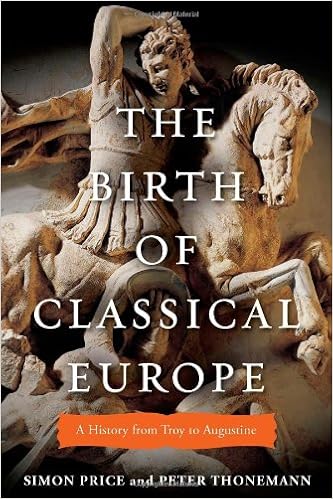
This book is a great review of the rise and fall of classical Europe, from the earliest civilizations in Crete and Greece to the fall of the Roman Empire and the rise of Christianity. The authors are professional historians and remarkably free of either Left or Right wing cant. They provide an excellent summary of the rise of Mediterranean civilization and the origins of the notion of Europe. They manage to pack a remarkable amount of facts into this book, including quantitative data where possible (“X percent of all crockery at this site changed from Greek to Etruscan between Y and Z years” kind of thing). Greco-Roman nerds will know many more details obviously, but even they will not be disappointed with how much information and perspective the authors can fit into a small space. Well worth reading.
Category: Omar Ali
The Role of the Ahmediyya Movement in Kashmir
From Dr Hamid Hussain
20 December 2019
I wrote a piece about recent changes in Kashmir. While working on the background, I stumbled on an interesting chapter of Kashmir & Pakistan history that I have never seen in any mainstream publication. I decided to dig a more deeper to understand it better. Following is the outcome of that exercise. I thought it was important for those interested in the history of the region. Enjoy.
Regards,
Hamid
Ahmadis and Kashmir
Hamid Hussain
“Independence of Kashmir can only be achieved by Kashmiris. Outsiders can only help in two ways; with financial support and by advocating their cause. Kashmiris should forget that outsiders will fight their war. Such outside help will not be useful; in fact, it will have opposite effect on the struggle for independence. If control of the struggle is in the hands of outsiders, it is possible that they will sell Kashmiris for their own interests. It is in the interest of Kashmiris that they should get advice as well as financial help from outsiders but never ask them to come and fight their war in Kashmir. In this case they will lose control. Long term sacrifice and not temporary emotional outburst will serve their cause and long term sacrifice can only be done by Kashmirisâ. Head of Jamaâat Ahmadiyya, Mirza Bashir Uddin Mahmud, 27 September 1931
Jamaâat Ahmadiyya is a sect founded by Mirza Ghulam Ahmad (1835-1908). In early twentieth century, it was a small community with disciples mainly from Punjab; the birthplace of the founder. There was much hostility against the group in view of doctrinal differences especially when Mirza claimed to be Messiah and prophet. Agitation of orthodox clerics over decades finally culminated in an unprecedented act where Pakistanâs parliament declared the sect non-Muslim in 1974. This started a wave of persecution forcing many Ahmadis to leave the country and find refuge all over the world. General hostility including outright abuse against the group is at such an abnormal state that it is impossible to have any kind of meaningful discourse about the role of Ahmadis in Kashmir as well as independence movement of Pakistan. This part of the history disappeared from almost all historical works in Pakistan.
Kashmir was a Muslim majority princely state ruled by a Hindu Dogra ruler. Kashmiri Muslims were economically poor and politically powerless. Muslims of neighboring Punjab, many with Kashmiri heritage were concerned about the plight of Kashmiri Muslims. In 1911, they established All India Kashmiri Muslim Conference (AIKMC) in Lahore. This organization remained only on paper with no connection with Kashmiri Muslims and no program. In the summer of 1931, simmering discontent in Kashmir resulted in riots. On 25 July 1931, leading Muslims mainly from Punjab gathered at Simla and established All India Kashmir Committee (AIKC). The list of attendees of this meeting included literary and intellectual powerhouse Sir Muhammad Iqbal, head of Ahmadiyya community Mirza Bashir Uddin Mahmud Ahmad, leading Punjabi politician Sir Mian Fazal Hussain, Nawab of Maler Kotla Sir Muhammad Zulfiqar Ali Khan, Nawab of Kanj Pura Ibrahim Ali Khan, leading cleric of Delhiâs Barelvi community Khawaja Hassan Nizami and a former teacher of the leading orthodox Sunni seminary Darul-Uloom Deoband Maulvi Mirak Shah. Fazal Hussain wanted Iqbal to head the organization but on recommendation of Iqbal, Mirza Mahmud was unanimously chosen as president of AIKC. Muslims of different walks of life were members of AIKC including politicians affiliated with different parties, lawyers, educationalists, landed aristocracy, clerics from different schools of thoughts, journalists and businessmen. At no other time, such a consensus developed among diverse Muslim population of India. Continue reading The Role of the Ahmediyya Movement in Kashmir

Sangat and Society: the Sikh remaking of the North Indian Public Sphere
[Author’s note: With the celebrations of Guru Nanak’s 550th Anniversary and the opening of the Kartarpur Corridor being in the news, this is an opportunity for discussing the importance of the Sikh message, not just from a religious perspective – for Sikhs – but for Indian history. This article places the founding of Kartarpur, and Guru Nanak’s message, in a historical context – juxtaposing it with Babur’s founding of the Mughal Empire.]
I. Turning of the Wheel: Baba Nanak and Babur
In 1519, Babur invaded India – âever since coming to Kabul we had been thinking of a Hindustan campaign, but for one reason or another it had not been possible,â he writes in the Baburnama (translated by William Thackston, see pp 270-280). For some time his armies had been campaigning on the frontiers of the Hindu Kush, but these campaigns had yielded ânothing of consequence to the soldiersâ. So, he turned to Hindustan. In the next few months, despite dogged resistance by the Afghans, Gujjars and Jats of the upper reaches of the Jhelum and Chenab, northern Punjab was subjugated, and plundered, by Baburâs armies. Babur himself spent most of his days inebriated, contemplating the legacy of Timur and setting poems to rhythmic metres. While his next great invasion of Punjab would come few years from then, in this interregnum, Punjab burned.
Among the towns and villages devastated was the settlement of Sayyidpur.
It was not long after Baburâs march of death through Punjab that Guru Nanak returned home from his western voyages – to Mecca, through Baghdad, Masshad, Khurasan, to Kabul, Peshawar, and, finally, to Sayyidpur. To the house of a humble carpenter, Bhai Lalo (Janam Sakhi Parampara by Kirpal Singh, pp 138-140). Continue reading Sangat and Society: the Sikh remaking of the North Indian Public Sphere
Browncast episode 76: Sham Sharma and Mukunda Raghavan
Another BP Podcast is up. You can listen on Libsyn, iTunes, Spotify, and Stitcher. Probably the easiest way to keep up the podcast since we donât have a regular schedule is to subscribe at one of the links above.
You can also support the podcast as a patron. The primary benefit now is that you get the podcasts considerably earlier than everyone else.
Would appreciate more positive reviews! Alton Brownâs âBrowncastâ has 30 reviews on Stitcher alone! Help make us the biggest browncast there is!

In this episode we talk to youtuber Sham Sharma (he hosts the Sham Sharma show on youtube). We are also joined by past guest Mukunda Raghavan, master of Meru Media. We talk about Indian civ, Hindutva, Muslims, Dexter Filkins and all sorts of fun stuff.

The “Same Page” saga..
Original article by Gen Asad Durrani. Comments in red by Dr Hamid Hussain. Additional comments in blue by Major Amin.
LG Asad Durrani views and my two cents in red.
Regards,
HamidÂ
The Same Page Saga
Lt Gen Âź Asad Durrani
The Chief of Army Staff in Pakistan is not just another head of service, nor is he, strictly speaking, a âchief of staffâ; the designation that the late Prime Minister Zulfiqar Ali Bhutto believed would deny the man on the horseback the clout to take over the Country. His assumption went ruefully wrong when Zia-ul-Haq, his handpicked COAS, not only putsched but also hanged him. In âPakistan Adriftâ, an account of my journey through the corridors of power, I have tried to assess the militaryâs role in the Countryâs polity and an army chiefâs special status in the power matrix â in which he often played the ultimate arbiter. For people like me therefore the commotion over the present incumbentâs service extension in the last week of November came as no surprise. The following chronicle however is not about any technicalities of the issue at hand, but about the algorithm of this game of thrones. Continue reading The “Same Page” saga..
Browncast episode 74: Maratha Bro Amey Talks Immigration, Ayodhya, etc
Another BP Podcast is up. You can listen on Libsyn, iTunes, Spotify, and Stitcher. Probably the easiest way to keep up the podcast since we donât have a regular schedule is to subscribe at one of the links above.
You can also support the podcast as a patron. The primary benefit now is that you get the podcasts considerably earlier than everyone else.
Would appreciate more positive reviews! Alton Brownâs âBrowncastâ has 30 reviews on Stitcher alone! Help make us the biggest browncast there is!
On this episode Razib talks to our resident Maratha philosopher, Amey, discussing US immigration, Ayodhya and whatever else comes up.

Browncast Episode 73: Conversation with Sadanand Dhume
Another BP Podcast is up. You can listen on Libsyn, iTunes, Spotify, and Stitcher. Probably the easiest way to keep up the podcast since we donât have a regular schedule is to subscribe at one of the links above.
You can also support the podcast as a patron. The primary benefit now is that you get the podcasts considerably earlier than everyone else.
Would appreciate more positive reviews! Alton Brownâs “Browncast” has 30 reviews on Stitcher alone! Help make us the biggest browncast there is!
We chat with American Enterprise Institute’s Sadanand Dhume (who also writes for the Wall Street Journal) about Konkani Brahmins, Hindutva, Ram Mandir, Babri Masjid, Indian culture wars and anything else that comes up.
Browncast 72: Conversation with Salman Rashid
Another BP Podcast is up. You can listen on Libsyn, iTunes, Spotify, and Stitcher. Probably the easiest way to keep up the podcast since we donât have a regular schedule is to subscribe at one of the links above.
You can also support the podcast as a patron. The primary benefit now is that you get the podcasts considerably earlier than everyone else.
Would appreciate more positive reviews! Itâs been a really really long time that weâve been on 30 iTunes positive reviews. I notice that Alton Brownâs Browncast has 30 reviews on Stitcher alone! Help make us the biggest browncast there is!

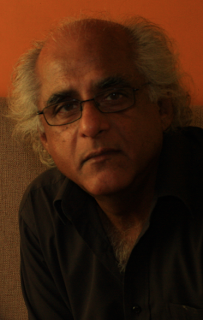
In this episode we talk to Salman Rashid. Salman is an ex-army man who left the army to become a travel writer. He has written 10 books and countless articles, most of which can be found at his blog odysseuslahori. We talk about partition, Pakistan, history, Alexander the Great and whatever else comes up..
\
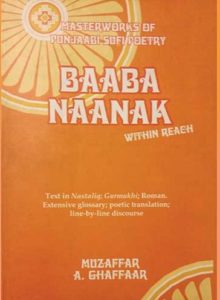
Baba Nanak Within Reach, by Muzaffar Ghaffar
A short introduction to the work of Muzaffar Ghaffar, who has published 30 volumes of classical punjabi poetry with detailed explanations and translation. Written by Punjabi writer Nadir Ali (who happens to be my father)
Muzaffar Ghaffar on Guru Nanak
BAABA NAANAK Within Reach – in MUZAFFAR GHAFFARâS series âMasterworks of Punjabi Sufi Poetryâ
Publisher :Ferozsons (Pvt) LTDÂ Â Â Â Â Â Pages :Â 435Â Â Â Â Â Â Â Price : Rs 1095

In the cultural wasteland that is our homeland these days, to be a man of culture doesnât take much effort; you do some literary chit chat or somehow get your name printed with some work people assume as cultural or creative and you become a cultural or literary figure! Having known Muzaffar Ghaffar for over thirty years, he is an honourable and notable exception to this superficial trend. He came to Pakistan with his savings and a couple of books in print, a book of English verse which has had a couple of editions published and a book On How a Government is Run . In my involvement with Punjabi we came together in the weekly âSangatâ in readings of Punjabi classic poetry held at the residence of Najm Hosain Syed and Samina Hassan Syed and I have had the pleasure of knowing him for over 30 years now.
A digression first: Najm Sahib is already famous in Punjabi literary circles in both East and West Punjab. To give you some idea I often quote a well-known Sikh scholar of Punjabi who was Head of Punjabi Department at Guru Nanak University, Amritsar. He said, âThere are two categories of Punjabis â those who have studied Mr. Najm Hosain Syed and those who have not; those who have not read him do not know much about Punjabi language or literature!â To those not familiar with Mr. Najm Hosain Syedâs work, this may sound like an exaggeration. But having attended weekly meetings at his house for nearly forty years and having read his poetry and books on literary criticism, plays and poetry, I venture to share this remark. There are almost forty books of verse and landmark works of literary criticism and four books combining half a dozen plays in Punjabi to his credit. He keeps his books small so that the price remains within reach of Punjabi readers. “Recurrent Patterns in Punjabi Poetry” is his masterwork and the full text is online at apnaorg.com.Â
Najm is Muzaffarâs guide and inspiration for the thirty volumes of the âWithin Reachâ series on Punjabi Classical poetry that are available to date, all in English. But neither in the US, nor in England and rest of English speaking world abroad have I seen these books in the market, although Punjabi literature is taught in many places in institutes of repute in these countries, with considerable Punjabi speaking public. Nor do I know of anyone abroad who talks of these books. In particular the worth and value of this remarkable volume âBaaba Naanak Within Reachâ on Baba Nanakâs poetry is incalculable, and it is our enormous loss that this work of M. Ghaffar remains largely unknown. Continue reading Baba Nanak Within Reach, by Muzaffar Ghaffar
The Ram Mandir Verdict in India. From Dr Hamid Hussain
From Dr Hamid Hussain. Dr Hamid is what might be described as a “secular” or “liberal” Muslim. These are his personal thoughts on the Ram Mandir judgement.
11 November 2019
 Someone had sent me excerpts of Spinozaâs God a day before the Indian supreme court verdict. I was pondering over those words when I was asked about my comments. Following was the result and all credit goes to Spinoza.
âIf you are desirous of obtaining a great name, of becoming the founder of a sect or establishment, be completely mad; but be sure that your madness corresponds with the turn and temper of your age. Have in your madness reason enough to guide your extravagances, and to not forget to be excessively opinionated and obstinate. It is certainly possible that you may get hanged; but if you escape hanging, you will have altars erected to youâ.   Voltaire (1698-1778)
 Regards,
Hamid
 Babri Mosque Verdict
Hamid Hussain
 âThe toughest kind of forgiveness is self-forgiveness and the road that leads to it is a lonely one but is also where mad meets the divineâ.  (1)Â
On November 09, 2019, Indian Supreme Court announced its judgment about the long standing dispute between Hindus and Muslims about a religious site in Ayodhya. Muslims claim that a mosque has been at this place since sixteenth century. Hindus claim that it was built on the site of a Hindu temple. The place has been locked since 1949 for fear of threat to public order. On 06 December 1992, a Hindu mob demolished the mosque resulting in riots that resulted in death of over 2000 people. After a three decades court battle, court awarded the site to Hindus to build a temple explaining that the sixteenth century mosque was built on the ruins of a Hindu temple. Continue reading The Ram Mandir Verdict in India. From Dr Hamid Hussain