Reflections on Nadir Shah’s exploits in India

Last year marked the 280th anniversary of Nadir Shah’s invasion of the city of Delhi – an event as catastrophic as the invasion of the city by Timur in 1398.

It is worth reflecting on this remarkable event in early 18th century – an episode that underscores the perils of a weak state.
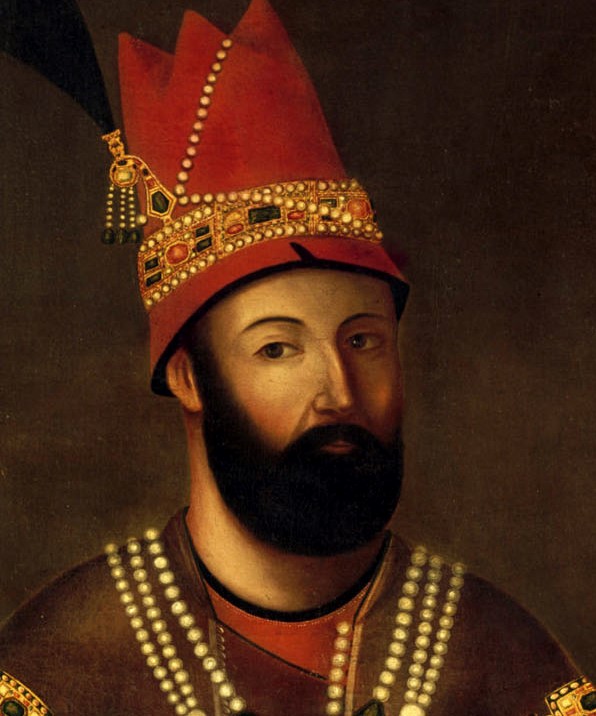
Source : wiki images

State of the Empire in the 1730s

What’s remarkable about this invasion is that it happened barely 32 years after the death of Aurangzeb in 1707 – a time when the Mughal Empire was still very formidable and pan Indian in extent (albeit a tad over-extended). By 1739, the decline of the empire was well underway. The Mughal emperor at the time of Nadir Shah’s assault was Muhammad Shah, Aurangzeb’s great grandson.

Now it is well known that Aurangzeb was just the 6th Mughal emperor, between 1526 and 1707. But Muhammad Shah who ascended the throne in 1719, was the 12th!

So you had six new emperors in the ten years following Aurangazeb’s death – as many emperors as the number between 1526 and 1707 – a commentary on the chaos at the head of the empire in the years succeeding Aurangzeb.

Now let us do a quick summary on the state of the region just before Nadir Shah’s assault –

  • Bengal was already semi-independent, with Murshid Quli Khan becoming the first Nawab of the region circa 1720.
  • Avadh was on its way to autonomy with Saadat Khan becoming its first Nawab in 1722.
  • The Marathas were clearly in the ascendant. By 1737, they had gained tax collection rights in Deccan, Gujarat, Bundelkhand. In 1737, two years before Nadir Shah’s raid, Baji Rao attacked Delhi and scored a remarkable victory – despite having an army half as large as the Mughals. Post the battle of Delhi, Malwa was ceded by the Mughals to Baji Rao’s Marathas. In 1738 on the eve of the Nadir Shah invasion, the Mughal crown was already weakened considerably.

The other point to note is that even after 2 full centuries of Mughal rule, the nobility of the land was largely foreign born. So power was wielded by men who felt no patriotism for India, and had no affinity to the traditions and culture of the land.  Let’s take some examples –

      • Nizam Ul Mulk, perhaps the most influential noble in early 1700s, was of Uzbek ancestry. His grandfather had migrated from Samarkhand
      • Saadat Khan, the Nawab Avadh, was a native of Nishapur (north eastern Iran), who had moved to India in early 1700s

This goes contrary to the perception pushed by many historians today that Mughals shouldn’t be regarded as foreigners as they were “thoroughly assimilated” and “rooted” in the Indian soil. Hardly the case.

The foreign origins of much of the creme-de-la-creme of the nobility meant a somewhat weak affinity to the land, and susceptibility to treason against the state. Saadat Khan in fact later advised Nadir Shah to assault Delhi, and ask for a large ransom.

Now let’s examine the situation in Persia in the decades leading up to Nadir Shah’s invasion of India.

The Safavid empire ended in 1722 following an Afghan rebellion. But this proved shortlived, with Nadir Shah defeating the Afghans and establishing his rule over Persia starting 1736.

With respect to Afghanistan – Mughals had lost Southern Afghanistan (including Qandahar) to Persia in the mid 1600s. However they retained control of Kabul / northern parts of the country.

Right from the start of his reign, Nadir evinced great interest in the Mughal Empire. He could see the waning power in Delhi as an opportunity. Also the Persian hold over Qandahar meant a strategic advantage for Persia, lost to the Mughals for nearly a century.

Failed Diplomatic efforts

What’s interesting though is that Nadir didn’t simply launch an assault on India with a savage horde. He engaged in extensive diplomacy, with multiple communications with Mughal crown!

E.g. in 1736, Nadir Shah sent an envoy to Delhi, informing of his intent to expel Afghan rebels from Qandahar, and requesting that the Mughal power in Kabul should obstruct these Afghans and not give them refuge. The Mughal emperor Muhammad Shah responded agreeably. But when the expulsion of Afghans happened from Qandahar in early 1737, the Afghan rebels did flee to Kabul. The Mughals breached on their promise!

When Nadir Shah sought an explanation for this breach through an envoy, Delhi gave him no reply. And on top of that detained the Persian envoy!

Even communication between Delhi and Kabul was terribly slothful! When the Mughal governor in Kabul sought funds for his troops, his repeated requests were turned down by Muhammad Shah the emperor. So clearly you had a situation when the frontier regions of Afghanistan and Punjab grew gradually defenceless through neglect, at a time when Persian power under Nadir Shah was on the rise.

This was an empire waiting to be assaulted.

The Battle at Karnal

Nadir conquered Northern Afghanistan in 1738. Peshawar and Lahore soon followed. Then the Shah marched to Karnal, where a decisive battle awaited him. In the great battle that ensued at Karnal (February 1739), the Persian army numbered at 55K cavalry. The Mughal army was likely larger, but heavily reliant on elephants – a ponderous and outmoded carrier.

What’s also remarkable is that the Mughal armies took for ever to assemble at Karnal! Saadat Khan, the noble from Awadh, took a whole month to arrive with his troops in Karnal.

It took him 3 days to travel from Delhi to Panipat – a mere distance of 55 miles! This is in sharp contrast to the blitzkrieg raids that Marathas were undertaking elsewhere in India at the same time. The Mughal army (in part perhaps because of its reliance on elephants) was not mobile enough. Not nimble enough.

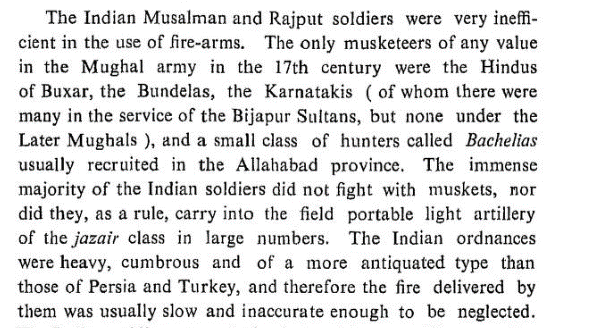
The other major difference was in the familiarity and comfort with fire-arms. The Persian army revelled at fire-arms. The Mughal army still relied a great deal on swordsmanship and “felt a contempt for missile weapons” (to quote Jadunath Sarkar)

Here’s Sarkar elaborating on the Indian inefficiency at fire-arms
So the result at Karnal was a resounding victory for Nadir Shah. But what followed was not a raid on Delhi rightaway, but extensive negotiations for peace!  This included face-to-face conversations between Nadir Shah and the Mughal emperor Muhammad Shah at the Persian camp near Karnal.

Negotiations post battle

Here’s an account from Sarkar drawing on the primary sources of Harcharan, Anandram et al on the first meeting between Nadir Shah and Muhammad Shah.
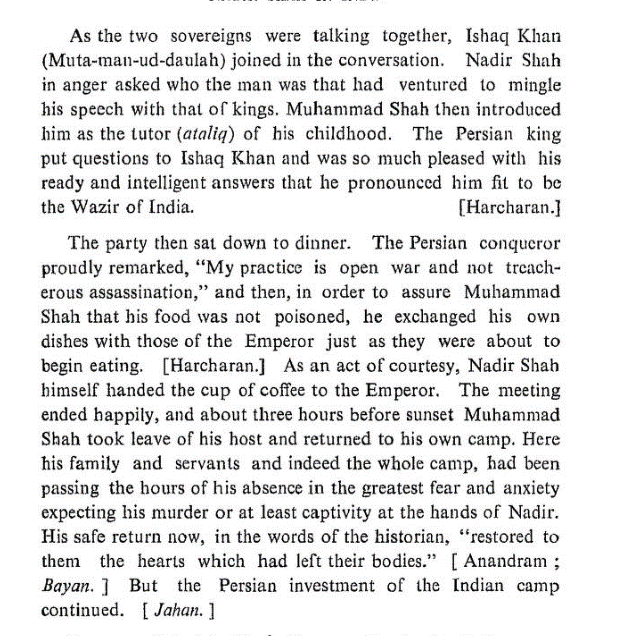
But the emperor reneged on his word and did not pay the requested ransom of Rs 20 crores! This angered Shah and eventually led to a second meeting with the emperor and the latter’s house-arrest

Raid on Delhi

What followed was the famous raid on Delhi, which lasted about 50 days. But a point to note is that the provocation for this trigger came from the Mughal side. Saadat Khan in particular – the Nawab of Oudh.  While Nadir originally had an indemnity of 50 lacs in mind, it was Saadat who told Nadir after the Karnal battle, that if he were to go to Delhi, he could get 20 crores! As opposed to 50 lacs.

Nadir’s raid on Delhi was focused mainly on collection of ransom. Not just from the treasury, but also from private mohallas, with the consent of the Mughal emperor. But he did not intend to engage in a massacre. What triggered the massacre was an uprising in Delhi against the stationed Persian soldiers. Some 3000 Persian soldiers were killed by Delhi-ites. Nadir had to retaliate with a massacre, which likely claimed some 20K Delhi civilian lives in a span of a few hours. This is a conservative estimate, with other estimates as high as 4 lacs.

Consequences and Takeaways

So that brings us to the end of this brief account of Nadir Shah’s raid of Delhi. What were its consequences?

First of all the raid did not trigger the empire’s decline per se. The Mughal empire’s decline had started long before Nadir Shah set foot.  But Nadir Shah’s invasion unlike Timur had some political consequences – it resulted in the loss of Afghanistan and the modern Frontier province to Persia. Eventually it led to the loss of Punjab to the Afghans (under Ahmed Shah Abdali) a few decades later. The Maratha raids on Bengal too ensued a few years after Nadir’s raid.

So it could be said that Nadir Shah’s invasion hastened the decline of the empire, though not necessarily the cause of it.

More importantly it has some lessons for our times. We tend to think of “invaders” as ravaging hordes lacking in civilization and human values. But Nadir was a shrewd diplomat. He engaged in multiple diplomatic overtures, though the Mughals bungled every one of them.  Even the ransom amount to him was suggested by a Mughal insider, Saadat Khan. So was the idea to raid Delhi. Even the massacre at Delhi that ensued was in large measure a retaliation of the massacre of his own soldiers by Delhi civilians

We live in an age of constitutional patriotism, where deference to the state has to transcend ethnic ties. But Nadir Shah’s episode has lessons for us in this respect.

The reason the invasion was facilitated was because of high treason, which in turn was caused by the fact that much of the Mughal nobility was of foreign origin, and felt little patriotism towards India.

Some 30 years ago, there was a debate in India around “Foreign origin” of Sonia Gandhi and whether this should bar her from public office and electoral politics. The debate settled in Sonia’s favor

But then when we reflect on episodes like these from the past (Saadat Khan’s treason for instance), you wonder if an ethnic connect to the land is a pre-requisite to expect a high degree of patriotism.

We will conclude on that note.

References: Jadunath Sarkar’s “Nadir Shah in India”.

The author tweets @shrikanth_krish
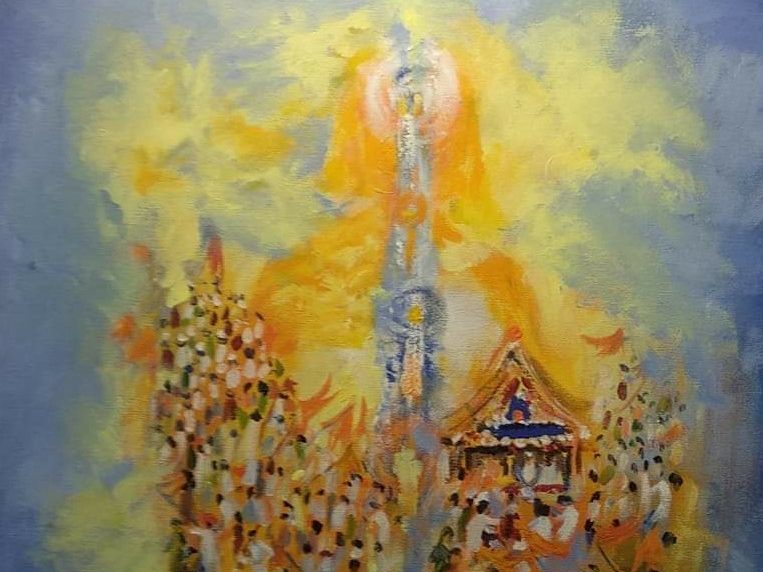
Hindu Integration: Brahmanas and Gramadevatas

Annual Waari – Kalyani Bhogle

The pluralism in Hindu thought is often pegged back to the philosophically sophisticated एकं सत् विप्रा बहुधा वदन्ति  from Rgveda – first mandala. While that message underlies a lot of Hindu thought as we know it, it’s often overstated as it sounds sophisticated to the scholars/amateurs studying it. On the other hand, some hymns from the family books, particularly the Rgvedic Hymns 7-82 to 7-89 give a fascinating peek into the mind of the Bharata purohit Vasishta after the Dasarajna Yuddha. The hymns which are very repetitive mostly praise Indra and Varuna for the help given to Sudas(Bharatas) and the Trstus in the Dasarajna where the enemies also worshiped Indra. The important point to glean here is the different functional roles for which these deities are evoked. Indra for war, Varuna for prosperity, Aditi for light, etc. Varuna who is often paired with Mitra or Aryaman, gets paired with Indra here – which scholars (RN Dandekar, Michael Witzel, etc) see as conciliatory.

According to Dandekar, it was out of this experience of bhakti that Vasistha became essential in the conciliation of the Indra- and Varuna-cults and especially in “averting a schism in the Vedic community” by demonstrating “that Varuna and Indra were not antagonistic to each other but… essentially
complementary. ‘Indra conquers and Varuna rules.”

It is fair to speculate that such a conciliatory approach would go on to shape interactions the mainstream Vedic thought would have with non-Vedic deities as these hymns are the victor’s recollection. This conciliation and integration (A) appear much more pragmatic and economic than abstract ideals (B) espoused by एकं सत् विप्रा बहुधा वदन्ति or other sophisticated thought from Upanishads or Gita. For B to emerge and sustain, A appears essential. With A established, B in some form or other would follow as evidenced by other Eastern faith systems which also tend to be inclusive. It is fair to say a combination of A and B lays the foundation for the emergence of quintessential pluralism of Hinduism.

Let us segway into a short story: 

  • In a village in Vengurla (South Konkan), there was a local Saint/Warrior (non-Brahmin) who was extremely popular with the masses. 
  • He passed away and his devotees wanted to make a shrine/temple for him. A Kaashyap Brahmin who was a respected man in the village objected. His objection stemmed from the deification of a man (probably Shudra) and placing him on the same pedestal as the Devas. 
  • The Brahmin (who had quite a bit of clout in the village) opposed this Adharma with all his might but was almost overpowered by the “uncouth masses” in the story.
  • The landed or Kshatriya(ish) castes sided with the masses instead of the Brahmin and as a result, the Brahmin couldn’t prevent the deification.
  • Additionally, the humiliated Brahmin was expected to condone the practice and give the shrine his blessings.    
  • He couldn’t be part of this Adharma and hence left his lands, wealth, position, and went northeast and settled in Ichalkaranji near Kolhapur preferring his descendants living in abject poverty over condoning Adharma.
  • The replacement Gaargya Brahmin was happy to support the deification of the Saint. His descendants flourish economically in the village with large lands and respect but suffer spiritually.    
  • The shrine/temple remains popular to this day and most villagers have forgotten about this tale around the origin of that particular deity. 
  • The spiritual suffering of the current Brahmin was removed by the forgiveness of the descendent of the Kaashyap Brahmin some years ago.
Ravalnath

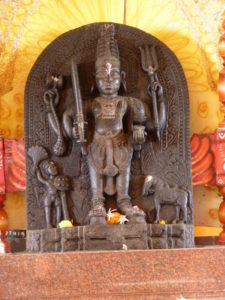
This is the fanciful tale of my great-great ancestor as told to me by my Chachera uncle (first cousin once removed). The Gotras are not important to this piece but the emphasis and obsession on Gotra is a salient feature of Brahmanism which deserves some attention. This tale is not very atypical. There have been other documented cases of such squabbles between village Hinduism and Brahmanism. This tale echoes many other tales from South Konkan – those of Ravalnath, Betal, etc. I am unsure if the deity in the tale of my ancestor is Ravalnath or Betal or something else entirely. But the contours of the tale are very similar. In both the cases of Ravalnath and Betal, there was initial resistance to these deities from local Brahmins in the medieval times – especially due to local traditions that involved blood sacrifices and other things frowned upon by Brahmins, but over time these deities got wider acceptance – even among local Brahmins. BetalWhile Ravalnath is a Kuladevata for most Goans (all castes), Betal is a Gramadevata of some local communities. Vithoba, the popular God of Pandharpur( the annual Waari) is a very important figure of the Bhakti movement. Religious scholar and Sahitya Akademi winner RC Dhere who extensively studied Vithoba also hypotheses pre Vedic origins of Vithoba. Khandoba is another deity whose origins are similarly muddy with a range of theories explaining him as the fusion of earlier deities including Kaal Bhairav. Interestingly in the Puranic tale of Kaal Bhairav “his struggle for the atonement of Brahmanhatya” is central. Khandhoba of Jejuri remains a deity for not only the Sudra castes, but Brahmins, Jains, Lingayats, and even some Muslims including the patronage of comparatively tolerant Bijapur Sultan Ibrahim Adil Shah. While it would be tempting to dismiss this as some tenuous Donigerish take, the sheer numbers of such stories spread across the country strengthen the hypothesis.
Coming back to the descendants of the uncompromising Brahmin from Vengurla. Today my extended family proudly worships all the Gramadevatas from Ichalkaranji whose origins may be very similar to the one whose foundation my ancestor had objected to. Ironically most of my paternal family follow a plethora of local Saints (in addition to the popular Bhakti Saints), whose tales of the origin have occurred within living memory and hence are far easier to negate. I would not go into rants about these Saints (esp Gajanan Maharaj) whose followers number in millions. While some traditional elite Hindus (especially Urban) are known to have disparaging views of Saints & local deities, mostly these distinctions have weathered away. It is not unlikely to find Hindus who fast on Mondays for Shiva also fast on Thursdays for some local Saint (who mostly claim intellectual or avatarish descent from Dattatraya).  Despite some initial friction, the Brahmanical thought has made its peace with such traditions. Most scholarship refers to this as – the local traditions (non-Vedic) being co-opted by Brahmanism. IMO this is an incomplete way of looking at it as it conflates organic integration which typically occurs over generations with the realization of some highly foresighted plan. Typically humans are not foresighted enough to pull off multi-generational machinations. From a multi-generation evolutionary paradigm, these would make sense but not if you take a snapshot at any particular moment in history.

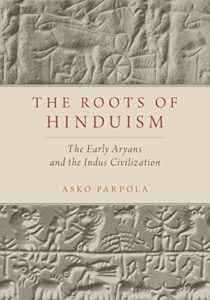
With this background, we go into realms of pure speculation and come to the Post Vedic deities in Hinduism. The origin of some of these deities is highly contested – especially that of Shiva. While the Rgvedic Rudra is often said to be the precursor of Shiva, the meaning of Shiva is certainly in contrast with Rudra. Whether the Pashupati seal from IVC or other Proto-Lingas are Proto-Shiva or not will likely not be resolved till we decipher the IVC script, but these speculations seem very plausible. Even Parpola doesn’t dismiss them in his Roots of Hinduism. In addition, Parpola makes a good argument in the IVC origins of Durga with seals of Tiger riding goddesses from Kalibangan. Similarly, we can say the Dravidian Murukan and the Vedic Skanda gave rise to the Karthikeya we know today. We still don’t have any intelligent speculation about the origins of Ganesha (other than some references to Gajapati), buts it fair to assume the elephant-headed god is a pretty late addition to the Hindu pantheon. The aim here is not to discuss and speculate the origins of these deities but to guess the mechanisms of integration of these deities and customs into Brahmanism. Brahmins had a huge ritualistic/moral capital, but given the tenuous or conflicting relations they had with the Kshatriyas and other dominant castes (as seen through numerous puranic stories especially those of Parshuram) it is fair to assume Brahmins would not often get their way with subtracting traditions they found Adharmic or uncouth, yet they could continue to shape these traditions from inside with participation. Pressure both from the masses and Brahmins would’ve actively shaped the integration of these traditions for centuries to the point where it’s often hazy where Brahmanism ends and where “Non-Brahmanical” traditions begin. (This probably happened with Sramana or Proto-Sramana traditions competing with Brahmanism but that is a different discussion)
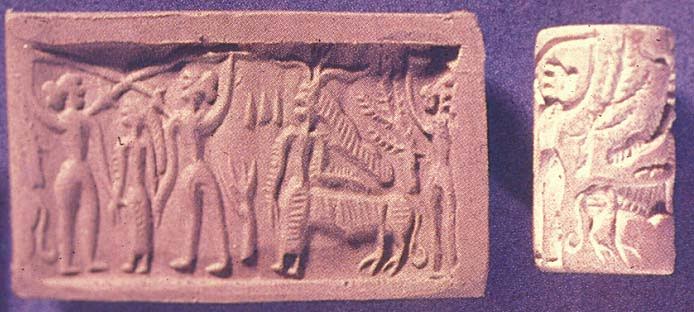
IVC goddess riding Tiger

While it is generally said Brahmanical thought absorbed the local traditions, it is equally or more appropriate to say that the village Hinduism made space for Brahmanism & tamed it – into the diverse and plural fold and this process was not complete for the entire subcontinent when Mahmud of Ghazni attacked Somnath. Scholars like to emphasize Adi-Shankara’s Advaita and Mutts, Upanishads, Rgvedic “एकं सत् विप्रा बहुधा वदन्ति” as it appears sophisticated and intellectual. However, the tendency of humans to pragmatically negotiate the boundaries of their traditions (in absence of exclusionary universalist ideas) when they already have multiple modes of worship tends to be underemphasized as it appears uncouth or folk. Roman religion easily absorbed Isis and Cybele into the Roman fold but couldn’t absorb the God of Abraham. In contrast, when Christianity conquered Europe it absorbed the old gods into the Christian fold as Saints but kept them subordinate to the one true god. However, Shiva and Ganesh did not bow done to Indra, and by the time of the Puranas, the mighty Vedic Indra was reduced to an insecure and somewhat petty King of Gods.

Maybe the Brahmin elites & Sanskrit managed to maintain a cohesive identity-based on sacred geography only because they themselves were tamed in similar mechanisms by the natives of the geography. If yes, then Hindu Pluralism and Syncretism is as much a legacy of numerous lost stories as it is of the philosophical moorings of the Vedas, Itihasas, and Upanishads. 

Postscript:

I had been thinking along these lines since my discussion with Mukunda and Omar on the Brown-cast about the roots of Indian pluralism. While commenting please stick to the topic and be civil & constructive. I will delete off comments for this piece.

Looking back at 2019 Maharashtra election

It has been a year since the 2019 Maharashtra election & its consequences which fascinated the country. The drama of the election remains unforgettable, for anyone interested I would recommend the book 36 Days.

For anyone interested in some analysis I would recommend Shekhar Gupta’s Cut the Clutters on the topic: here; here; here and here.

However, here are a few salient points from the election and the Maharashtra government

  1. Imagery matters. This image of the 80-year-old cancer patient Sharad Pawar braving the rains in Satara had a huge impact on voting in western Maharashtra.
  2. If someone has to stop the Hindutva Ashwamedh, strong leaders are essential. No one can win elections on sloganeering without strong & visible leadership.
  3. Caste still plays an important role in even progressive states like Maharashtra. One of the reasons for the defeat of BJP was the anti-Brahmin sentiment evoked by NCP by indirectly attacking Fadanvis’s caste.
  4. Ideology is important for political parties, but not as important as survival. Shivsena’s shift out of the NDA was for its survival and not for any other nonsense we hear.
  5. The NDA was well and truly over in 2019, the Akali’s leaving the NDA was in someways foreshadowed by ShivSena’s exit. Bihar election result and Nitish/Paswan reaction to the result would be something to watch out for.
  6. Forming a coalition government is easy, running an effective administration with conflicting interests and multiple power centers are tough. It would be a surprise if the SS-NCP-INC government completes its full term.
  7. All governments abuse institutions when in power and to nearly the same extent, not just the BJP.
  8. Regionalism can be a bulwark against Central hegemony. The region can bind what ideologies divide.
  9. Confrontational governments will find it difficult to work with an all-powerful central government. Non-BJP state governments can either take the Maharashtra route or the Andhra route (of YSR Jagan Reddy)
  10. The respect of the position of the governor (which never had too much respect I guess) has taken a very bad hit after the Maharashtra example.

Browncast: Ruchir Sharma, Marxian Hindutva

Another BP Podcast episode is up. You can listen on LibsynAppleSpotify,  and Stitcher (and a variety of other platforms). Probably the easiest way to keep up the podcast since we don’t have a regular schedule is to subscribe to one of the links above!

You can also support the podcast as a patron. The primary benefit now is that you get the podcasts considerably earlier than everyone else. This website isn’t about shaking the cup, but I have noticed that the number of patrons plateaued a long time ago.

In this episode we talk to Ruchir Sharma,   an international affairs and social entrepreneurship expert who also writes in some Indian publications and used a good deal of “woke” terminology in his writings and has talked of something he describes as “Modian Socialism” (as opposed to Nehruvian Socialism). Check it out. Comments welcome as usual.

PS: just to be clear, this is not the Ruchir Sharma who works in NYC in the finance “industry” and writes in various well known publications..

Open Thread – 10/17/2020

The thread is open. Three new podcasts this week in case you aren’t subscribed. Sometimes I get overwhelmed with things and I just can’t be bothere with detailed show notes.

As I mentioned before I’m recording interviews for a new podcast I’m starting up separate from the others I run. I’m just throwing them on Patreon for now. Today I recorded an interview with the author of 1177 B.C.: The Year Civilization Collapsed. Looking at the tracks…he’s a very good talker!

I really recommend the book, it’s pretty well written. He also talks about his follow-up book, in terms of when we can expect and what it’s about.

Also, I may start trashing stupid comments now and then. Just to keep you guys “honest.”

An evening to remember - the chase, the hunt, the theft, and the meal

I am finally starting a Medium Photoblog (travel and living) after years of laziness. I would only post my Photoblogs on Brownpundits if I find the topic would interest BP Readers (i couldn’t even find a suitable category 🙂 ). I hope to become better at brevity in prose with photo blogging.  

Crossposting from Protected By The Sea.

I have been wanting to start a photoblog (travel and living) for years but never got around my introversion and laziness till now. I couldn’t think of a better story to start this blog. The photographs are poor due to a combination of rain and poor light but I felt the story is worth it.

After four spectacular days in Kenya, we finally reached Masai Mara and started an evening Safari. After an eventful couple of hours came the moments which will be etched in my mind forever. I had not seen a Cheetah after four days in Kenya and was dearly hoping to spot one in Masai Mara.


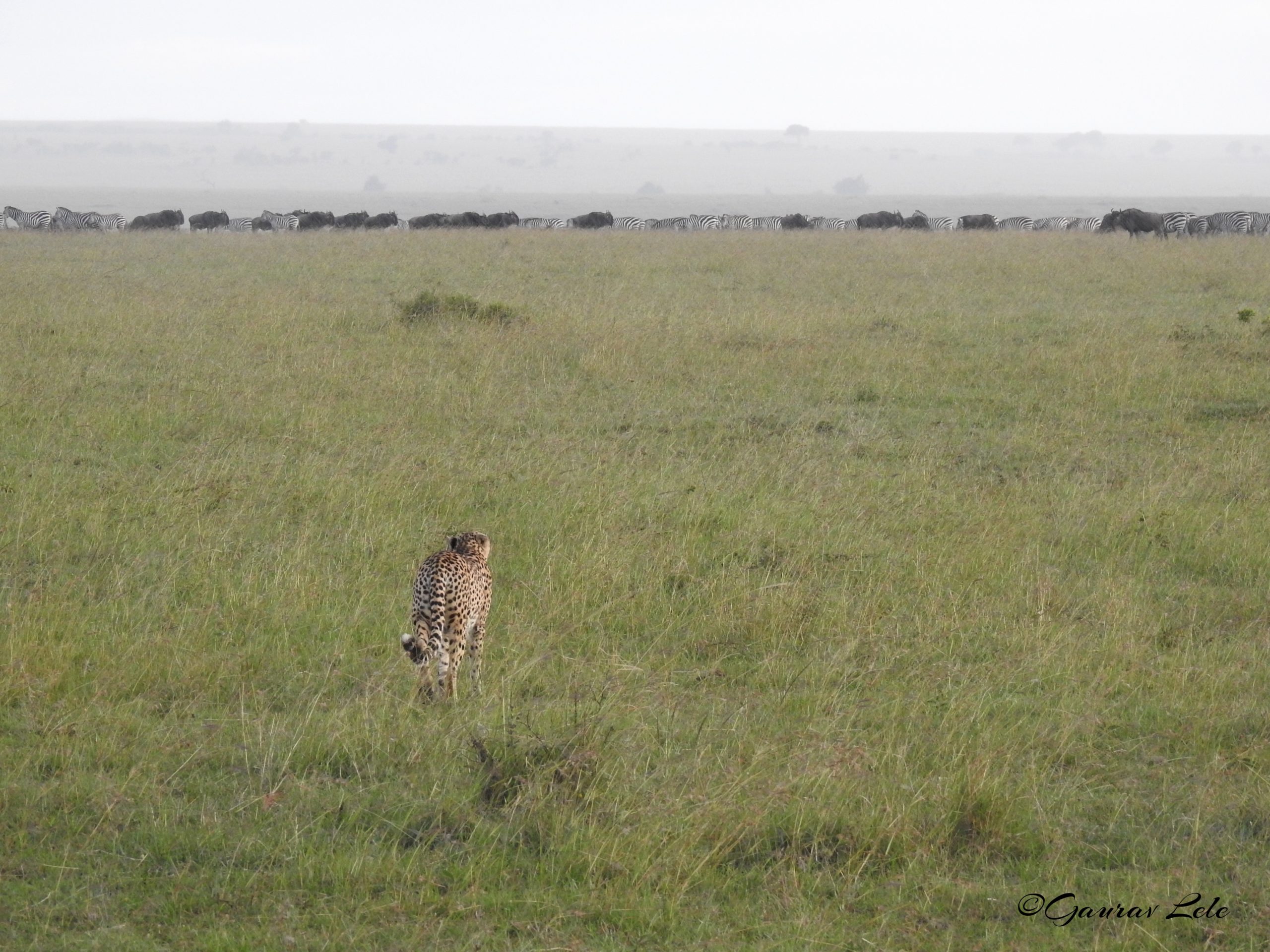
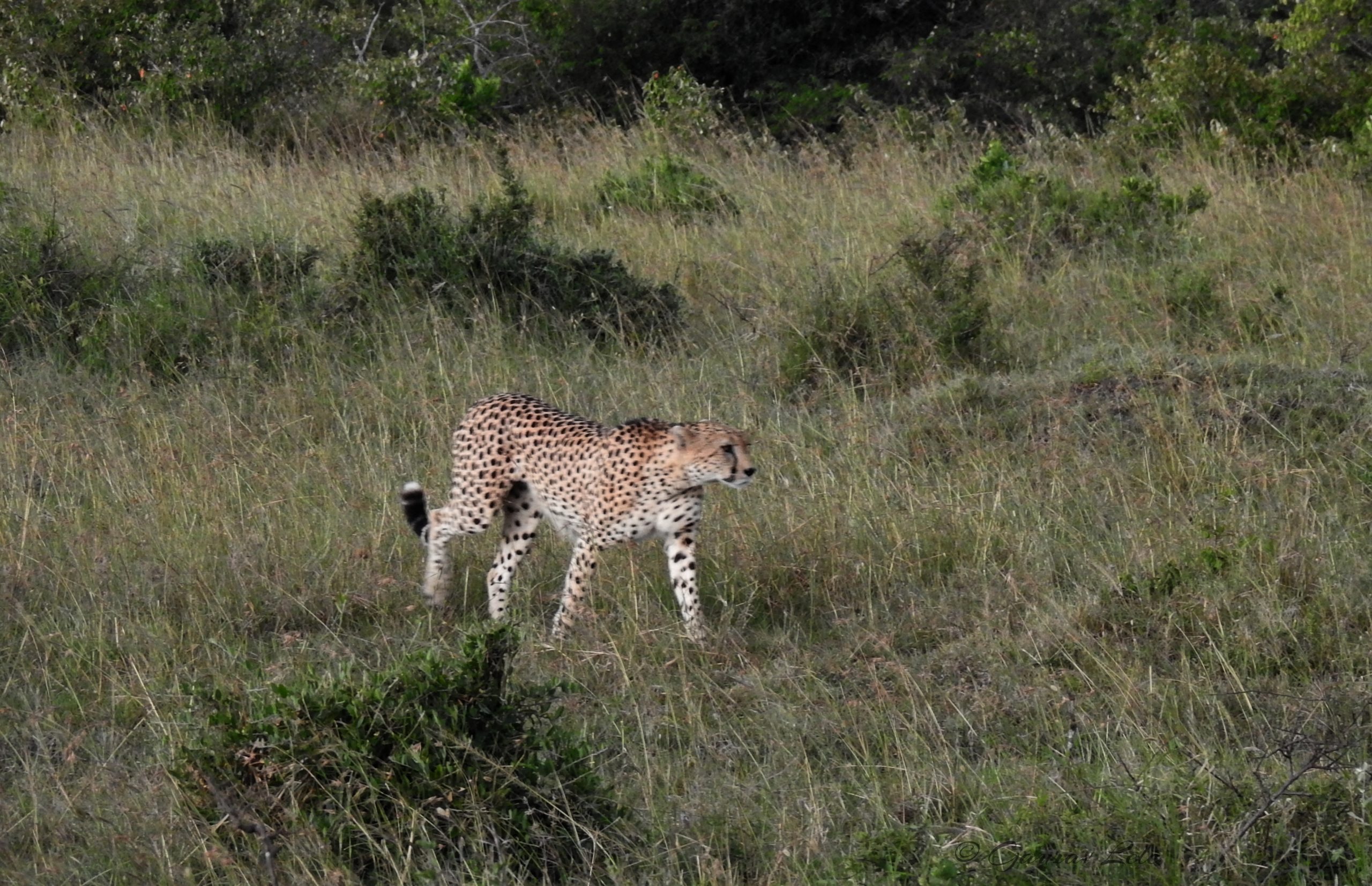
As it started to drizzle and we considered taking a break we spotted a Cheetah on a stroll

the Cheetah zoomed in on a herd of wildebeest visible at a distance

The Cheetah began the chase. Sadly for us at this moment the rain became too heavy to see anything

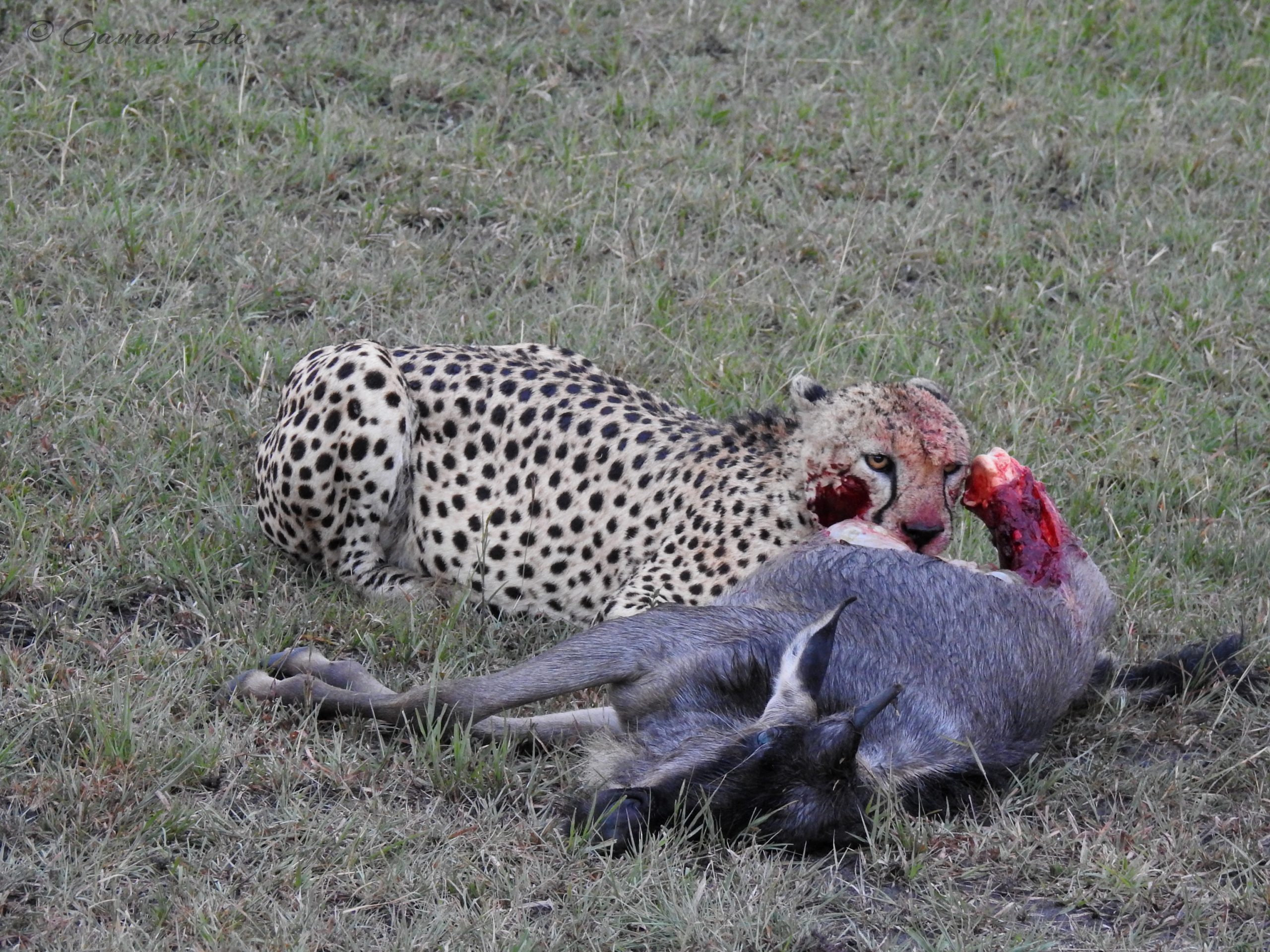
Thankfully the rain went away and we saw the Cheetah enjoying his well-earned meal half a km away

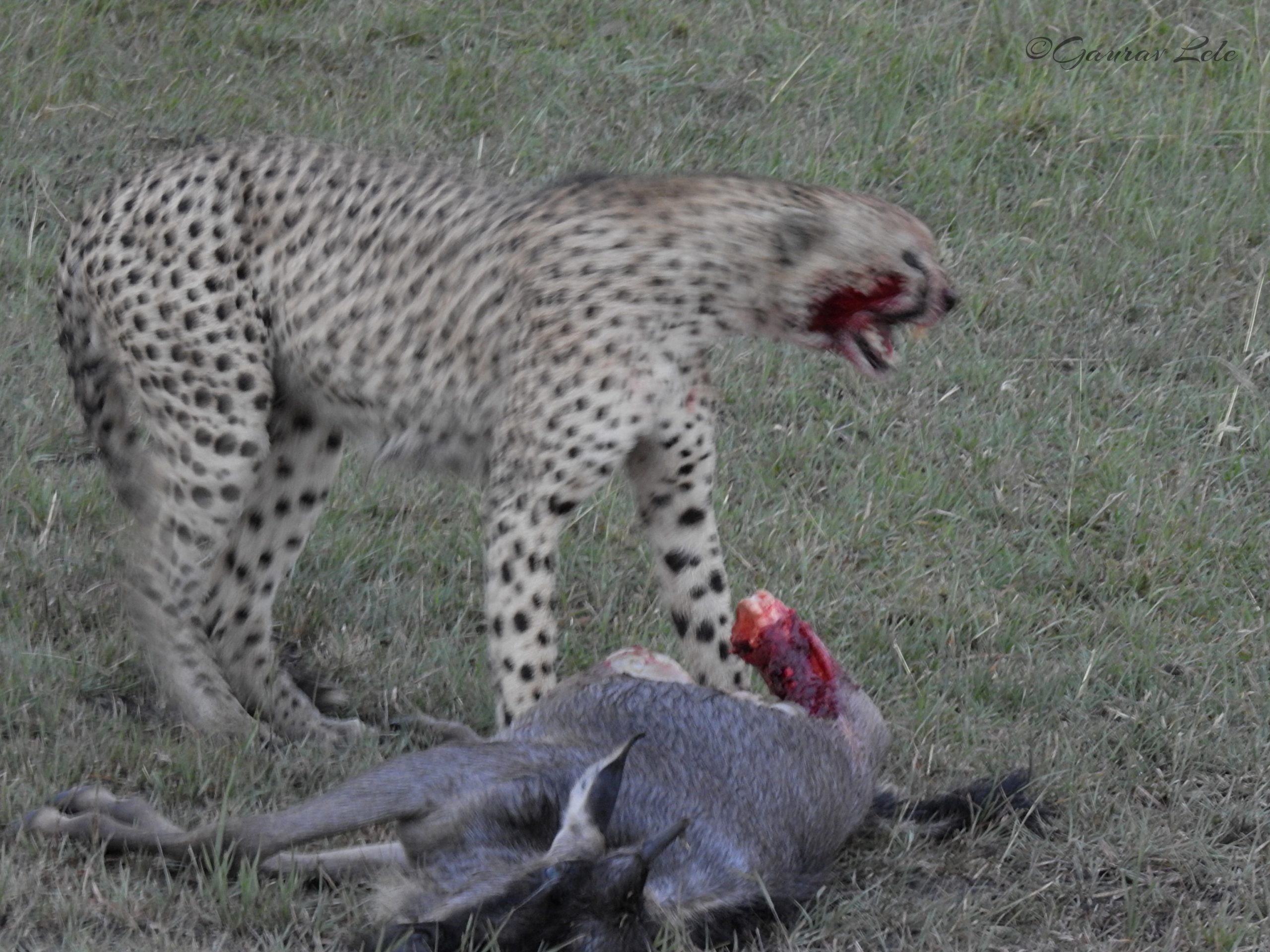
He was rudely interrupted by a group of hyenas. The Cheetah ran off after some posturing clearly smarting.
The hyenas finished the wildebeest within literal minutes. The noises of groans, laughter, and cracking of bones I heard that evening remains one of the most singular cacophonies ever.
The rise of Indicus!

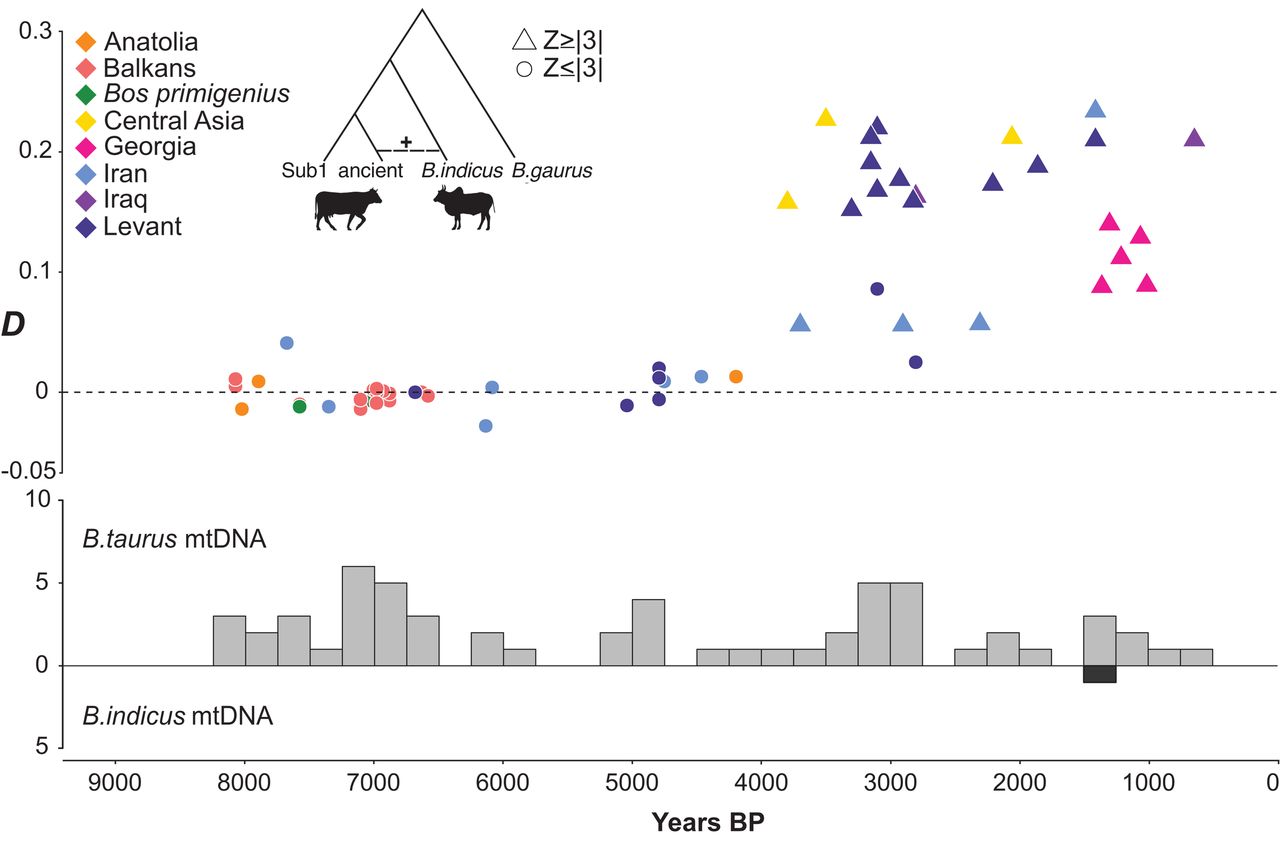
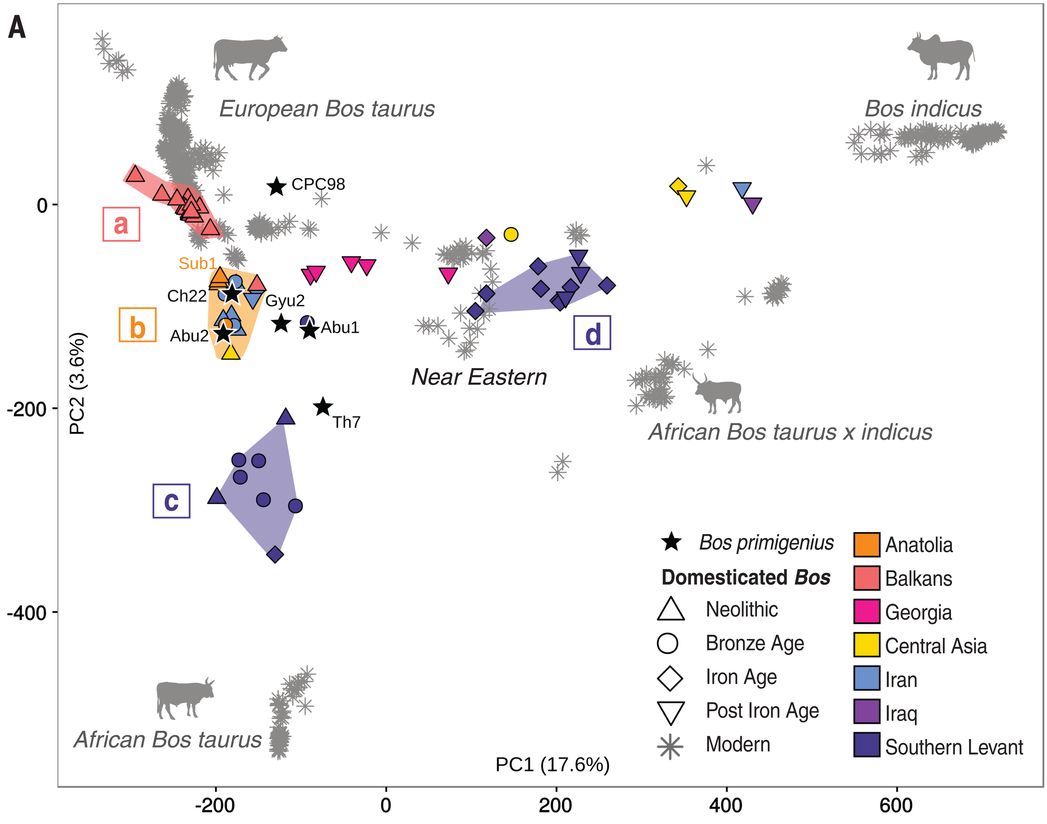
A few years ago an ancient DNA paper on cattle was published, Ancient cattle genomics, origins, and rapid turnover in the Fertile Crescent. It’s a pretty good paper with interesting results. The paper confirmed pretty strikingly that there was a punctuated and massive expansion of indicus ancestry across the Near East between 3,500 and 4,000 years ago.

The interesting aspect of cattle is that there are really two species that intermix. Using mtDNA researchers estimate indicus and taurus diverged 300,000 to 2,000,000 years ago. But the main thing you have to remember is cattle generations are about 20% as long as human generations. So 300,000 cattle years are equivalent to 1.5 million human years. And, for technical reasons (smaller effective population size) one should probably assume mtDNA underestimates the divergence.

Ancient cattle from the Near East are all taurus. The PCA plot shows that most of the variance is on PC 1 which separates indicus and taurus (a secondary dimension is PC 2, between African and Near Eastern/European lineages). The figure at the top of this post shows that there is a massive jump in genome-wide indicus ancestry across the Near East between 2000 and 1500 BC. As the authors note this can’t be diffusion; the jump is too sudden and sweeping.

So what happened during this period? As noted in the paper: Bronze Age civilization almost collapsed around ~2000 BC. More concretely, after 2000 BC is when we see evidence of Indo-Europeans in the Near East. The Indo-Aryan Mittani show up in Mesopotamia in ~1600 BC. The Indo-European Hittites, the Nesa, are known from Anatolia a bit earlier.

This is also the period that small, but detectable, levels of “steppe” ancestry show up in some ancient samples.

Before this paper, I would have leaned to the position that the Mittani Indo-Aryans migrated directly from the Sintashta homeland without much contact with Indian Indo-Aryans. These data are too suggestive of a widespread zone of expanding agro-pastoralists that existed between western South Asia and the Near East between 2000 BC and 1500 BC.

One of the things we know from the barbarian period during the Fall of Rome is that barbarian groups had strong channels of information flow. For example, a group of Saxons arrived with the Lombards in Italy in the second half of the 6th century. But, through various channels, these Saxon warriors learned that their co-ethnics had established dominance in what was to become England, and there are texts which allude to the reality that they decamped and crossed the Alps, presumably on the way to what was going to be England. The point here is that there was a “Saxon international.”

Aside from the Mittani the evidence of Indo-Aryans in the Near East is tenuous, though some of the Kassites of Babylonia may have had Indo-European affinities. There is not nearly as strong a genetic imprint of steppe in the Fertile Crescent as in Northwest India. The Hittites were very different from Indo-Aryans, who seem to have the closest relationship to the Slavic language family.

The indicus breed is adapted to tropical dry climates. It seems plausible that the Indo-Aryan international facilitated the spread of this breed in the centuries before 1500 BC.

Twin bombings across Pakistan in Waziristan and Ormara

(Article originally posted at the These Long Wars blog)

I’m going to link to the Dawn article, because let’s face it, nobody except state apparatuses are now reporting on Balochistan, because all independent media worth mentioning has been forced out by violence and intimidation. The Balochistan model of political control is being rolled out across Pakistan with varying degrees of political success.

I don’t know what I can say about the Waziristan attacks, besides maybe the state of Pakistan should stop using the former FATA districts as a launching ground for attacks into Afghanistan. That sort of observation feels redundant, but one would imagine that the milieu that feeds extremists and makes it easier for them to thrive there might also succour anti-state extremists.

What I can say about the Balochistan attacks besides that I think enough is enough with using the Frontier Corps (FC) for internal security. Up-arm and up-armour the Balochistan police and send them after the insurgents. That can be done if we give the Baloch people a stake in their future by creating as many jobs as there are households in Balochistan. The number of non-secessionist Baloch probably outnumbers the number of secessionists. However, their interest in breaking away would be neither here nor there if there were serious economic reasons for them to remain tied to Pakistan and the state did not predate on their resources. If Balochistan was treated as a normal province rather than a colony, enough residents would take care of the violent secessionists on their own. I think this insurgency, and over-extended internal security mission in Balochistan has gone on long enough. This is supposed to be the Fifth Baloch insurgency, and I’m not even sure if we are in the fifth or sixth phase of this Fifth Baloch insurgency.

I’m gonna have to lean on NFP’s views on how these conflicts in these socially marginal districts are now being fed and politicised by the larger mainstream, ultra-nationalistic polarisation.

https://twitter.com/NadeemfParacha/status/1316736696478769152?ref_src=twsrc%5Etfw

You can read Dawn’s report on the attacks, here.

Ayesha Siddiqa’s succint history of anti-Shia Deobandis

(Article originally posted at the These Long Wars blog)

Ayesha Siddiqa covered the sudden rise of anti-Shia extremism in Pakistan, in a recent article. In it she gave a short history on the provenance of anti-Shia, Sunni extremism in the country that’s worth reading:

Though the first instance of Sunni-Shia tension erupted around 1951 in Sindh, it built up more decisively during the 1980s. General Zia-ul-Haq’s regime looked away while the Anjuman-e-Sipah-e-Sahaba (ASS) took birth in Jhang, South Punjab in 1986. It later turned into the Sipah-e-Sahaba Pakistan (SSP) that became the mothership of all Deobandi militancy. It gave birth to Lashkar-e-Jhangvi (LeJ) during the early 1990s, and also the Harkat-ul-Mujahideen, Harkat-ul-Ansar, and later Jaish-e-Mohammed (JeM).

During counter-terrorism operations by Pakistan, segments from the SSP, LeJ and JeM went into making the Tehreek-e-Taliban Pakistan (TTP). Some members of this even went on to join Daesh. The SSP was also one of the first organisations to fight in Afghanistan. Besides militancy, the organisation also engaged in politics. Its leader, Haq Nawaz Jhangvi, initially contested elections in 1988 from a Jamiat-e-Ulema-e-Islam–Fazlur Rehman (JUI-F) ticket, and later formed his own party. Around the time Haq was killed in 1990 outside Islamabad, Pakistan saw a lot of bloodshed, including sectarian violence, through the decade of the 1980s, 1990s, and the 2000s. Like the evolution of its militant wings, the SSP’s political face also evolved. One of its current forms is the group Ahle Sunnat-Wal-Jamaat (ASWJ), which is visible in electoral politics. The SSP and other militant groups are part of the Deobandi network that comprises militant outfits, political groups, and welfare institutions.

The network is so well spread out in the largest province of Punjab that there are over 20,000 staunch Deobandi voters in every constituency, which makes the group important for all political parties and builds their influence. The JUI-F, headed by Maulana Fazlur Rehman, is one of the most prominent faces of the network. It is instrumental in partnering with the Pakistan Peoples Party (PPP) and spreading the influence of Rehman’s network in Sindh and Baluchistan.

I think that’s a good enough bite-size history by Dr Siddiqa on the rise of sectarian extremism in Pakistan.

Below is an election poster of anti-Shia candidates, with my opinion on them.

https://twitter.com/TheseLongWars/status/1314616671018024960

Their Muslim Problem—And Ours


Every now and then there is a controversy on Indian-Twitter which bleeds over into my timeline that I have to notice.

Some quick observations:

– There are those who lambast the critics of this ad. Many of the critics are low-IQ vulgarians. So the criticism is not without foundation. But, most of the responses dodge the gendered nature of the objection. The fact is that in Islam it is understood that Muslim men can marry non-Muslim women. It is also tolerated for Christians and Jews to retain their religion after marriage. The children are considered Muslim. This practice in a patriarchal society was seen as a boon to the Islamic nation.

The advertisement plays into this Islamic trope. The converse of this is that most interpretations of sharia ban the marriage of Muslim women to non-Muslim men. Again, the rationale for this is straightforward: the children inherit the religion of the father, and therefore the children are lost to Islam. If the supporters of the beauty of the advertisement of interfaith marriage believe in this custom, then they should support more speech. In particular, they should support an advertisement where a Hindu man marries a Muslim woman in a Hindu ceremony to show that there is nothing wrong with this act so long as the people consent freely.

Continue reading Their Muslim Problem—And Ours

Brown Pundits