From OIT to AIT

For TL;DR jump to My reasons for this position today are


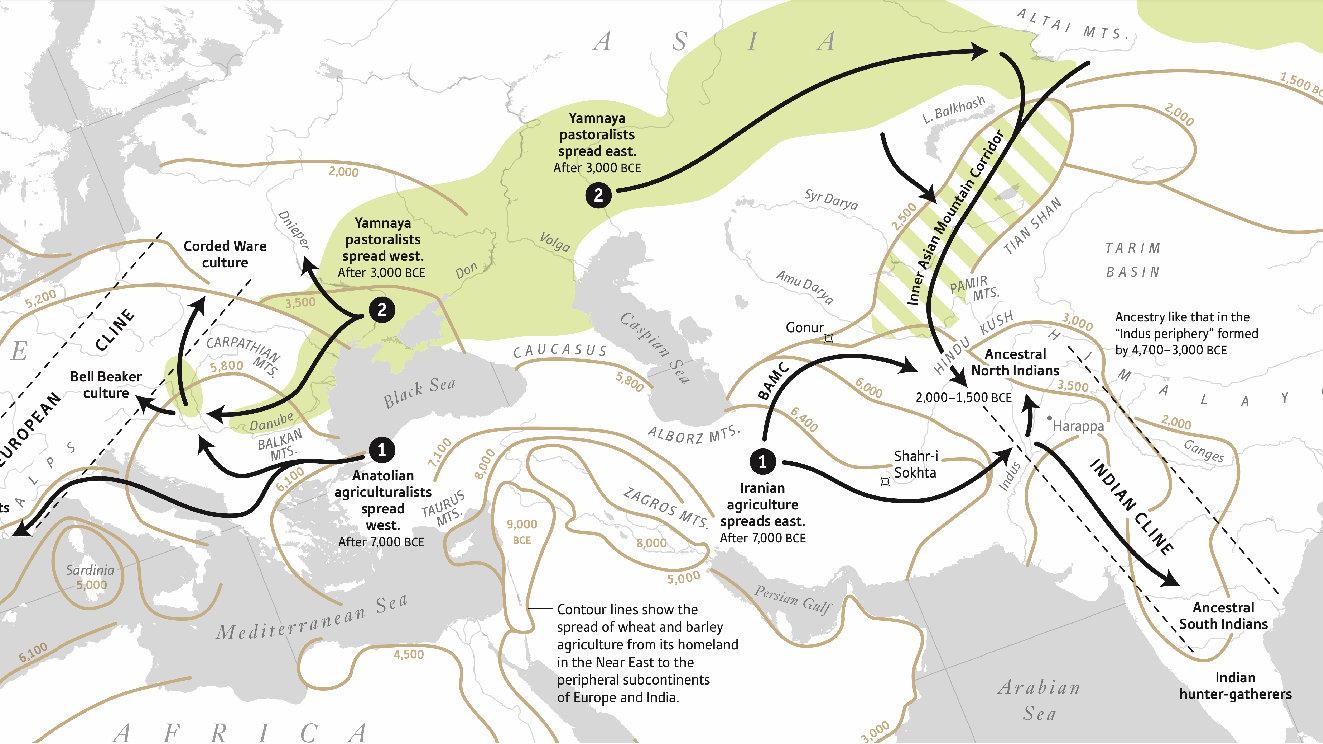
Yesterday I tweeted about how OIT is becoming an Article of Faith on the Hindutva Wing in a thread related to Ruchir Sharma podcast where he dodged the AIT question. I further tweeted the change in my position of one supporting OIT (till 2018) to AIT by 2018 especially in face of the recent genetic evidence and following the work by Razib Khan. I was contacted by BP regular guest and host of the Carvaka podcast – Kushal Mehra and we had a long (3 hours) chat. His reading of the issue (Archeology and Rgveda) is much more robust than mine and I felt as Hemu’s army would’ve felt battling Babur’s projectiles. (though I am still not convinced by his argument). Hence I write this piece to evaluate my evolution with the Aryan question and also putting my current position & its defense in digital ink.

Like most Indians, I had read about the Aryan invasion theory as a historic fact and only got introduced to the inherent racism in the initial framing of the AIT after my schooling. In 2008 the paper, Reconstructing Indian Population History came out and the terms ANI and ASI got popularized. The media commentary on the paper (as with the Rakhigarhi paper) seemed to suggest the genetic data had refuted the AIT. Influential public figures like Subramanian Swamy (who appeared a lot more respectable to me in 2008-09) and few lesser-known Marathi influencers and others championed the debunking of the AIT myth in the public sphere which was not refuted except well enough except by historians like Romila Thapar (in whom I have low trust around politically charged topics as proven in Babri case). Things started getting heated in Indian Media around 2013-14 with after the publication of Genetic Evidence for Recent Population Mixture in India. But my interest in the Aryan issue came due to this article by scientist and influencer Anand Ranganathan on newslaundry (before then I had been largely ignored the arguments and counterarguments). I had some instinctive unease with these ANI/ASI argument against AIT but chose to ignore my doubts as Geneticists from India & commentators like Anand Ranganathan (who is a scientist), Sanjeev Sanyal, even anti-Hindutva Shashi Tharoor chose to concur with the views refuting the AIT.

In the following year or two, I read the following

  • Romila Thapar on Ancient History (small bands of herders)
  • Upinder Singh (who is non-committal)
  • Michael Daninos Lost River (the most reverent Sarasvati)
  • Free Papers on Academia – especially the Michael Witzel and Shrikant Talegeri debate.
  • Koenraad Elst’s blogs.
  • Edwin Bryant’s Indo Aryan controversy book.
  • Sections of Mallory’s book
  • Ambedkar’s book on Shudras

I particularly saw the linguistic arguments for AIT to be weak largely attributable to my ignorance of the field. I see myself as extremely ignorant about history in general around then, for my interest in non-fiction is very recent (2015 onwards). In some ways, I am still not well-read compared to most authors/commentators here. I  haven’t read any history from outside India other than British, American, and WW2.

Hence I was moderately convinced by Danino’s Sarasvati argument back then. Additionally following the Witzel-Talageri debate I found a lot of criticism of Talageri ad-hominem and patronizing. The dismissal of Talageri’s work as a bank clerk’s revisionist Hindutva did not seem scholarly to me (I mean Witzel’s criticism did not appear scholarly but ad-hominem). In my view, Edwin Bryant’s book confuses as it doesn’t take a position after 500+ pages. However in the end the lack of Archeological support for AIT (no significant change in material culture) made me convinced that the AIT was flawed. As I see this as a binary problem i.e either AIT or OIT has to be true to explain the spread of Indo-European languages, my position was that of OIT. I also felt AMT is a workaround for the problematic parts and holes in the AIT.

In 2017-18, around the time The Genomic Formation of South and Central Asia hit the biorxiv and created quite a few waves in the Indian media, articles by Tony Joseph, Shoaib Daniyal, and Hartosh Bal made enough noise on my twitter timeline to make me take a renewed interest in the controversy. Around that time David Reich’s book was published and most AIT guys used Reich’s book to bolster their claims. By the time I had completed Reich’s book I was almost convinced of the AIT yet I made an effort to cross-check the counterviews. I reached out to Anand Ranganathan who sort of dodged my cross-questions. I also reached out to Swarajya Magazine (of whom I was a subscriber in 2018/19) and was not at all convinced by the explanation given by them here and here. On reading work by Razib & other genome bloggers who got a shout out in David Reich’s book I was even more convinced by their arguments. I read Tony Joseph’s Early Indians and it does a good job of laying out the data IMO. However one always notices the author’s political biases coming up especially around his handling of Caste( I find it extremely stupid to look back at events that are speculated 2000 years ago with today’s moral compass and use it making political points calling the Brahmins in 100 AD the original Tukde-Tukde gang.)

I have since, also read David Anthony’s book, Narsimhan and Shinde papers, read most BP blogs (including JR’s pieces) and comments on AIT/OIT, followed a small bit of linguistics, and listened to the views of Niraj Rai, Shrikant Talageri (on Carvaka), Koenrad Elst. I still continue to hold the view that AIT probably happened and more importantly OIT seems highly implausible.

My reasons for this position today are:

  1. I am partial to the view that Genes and Languages are moderately correlated. There are exceptions as readers of this blog would know, but they are exceptions. As the genetic data points out that 10-20% of Indian ancestry comes from Bronze Age Steppe, I find it highly implausible that such large changes wouldn’t result in some language change – especially given the gradients of Steppe wrt North/South and Caste. Additionally, the complete absence of AASI like genetic ancestry beyond the boundaries of the Mauryan & Mughal empires at their zenith is big deal. If any kind of OIT that doesn’t explain satisfyingly falls short. (Roma Gypsies have AASI)
  2. On the whole, I find the Steppe hypothesis works well linguistically and archaeologically to an exceptional degree in my reading – for Europe. By Occam’s razor, it would be fair to assume India isn’t an outlier among regions speaking Indo-European. Small objections like this don’t debunk the entire Steppe hypothesis IMO.
  3. The lack of material culture change associated with AIT is a problem, but the same objection is also present for OIT. Lack of evidence isn’t the absence of evidence. At best archaeologically the AIT/OIT debate is a Tie.
  4. I find Talageri’s work lays excessive claim on his interpretation of Rgveda and Avesta. I find the Rgveda has no memory of invasion argument weak. What we know of the Rgveda might just the memory preserved post the Bharata victory in the Dasarajna (Victor’s memory). It would be plausible that memories of invasion may be lost by accident of history. I am no expert on either Rgveda or Linguistics (I have read only 4-5% of Ralph T.H. Griffith translation) but I still find the lack of scholarly approval of Talageri’s work a problem from believing his work. However, on Kushal’s advice, I am going to read his entire work – 3 books hopefully by sometime next year.
  5. I take the Horse argument seriously. The paucity of equid bones IVC itself is significant. Especially if you compare them to Steppe sites. (The Botai & other steppe sights are extreme in the sheer quantity of horse bones). On the whole, I find Anthony’s horse hypothesis holds in face of the data we have today.
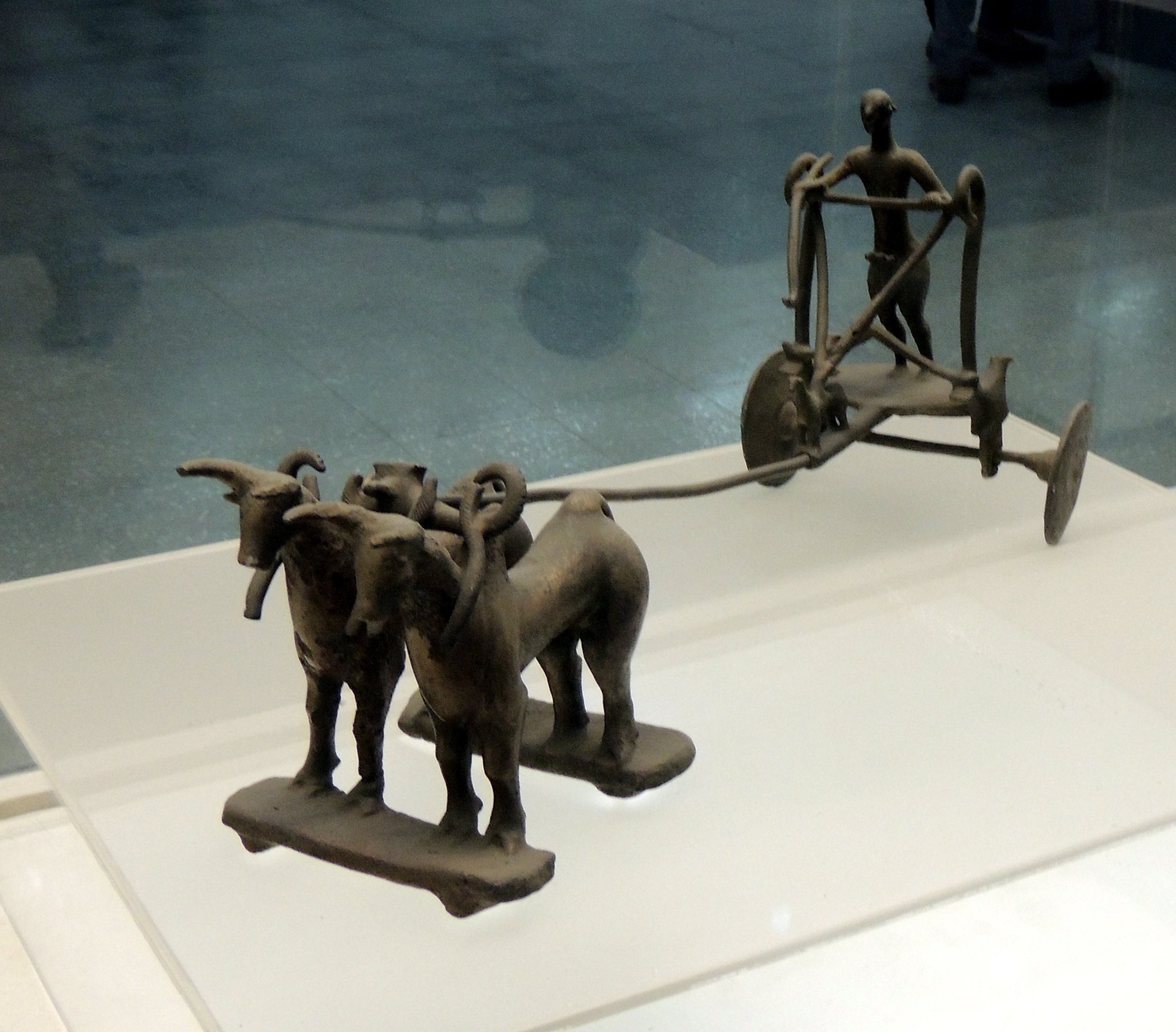
  6. I don’t see the Sanuali find as a game-changer. The Daimabad hoard Bull drawn cart/chariot has been known for decades. I don’t think the argument for Sanauli chariot being Horse-drawn is convincing yet. Also, the lack of spoked wheels would make the chariot less agile which would make it not a War-chariot like Sintasta. Anthony had to fight a lot for years before even his finds (which are far more impressive than Sanauli) at Sintasta were taken seriously as a war chariot by the community. His chariots were disproved by peers for things like width, length, etc. At the least, it’s premature to call the Sanauli chariot as a deal-breaker for AIT. Additionally latest the dating of Sanauli at 1800BCE isn’t far enough from the 1500+-200 date given for AIT. Rather the 1800BCE dating appears consistent with Asko Parpola’s first Pre Rgvedic Arya migration theory.
  7. I have heard Slapstik’s BP podcast, read his comments, and also those of some others who know linguistics along with some light reading of linguistics. The linguistic argument appears robust enough for my non-expert ears.
  8.  In historic times, since the Persian invasion during the time of Bimbisara to the invasion of Abdali – the flow of invasions has been Strictly One Way – from the Bolan/Khyber pass to the Subcontinent. (in some cases as speculated with some Hunas – via Kashmir). Examples of these being Persians, Greeks, Sakas, Parthians, Kushanas, Hunas, Arabs, Turko Afghans, Mongols, Mughals, Persians, and Afghans. These invasions have a concrete economy to them – the fertile and prosperous lands of the Indo-Gangetic plains. So it begs the question – why would Indo-Aryans go out if they were indigenous. Many reasons for coming IN & almost no for going out.
  9. I find the arguments over Sarasvati which convinced me once unconvincing today. I think the argument comes from the position of reverence to the holy Sarasvati from the Rgveda & laying excessive emphasis on it. I am convinced by the general argument of the same names being used for rivers by migrating people and we have many examples of that in the country. Additionally, the Shtich that the Yamuna changed course and dried up Sarasvati made famous by Amish’s fiction appears on its face – an extraordinary claim with almost no concrete evidence.

Closing comments:

  1. It’s fair to say both sides in India are fairly motivated by politics. I don’t find the OIT arguments as ridiculous as some AIT supporters find, but one can’t ignore the identity politics and question of Islam being catalytic in the debate. Personally, I don’t think this is a coherent position, I supported the OIT while being a Liberal opponent of Hindutva for almost 2-3 years and even today I am open to change my mind in face of new evidence. However, I think it’s unlikely that I will be easily convinced without some genetic data or more archaeological data (more chariots around 2500 BCE with horses).
  2. A salient point made by Talegiri is worth noticing. He claims that the Indians who continue to support AIT are Brahmins who have not yet given up their supremacist mindset. He also conjectures such support for AIT goes hand in hand with the defense of Varna. Growing up as a Chitpavan Brahmin I know this argument has some truth to it, though Maharashtrian Brahmin communities have given up those supremacist ideas in 2020. In a way, Hindutva has united what Varna/Jati had divided.
  3. A version of OIT seems to be too fantastic to be true but works with genetics and archaeological findings. This theory being Aryas composed the Vedas before 3000 BCE, some of them settled in IVC cities, some went out into the Steppe. And then these Steppe people spread the languages and a pulse came back around 1500 BCE and composed the latter Rgveda. I naturally don’t buy this 🙂
  4. In the end, the difference is what kind of evidence people are willing to buttress their arguments on. Most of the time such opposing views would talk past each other. I get a feeling no amount of Ancient DNA will convince OIT folks who take the Rgvedic & archeological arguments over Genetics/Linguistics. Personally, I am partial to Genetics\Linguistics as I find it more Sciency than Reconstruction from texts & archaeology (or lack thereof).

Postscript:

I plan to read Talageri’s books, Asko Parpola’s Roots of Hinduism, Mallory’s book again in the coming years as I find the issue fascinating. I guess that Razib, Slapstik, and others who have been at this topic for years on the blog might be finding the topic boring by now. Still, I would urge them to comment and point out any inconsistencies or blindspots I may have had in my summary above. Same for OIT guys – as already mentioned I will be reading Talegiri – is he the main guy you rely on? How many of you are patrons of Kushal’s AIT/OIT work ? which appears to be very extensive.

I said above that Talageri is not Hindutva but have been corrected by Kushal made the change in the blogpost.
Problems with the terms INDIC and DHARMIC

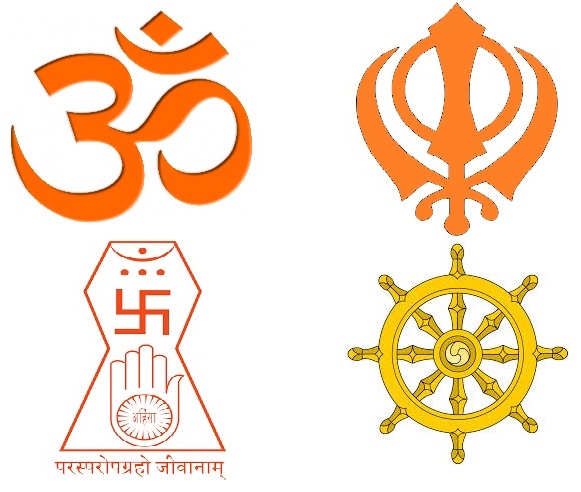
With the rise of Hindutva, certain terms are gaining traction in the intellectual spheres for denoting native Indian beliefs and philosophical systems. As the word Hindu which started as a geographical term has today come to mean a specific overarching faith and philosophical system among the Indian native systems, new words need to be found to encompass all the native systems under an umbrella term. As a term, the terms Dharmic and Indic have come up to encompass all the native Indian systems – like Hinduism, Buddhism, Jainism, Sikhism, etc. The need to have a separate word for these systems appears valid, but I often cringe at the use of words Dharmic & Indic (though I hypocritically use them). The primary urge to use these terms seems to be the desire to have a broad tent for native Indian faiths against/or in contrast to western philosophical and religious systems (especially Abrahamic and Enlightenment systems).

INDIC: 

The word Indic originally appears to be used for denoting Indo-Aryan languages in the literature. However, it is being used extensively by people from Left as well as Right to denote the native Indian faiths.

Merriam Webster dictionary defines Indic as:

  • of or relating to the subcontinent of IndiaINDIAN
  • of, relating to, or constituting the Indo-Aryan branch of the Indo-European languages ( Urdu the national language of Pakistan is also an Indic language, so would Pakistan by extension be Indic? )

If we take the first meaning, it simply means Indian. Unless it metamorphs into the meaning the users of the term Indic want to be mean, this will continue to be confusing in the future as well. The urge to avoid using the term Indian which has a specific meaning in the world of nation-states is understandable but Indic doesn’t seem to go around the problem enough IMO.

Another problem with the term Indic is that the word itself has no history in any of the native systems. Though after the popularization of South West Asia (or South Asia), Indic seems not so bad.

DHARMIC:

The word Dharma is a better candidate as it is the concept of Dharma that loosely binds the native Indian systems more than the mere geographical accident of origin. The meaning of Dharma in all the native faiths is similar enough to make this framing faithful. But the word Dharma has a meaning that transcends the native Indian practices and seems to point towards some basal human morality. In a way, Dharma is universal and unconstrained by the geographical boundaries of the subcontinent. Consequently using Dharmic for specific systems just because they know “of Dharma” or are “in conversation about Dharma” is wanting. The word Dharma also carries a lot of moral baggage and it would be unwise to even indirectly imply that certain systems are Dharmic.

Additionally, if we use Dharmic to denote native Indian faiths, what would we call the non-native Indian faiths? Adharmic faiths or Non-Dharmic or Un-Dharmic? Adharma like Dharma cannot be used to denote whole faith and philosophical systems – unless you are in the supremacist bubble. Similarly, other negations – Non/Un when placed on a word of deep meaning like Dharma don’t lead to desirable labels.


NEOLOGISM: 

Compare both these to the word Hindutva. For anyone who has rudimentary exposure to any Indo-Aryan (Indic) languages, the word would instantly click. There is something organic and quintessential about the word itself which is certainly lacking in Indic/Dharmic.

Though the word Hindutva was not coined by Savarkar, it certainly was popularized by him. Savarkar himself is credited with over 100 new words in Marathi. Though the aim of Savarkar behind his neologisms is often chided by liberals as fanatical, no one can deny that the result is an enhanced Marathi vocabulary.

In closing, it wouldn’t be a very bad idea to coin a new word to denote the wide tent under which a variety of native Indian cultures have flourished for millennia. Linguists and geeks – get working.

Climate change is a development problem

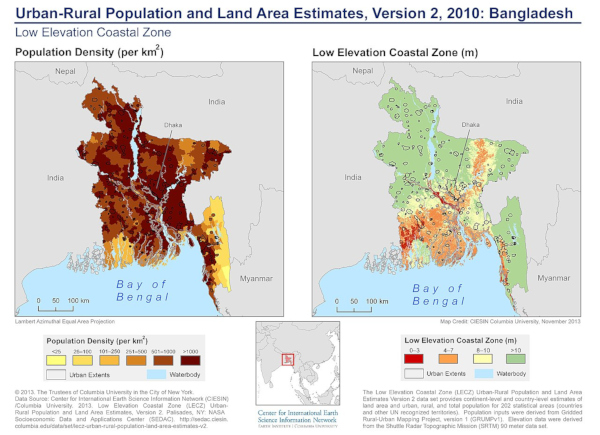
In the comments below there is some mention of the problems that Bangladesh will face due to increases in global sea level. The hypothesis is that there will be a mass migration to India as Bangladeshis flee low-level zones which are going to be inundated. I don’t think this is capturing the real issue: if millions of Bangladeshis are still subsistence farmers on marginal maritime zones then there has been a massive development failure.

Even extreme sea-level scenarios by 2100 posit a 2.5-meter rise, which means only a small proportion of the territory of Bangladesh would be inundated. If by 2100 Bangladesh is not a predominantly urban society after 80 years of economic development from 2020, there are much deeper structural problems to deal with than climate change.

Development and wealth change the downsides of risk a great deal. The 1970 Bhola cyclone caused hundreds of thousands of deaths. Something that is unlikely to be replicated in the region for various reasons (e.g., information technology and coordination are far better!).

I’ve been paying attention to climate change since the late 1980s. As someone whose family is from Bangladesh I have been very worried…my image in 1990 was of peasants fleeing inundated paddies. But things have changed a great deal. In 2020 nearly 40 percent of Bangladeshis live in cities. By 2100 a substantial majority should…

Beyond the Bangladeshi basket-case

Coronavirus has been an economic disaster all across South Asia. But, beyond that, there are changes that have occurred before the pandemic and will continue after. For example, Bangladesh’s per capita GDP now higher than eastern and northeastern India:

Bangladesh’s per capita gross domestic product (GDP) is now higher than most Indian states in eastern and northeastern India, with the exception of small hill states such as Mizoram and Sikkim. According to the data from the International Monetary Fund (IMF), Bangladesh’s per capita GDP was $1,905 in 2019, against West Bengal’s $1,566 in 2018-19 (FY19) — economically the most developed state in eastern India.

Bangladesh is not really comparable to India, which is a diversified economy that is more than an order of magnitude larger. But, it is comparable to West Bengal. On economic matters, I am broadly sympathetic to right-liberal economics, so I’ll spare you my interpretation of what’s going on.

Noakhali rape victim video

Bangladesh: Protests Erupt Over Rape Case:

Protests in Bangladesh erupted this week after a video of a group of men attacking, stripping, and sexually assaulting a woman went viral, Human Rights Watch said today. Protesters called for the resignation of Home Minister Asaduzzaman Khan Kamal over the government’s failure to address an alarming rise in sexual violence against women and girls.

Noakhali Gang Rape Victim: Delwar raped her several times before:

Our Noakhali correspondent’s personal office is in a computer market in Maizdee Old Bus Stand area. Over the last two days he has witnessed how the video spread over the whole market. It was played and replayed in public on computer screens as everyone crowded to perceive first-hand the horror inflicted on the woman.

“Bhaiya, do you have the video? I had it but it got deleted… I wanted to show it to someone,” said a computer businessman, approaching our correspondent, who declined to entertain the request.

Snippets of conversation overheard on the street also attest to how widespread the video has become. Two elderly men out on their evening stroll complained to each other, “The video keeps popping up on my mobile phone. This is so awkward, especially in front of the wife and kids…”

So perhaps a naive question: why are people sharing this video??? Every few years I hear about a gang-rape video coming out of MENA and South Asia, spreading virally. Why do people want to see this? It’s like sharing a video of a murder..

Open Thread – 10/10/2020

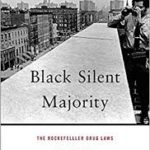
Some cool podcasts will be posted soon. Already posted two on the Patron page, including a very cool one where Mukunda and Jahanarra talk to Michael Fortner. A professor at CUNY, Fortner is the author of Black Silent Majority: The Rockefeller Drug Laws and the Politics of Punishment.

I’ve also posted a podcast with Devang Mehta on what’s wrong with science, and how to fix it (also, some advice for Indians who might want to get into the world of Western academic science).

Also, I will probably post a few previews of a new podcast I’m starting (solo) for patrons. This is going to be part of my new substack newsletter. This weekend I’ll be talking to an old friend from grad school who snapped and turned against wokism last week (he was involved with BLM since 2015, and I just got off the phone with him and he told me things he’s seen in BLM up until this summer left him very jaded, suspicious, and skeptical).

NCERT Books – Early Muslim invaders


Even though the comment thread on my previous blog post – Playing with Fire was the immediate trigger for me writing this post, but I have been meaning to wade into this topic for some time. History writing in India has been a controversial topic especially since the ascendency of Hindutva. NCERT books on history are often blamed for preventing the “Truth and Reconciliation” between the Hindus and Muslims. While these criticisms have some merit, I often feel they’re overstated and straw-manned. Left-Liberal historians – Messrs Romila Thapar, Irfan Habib, Satish Chandra has been the favorite punching bag of Hindutvavadis in general. A lot of times people get carried away in hubris while punching these histories. Generalizations and misrepresentation of writings of these historians are rife in the Hindutvavadis.

I will go through Medieval India by Satish Chandra (class 11 history), Romila Thapar’s Medieval India (class 7), and Medieval history book by Nios (by multiple authors).

This piece focuses on the treatment given to Pre-Delhi Sultanate Muslim Invaders – the famous Ghazis of Islam. My recollection of textbooks is that the Mughals (except Babur and Aurangzeb) are glorified to a certain extent – especially Akbar, but none of the previous Muslim rulers are. I may be wrong – I am yet to read those chapters and will be posting about them later.

Mohammad Bin Qassim :

The Ummayad General doesn’t get much mention in these texts as by most accounts the Arab conquests of Sindh were at most localized events and did not have lasting consequences beyond Indus. Yet the one mention he gets in the Medieval history NCERT book isn’t something which appears positive.

  1. NIOS book – Module 2 – Page 134 History Module 2:  “Arabs were also attracted by the wealth of India. Arab merchants and sailors had brought back stories of great wealth of India. However, the reason for the invasion of Sindh was to avenge the plunder of Arab Ships by pirates of Debol. King Dahir refused to punish the pirates. Hajjaj the governor of Iraq despatched an army under Muhammad Bin Qasim. He arrived in Sind in AD 712, and besieged Debol which was situated on the sea coast. After crossing the Indus he marched forward. At Rawar, Muhammad Bin Qasim attacked Dahir who was defeated. Arabs killed a large number of fleeing soldiers. Dahir was also caught and killed. Muhammad Bin Qasim now proceeded forward and within a short span he conquered various important places in Sind including Brahmanabad”

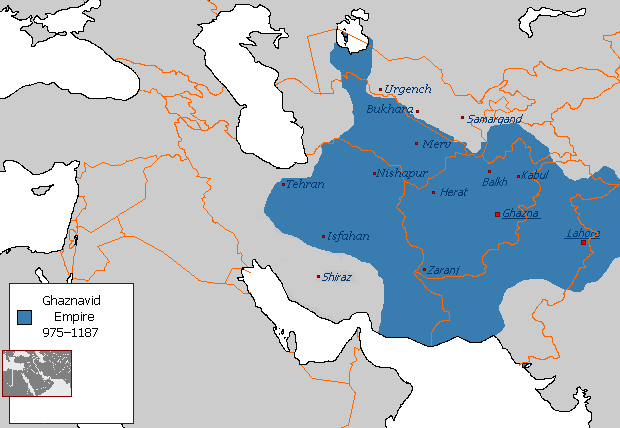
Mahmud of Ghazni:

  1. In Satish Chandra’s Medieval history, the period from 1000-1200 is called the Age of Conflict. The intra-Turkic conflict between Muslim and Non-Muslim Turks before the consolidation of Turkic sultanates also finds mention in the chapter. Additionally, he notes “The Islamized Turkish tribes were to emerge as the greatest defenders and crusaders of Islam. The love of plunder went side by side with the defense of Islam. About Mahmud – Mahmud is considered as a hero of Islam & the ghazi spirit further increased during his time. In India his memory is only of a plunderer and destroyer of temples. Mahmud also posed as the great But-shikan or destroyer of images. Mahmud also broke the Shivlingam and ordered parts brought back to his capital.”
  2. In Romila Thapar’s Medieval history, Mahmud doesn’t get a positive treatment. Thapar says “One of the attacks which is frequently mentioned was the destruction of the Somnath temple. Destroying temples had another advantage – he could claim as he did that he had obtained religious merit by destroying images. In 1030 Mahmud died and people of North India felt relieved“. After this Thapar does state his achievements for his capital and state along with his patronage of scholars like Firdausi and Al-Birauni.
  3. NIOS book – Module 2- gives a slightly more neutral characterization of Mahmud “Mahmud enriched his treasury by looting the temples of Nagarkot, Thanesar, Mathura and Kanauj. The attack against Nagarkot in AD 1008 has been described as his first great triumph. In AD 1025, Mahmud embarked on the most ambitious Indian campaign, the attack on the Somnath temple in Saurashtra. Mahmud captured the city after grim struggle in which more than 50,000 defenders lost their lives. His attacks on India were an attempt to fulfil his ambition to make Ghazni the formidable power in the politics of Central Asia. Mahmud’s raids into India were only to acquire the famous wealth of India.

Mohammad Ghori: 

  1. In Satish Chandra’s book – The Ghurid invasions and Mohammad’s legendary battle against Prithviraj Chauhan finds considerable space given to it. The analysis is neutral and doesn’t get into speculations beyond a point. The other exploits of Mohammad and Qutubuddin Aibak are explained in some detail. The author makes no claims of iconoclasm except in the case of Bakhtiyar Khalji in Bihar and Bengal. About Khalji he writes “he destroyed some of the great Buddhist monasteries at Nalanda and Vikramshila“. Additionally, he notes “Neither was really concerned with Islam, though neither scrupled over the use of Islam to justify their plunder of Indian cities and temples
  2. In Romila Thapar’s Medieval history – she also focusses on the Battle of Tarrain and appears neutral towards Mohammad Ghori and the Ghurids in general.
  3. NIOS book also gives a neutral and brief analysis of Ghurid invasions and capture of North India.

    Romila Thapar’s Medieval History is meant for 7th standard and hence doesn’t have the details seen in Satish Chandra’s 11th standard history book. Satish Chandra’s book captured a lot of facets of these invasions including religious.  Reading these chapters, it is fair to conclude that none of these books glorify these early Muslim Ghazis. It can be fairly argued from Hindutva point of view, that Islam’s role in these conquests is understated (especially in Thapar’s Medieval History). But that book is meant for 12-year-old kids.

    On the broader reading of history, I guess Islam is necessary but not sufficient in explaining the Turko-Afghan invasions of India in the 11th and 12 centuries.

    Treatment of Delhi Sultans next.

Jaswant Singh: The Last Liberal Conservative

Major Jaswant Singh (1938-2020), a former Indian army officer and distinguished parliamentarian and politician passed away recently. He served high office in the first BJP/NDA regime (1998-2004) and was, variously, the Defence, External Affairs and Finance Minister. Perhaps his most enduring legacy was his deft handling of India’s foreign policy in the aftermath of India’s nuclear tests in 1998. Most famously, his dialogues with the US Deputy Secretary of State Strobe Talbott helped cement Indo-US ties in the aftermath of the Cold War era.

There are some excellent obituaries- from allies, critics and rivals alike- which give us a good sense of the man and his persona. For me, the obituary that really struck a chord was the one by the senior Indian journalist Shekhar Gupta in his Cut the Clutter show.  It is worth quoting him verbatim:

Jaswant Singh was the last Indian liberal conservative… A conservative in the sense that he brought in a Hindu sensibility, a love for Indian culture. But liberal enough…to embrace everybody… and not interfere in anybody’s way of life and allow a healthy debate… he would have fitted the Swatantra Party very well and would have brought to it the one thing it seemed to lack in the 1950s and 60s: a strong appeal to nationalism”.  

With Singh’s passing, it does feel that the last vestiges of the Vajpayee era are fading away. In his obituary for Singh, the journalist Saeed Naqvi, by no means a cheerleader for the BJP says that “Vajpayee’s was a cabinet of women and gentlemen, a few rotten apples notwithstanding.” Old fashioned virtues of moderation, decency and honour were valued by Vajpayee, and there was no one who epitomised old school more than Jaswant Singh. Through his career as a soldier and public servant and his sense of noblesse oblige, this thoroughbred Rajput proved to be a worthy Kshatriya by virtue of his karma.  In that, he was not alone. Dr. Karan Singh of the Dogra dynasty of Jammu & Kashmir and Captain Amrinder Singh of the House of Patiala are others of his generation who come to mind, albeit with different political ideologies.

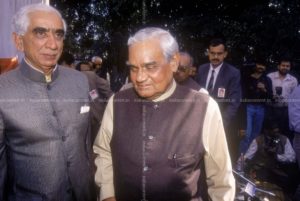
Jaswant Singh and Atal Bihari Vajpayee: The last of the Liberal Conservatives. Source: Indiacontent.in

As a self-avowed liberal conservative, it is hard to not feel a tinge of sadness at this. One got the sense that men like Vajpayee and Singh were able to balance tradition and modernity: adept at blending the Burkean with the Vedantic, and equally well versed in the Bhagavad Gita and the Indian Constitution.

I could name half a dozen prominent BJP politicians in the Vajpayee years who could have identified as liberal conservatives. I struggle to name any noteworthy ones in the Modi-Shah BJP. The closest that comes to mind is the Odisha politician Baijayant Panda, but he is not prominent or important enough in the party. Others such as the former Maharastra Chief Minister Devendra Fadnavis or the current Madhya Pradesh Chief Minister Shivraj Chauhan had the potential to tailor their politics in this direction with the right backing and support. Unfortunately the signal from the leadership is that chest-thumping nationalism and ideological purity counts for more than moderation and compromise. Unlike a Jaswant Singh, these politicians do not have the intellectual courage or independence of spirt to breach the party line and chart their own path. It is a sad indictment on Indian politics, one that would have undoubtedly greatly depressed Jaswant Singh.

China, strong government, free society, India, weak government, strong society

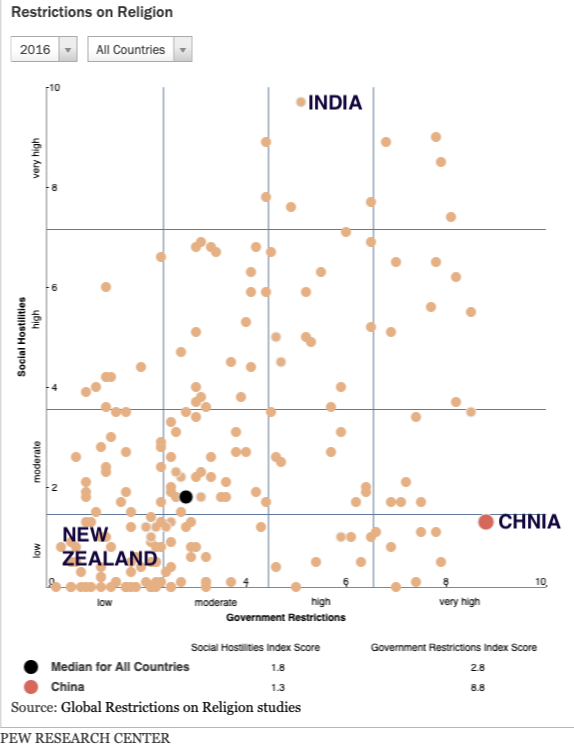
In our discussion on the podcast, Abhinav talked about China and India in relation to society vs. government. I stumbled on this chart from Pew that illustrates it.

China’s government controls religion much more than India’s government. But on a personal level, the Chinese have much more freedom in their religious identity. Indians are simply not equipped to understand how religion does not have corporate power as an identity in the same way in East Asia, which means the stakes for individual religious experimentation are far lower.

Brown Pundits