
In Cixin Liu’s sci-fi trilogy (The Three Body Problem), humanity is under attack by a more advanced alien civilization. The aliens have sent sophons (modified photons) that can read/see/hear everything that is outside our heads, but they cannot read minds (apparently the Trisolarians have not solved the mind-body problem either), so the UN selects some people to be “wallfacers”; selected humans who are given free rein to develop a strategy to stop the aliens; they keep their strategy hidden inside their own minds, while using whatever resources humanity can put in their hands. In some sense, charismatic leaders are a bit like wallfacers; we trust their leadership without necessarily knowing what goes on in their head. As the Covid-19 pandemic continues to rage, we have the organized (relatively transparent) commissions and committees of the world hard at work, trying to figure out the best possible strategy. But much is unknown about the pandemic and how it will play out, especially in economic and political domains; in such times, leadership matters more because sane people disagree and no algorithm can decide who is right. The leader really has to lead, to make difficult decisions, to take original initiatives, to look for fresh answers. So who, out of the current crop of world leaders, is likely to do something above (or well below) “normal” handling?
- Trump. My view is not a secret. He is a corrupt narcissistic conman and a disaster. That does not mean he is wrong about everything and his critics are correct. In some cases his instincts may turn out to be better than those of the bureaucrats and traditional politicians, who maybe fighting the last war with yesterday’s methods (and whose own corruption and blind spots gifted us Trump in the first place). But he is batshit ignorant, he does not want to learn, he is not interested in anything beyond his own welfare. I expect nothing from him. I don’t even think he is seriously thinking about what to do, other than what he can get for his own re-election (see how he has managed to discover that stopping immigration is an anti-viral move at this time). That said, I am aware that there are sane people who like him and I encourage them to tell us more in the comments section 🙂
- Xi Jinping. Comrade Xi and his team are a black box to me. Please add your opinion in the comments section. I do think he is a Chinese patriot and I think China has many competent people at high levels of government and they have high standards of professionalism in midlevel people; I expect them to do some things very well, but it is also a dictatorship; dictatorships breed yes men and sycophants. Which brings us back to Xi, who I dont know anything about. So please comment..
- Putin. The Czar of all the Russians is clearly an intelligent and capable man. He has been in power for a long time. That breeds overconfidence and limits reality testing. Also, his country has less money than the first two. But the list of outsiders who paid the price for underestimating Russians is a long one; they are an amazing people, regularly screwing up on a massive scale and then regularly performing well beyond expectations. What do you think it will be this time?
- Merkel. She seems highly intelligent and Germany can never be underestimated, but while I expect her to do a competent job, I do not expect unexpected miracles. No big “out of the box” moves. Which may be a good thing.
- Modi. His fans love him the way Trumpists love Trump; he is their only hope in an elite that otherwise does not have their pet projects as priority number one. Unlike Trump, he is not a conman, he is probably sincerely trying to make India stronger (whether he is succeeding or not is a separate question). But other than thinking he is sincere, I remain almost completely ignorant about his qualities as an individual. To hear his opponents say it, he is a bigoted non-entity, a “small man”, neither intelligent, nor well informed and certainly not well-intentioned. Supporters have a different view, but I am not sure how much of that is based on any real knowledge of the person, as opposed to his carefully cultivated persona (and their own projections/hopes). As far as i can tell, he is surrounded by yes men, doesn’t take criticism well and keeps his private thoughts to himself (in this at least, he is the polar opposite of Trump). So the bottom line is, I don’t know if he is capable of something above and beyond whatever capabilities the Indian state has collectively. Those abilities may be good enough (or better than nothing), but that does not seem to hold out the hope of any “out of the box” brilliant moves. Conversely, it also means they will not do crazy stuff.
- Imran Khan. The less said, the better. I will be happy if his regime turns out to have done about average. I fear they may do worse than average.
- Bojo. Baby Churchill may not be Churchill. Lets hear it in the comments.
What else? who is your wallfacer? and why? (I clearly know nothing about the leaders of South Korea, Taiwan or Japan.. feel free to tell us more about them in the comments section)
Just to be clear, I am not talking about “routine” response to the pandemic. That is important and it follows protocols and plans developed by bureaucrats and public health professionals, for better AND for worse. The thought here was that there may be an opportunity here for some nation to go beyond that level (or to significantly sink below it). IF that happens, who is likely to outperform the herd, who is likely to underperform? (e.g. I am guessing that Trump will under-perform, by American standards). For the purposes of this post, I am thinking more about the economic and political consequences, not so much the caseload and death rate.
Trump seems to suggest this as a possible coronavirus treatment: “And then I see the disinfectant, where knocks it out in a minute. One minute. And is there a way we can do something like that, by injection inside or almost a cleaning … It’ll be interesting to check that.”
— Kyle Griffin (@kylegriffin1) April 23, 2020
 Another BP Podcast is up. You can listen on
  As someone who was raised in the United States as a person of brown complexion, I grew up as an “Indian.” This, despite the fact that the last time any of my ancestors were Indian nationals was before 1947. The main reason is that it is really hard to get people in 1980s America to know what “Bangladesh” was. Yes, there was a famine and a concert in the early 1970s, but this was not very well known. Since I had brown skin, and my parents ate spicy food, it seemed plausible to accept that I was Indian and just “go with it”.*
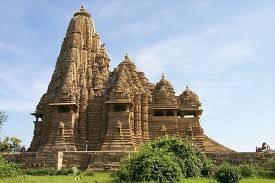 As a grown adult, with children of mixed background who find my exotic antecedents amusing, I have had to reflect more on the relationship between India and its native religious traditions and identities. Hindus often make the accusation to Indian Muslims and Christians that these religion’s holy sites are elsewhere. In contrast, southern Asia is the locus of “Hindu” spirituality. The sacred geography of Islam in Arabia, the Levant, and for Shia and Sufis more broadly across the Near East (with some expansion in other areas for Sufis, though these are secondary). For Christians, the locus is in the Near East and Europe. But I think this focus on Islam and Christianity takes the eyes off the major prize.
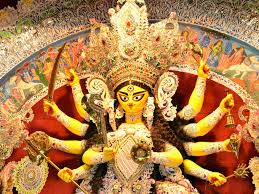
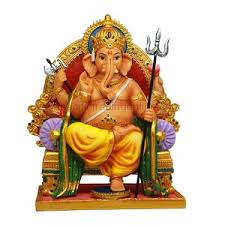 What does it mean to be Hindu?** I think that it is clear that Hinduism is a precipitation of the indigenous religious traditions of India, a fusion of numerous strands which are quite distinct. As a non-Hindu it is not my role to adjudicate on what is, or isn’t, Hindu, but it seems quite clear that there is something distinct from Islam and Christianity, and that that distinctiveness is usually due to indigenous aspects (some of which were exported through Buddhism out of India). Al-Biruni saw this. Hindus themselves saw this even if they did not think of themselves as a confessional religion.
 This doesn’t mean that non-Hindu Indians and subcontinentals are not distinctively South Asian. Look at a street scene in Pakistan, and it looks more like New Delhi than Tehran. The people, the color, the foods and density. But for various reasons Pakistanis have rooted their identity in Islam, and this makes identification as subcontinental awkward for many Pakistanis, because Hinduism suffuses subcontinental identity. The word Hindu after all originally just meant Indian.
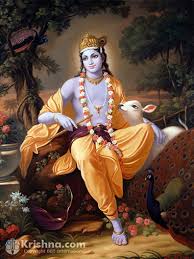 The point of this post is not to take a particular stance on whether India is or isn’t secular, or should or shouldn’t be secular (whatever that means in India, which is different from the United States). Rather, it’s to acknowledge the “elephant in the room.” Growing up around my parents’ Indian, Pakistani, and Bangladeshi friends, there was always the reality and tension that they had non-subcontinental attachments and identification, in theory. The theory part is made salient by the reality that my parents socialized with Hindu Indians and Bangladeshis (generally Bengali, but not always), but never with Muslims from other regions (the sole exception was when I had an Indonesian best friend, though my parents complained that the Indonesians weren’t very good Muslims anyway so what was the point?). They were foreigners in concrete terms, though there was an abstract brotherhood implied by faith.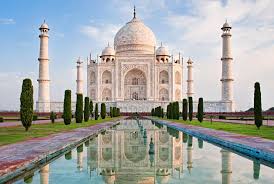

 You can also support the podcast as a