
Find more statistics at Statista
Ghaznavids from 1021 to 1186
The following is a set of pictures from Major Amin (a well known military history specialist in Pakistan) that give the flavor of the 200 year run of loot, plunder and internecine warfare that characterized the Ghaznavid dynasty (including alliances with Indian rulers and officials who were willing to work with them). These are just headlines, interested readers will have to look up more detail in other articles and books (or in wikipedia, which is always helpful). There is a volume 1 that I will post when i get some more time.
By the way, this topic reminded me of a little episode from our school days. We had a Christian history teacher (a Mr Lawrence) who had written a kind of guidebook that all of the students used to study 8th grade history. In the chapter on Mahmood Ghaznavi, he had listed the reasons for his attacks on India. The list included items like spreading Islam and putting down miscreants and point number X was “loot and plunder”. Our Islamic studies teacher found out and started a campaign against Mr Lawrence for bringing Islamic heroes into disrepute. This led to the inevitable excision of this chapter from the book, but students had copies that had already been printed; they had to have the offending passages either torn out or crossed out. So it goes..

Browncast Episode 94: Amey and Amit, Indians, not South Asian
Another BP Podcast is up. You can listen on Libsyn, Apple, Spotify, and Stitcher (and a variety of other platforms). Probably the easiest way to keep up the podcast since we don’t have a regular schedule is to subscribe to one of the links above!
 You can also support the podcast as a patron. The primary benefit now is that you get the podcasts considerably earlier than everyone else. This website isn’t about shaking the cup, but I have noticed that the number of patrons plateaued a long time ago.
I would though appreciate more positive reviews! Alton Brown’s “Browncast” has 30 reviews on Stitcher alone! Help make us the biggest browncast! At least at some point.
This episode is a discussion with regular guests Amey and Amit, two Right(ish) and American(ish) people of Indian origin. Their main beef on this podcast is with terms such as “South Asian”, and it means and doesn’t mean…
Being right-wing is just a thing, no matter the color
The Juggernaut has an amusing piece Seema Verma and the #DesiWallofShame, which basically assumes that any brown person (Indian American) who has non-liberal beliefs must be exhibiting either false consciousness or self-interest. The piece reminded me of this PLOS ONE piece, The Moral Stereotypes of Liberals and Conservatives: Exaggeration of Differences across the Political Spectrum:
Across the political spectrum, moral stereotypes about “typical” liberals and conservatives correctly reflected the direction of actual differences in foundation endorsement but exaggerated the magnitude of these differences. Contrary to common theories of stereotyping, the moral stereotypes were not simple underestimations of the political outgroup’s morality. Both liberals and conservatives exaggerated the ideological extremity of moral concerns for the ingroup as well as the outgroup. Liberals were least accurate about both groups.
This part of the piece was quite funny to me:
In the months after Verma was confirmed in 2017, South Asian American activists such as Deepa {{{Iyer}}}, Anirvan {{{Chatterjee}}}, and Esha {{{Pandit}}} started noticing that there was an abundance of Indian Americans in the highest echelons of the Trump administration.
“It was so surprising and jarring to see someone brown supporting policies which harm South Asian communities, immigrant communities, refugees, Muslims, and other communities of color,” explained Iyer. For example, Trump’s efforts to deport DREAMers and other undocumented immigrants could affect over 22,000 Indians and Pakistanis. “A group of us that felt like it would be important to raise awareness and ask, ‘What does that mean when they’re supporting and advancing the goals of administration that is clearly pursuing an agenda of Islamophobia, xenophobia, racism?’”
Many years ago there was an attack on Michelle Malkin as the “Asian Ann Coulter.” Malkin, and even some liberals, suggested that really she was just Michelle Malkin. Her “Asian” ethnicity was immaterial.
Similarly, don’t be surprised that someone of a particular color or ethnicity has views that differ from your own. People are diverse in their views, no matter their physical type or cultural heritage. Since Deeper {{{Iyer}}} is a progressive she doesn’t think that she could ever be racist, but the idea that just because someone is of a particular color they should be the ideology that you prefer they be, that’s kind of racist.
The stupid part of the #DesiWallOfShame is that you should “shame” Veerma, Pai, or Haley, based on their beliefs and actions. Their ethnicity is irrelevant. There’s no #GermanAmericanWallOfShame for Donald Trump.
The Elephant and the Dragon
This comment reflects in many ways important elements about how and why the Chinese view the Indians as they do:
… your question has answers in two periods. The second and most recent was during the cold war, shaped by Chinese elite (diplomatic) interaction with their Indian counterparts during this period who came to see Indians as unserious prevaricators. Big talkers and little doers, whether or not you agree with this assumption, it is what drives Chinese elite opinion today.
The first and older break was an earlier schism in worldview at the dawn of the 20th century when Chinese elites chose to take the path of Darwinian materialism towards national salvation. This meant radical politics and a restructuring of Chinese society towards any ends at any cost as long as it meant material prosperity and power. This left China lurching between fascism and communism. At the same time they came to view simultaneous Indian political trends, another vast nation under Western power, as being embodied by Tagore and Gandhi. That is focused towards traditionalism and eastern metaphysics as a path to revival. This is again may or may not be true but it became the default opinion. This was actually shared by elements of the Chinese elites as well, though the losing faction. The winners of the debate viewed such a policy as childish escapism verging on nihilistic passivity in the face of real threats and India, as the eidolon of such defeated views became tarred by association.
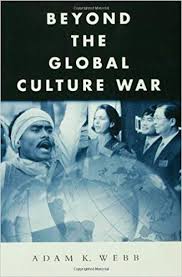 As I have noted before, Adam K. Webb’s Beyond the Global Culture War highlights attempts by early 20th century Asian traditionalists to coordinate. Some of the same characters appear in Mark Sedgwick’s Against the Modern World: Traditionalism and the Secret Intellectual History of the Twentieth Century. For all the influence of Fabian socialism on Nehru and the early leaders of India, nothing on the scale of what happened in China to the traditional society occurred in India.
But today as many Chinese transition to post-materialism they are looking back to their own past. This is natural. But the past destroyed is not so easy to access and rebuild.
Addendum: Chinese liberals and progressives of the early 20th century adopted and modified racial theory from Europeans.
Nicknames in the British Indian Army
An oldie from Dr Hamid Hussain
Nicknames
Hamid Hussain
In British army, officers were sometimes given nick names. This tradition continued in British Indian army when Indians were commissioned as officers. The trend continued in present day Indian, Pakistani and Bangladeshi armies with addition of some native touch. Some nick names were simply abbreviations of original names. Lieutenant General B. M. Kaul (5/6 Rajputana Rifles) was nick named ‘Biji’. His first name was Brij Mohan which was abbreviated to ‘Biji’. Brigadier H. D. Bilimoria was nicknamed ‘Russi’ while some friends called him ‘Billi’ and Major General Iftikhar Khan (7 and 3 Cavalry) was nick named ‘Ifti’. Some modified abbreviations of original names were also used. Lieutenant General Altaf Qadir (4/12 Frontier Force Regiment) was called ‘Toffy’ probably transformation of his first name Altaf while Lieutenant General Habibullah Khan Khattak (Baloch Regiment and 1 Bihar Regiment) was called ‘Beebo’.
Many Indian officers had long names that were difficult to pronounce therefore they were given Christian nick names by their fellow officers as it was easy to pronounce. Field Marshal Kodandera Madappa Cariappa (1/7 Rajput Regiment)) was nick named ‘Kipper’, General Kodendera Sumaya Thimayya (4/19 Hyderabad Regiment) was called ‘Timmy’, Field Marshal Jemi Hormusji Framji Manekshaw (4/12 Frontier Force Regiment & 2/8 Gorkha Rifles) was called ‘Sam’, Lieutenant General Atiq ur Rahman (4/12 Frontier Force Regiment) was called ‘Turk’, Major General Yusuf Khan (7 Light Cavalry) was called ‘Joe’ and Major General A. A. Rudra (28 Punjabis) was nick named ‘Jick’.
Some nick names originated as a complement of a quality of the officer or some weak point. Others got weird nick names for different reasons. Lieutenant General Amir Abdullah Khan Niazi (1/14 Punjab Regiment) won his Military Cross (MC) in the killing fields of Burma, pinned by Viceroy Lord Wavell. He fought well and his superior British officers were impressed and nick named him ‘Tiger’. He was known in the army as Tiger Niazi. When he landed in East Pakistan in 1971, he announced that ‘Tiger Niazi’ has arrived. A Bengali commander Kadar Siddiqi (a non-commissioned officer of 2 East Bengal Regiment) quipped that “there are no tigers in Mianwali (referring to Niazi’s birth place). Here you are among tigers”. Kadar fought against Pakistan army and earned for himself the nick name of ‘Tiger’ and later popularly known as ‘Tiger Siddiqi’.
Open Thread, 04/11/2020 Brown Pundits
Do your thing.
Update: I forgot I had an open thread in queue. So that’s why it’s redundant. At least you have two places to bicker over Hindu/Muslim-India/Pakistan-Cow dung/Camel Urine
Open Thread, April 11th, Brown Pundits
Talk about what you want to talk about.
How is everyone holding up in lockdown?
The gods of place
 Two books recently have made me wonder about the insights into the development of religion and culture in the Indian subcontinent. The Final Pagan Generation: Rome’s Unexpected Path to Christianity explicitly makes an analogy to local Hindu gods and shrines to allow us to conceptualize what pre-Christian Roman religion was like. The whole city was the purview of the gods, and their presence pervaded the world. The Final Pagan Generation notes that even though the attack on grand public temples such as the Serapion at the end of the 4th century are salient and notable, even 100 years later Christian mobs were able to collect thousands of items of religious significance through Alexandria.
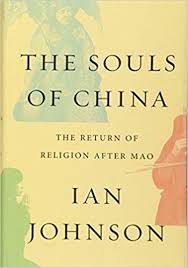
Recently I have been reading The Souls of China: The Return of Religion After Mao. The author notes that though the great traditions of Buddhism, Daoism, and Confucianism, warrant public notice, the reality is that pre-modern Chinese religion was dominated by local gods, with numerous temples to the gods of a particular city, or a particular profession. Reviled as “superstition” in the early 20th century, these local gods and their shrines were torn down and destroyed first by the Nationalists, and later the Communists. 21st century China has only slowly been allow for the reemergence of this religious substrate.
One could argue that Abrahamic religions lack these organically developed local twists. But this is actually not true, as for Catholic Catholics saints and relics are a critical intermediary layer in their religious institution, and within many forms of Islam, the shrines of saints are critical. Rather, particular forms of Protestant Christianity and Salafist Islam are peculiar in their abstraction and rational decoupling from place.
Browncast Episode 93: Camilo Gomez, Peruvian Left-libertarian
Another BP Podcast is up. You can listen on Libsyn, Apple, Spotify, and Stitcher (and a variety of other platforms). Probably the easiest way to keep up the podcast since we don’t have a regular schedule is to subscribe to one of the links above!
You can also support the podcast as a patron. The primary benefit now is that you get the podcasts considerably earlier than everyone else. This website isn’t about shaking the cup, but I have noticed that the number of patrons plateaued a long time ago.
I would though appreciate more positive reviews! Alton Brown’s “Browncast” has 30 reviews on Stitcher alone! Help make us the biggest browncast! At least at some point.
 Readers might want to know that last month was our biggest month in terms of traffic in the last year and a half of the Brown Pundits Browncast. This is probably due to the copious number of podcasts.
If you skip a week, make sure to check the backlog, because some weeks we post three podcasts!
This episode is a discussion with Camilo Gomez, a Left-libertarian intellectual and activist based out of Lima. We discussed:
– Covid-19 in Ecuador
– Racial dynamics in Peru
– The influence of Chinese in Peru
– What’s going on with Bolsonaro in Brazil?
– The long-term prospects of libertarianism in Latin America