Please keep the other posts on topic. Use this for talking about whatever you want to talk about.
Please note our podcast, Twitter, and RSS feed. Also, our Patreon.
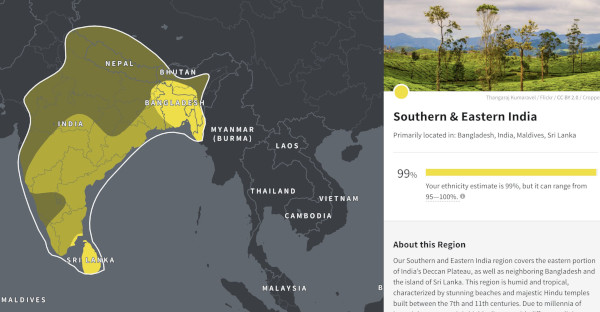
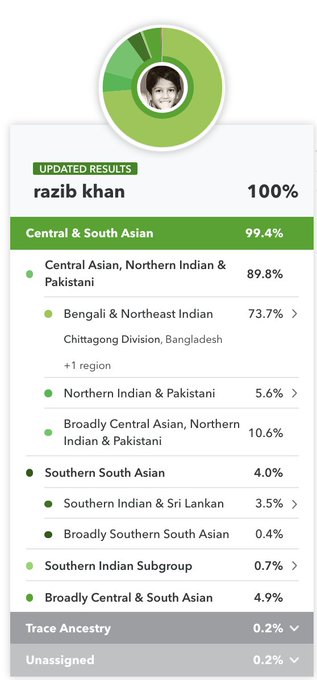 Recently I made a comment that I appreciate what 23andMe and Ancestry have done with their South Asian ancestry updates. My own results came into sharper focus. The algorithms did what they were supposed to do.
Both of the companies found that I’m probably Bengali. 23andMe, with its massive database, and SVM framework, even narrowed down where in Bangladesh my family is from.
Both my parents are from Comilla. More specifically, my mother’s family is from Homna (though her maternal grandfather was from Noakhali by origin). When I was small I was sent to stay with my mother’s relatives in Sreemudi village, which I can now find on Google maps! My father’s family is from just outside of Chandpur. Basically, my family hails from the lower reaches of the Meghna river. And more precisely, the eastern shore of the Meghna.
And yet this analysis is missing something. The term and category “Bengali” has implicit within it other phenomena. I generated a PCA which illustrates this well:
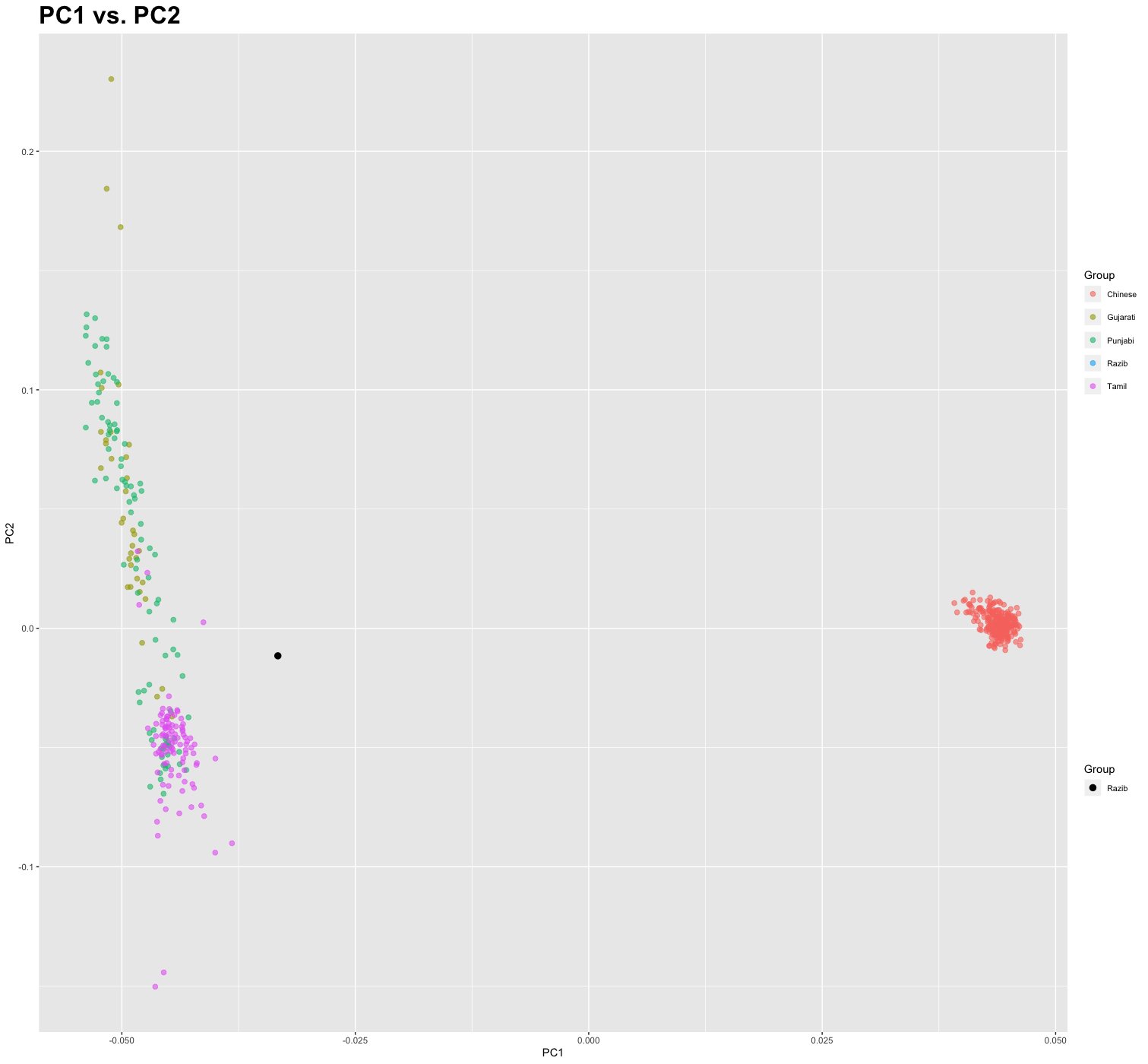
You can see I’m pretty clearly shifted toward East Asians. That’s because that’s common in Bengalis. That seems like it’s interesting information people would like to know. But simply creating a “Bengali” category masks all that.
Speaking of genetics, I finally got around to playing around with qpAdmin. People keeping asking me Bengali percentages of the various ancestral components in the recent Reich lab India paper. Well, I ran the same model (mostly, not exactly sure of all the samples….), and got some results.
| IndusValley | Steppe | AHG/AASI | EastAsian | Birhror (Munda) | |
| Bengali | 0.448 | 0.126 | 0.301 | 0.125 | |
| Punjabi – Lahore | 0.58 | 0.2 | 0.192 | 0.03 | |
| Tamil – Sri Lanka | 0.57 | 0.07 | 0.38 | -0.025 | |
| Gujarati | 0.59 | 0.18 | 0.21 | 0.03 | |
| Telugu | 0.595 | 0.085 | 0.33 | 0 | |
| Birhor | 0.27 | 0 | 0.49 | 0.24 | |
| Bengali | -0.163 | 0.142 | -0.86 | -0.364 | 2.25 |
| Bengali | 0.264 | 0.136 | -0.075 | 0.675 |
The “Bengali” sample is from the 1000 Genomes. You can see that 12.5% of the ancestry is “East Asian”. These are Dai. The AHG are modeled as being related to the Andamanese as per the Reich lab paper, and Indus Valley are the pooled IndPe samples. Steppe are Sintashta.
I ran the other 1000 Genomes samples with the same model. The -0.025% for Tamils for East Asian is that this model is really not necessary for them. I kept the East Asian in there to compare apples to apples with the Bengalis.
I also looked at Munda population, the Birhor. The results align perfectly with what we know. The Munda have no steppe ancestry. But, they have a lot of East Asian ancestry. One hypothesis for Bengalis is that they have Munda ancestry. But when I add them to the model you can see the results are crazy. If I swap out the East Asians with the Munda the results make some sense, but standard errors are way higher than in the model with the Dai/East Asians.
Basically, Bengali (Dhaka) samples have East Asian ancestry that’s more like populations to their east, and not like the Munda to their south and west.

In the post 9/11 years, a multitude of “Pakistan experts” emerged and the bookshelves were flooded with books containing the words ‘Pakistan’, ‘crisis’, ‘storm’ or ‘battle’. In my opinion, very few writers from outside Pakistan (and even inside) have explored the country, its politics and its regional dynamics pre- and post-9/11. I consider Shuja Nawaz as one of the authors who, both as an insider and an outsider, written about Pakistan’s civil-military imbalance and foreign policy while maintaining balance and equanimity. I would like to disclose here that I have benefitted personally from Shuja Nawaz’s actions in the past. I was selected as one of the fifteen ‘Emerging Leaders of Pakistan’ (ELP) selected by Atlantic Council’s South Asia center (headed by Shuja) in 2012.
A little backstory: I was in a strange place in my life at the time. I had just finished medical school and had started my internship in internal medicine. My life was in flux. In the last year of medical school, I had drifted away from medicine and towards political science and history. Following Salmaan Taseer’s assassination in 2011, I had taken night classes at a makeshift school on political economy and history (more on ST’s assassination and my transformation here ). I had also started writing for my own blog and later for express tribune’s (ET) blogs and for Viewpointonline, a fledgling left-wing weekly. By the time I started my internship in May 2012, I had been published in ET, Pakistan Today and Dawn Blogs. During medical school, I had taken part in student politics and was aware of the brewing ‘Doctors Movement’ which was headquartered in the same dorms where I lived. In June-July 2012, there was a massive strike across Punjab and many of my classmates who were interns got arrested and were placed alongside death row inmates in Lahore. I wrote about this for ET and Dawn and engaged in twitter and Facebook wars with people who saw no benefit in our strike. A week after the strike was over, I received an email from Shuja that I had been selected for ELP and would be visiting the US in October-November 2012. I had earlier done an online interview and an in-person interview (after a typical 40-hour shift at the hospital) during the selection process. The other 14 people came from different backgrounds (Activists, NGO people, media people) and I was selected as a writer. We met General Mattis at Shuja’s house in Virginia, Lt Gen Douglas Lute (Obama’s special rep for Af-Pak) in the West Wing of White House and Chuck Hagel at the Atlantic Council. We also visited the Pentagon and Hoover Institute in San Francisco where we met George Shultz. Most of these meetings came about due to personal connections and efforts by Shuja and his staff. One of the dominant themes of our conversations was the status of Pakistan post-2014 ‘withdrawal’ of the US from Afghanistan. We also got a two-hour masterclass in US-Pakistan history from Shuja while we were stranded at our hotel in NYC due to Hurricane Sandy (and had to cancel our meeting with then-Mayor of Newark, Cory Booker). I wrote a few blogs for the now-defunct website for the fellowship that can be accessed here, courtesy of way back machine.
Personally, that first visit to the US in 2012 changed a lot of things for me in the short and long run. The fact that I’m writing this while sitting in the United States with a pretty stable life owes a lot to that selection. I have met Shuja over the years both in the States and in Pakistan and have learned a lot from him. I rate his earlier book ‘Crossed Swords’ (which I have a signed and amended-by-the-author copy of) as one of the best books on Pakistan’s military-industrial complex and its impact on Pakistan’s history.
Moving on to the next book. Shuja has been close to many of the protagonists in the book on both the US and Pakistani side. He grew up in a military family and his brother Asif was Chief of Army Staff in the early 90s, before his sudden death. He has been called the ‘Pakistan army’s man in DC’ by some people in Pakistan over the years. Having read books on Pakistan-US relations in the last decade (including but not limited to: Directorate S, The Dispensable Nation, War on Peace, India vs Pakistan, Sleepwalking to Surrender, The Wrong Enemy, The Way of the Knife), one gets a general outline of the ebb and flow of the relationship between the two countries. What Shuja’s book does is to add an insider’s narrative on the events and puts things in perspective. It starts off on the Pakistan side with the political reshuffling underway in 2006 when Musharraf wanted to sign an NRO with Benazir Bhutto (BB) and a few months before that Nawaz Sharif and BB had signed the Charter of Democracy. Musharraf wanted to share power with BB but on his own terms, as a dominant partner. BB was not interested in such a lopsided setup and was gathering allies in the US before her trip to Pakistan. Musharraf was fighting many fires in 2007, the chief one among them was ‘Lawyers Movement’, allegedly an internecine conflict involving different intelligence agencies. BB landed in Pakistan in October and faced a bomb blast in which she survived but more than 100 of her dedicated party workers perished. In December, BB was not so lucky and became the target of another assassination attempt. Musharraf had lost the plot. Fresh Elections were held and BB’s party took control of the Federal government. Musharraf tried to maneuver a role for himself in the democratic setup but had to resign in August 2008. It was a new era for Pakistan and the political class was in charge after 9 years of complete military rule. Shuja was a first-hand witness to BB’s deliberations in the US and provides an insight into her mindset and that of Zardari at the time.
There was a change of guard in the US as well. Obama was elected President on the promise of quitting the useless, forever wars in Iraq and Afghanistan. In the first Obama term, there was the morass known as ‘Af-Pak’ policy review with State Dept, CIA, Military on one side and Richard Holbrooke on the other. In the end, with all possible information, Obama chose to announce an exit timetable from Afghanistan alongside a surge of troops. That was a blunder, as has been acknowledged by people in the Obama Foreign Policy team. The details of this process have been documented by Steve Coll and Vali Nasr in their respective books but Shuja provides further insight gained from candid interviews with key stakeholders and policymakers including Bruce Reidel. One particular thing that caught my eye was the discussion on Haqqani Network. I have always wondered why Pakistan protected them with such rigor and passion. A ‘senior Pakistani army officer’ told Seymour Hirsch that Haqqanis had “facilitated the evacuation of ISI personnel and their friends from Kunduz” and that was why they were regarded highly. Shuja thinks its not the right answer and I tend to agree with that. I wrote about the infamous Kunduz airlift here (link) and wish more Pakistanis would know about that incident.
With the arrival of Obama, the Musharraf-Bush ‘bromance’ post-9/11 was also over. Pakistan had received generous US aid and support (Non-NATO ally status and more) as a result of that relationship. The year 2008 changed that. Things went from bad to worse in 2011 though. Shuja has reserved a major chunk of his book on what happened in that fateful year. It was the year of Raymond Davis, of the OBL operation (my first ever blog for Dawn was on the OBL raid and I remember writing about the incident in Urdu while sitting in a General surgery lecture during May 2011), Memogate and Salala. I remember being quite up to date with the news at the time but Shuja’s narrative on all of these events, particularly the Memogate and Salala has added to my understanding of how the events unfolded and divergent viewpoints of protagonists.
He devotes a chapter to the issue of Financial Aid from the United States to Pakistan. It is a complex topic that involved failures on both sides. I have talked to many friends in Pakistan about this who work in development/human rights organizations and they told me stories of how cumbersome the process of getting funds from USAID is and the need for publicity often has to be weighed against the image that the US has in Pakistan (which is overwhelmingly negative). That is the reason why some of the leading human rights organizations (e.g HRCP, Shirkat Gah) in Pakistan don’t even apply for grants and funds from US sources. There was (still probably is) a whole industry of ‘grifters’ who arose from the post 9/11 largesse by the United States. In the mid-2000s till recently, using the words ‘combating religious extremism’ was a very good way to get international aid in Pakistan, a fact that has been criticized by actual human rights activists. Many religious figures also used this opportunity to get US visas and money in the guise of fighting religious fundamentalism. Shuja writes about the much-maligned Kerry-Luger bill (in 2009) that was supposed to prioritize civilian aid to Pakistan and was disparaged from early on by the military. In the Tierney Repot in 2008, prepared by the US House of Representatives Committee on Oversight and Reform, it was admitted that “US brand in Pakistan had become ‘toxic’ over time”.
The New York Times wrote an editorial in 2015 titled ‘Is Pakistan worth America’s Investment?’ which Shuja quotes (and I find very true):
“Since 9/11, the United States has provided Pakistan with billions of dollars, mostly in military aid, to help fight extremists. There are many reasons to have doubts about the investment. Still, it is in America’s interest to maintain assistance—at a declining level—at least for the time being. But much depends on what the money will be used for. One condition for new aid should be that Pakistan do more for itself—by cutting back on spending for nuclear weapons and requiring its elites to pay taxes.
Doubts about the aid center on Pakistan’s army, which has long played a double game, accepting America’s money while enabling some militant groups, including members of the Afghan Taliban who have been battling American and Afghan troops in Afghanistan”.
Military Aid and what Pakistan did with that is no different. The details about how the Navy claimed $445 per sailor from Coalition Support Funds (CSF) in June 2005 but $800 per sailor in December 2005 would be comical if not tragic. In contrast, Air Force charged $800 per person in 2004 and $400 in later years. The Army charged steadily at $200. Similarly, Navy charged $5700 per vehicle per month as opposed to Army’s less than $100 per vehicle per month.
For Pakistan-watchers and students of civ-mil imbalance in Pakistan, there are frequent nuggets of interesting information. For example, about the 2014 PTI Dharna, US Ambassador Olson told Shuja that “We received information that Zahir-ul-Islam [DG-ISI] was mobilizing for a coup in September of 2014. General Raheel Sharif blocked it by, in effect, removing Zaheer, by announcing his successor. Zahir was talking to the corps commanders and was talking to life-minded army officers. He was prepared to do it and had the chief been willing, even tacitly, it would have happened”. We also learn about the inroads made into military by Tablighi Jamaat (TJ) and the ‘Pir-Bhai’ system which distorts the discipline of army.
In my opinion, the book is recommended reading for people interested in Pakistan, its civil-military relations and how the US treats its relation with Pakistan.
Another BP Podcast is up. You can listen on Libsyn, iTunes, Spotify, and Stitcher. Probably the easiest way to keep up the podcast since we don’t have a regular schedule is to subscribe at one of the links above.
You can also support the podcast as a patron. The primary benefit now is that you get the podcasts considerably earlier than everyone else.
Would appreciate more positive reviews! Alton Brown’s “Browncast” has 30 reviews on Stitcher alone! Help make us the biggest browncast there is!
 We chat with American Enterprise Institute’s Sadanand Dhume (who also writes for the Wall Street Journal) about Konkani Brahmins, Hindutva, Ram Mandir, Babri Masjid, Indian culture wars and anything else that comes up.
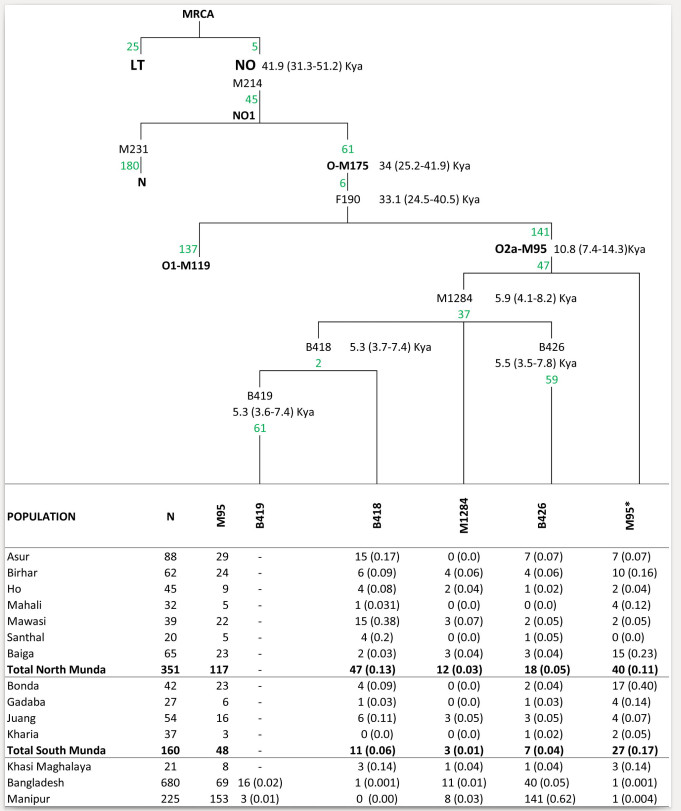
The phylogenetic analysis of Y chromosomal haplogroup O2a-M95 was crucial to determine the nested structure of South Asian branches within the larger tree, predominantly present in East and Southeast Asia. However, it had previously been unclear how many founders brought the haplogroup O2a-M95 to South Asia. On the basis of the updated Y chromosomal tree for haplogroup O2a-M95, we analysed 1,437 male samples from South Asia for various downstream markers, carefully selected from the extant phylogenetic tree. With this increased resolution, we were able to identify at least three founders downstream to haplogroup O2a-M95 who are likely to have been associated with the dispersal of Austroasiatic languages to South Asia. The fourth founder was exclusively present amongst Tibeto-Burman speakers of Manipur and Bangladesh. In sum, our new results suggest the arrival of Austroasiatic languages in South Asia during last five thousand years.
From the discussion:
The diverse founders as well as the large number of unclassified samples (41% for Mundari, 38% for Khasi and 1% for Tibeto-Burmans) suggest that the migration of Austroasiatic speakers to South Asia was not associated with the migration of a single clan or a drifted population. Neither does the contrasting distribution of various founders discovered in this study amongst both Mundari and Tibeto-Burman populations support the assimilation of the former to the latter.
Another BP Podcast is up. You can listen on Libsyn, iTunes, Spotify, and Stitcher. Probably the easiest way to keep up the podcast since we don’t have a regular schedule is to subscribe at one of the links above.
You can also support the podcast as a patron. The primary benefit now is that you get the podcasts considerably earlier than everyone else.
Would appreciate more positive reviews! It’s been a really really long time that we’ve been on 30 iTunes positive reviews. I notice that Alton Brown’s Browncast has 30 reviews on Stitcher alone! Help make us the biggest browncast there is!
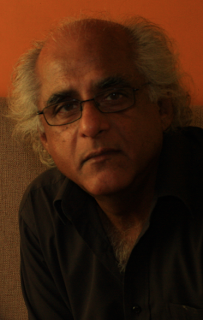
In this episode we talk to Salman Rashid. Salman is an ex-army man who left the army to become a travel writer. He has written 10 books and countless articles, most of which can be found at his blog odysseuslahori. We talk about partition, Pakistan, history, Alexander the Great and whatever else comes up..
\
A short introduction to the work of Muzaffar Ghaffar, who has published 30 volumes of classical punjabi poetry with detailed explanations and translation. Written by Punjabi writer Nadir Ali (who happens to be my father)
Muzaffar Ghaffar on Guru Nanak
BAABA NAANAK Within Reach – in MUZAFFAR GHAFFAR’S series “Masterworks of Punjabi Sufi Poetry”
Publisher :Ferozsons (Pvt) LTD Pages : 435 Price : Rs 1095
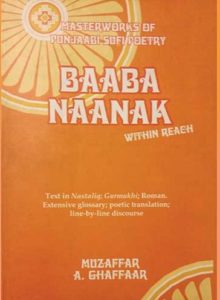
In the cultural wasteland that is our homeland these days, to be a man of culture doesn’t take much effort; you do some literary chit chat or somehow get your name printed with some work people assume as cultural or creative and you become a cultural or literary figure! Having known Muzaffar Ghaffar for over thirty years, he is an honourable and notable exception to this superficial trend. He came to Pakistan with his savings and a couple of books in print, a book of English verse which has had a couple of editions published and a book On How a Government is Run . In my involvement with Punjabi we came together in the weekly “Sangat” in readings of Punjabi classic poetry held at the residence of Najm Hosain Syed and Samina Hassan Syed and I have had the pleasure of knowing him for over 30 years now.
A digression first: Najm Sahib is already famous in Punjabi literary circles in both East and West Punjab. To give you some idea I often quote a well-known Sikh scholar of Punjabi who was Head of Punjabi Department at Guru Nanak University, Amritsar. He said, “There are two categories of Punjabis – those who have studied Mr. Najm Hosain Syed and those who have not; those who have not read him do not know much about Punjabi language or literature!” To those not familiar with Mr. Najm Hosain Syed’s work, this may sound like an exaggeration. But having attended weekly meetings at his house for nearly forty years and having read his poetry and books on literary criticism, plays and poetry, I venture to share this remark. There are almost forty books of verse and landmark works of literary criticism and four books combining half a dozen plays in Punjabi to his credit. He keeps his books small so that the price remains within reach of Punjabi readers. “Recurrent Patterns in Punjabi Poetry” is his masterwork and the full text is online at apnaorg.com.
Najm is Muzaffar’s guide and inspiration for the thirty volumes of the “Within Reach” series on Punjabi Classical poetry that are available to date, all in English. But neither in the US, nor in England and rest of English speaking world abroad have I seen these books in the market, although Punjabi literature is taught in many places in institutes of repute in these countries, with considerable Punjabi speaking public. Nor do I know of anyone abroad who talks of these books. In particular the worth and value of this remarkable volume “Baaba Naanak Within Reach” on Baba Nanak’s poetry is incalculable, and it is our enormous loss that this work of M. Ghaffar remains largely unknown. Continue reading Baba Nanak Within Reach, by Muzaffar Ghaffar
From Dr Hamid Hussain. Dr Hamid is what might be described as a “secular” or “liberal” Muslim. These are his personal thoughts on the Ram Mandir judgement.
11 November 2019
Someone had sent me excerpts of Spinoza’s God a day before the Indian supreme court verdict. I was pondering over those words when I was asked about my comments. Following was the result and all credit goes to Spinoza.
“If you are desirous of obtaining a great name, of becoming the founder of a sect or establishment, be completely mad; but be sure that your madness corresponds with the turn and temper of your age. Have in your madness reason enough to guide your extravagances, and to not forget to be excessively opinionated and obstinate. It is certainly possible that you may get hanged; but if you escape hanging, you will have altars erected to you”. Voltaire (1698-1778)
Regards,
Hamid
Babri Mosque Verdict
Hamid Hussain
“The toughest kind of forgiveness is self-forgiveness and the road that leads to it is a lonely one but is also where mad meets the divine”. (1)
On November 09, 2019, Indian Supreme Court announced its judgment about the long standing dispute between Hindus and Muslims about a religious site in Ayodhya. Muslims claim that a mosque has been at this place since sixteenth century. Hindus claim that it was built on the site of a Hindu temple. The place has been locked since 1949 for fear of threat to public order. On 06 December 1992, a Hindu mob demolished the mosque resulting in riots that resulted in death of over 2000 people. After a three decades court battle, court awarded the site to Hindus to build a temple explaining that the sixteenth century mosque was built on the ruins of a Hindu temple. Continue reading The Ram Mandir Verdict in India. From Dr Hamid Hussain
A recent comment revived this excellent older post by The Emissary, so we’re bringing it back to the front page. Our archives are strong, and worth revisiting.
There are various images I could have chosen to represent Islam in India. One could use the Taj Mahal, the ruins of a temple, a mural of a bloody battlefield, Muhammed Ali Jinnah, the beauty of Indo-Islamic art, and so many more images. Islam in India has had a long and complicated history. People have argued till tongues became swords over the impact of Islam on India and its relation to the people. Indeed, one could argue the most lasting impact of Islam on the subcontinent is its partitioning by Jinnah and his cohorts on that fateful day in 1947; when Mahatma Gandhi’s dream was ripped apart in a bloody separation of an ancient people.
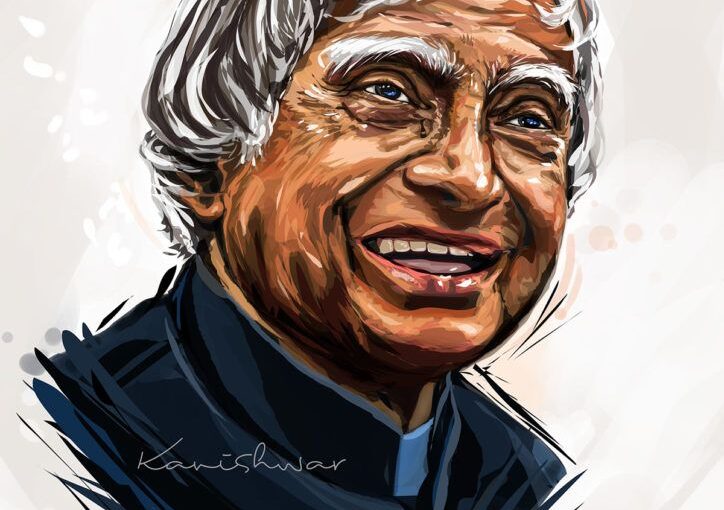
But while this post will examine the past, I want to focus on the now and future of Islam in India. That is why I chose to have possibly the most beloved Indian in history, Dr. APJ Abdul Kalam, as the heading photo for this post. But we will talk more about him and what he encapsulates later; let’s take a look back at the sands of time.
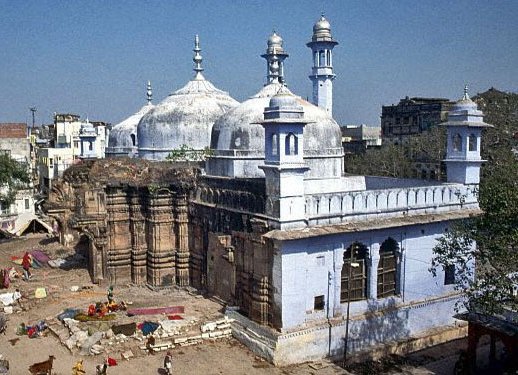
I’ll be upfront and say I have an overall negative view on Islam’s past impact on India.
One of the most eminent historians ever, Will Durant, wrote this of the Islamic invasion of India:
“The Islamic conquest of India is probably the bloodiest story in history. It is a discouraging tale, for its evident moral is that civilization is a precious good, whose delicate complex of order and freedom, culture and peace, can at any moment be overthrown by barbarians invading from without or multiplying within.” – The Story of Civilization: Our Oriental Heritage page 459.
History has witnessed monsters that have killed millions – Genghis Khan, Alexander the Great, the Spanish conquistadors of America, etc… – but Durant singles out the hundreds of years long siege of Islam on India as the bloodiest of them all. Millions dead, raped, or forcibly converted. Temples, universities, and entire cities lay in ruin. An indigenous culture repressed and humiliated all because they believed in a different god.
While this image is grave, it’s not what I want you to leave with in regards to India’s Islam. Amongst the carnage and deep darkness that swept the subcontinent, there was light.
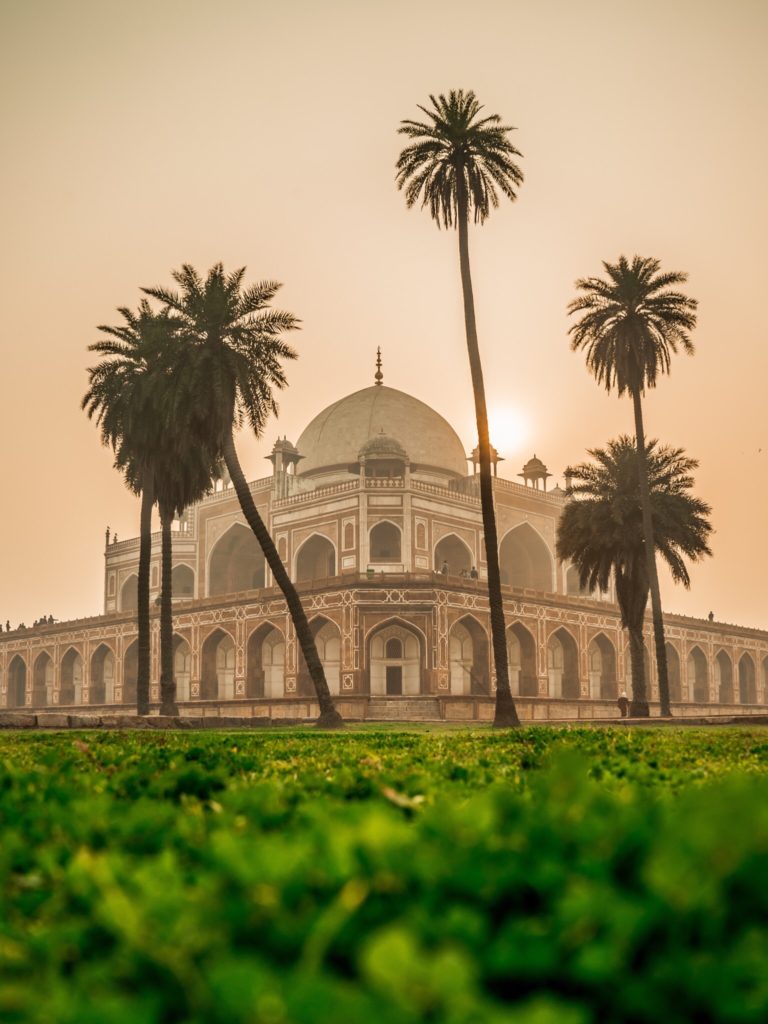
Islamic rule in India produced great art, literature, opulence, but most beautiful of all – syncretism, the trademark of India. Akbar was one of the first rulers who recognized the underlying similarities between Islam and Hinduism; so much so, that he integrated both religions into his own system – Din-I-Ilahi – or the Religion of God (original…I know).
The Varanasi poet and weaver, Kabir, won the hearts of both Hindus and Muslims. His poetry would be recited till this day as an epitaph to his spirit of spiritual harmony. His musings would change how religion was practiced across North India, including influencing a newly born religion – Sikhism. Guru Nanak would continue Kabir’s compare and contrasting of Hinduism and Islam, while providing his own unique philosophy.