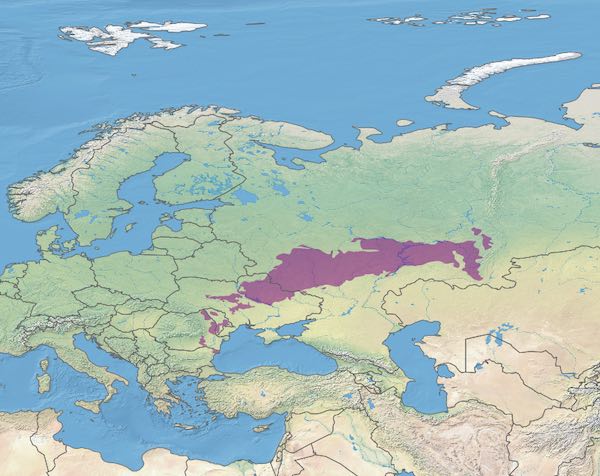
In the comments below a reader asks a legitimate question: why the focus on Indo-Aryans when the most probably model suggests that even among the most “Aryan” of South Asian groups the ancestry attributable to the Andronovo-Sintashta people are only on the order of 30%? In most of northern South Asia, the fraction is probably closer to 10%, and it is far lower in the south (there is a concomitant varna gradient as well).
The exact point estimate will change, but it is almost assured that most of the ancestry of Indo-Aryan speaking South Asians is going to derive from the people who were resident within the Indian subcontinent when the Indo-Aryans arrived. So why the arguments and debates about Indo-Arans?
To understand this I will move the discussion out of a South Asian context first:
O most valiant and blessed martyrs! O truly called and elected unto the glory of Our Lord Jesus Christ! Which glory he that magnifies, honors and adores, ought to read these witnesses likewise, as being no less than the old, unto the Church’s edification; that these new wonders also may testify that one and the same Holy Spirit works ever until now, and with Him God the Father Almighty, and His Son Jesus Christ Our Lord, to Whom is glory and power unending for ever and ever. Amen.
– Perpetua
The above is the conclusion of the witness and statement of St. Perpetua, a young Christian woman martyred by the Roman authorities on account of her faith. For over 1,000 years Christians have identified with and drawn strength from Perpetua. Young Catholic women in Poland cry to this day when they read her story. The story of Perpetua is their story in some deep way.
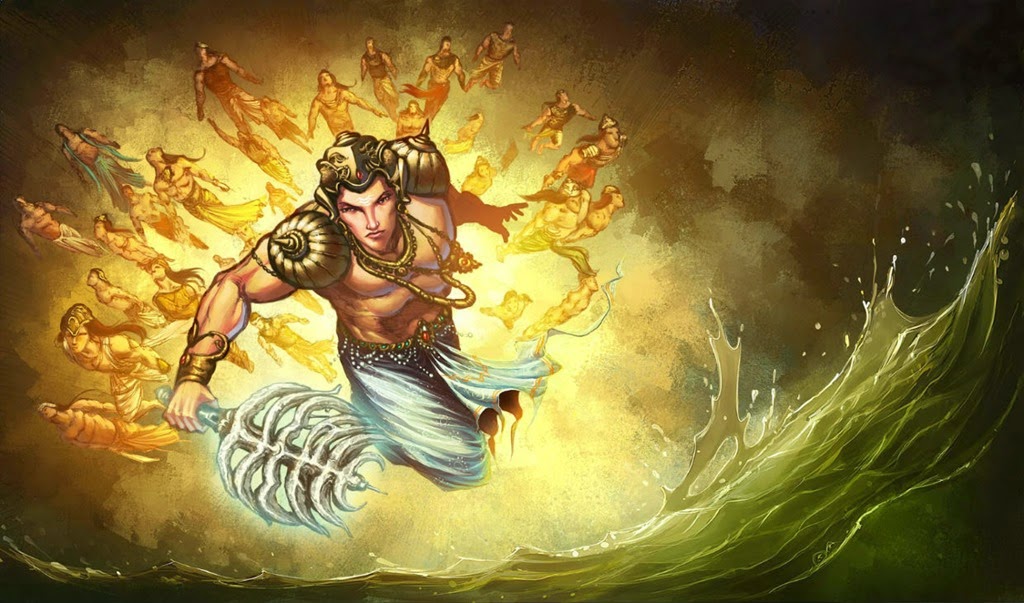
When Perpetua was being sent to her death, the ancestors of the Polish women who identify so great with her were pagans, practicing slash and burn agriculture south of the Baltic shore. They were worshipping and venerating gods which in fact held a distant relationship to those of the Rig Veda!
Many of us may laugh at the fact that Pakistanis venerate Muhammad bin Qasim , when if he were alive today he likely have contempt for the “black crows” which bow down before the Arab god (Qasim lived before a more universalistic Islam emerged, and when the sect was very much a cult of the Arabs of the Arabs). Similarly, the origin priests of the Indo-Aryans would probably look with confusion and bewilderment at the “black” people speaking with their voice.
But speak they do! The power of the Indo-Aryans is the power of memory over flesh. In the Bible, Ruth states that “thy people shall be my people, and thy God my God: Where thou diest, will I die, and there will I be buried…”
What language did the mleccha speak? I am convinced that some of them surely spoke dialects related to those of southern India, though the existence of Burushashki points to greater complexities than we may imagine. What gods did they worship? There are suppositions one can make about the non-Aryan elements of Indian culture. They are likely numerous, constitutive to an understanding of Indian culture, but they are the background. The frame.
In the foreground is the name and the speech of the Aryans. The very words which roll off our tongues, and the memories of the heroes of yore. The Aryans obtained their cultural immortality by implanting in the other peoples of the Indian subcontinent their speech, their mythos, and their very identity.
A new paper for David Anthony mentions something which I had missed:
The currently oldest sample with Anatolian Farmer ancestry in the steppes in an individual at Aleksandriya, a Sredni Stog cemetery on the Donets in eastern Ukraine. Sredni Stog has often been discussed as a possible Yamnaya ancestor in Ukraine (Anthony 2007: 239-254). The single published grave is dated about 4000 BC (4045–3974 calBC/ 5215±20 BP/ PSUAMS-2832) and shows 20% Anatolian Farmer ancestry and 80% Khvalynsk-type steppe ancestry (CHG&EHG). His Y-chromosome haplogroup was R1a-Z93, similar to the later Sintashta culture and to South Asian Indo-Aryans, and he is the earliest known sample to show the genetic adaptation to lactase persistence (I3910-T).
The likes of him we shall never see on this turn of the wheel
As you know the R1a1a-Z93 is the sub-branch of R1a1a that is common outside Europe (Central Asia & South Asia). A previous sample was dated to 3,800 years ago from a Sbruna sample, and it is rather common on the Central Asian steppe of the period as evidenced by ancient DNA. The details of its intrusion (or lack thereof as some might say) into South Asia have not been fully elucidated by ancient DNA, but they likely will be soon.
Additionally, the I3910-T mutation is known to share identity-by-descent between people in South Asia and in Europe. That is, the mutation in both populations is due to a common ancestor.
Razib Khan · August 4, 2019 · Comments Off on Episode 62: Leighton Woodhouse, the Left, identity, and 2020
Another BP Podcast is up. You can listen on Libsyn, iTunes, Spotify, and Stitcher. Probably the easiest way to keep up the podcast since we don’t have a regular schedule is to subscribe at one of the links above.
You can also support the podcast as a patron. The primary benefit now is that you get the podcasts considerably earlier than everyone else. I am toying with the idea of doing a patron Youtube Livestream chat, if people are interested, in the next few weeks.
Would appreciate more positive reviews!
This episode is a conversation with Leighton Woodhouse of the Extremely Offline podcast. We talked about the Left, identity politics, and the future of American politics and 2020.
Please keep the other posts on topic. Use this for talking about whatever you want to talk about.
I’m reading Buddhism: A History. That inspired me to write The Invention Of World Religions 2,000 Years Ago. One of the assertions in the book which I would be curious as to reader opinion: Advaita has more in common with classical Indian Buddhism than the Mahayana sects of East Asia.
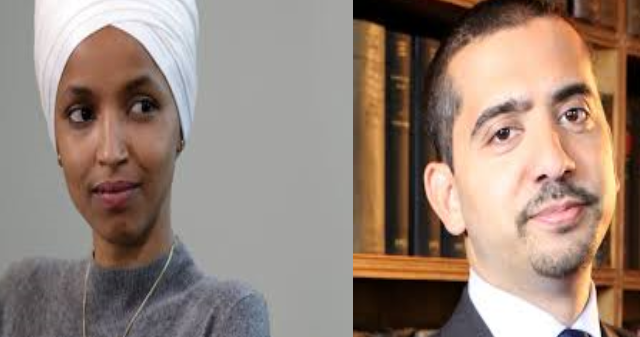
I was meaning to write this for some time now but somehow I kept postponing. Razib’s recent post about Mehdi Hasan inspired me to sit down and finish what I was thinking of writing down (https://www.brownpundits.com/2019/07/31/mehdi-hasans-hypocrisies/). This long post is not about Mehdi Hasan par se, or even Ilhan Omar (sheepishly admitting her clickbait value). This is mainly about prominent Muslims in American public life and public perception of Muslims. In the first part of this post I will discuss direct political aspects of Muslim public representation and in the second I will dive into some of the relevant socio-political and moral issues.
Barack Hossain Obama became the first African-American person to be elected President of United States in 2008. He was reelected in 2012. Now, there are lot of grounds for criticism of Obama’s presidency. His leadership in lot of important matters, particularly in foreign affairs , have come under lot of criticism since the end of his presidency. In domestic matters too, his leadership record has lost lot of luster even among his supporters. However, most Americans agree that Barack and Michelle Obama occupied the White House with exemplary dignity and fulfilled the inspirational role that Americans generally expect the presidential office to provide in this very republican (small R) of countries.
The Obamas were very acutely aware of the huge responsibility they had as the first African-American couple in the White House. They knew personal scandals, failure to control and command, would create huge barriers for the next ethnic minority aspiring to be president. That’s why they were dignified and moderate to a fault in their conduct. In that consideration, the Obama presidency was an unqualified success. Today Barack Obama is the most popular living President to Americans with 60% approval rating (https://today.yougov.com/topics/politics/explore/public_figure/Barack_Obama) and Michelle Obama is frequently polled as the most admired woman in America. The next presidential candidate of African-American descent who will reach the final stages of election, will not face any questions because of his/her ethnic background except from the incorrigible bigots.
John Fitzgerald Kennedy became the first Catholic president in 1960. It’s hard to believe now but prejudice against Catholics was very widespread among mainstream Protestants of America, who were the overwhelming majority, until fifty years ago. When populist nativists of the early 20th century railed against domestic and foreign enemies of the people, ‘Jews, Papists and the N-word’ was the standard phrase used. Kennedy was aware of the great headwind facing him in seeking primary nomination and then eventual victory. He famously said before the election, “I am not the Catholic candidate for president. I am the Democratic party’s candidate for president, who happens also to be a Catholic. I do not speak for my church on public matters, and the church does not speak for me,” (https://www.wbur.org/news/2017/05/25/kennedy-catholicism-presidential-campaign). He kept emphasizing this point before the election and was mindful of his role as the first Catholic president after getting elected. Suffice it to say anti-Catholicism ceased being significant in American political sphere after the Kennedy’s presidency.
Ilhan Omar became the first visibly-Muslim, hijab-clad elected representative at federal level in 2018. Understandably, her ascension to national stage created huge amount of interest, savory and unsavory, in all corners of the politically engaged section of the people. I am not going to mention the long list of accomplishments and controversies Ilhan Omar has been registering in almost daily basis since her election. It will not be an exaggeration to say that she has become one of the most prominent banner issues that are feeding the frenzy of the two battling political armies in national arena. She is inflaming passion even more than Alexandria Ocasio-Cortez, who may be representing more the economic division than the cultural division represented by Omar.
I personally think that Ilhan Omar is not a very religious Muslim, the identity aspect of the religion is more important to her. Rather than cosmic theology, her religious identity offers her a worldview theology; providing explanation of power relations among communities, groups and institutions of today’s world. Socio-cultural beliefs define the modern political man and Ilhan Omar represents the current cleavages more starkly than almost any other public figures.
However, Ilhan Omar was not lucky enough to get the elite education and varied experience that both Obama and Kennedy had. Experiences greatly influence worldview. A liberal, integrative, long-term worldview that typify Obama, Kennedy, may be too much to ask from her. I personally think she is not very sophisticated but that is not germane to this discussion. However, among her most prominent public defenders there are many who have benefits of background and who are very articulate. That brings me to public personalities like Mehdi Hasan.
In the last couple of years, several Muslim media figures have been regularly invited into mainstream media like CNN, MSNBC, NYTimes, WaPost whenever some events related to Muslims became prominent in the fast churning stream of news and views. Mehdi Hasan, Wajahat Ali probably commanded bulk of those airing of Muslim perspectives. They are among the staunchest defenders of Ilhan Omar (also of other minority social justice public figures) in media. They are also among the most vehement critics and denouncers of Trump, Trump-supporters, the Republican Party and American foreign policy in general. They had been like this since Trump became the Republican nominee. I remember how I first saw Wajahat Ali in CNN before the 2016 election when he repeatedly and day after day described Trump as ‘impotent’. I cringed every time I heard that, but it could have been just me.
Now, people like Ilhan Omar, Mehdi Hasan and Wajahat Ali have lot of justification to go ballistic against Trump and his supporters. I think that Trump is significantly more racist than an average white American septuagenarian, his policies have targeted Muslims discriminatorily, his utterings have stoked outpourings of anti-Muslim hate, Muslims in America may become further victimized if Trump is reelected. However, opportunities of public criticism should not just opportunities for lashing out. We should evaluate effects of these criticisms, whether they are benefitting the country or even Muslims themselves. There is also an ethical aspect of this public criticism, which I will discuss in part II of this blogpost.
Ever since the 9-11 attacks the partisan divide in attitudes towards Muslims and Islam has gradually diverged in America. There are reasons to believe that the divide has become starker in recent years. A recent survey conducted before the 2018 elections show that 71% percent of self-described Republicans agreed they don’t believe Islam is compatible with American values, compared to an overall 42%. 60% of Republicans agreed with the idea that Muslim Americans weren’t as patriotic as non-Muslim Americans, compared to 38% generally (https://www.theguardian.com/world/2018/nov/01/new-america-study-report-republicans-muslims-trump-midterms). The wide difference between the Republican numbers and the average for the population means the difference in attitude between the two parties is very wide. Few wedge issues signal the difference between the two parties more clearly now than their respective attitude towards Muslims in America.
Shadi Hamid has said that he is comforted that at least one of the two political tribes of America is acting as a shelter for American Muslims in these troubled times (https://gen.medium.com/how-donald-trump-made-me-a-muslim-7f28abcfd33a). Muslim Americans reciprocate the Democratic support faithfully. It is estimated that about 90% of them vote for the Democratic party in national elections now, before 9-11 the figure was more even. As much as 30-40 Muslims voted Republican in the 1990s. Other analysts OTOH have expressed reservation about the state of Muslims in the political polarization. Republican disdain for the Democratic Party and suspicion about Muslims in America may be reinforcing each other, worsening the political divide. Moreover, it’s not that Muslims find a very natural place in Democratic Party that is mainly characterized by secularism and progressivism. Shadi Hamid recounts that a religious Muslim told him, “I can sense the disdain from the Democratic Party towards my faith, even as they don a cape against Islamophobia. The underlying view Democrats have [about] anyone seriously religious is that they’re, at best, silly and gullible, and at worst, dangerous.” (https://www.washingtonpost.com/outlook/for-religious-american-muslims-hostility-from-the-right-and-disdain-from-the-left/2019/07/25/7121e4ce-99e4-11e9-830a-21b9b36b64ad_story.html?utm_term=.f693a53b2fd8 )
For a minority that comprises only 1% of the voters, this kind of polarization should be very alarming. Its true that there are other minorities who also are reliable member of the Democratic clan. Black-Americans generally vote for the Democrats in the 90s while Jewish voters vote in the 70-80% range. However, the socio-political positions of Muslims are not same as Blacks or Jews. Black American voters comprise about 12% of the total voters; they are indispensable core of the Democratic coalition and a un-ignorable part of America for Republics. Moreover, sufficient number of Black Americans take part in Republican politics and intellectual development , making them always cultivable for Republican political leadership. While Jewish voting population is close to 2% of total, they have very powerful representation within the Republican establishment.
We must consider this context when examining the role of Muslim political and media personalities in the political sphere. It seems to me the most visible Muslim personalities in politics and media, determinedly and gleefully want to exacerbate the partisan divide. Few rational observers would disagree that Donald Trump has been most un-presidential in his public sayings during this political phase of his life. Even labelling those words as juvenile would probably be unjust towards the youth. However, these Muslim public personalities seem to think that going toe to toe and tit for tat with Trump and the Republicans, are the best tactics for Democrats and Muslims. I think, apart for impact on partisanship, there are important ethical aspects in these public exchanges that also have deep and wide consequences, which I intend to discuss in the second part.
These Muslim public personalities want total war against Trump and Republicans where crossing the line or fraternization with the enemy will be unthinkable. A few days ago, a very prominent Muslim religious leader, Hamza Yusuf, got widespread notice among Muslim Americans for joining a multi-religious state department commission on Human Rights (https://www.aljazeera.com/indepth/opinion/time-muslim-americans-condemn-hamza-yusuf-190715130254222.html). Many people would argue this as a very sensible move considering the plight of Muslims in many countries of the world and the very important role that America has in global concerns about those hapless Muslims. However, for political activist Muslim-Americans, Hamza Yusuf joining a Trump presidency commission was an ultimate betrayal, an act of Vichy French ignobility.
A Blitzkrieg style total war wouldn’t be so reckless if the chances of victory were good. However, chances don’t look good at least in the short term. When Trump became presidents, Democrats and liberals were openly speculating how he would be removed from power within one or two years because of all the scandals and malfeasance in the past and before the election. With low presidential approval ratings acting as comfort blanket, few Democrats were thinking Trump would last the full first-term, let alone getting reelected. Now desperation is in the air. Democrats openly speculate that Trump is heading for a second-term and Democrat’s chances are not so good. Betting markets reflect that increasing despair also. This political atmosphere again demand that Muslim Americans take long hard look how their political and media personalities are representing them in the public sphere. I have not read any reports of how Muslim Americans view role of their representatives in the public arena but from my personal interactions I gather that most of them are very uncomfortable being the spearhead of the resistance. Lot of them say that they physically wince whenever Ilhan Omar is in the news and they wish she would be far less prominent.
However, coalition-building, gradual advances may be things of the past and the spirit of the times may demand reckless combativeness. Just as revolutions in military affairs made Blitzkrieg possible, revolutions in socio-political affairs of current era may be favoring bold tactics. After all, Republicans had their May 1940 moment in November, 2016 in a most improbable victory with a most improbable candidate who refused to occupy the center ground. In these kind of historical victories, being the armored spearhead of deep battles brings everlasting glory. Nevertheless, people should also remember that Blitzkrieg grinded to a halt in 1941 in face of obdurate structural conditions and determined resistance. The spearheads were obliterated.
Another BP Podcast is up. You can listen on Libsyn, iTunes, Spotify, and Stitcher. Probably the easiest way to keep up the podcast since we don’t have a regular schedule is to subscribe at one of the links above.
You can also support the podcast as a patron. The primary benefit now is that you get the podcasts considerably earlier than everyone else. I am toying with the idea of doing a patron Youtube Livestream chat, if people are interested, in the next few weeks.
Would appreciate more positive reviews!
This episode is a conversation with Lisa Mahapatra. We talk about her being a non-woke global human, being an ethnic Oriya, and being a dark-skinned woman. It was a fun conversation because to be frank Lisa is the type of person I’m often friends with. Heterodox, “gives no fucks”, and frank.
I am taking a more front & center role on this weblog proceeding forward. Moderate/inspection of comments will become stricter. I suspect some of you will be banned because you post worthless comments. Also, I am seriously thinking about installing a plugin that caps word-length on comments.
Since this weblog gets about 10 times more traffic than it did a few years ago, it seems the right time to tighten the screws a bit.
Last few years I have been working on horizontal and vertical spread of conflict in the Middle East. This is first of the series looking at each player. This one was the outcome of my own trips to Washington every few months to get some feel of beltway currents. I have no specific insight but want to provide some glimpses of the issues facing the region.
Hamid
Beltway Battles
Hamid Hussain
“I have had lobbyists, and I have had some very good ones. They could do anything.” Donald Trump
In United States, domestic and foreign entities engage in lobbying at federal and state levels to promote their interests. In the last few years, many Arab countries have increased their lobbying efforts in Washington to promote their interests. In 2017, open conflict between Qatar on one side and Saudi Arabia, United Arab Emirates (UAE), Egypt and Bahrain on the other has spilled over into international arenas. In Washington, these efforts are multi-faceted including marshalling support of large businesses, think tanks, universities, legislators and public policy influencers.
The meteoric rise of a 30-year-old previously unknown royal family member to the dizzying height and sidelining of the old hands of Royal family in Saudi Arabia changed power dynamics inside the kingdom. This resulted in some competition even in Washington. Crown Prince and interior minister Prince Muhammad Bin Nayef hired a lobbying firm run by a Trump campaign advisor Robert Stryk. The firm was paid $5.4 million to make inroads into new administration. However, in June 2017 when Muhammad Bin Nayef was removed from his positions and Muhammad bin Salman (MBS) elevated as Crown Prince, the deal ended. MBS alienated many royal family members but for international image, he used others. Old hand and once a long-time ambassador to Washington Prince Bandar Bin Sultan quickly changed his direction and lined up behind MBS. During MBS visit to United States, Bandar was at hand to bring in his old contacts. Bandar’s daughter Princess Reema provided the soft and feminine face for the new regime on international circuit defending royal family in Washington and Davos. Full brother and close confidant of MBS Prince Khalid Bin Salman was appointed ambassador to Washington. Saudi embassy chose an American raised and educated Saudi-American Fatima Baeshen as its spokeswoman. She had previously worked at a pro Saudi think tank Arabia Foundation run by a former banker Ali Shihabi. (Bloomberg Businessweek, 26 April 2018, https://www.bloomberg.com/news/articles/2018-04-26/saudi-arabia-reboots-its-washington-lobbying-blitz)Continue reading Beltway Bandits (Lobbyists and Middle East Policy), Dr Hamid Hussain
Update: Since this post is receiving many-fold more visitors than this blog normally receives in the whole day, here is the TL;DR for those who are too dim to read, or too lazy to do so: Hasan should not engage in guilt-by-association against others when the tactics are so easily turned against himself. That is all.
End update
As I am trying to withdraw from Twitter food-fights I did not want to comment on this on that medium. But, since I have a platform of this weblog, I did think it would appropriate to point out a peculiar sort of behavior by Mehdi Hasan, a relatively prominent commentator in the UK who is becoming more well known in the USA.
A few days ago I saw Hasan criticizing Rand Paul on Twitter for the fact that his father was involved in a controversy around racist newsletters in the 1990s. I thought it was strange for Hasan to imply that the guilt of the father should echo down through the generations, The main issue I have with this sort of behavior is that Hasan himself was saying that homosexuals were pedophiles and non-Muslims lived like animals down into the 2000s, far more recently than the Ron Paul Newsletters. Hasan has disavowed these views, and my own view is that unless otherwise shown one can probably accept that he’s changed his positions (he has, for example, denounced the traditional Islamic punishment of death for apostasy in the last decade).
Hasan should probably more careful than most in holding someone’s past against them, let alone the transgressions of someone’s father (no matter the context). The grace that he is given, he should give to others.
His behavior indicates to me that he believes he is prominent and powerful enough that no one will point out the hypocrisy of his behavior in asking forgiveness of his own past while holding the past of the parents of ideological opponents against them.
But the main reason I’m posting now is that today I saw something again where Hasan attempted to play guilt-by-association: this time against Tulsi Gabbard. In particular, he criticized her for appearing on Tucker Carlson’s show, which is bad because Carlson is a bad person (a racist according to Hasan). Of course, some of us are aware that Hasan has a long-time grievance against Gabbard for being Islamophobic. It wasn’t a coincidence that he criticized her.
My problem is that Hasan works for Al Jazeera, which owned by the government of Qatar. Qatar is a repressive, reactionary, and racist state. I say this from personal experience having visited. Of course, I myself had fun in Qatar, because I stayed at a nice hotel, and drank wine and dined at Nobu. But we all know the lives that the Asian and African work-force live to maintain the techno-reactionary utopia (of course Western people are treated well in Qatar).
No one is pure and lives on an island. The United States itself has blood on its hands, and all Americans who are citizens of this democracy have some share of that. I don’t begrudge progressive journalists who work for Al Jazeera English. A job is a job today in journalism, and Al Jazeera is a big organization with diverse views. But, the fact is that within Al Jazeera its non-English arm often trades in racism and religious bigotry, and the ultimate ownership is in the hands of an autocratic monarchy.
To me, this means that employees of Al Jazeera English should show a bit of humility and acceptance of moral complexity when it comes to complicity and associations. As it is, quite often they are among the most woke and self-righteous exemplars of the opinion journalism class. Tucker Carlson and Fox News are perhaps nasty and racist in Hasan’s view, but Al Jazeera is sponsored by an incredibly classist and reactionary government. Should the latter negate our acceptance of Hasan’s assertions that he is a progressive person?
Hasan’s problem with Rand Paul is clearly with the views of Rand Paul. His problem with Tulsi Gabbard is that he believes she is Islamophobic. He should focus on these issues, instead of attempting guilt-by-association, because he and many other self-righteous pompous journalists live in gossamer glass houses.
This is an old post from Major Amin (from 2017) The article is by Dr D Souza (originally in “Eurasian Review”) and Major Amin’s own comments are in bolded black font.. Now that the Afghanistan exit strategy is in full flow, how does this stand up?
Trump’s ‘New’ Afghanistan Strategy And India-US Strategic Partnership – Analysis
Donald Trump’s strategy for Afghanistan and South Asia announced on 21 August, was intended to highlight the novelty and surprise elements of a roadmap that purportedly sought little short of the decimation of terrorism. For all that, the ‘new’ strategy, its overheated semantics and studious ambiguity notwithstanding, in reality is but a continuation of the American trial and error method that has kept insurgent aspirations of a victory alive these 16 years since the US intervened in Afghanistan.
THIS IS A VERY MISCONCEIVED ASSERTION BY MS D SOUZA. THE NEW TRUMP STRATEGY IS TANGIBLE , PRECISE , WELL ARTICULATED , WELL SPELT OUT AND NOT SEMANTICS.
FIRST TRUMP STRATEGY HAS FOR THE FIRST TIME SPELT OUT THAT USA IN AFGHANISTAN IS DEALING NOT WITH NON STATE ACTORS BUT WITH A STATE PROXY I.E AFGHAN TALIBAN PROXIES OF THE PAKISTANI STATE.
THIS IS A RADICAL DEPARTURE FROM ABSOLUTE LACK OF MORAL COURAGE OR STRATEGIC RESOLUTION AS EXHIBITED BY BOTH PRESIDENTS BUSH AND OBAMA.
THIS CHANGES THE US OBJECTIVES FROM PUNY THIRD RATE SNUFF SELLERS LIKE BAITULLAH MEHSUD BEING KILLED BY US DRONES TO STRATEGIC TARGETS WHICH ARE STATES AND NOT NON STATE ACTORS.
THE TRUMP STRATEGY AS PUBLICLY RELEASED DID NOT PRECISELY STATE THAT PAKISTAN WAS THE “MAIN ENEMY” BUT ITS CLASSIFIED PORTIONS AS PER HIGHLY PLACED SOURCES STATE THAT PAKISTANI STATE WAS CLEARLY SPECIFIED AS WHAT CARLOTTA GALL COINED ” THE MAIN ENEMY”.
After spending much blood and treasure, has the US learnt from its mistakes? Is the present strategy a break with the past? Or is it a mere continuation of a policy with no defined objectives and outcomes? India must consider carefully its desired terms of engagement for any serious partnership with the US in Afghanistan. Ahead of US Defense Secretary James Mattis’ visit to New Delhi on 25 September, New Delhi needs to use the opportunity to tell Washington of the shortcomings of the present Afghan policy.
THE ASSERTION BY MS D SOUZA THAT THE USA HAS SPENT MUCH BLOOD IS ALSO SEMANTICS AND NOT BASED ON HARD FACTS. AFGHANISTAN WAS OCCUPIED WITH ONLY ONE CIA CIVILIAN KILLED BECAUSE OF HIS OWN RASHNESS AND US CASUALTIES IN 7 YEARS OF PRESIDENT BUSH DID NOT EXCEED 394 . 1400 US SOLDIERS WERE LOST BECAUSE OF SHEER AMATEUR BEHAVIOUR OF PRESIDENT OBAMA WITH ARM CHAIR STRATEGISTS LIKE REIDEL AND OTHERS DURING THE SURGE WHICH WAS APOLOGY OF ANYTHING THAT CAN BE CALLED STRATEGY.
Ambiguities and Novelty
President Donald J. Trump addresses the nation on the South Asia strategy during a press conference at Conmy Hall on Fort Myer, Virginia, Aug. 21, 2017. (Photo Credit: DOD photo by Sgt. Amber Smith)
After all the opposition for the war in Afghanistan he unleashed over the years via social media, especially in his election campaign, when push came to shove, Donald Trump’s strategy for Afghanistan and South Asia, elaborated on 21 August 2017 chose the least bad option, the one which would have the least resistance and would provide room for maneuver to match the domestic needs and geopolitical interests. Despite tall claims of having studied Afghanistan in great detail and from every conceivable angle, Trump strategy’s on Afghanistan is neither new nor comprehensive.
New Delhi needs to remain cautious before embracing this ambiguous strategy. Among its many ambiguities, three are especially worth considering:
Kinetic vs Non-kinetic
First, the strategy, apparently scripted by the US military, is not about nation building but kinetic operations, search and destroy by another name. Getting a free hand on the ground with no micro-management from Washington is a victory of sorts for the US generals in Afghanistan. Still, much confusion abounds as to whether the strategy is counter-insurgency, counter-terrorism plus, or an overt reliance on the use of military force. Moving away from the earlier time-based approach to one based on conditions is certainly appropriate. In this, Trump has addressed the error of his predecessor, Barack Obama, who in December 2009 had announced troop surge and exit at the same time. This only worked to insurgent advantage, allowing an approach of ‘waiting out the enemy’.
KINETIC IS THE ONLY THING IN A LAND OF COLD BLOODED ASSASINS WHO WERE PACIFIED BY MONGOLS , MUGHALS AND PERSIANS WITH MASSIVE MASSACRES.THIS IS A SCENARIO WHERE VULGARLY PUT NO ONE ACKNOWLEDGES YOU AS THEIR FATHER TILL YOU LAY THEIR MOTHER. KINETIC IS THE ONLY SOLUTION AND DID WORK UNDER GENGHIS KHAN , TAMERLANE AND BABAR.THE HINDU RAJPUT MUGHAL GOVERNOR OF KABUL CARRIED ONLY A WALKING STICK ! BECAUSE THE MUGHALS UNDER BABAR HAD SORTED OUT AFGHANISTAN.
Yet there is no indication whether the intent is to convert Afghanistan into a new South Korea, where US troops are indefinitely based, or something else. A conditions-based approach is preferable to the mistaken announcement of a time schedule, but there is nothing to indicate what will be done to address those conditions that are fueling extremism and violence. Further, the apparent decoupling of kinetic and non-kinetic elements of the strategy, the military and civilian components, will limit the gains achieved through kinetic operations. Claiming that all of this will be something more than smoke and mirrors is guaranteed, Trump proclaimed, by the application of will. Unlike Obama, he implied, this time the US will fight to win. To point out the sheer profligacy of such a pronouncement seems almost a waste of effort.
MAKING SWEEPING JUDGEMENTS AND DISMISSING A PRESIDENT WHO HAS A STRATEGY WHICH HAS BEEN SPELT OUT IS NOT GOOD JOURNALISM AND THAT TOO FROM AN AUTHOR WHO HAS NOT REALLY VISITED THE ACTUAL BATTLE FIELDS OF AFGHAN WAR.
Role of Regional powers
Second, Trump has not identified any benchmarks and targets for actions. This keeps the expectation bar low but also does not address the basic component of metrics. Neither has he expressed in any clear terms expected steps to be taken by Afghanistan, Pakistan, India, or even the US itself. Most importantly, the role of other major regional powers such as Russia, China, Iran, UAE, and Saudi Arabia remains undefined. Afghanistan’s tragedy lies in the fact that its internal contradictions have been exploited by external powers. Without a regional strategy, the external powers will continue along this path, notably neighbouring Pakistan.
PRESIDENT TRUMPS STRATEGY CLEARLY IDENTIFIES PAKISTAN AS THE CULPRIT AND THE WHOLE STRATEGY IS BASED ON THIS DEMISE. THIS HAS CREATED JITTERS IN PAKISTAN AND THE PAKISTANI ARMY CHIEF AND HIS ISI HAVE BEEN DOING A LOT OF RUNNING AROUND.
Safe haven
Third, every US president is aware of Pakistan’s role and interests in supporting the terrorist groups in Afghanistan. It is perhaps the first time that a US president has stated this publicly, but it is not as though the reality has not hitherto figured into planning. Nevertheless, there it was: ‘Pakistan often gives safe haven to agents of chaos, violence, and terror,’ Trump stated unambiguously. Unspecified was just what coercive instruments could be brought to play to change Pakistan’s behaviour.
Trump’s critique of Pakistan is in line with New Delhi and Kabul’s position on the external support and sanctuary provided to the insurgent and terrorist groups that are the source of Afghanistan’s instability. That Pakistan has been a mendacious ally in the US-led war on terror, sheltering terror groups like the Taliban and the Haqqani network, and using them as strategic assets in Afghanistan, despite the aid of more than US $33 billion being given to Pakistan in the last decade and half for the counter-terrorism cooperation.
HAQQANI NETWORK IS A MINOR PLAYER IN TERMS OF NUMBERS OF US SOLDIERS KILLED. THE MAIN ACTOR IN NUMBER OF US SOLDIERS KILLED IS THE QUETTA SHURA OR THE MULLA OMAR GROUP BASED IN PAKISTANI BALOCHISTAN.
Strategic Partnership in Afghanistan
The sudden recognition by Trump of New Delhi’s concerns needs to be received with caution in view of the role he wishes to assign New Delhi as a strategic ally andfurther develop thestrategic partnership with India. The proof lies in the pudding. Even as Pakistan considers cozying up to China as its safety-valve, the strategy has been welcomed in Kabul and New Delhi. In spite of Trump’s awkward mentioning first of India’s substantial trade benefits from good relations with the US – before elaborating on his expectations from New Delhi ‘to do more’ – New Delhi has welcomed the strategy. It is seen as a nod to the importance of India’s economic and development assistance thus far and an acknowledgement that without India’s soft power, things could be much worse.
Counter terrorism cooperation
Though mentioning the fact that at least 20 US-designated foreign terrorist organisations are active in Afghanistan and Pakistan — the highest concentration in any region anywhere in the world, Trump’s strategy appears geared towards targeting al-Qaeda and the ISIS. If the US is still looking for apolitical settlement with the Taliban, New Delhi will have to make sure that this is done by the Afghan government through an open, inclusive, and accountable process.
Moreover, New Delhi needs to tell Washington that the targeting of terrorists groups cannot be selective and must include groups that are detrimental to India’s security interests, as well. Any robust counter-terrorism cooperation with the US will need to address issues of funding, training, and support provided to these groups.
Non-kinetic Approach
India has pledged more than US$3 billion for various civilian capacity building, infrastructure and development projects in Afghanistan. This has brought it significant good will among the Afghans. By avoiding a narrow security dominated approach, India is seen as a neutral partner and not a party to the conflict. It is prudent, then, for New Delhi to stay clear of involvement in the kinetic side of the equation, while simultaneously urging the US to play a more meaningful non-kinetic role in institution building and reform.
This goes against the Trump administration’s stated goal of avoiding nation-building, yet any military strategy divorced from building strong institutions of governance and service delivery is unlikely to translate kinetic gains into tangible political outcomes. A mere addition of over 3,000 troops to Afghanistan, where they will bolster the approximately 11,000 American forces already there will not make much impact unless there is a clarity of the mission, rules of engagement and outcome, in addition to building effective and responsive governance institutions.
There is serious possibility that the US is looking to India to perform the non-kinetic component while the US engages in what certain figures feel it does best, kinetics. This would be a thankless position for New Delhi to be in which could entail burden-sharing and risk strategic distortion as concerns its interests.
ALL INDIAN AID WILL GO INTO DUST IF THEIR IS NO KINETIC ENERGY IN THE AFGHAN SCENARIO.
Long drawn out war
Likewise, the role of private contractors in the push to outsource the war; the continued dependence upon warlords, power-brokers and militias for support of counter-insurgency operations; the use of air power as a surrogate for actual engagement, together with inadequate human intelligence (HUMINT) resulting in collateral damage and increase in civilian casualties, all need to be clarified. The potential for New Delhi to be caught in the blowback from Washington’s ill-considered approaches must be considered.
Skeptics are already highlighting that by lumping its Afghan with its South Asia (India and Pakistan) strategy, the Trump administration runs the danger of not only intensifying the India-Pakistan competition but also intensifying regional competition as Pakistan seeks succour from the likes of China, Russia, and Iran. The dangers of such competition, notwithstanding, Pakistan will need to compete with India on the development and reconstruction of Afghanistan which will accrue good will from the Afghans. At the moment, the popular sentiment for Pakistan remains very low.
A weak and unstable Afghanistan has been a primary objective of its predatory neighbours. Leaving to the side the reality that countries like Pakistan are not simply going to give up this quest, regardless of US positions or threats, there is the fundamental necessity for any American strategy that has any hope of success to work towards building a strong and stable Afghan state that will make the subversive campaigns of these neighbours and their proxies difficult.
Institution building and reform
This can be achieved by institution building and reforms in the security, political, economic, and governance sectors. The Trump administration has refrained from making clear long term commitments. The time to do so is now.
In the security sector, there remains a need for better training, equipment, vetting, and policing capabilities, as well as an increase in Afghan airpower capability. The latter element alone, if inadequate, seems all but to guarantee that the gains achieved through kinetic operations will be simply lost.
In the political sector, in addition to revamping the indigenous institutions for peace and reconciliation such as the High Peace Council, reconciled and reintegrated fighters will need opportunities for employment and acceptability as they transition back into society. More importantly, as Afghanistan heads to another round of presidential and much delayed parliamentary elections in 2019 and 2018, respectively, systems, procedures, and logistics need to be put in place to avoid the messy elections outcomes of previous years. These have seriously impacted the credibility and functioning of the Afghan government. Greater decentralisation will help popular participation on the margins. The limits of an overly centralised form of governance of last decade and half are evident.
A legitimate government that delivers to the people the basic services is essential to any hope of victory, however defined. A clean, responsive and accountable governance system under the rule of law is essential to build the trust of the populace and deprive the insurgents of their support. If this seems so much pie-in-the-sky, then there hardly seems any point in being involved. Just what the announced US strategy is to contribute to such an end-state is puzzling.
Prospects for India-U.S. partnership in Afghanistan
If India and U.S. intend to work together in denying these groups and their sponsors any space in Afghanistan, the first step will be to chalk out a comprehensive and long term plan along with the Afghan government to build a strong and stable Afghanistan that will be an antidote to these forces at play and predatory neighbours. The Strategic Partnership Agreement signed by New Delhi with Kabul in October 2011, provides a good template. As US adopts a kinetic approach towards Afghanistan, New Delhi will have to spell the conditions for any cooperation to take this strategic partnership ahead.
For New Delhi to partner with US development and aid agencies, such as USAID, there is a need for integrated planning to provide market access for the products produced, accompanied by skill-based training for small and medium enterprises for income generation and boosting domestic production. Continuing instability has enabled neighbouring countries to pour in cheap goods, thus, stunting Afghanistan’s indigenous economic revival and growth.
New Delhi will have to tread carefully in the shifting sands inside Afghanistan and the region. Rather than rushing into the American embrace, New Delhi’s primary objective must be to fulfill its obligations as Kabul’s strategic partner. Trump has sought an honourable and enduring outcome, the contours of which remain unknown. Ahead of US Defense Secretary James Mattis’ visit to New Delhi on 25 September, which will be followed by secretary of state Rex Tillerson’s visit, New Delhi needs to use the opportunity to tell Washington of the shortcomings of the present Afghan policy. The Afghans have long looked to a friendly India to play this role of a serious interlocutor. India should step up to the plate commensurate with its rising power status and aspirations.
NEW DELHI WILL REMAIN A MINOR PLAYER IN THE AFGHAN WAR. IT DOES NOT HAVE THE GEOPOLITICAL MUSCLE TO RESTRUCTURE AFGHANISTAN. WHERE NEW DELHI CAN MATTER IS IN CAPACITY BUILDING OF AFGHAN STATE BOTH POLITICAL MILITARY AND ECONOMIC AND IN PRESSURISING PAKISTAN.THE GEOPOLITICAL PART OF RESTRUCTURING IS WHITE MANS BURDEN AND THE USA HAS TO ACCEPT THIS FACT.
AFGHANISTAN IS A US STRATEGIC OPPORTUNITY TO DESTABILISE CHINA AND RUSSIA AND KEEP AN EYE ON PAKISTAN AND IRAN AND NOT A CALAMITY AS PESSIMISTS VIEW IT.

 In the comments below a reader asks a legitimate question: why the focus on Indo-Aryans when the most probably model suggests that even among the most “Aryan” of South Asian groups the ancestry attributable to the Andronovo-Sintashta people are only on the order of 30%? In most of northern South Asia, the fraction is probably closer to 10%, and it is far lower in the south (there is a concomitant varna gradient as well).