Unbelievable podcast with Prof. Devji

We are doing a podcast with Prof. Devji right now.

He’s a Professor of Indian Studies at Oxford and head of the Asian Studies.

Really lovely and dense; will be released in June. Professor Devji’s knowledge is really impressive..

Kushal and I had a *friendly* shouting match (we get on quite well actually) because I used the title “Maharajah Modi,” thereby undermining Indian democratic traditions (he alluded to India’s modern Maharani but I found her the most effective post-independence leader).

Interestingly enough Professor Devji just alluded that Hindutva, colloquially, to use royal titles for its leaders.

We are discussing Prof. Devji’s latest article; Search for a Majority.

Interesting as an aside that the Left-Liberal elite (the “Lutyens crowd” in Indian parlance) is completely entrenched in Cambridge; even soft-BJP types have to tone it down otherwise they get shouted at. Lots of self-censorship..

I am human, and I think nothing human is alien to me.

There was a comment below which I am now reflecting on…that this “This blog pertains to South Asians.” The comment was sincerely made, and I take no deep issue with it.

Rather, I wonder what the purview of pertaining to South Asians is for each of us. Do we all see the same sky above us? Or does where we stand alter the constellations above? Both?

There are so many faces to this question. Some might echo Naipul and suggest that those of us from Muslim backgrounds are shorn from our Indian roots, that we are a people without a spirit. Others might assert a racial component, which in the Western context becomes cloying and exceedingly restrictive. Liminal populations are matters of dispute.

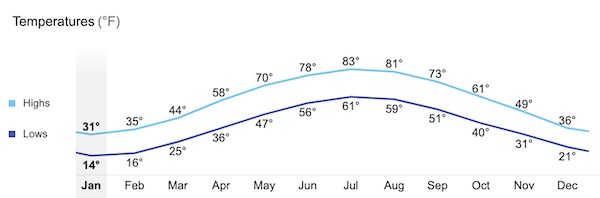
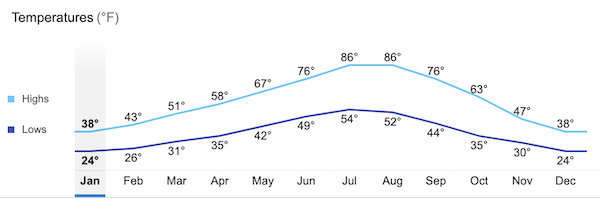
And yet I reflect on my own life, my own orientation, my own upbringing. I spent long enough in Bangladesh as a small child to remember the taste of jackfruit in my mouth…but below are the climatic conditions I grew up with as an elementary and secondary school child and teenager.

I wasn’t born in the cold and ice. But I was raised in it. I was moulded by it. I do not miss the seasons. I do not miss the ice. But the ice is part of who I am.

The cold of winter is deep in my experience, and that is almost one reason that I shudder to think of the cold, and I positively avoid it now that I have a choice as an adult.

And yet this is not typical of the South Asian, Indian, subcontinental, background. It is not part of our deep cultural memory, it is particular to many of us who grew up in the 1970s and 1980s, young children of hopeful immigrants fleeing countries of grinding poverty and deep sclerosis, embedding themselves in frozen landscapes where they traded warmth for hope.

Readers of my other weblog (which as of this current writing is undergoing some maintenance by yours truly) sometimes ask me when I choose to post here, and when I choose to the post there. To be honest that distinction is harder to make for the non-science content.

If there is an election in India. If there are tensions on the border between Pakistan and India. If someone wants to engage in a troll-fest on the Kashmir question. This blog will be a space where those issues are mooted.

But there are more things in heaven and earth, Harjeet, than are dreamt of in your Darśana.Ā 

I think a reasonable position may be “this is a South Asian weblog, this is why we are talking about this.” But, I am very wary of the proposition, “this is a South Asian weblog, this is why we should not be talking about this.”

Seek illumination even if you have to go as far as China, for seeking knowledge is a duty on every human.

Browncast into June….

Thanks to everyone who is a patron on the Browncast. I’ll be posting a few more in there today (or very early tomorrow). We won’t be posting anything in public until June 1st. Our podcasts tend to go longer, rather than shorter. Perhaps it’s a brown thing? In any case, regular podcasts of 1+ hours mean that our month quota gets used up regularly.

I won’t be recording too many podcasts for the next month (I may jump on one here and there depending on my availability), but that’s fine because there are already several in the pipeline. Here is a preview:

  • Discussion about the Indian elections. Kushal and Zach almost get into a (friendly) shouting match on this one
  • I talk about Game of Thrones, fantasy, and neuroscience, with Adam Calhoun
  • A discussion with an Israeli American about living in Israel, and perceptions of Israel abroad.
  • A discussion about open science with “data thug” Jordan Anaya
  • A discussion between me and two young millennial tech-bro browns about navigating American society
  • A discussion of Game of Thrones with a historian and a geneticist (this is not recorded yet)

One of the reasons I’ll be taking a break is that I’ve been podcasting pretty intensively recently. I’ve been putting out a podcast every week for my main science one since the end of January, and have gotten about 2 months ahead there (that’s what recording on weekends and two or three times a week sometimes will do).

I will be focusing on other projects for a bit, and not podcasting will make my schedule more flexible.

How Indians invented the universal religion

One of my favorite podcasts is Two for Tea, which tends toward “centrist-edgelordism”. The latest guest is, Armin Navabi, who I have nicknamed the Ayatollah. Armin is literally one of the most logical people I have ever known of, at least in the domain of those who are not visibly already extremely at one end of the spectrum. His views on religion come from this rationalist perspective, and that is where I part ways with him because I don’t see rationality as powerful a force as he does in shaping human behavior.

But in this post, I want to disagree with something Armin said in relation to the history of religion: that universalism and post-tribal religion was invented by Christianity and the Abrahamic tradition. This is clearly false.

From Ashoka’s Edict 13, put down in the 3rd century before Christ:

Now, it is the conquest by the Dharma that the Beloved of the Gods considers as the best conquest. And this one (the conquest by the Dharma) was won here, on the borders, and even 600 yojanas (leagues) from here, where the king Antiochos reigns, and beyond where reign the four kings Ptolemy, Antigonos, Magas and Alexander, likewise in the south, where live the Cholas, the Pandyas, and as far as Tamraparni.

Continue reading How Indians invented the universal religion

An apology to Brown Pundits

My quick Election 2019 reaction article “The rock that broke liberalism” in the local English daily Dhaka Tribune seemed to have blown up in social media. As I woke up this morning, the article has nearly 9000 shares and still growing by the hour. Most probably the blow-up happened because some prominent Indian media personality with lot of followers shared the article.

I want to apologize here to BP and also to Omar Ali bhai for not mentioning Brown Pundits or his his name directly. Althought by mentioning the key words in the BP 2016 article and also the thesis question, I made it very easy to find the article with minimum enterprise through Google search (Links at the end). I wrote the article with Bangladeshi audience in mind, I did not expect it to go ‘international’. Thus I unintentionally deprived Brown Pundits from some desereved publicity and Omar Ali bhai from due direct recognition.

The reason why I was shy about mentioning Brown Pundits is that I wanted to keep my column writing profile in Bangladesh and occasional Brown Pundits contributor and commenter seperate. Firstly, I regard BP as a forum where one can freely speak their minds about sensitive issues (very unwise I know. In internet nothing is safely hidden and everything is permanent). Secondly, as a Bangladeshi who wishes to travel to home country regularly, speaking freely about sensitive issue is a very ill-advised for me. Thus my reluctance to let my contributions/ comments in BP be known among home-circles.

This is the dilemmna of the era for us. We want to talk, yes just talk, debate, analyze, about issues that interest us but there are great number of people from all sides for whom talking freely is the biggest existential threat in the world. Of course Razib is a prime example of the reality of the threat. Awarded NYTimes op-ed contributor just for a day because the internet outrage mob mobilized in milliseconds.

https://www.dhakatribune.com/opinion/op-ed/2019/05/25/the-rock-that-broke-liberalism

Is Islam the rock on which the liberal order broke?


Pakistani women, Chinese men, the continuing story….

The New York Times has a follow-up story with some nuance, She Thought She’d Married a Rich Chinese Farmer. She Hadn’t.

Now there is coverage of Muslim girls going to China. The model is the same as the Christian girls, rural Chinese men who aren’t as wealthy as they present themselves, go through nominal conversions or affirmations of faith, and take the women back. Here for me is the interesting part:

Then, after a four-hour drive past fields of wheat and corn, they arrived at Dongzhang village in Shandong Province, where she saw her husband’s duck farm. It was not the sprawling operation of a wealthy man that she had envisioned, but a modest family farm where he lived with his parents and two brothers.

The New York Times was unable to independently verify Mr. Zhang’s income. But on a recent visit to the Zhang family home, a Times’ reporter found a newly built housing compound with multiple bedrooms and shiny tile floors.

Outside the family home, Mr. Zhang’s mother, who is in her 60s, recalled being puzzled by Ms. Kanwal’s reactions.

ā€œShe is religious, so when she came here I went out of my way not to give her any pork,ā€ she said, as a small guard dog barked nearby. ā€œI stir-fried chicken and made egg omelets for her. But no matter what I served her, she just refused to eat.ā€

Some of the more sordid stories of prostitution are likely true. And, it seems from the story above that some of the girls who moved to China are pregnant, and reasonably happy where they are. But many of the stories are grayer and not so clear.

The mother-in-law above seems well-meaning, after a fashion, but one can see the perspective of a young Muslim girl from Pakistan, encountering a world filled with pork, dogs, and without the washing facilities she was used to. Additionally, the reporters seem to agree that the farmer was prosperous, if not necessarily wealthy. With no real linguistic common ground, it’s pretty easy to imagine that wires could get crossed her. The huge cultural chasm, where most Chinese do not take religion that seriously, is probably almost impossible for a Pakistani girl from a non-cosmopolitan background to fathom.

Right now these stories are exotic. But if more and more girls stay and settled down in China, that will result in positive word of mouth. The precedent with other Asian countries is tragic and horrible stories will continue. But that may not be the whole, or the main, story.

I’m fond of saying “two is the first number”

I was senior analyst in a small and wonderfully eccentric DC Beltway think tank a while back, and my boss kept asking me for what he called “early indicators” of upcoming troubles. The trouble was, I never saw an “indicator” as such — I only ever saw “indicators” plural. It takes two to tango, they say, and from my POV it takes two to make a pattern.

My HipBone Games began as an attempt to make Hermann Hesse’s Glass Bead Game playable, preferably on a paper napkin in a sidewalk cafe, so I began with boards like my WaterBird —
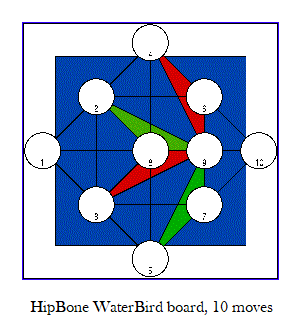
— with ten moves, ten concepts arrayed in such a way that players or later readers could see ten richly interconnected concepts in one place — concepts that might be textual, musical, mathematical, visual, filmic — if we’d known how to convey smells via the internet, I’d have included those, too..

And over time, I discovered the obvious — that the fundamental game move involved two concepts, with one bridging link between them. So that’s the fundamental way to learn to play the HipBone Games. Over time, I’ve come to rely more and more on this simplest of HipBone Games, the DoubleQuote:
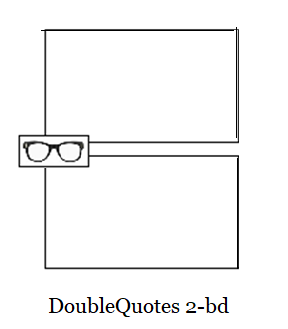
— leaving the larger HipBone Gameboards — the 8-move Dart board on up to the 120-odd Said Symphony board, dedicated to, you may have guessed it, Edward Said, and available for possible competition games and solo symphonies.

**

What’s a concept, you might ask — what constitutes a move?

I might use a different definition if I were taking about anything other than the Bead Game, but in this context, a concept is a rich idea — an idea with rich possibilities for association. Let me take a paragraph from a New Yorker piece as an example:

Melissa and Ashley, identical twins from Georgia, shared a bedroom while growing up. They had the same best friend, took classes together in high school, and dreamed of becoming artists in their own collective. ā€œWe’re like two different people with one brain,ā€ Melissa liked to say.

The article in question is titled An Underground College for Undocumented Immigrants — so there’s room associations with the underground railroad perhaps, another situation where the official system repressed a minority, and that minority found ways to circumvent the system.

I’ve chosen this example, in fact, because it offers numerous associative possibilities — to other ideas, narratives, or statistical finds about twins, to other New Yorker articles, to underground movie theaters or catacombs, to those who dream of becoming artists — and in particular for my purposes here, because it’s about two people who think, almost as if they are one.

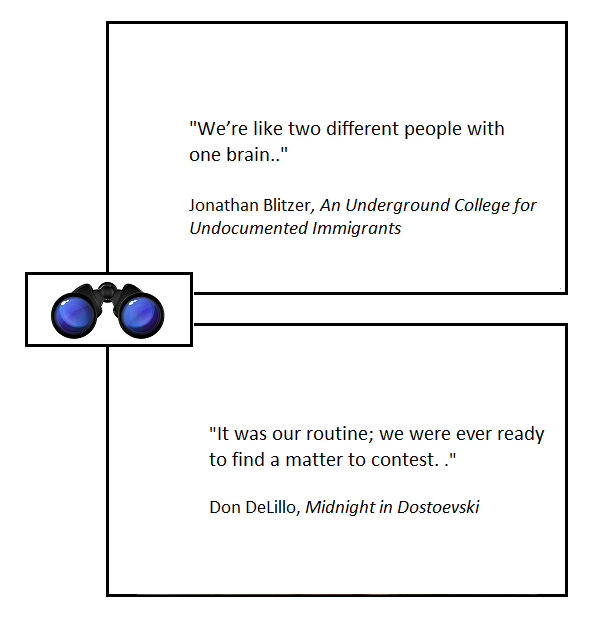
In fact, to emphasis this notion of unity and harmony, I might simply chose this statement for the first position in my DoubleQuote::

We’re like two different people with one brain

**

Let’s use a musical analogy, and say the two of them think in close harmony, or, since there are two of them, that thinking together, they constitute a duet..

The opposite of harmony,in which many notes played simultaneously form a chord, is counterpoint, in which differing melodic lines move between discord and resolution — harmony a “vertical” matter, synchronic, while counterpoint is “horizontal” and diachronic —
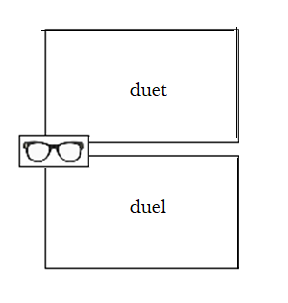
— and the opposite of a duet is a duel.

**

The two friends in Don DeLillo’s New Yorker piece, Midnight in Dostoevsky like to keep their minds at opposite poles from each other. As one of the two reports:

He liked to test himself on what he knew. He liked to stop walking to emphasize a point as I walked on. This was my counterpoint, to let him stand there talking to a tree. The shallower our arguments, the more intense we became.

I wanted to keep this one going, to stay in control, to press him hard. Did it matter what I said?

The actual phrase I’d place in juxtaposition to the first paragraph above might come from a discussion of whether the old man walking in front of them that day was wearing an anorak or a parka —

It was our routine; we were ever ready to find a matter to contest.

Again, the context — the article itself — is rich in associative potentials, with parkas, anoraks, Inuits, linguistics, life in the arctic circle, the whole idea of North — on which the pianist Glenn Gould wrote an entire radio opera

— and note that Gould is himself a master of counterpoint, specializing in the work of JS Bach, and called his radio opera technique “contrapuntal radio” —

So:

“This was counterpoint” — the opposite of harmony, and full of both conflict and resolution, with phrases isolated and overlapping, paused and repeated, denial and occasional agreement and renewed denial — a duel, not by any means a duet.

And yet each of our two excerpts describes the conversations of two close friends, the one emphasizing unity, the other diversity. And it is in the similarities and differences between the two conversation — between duel and duet — that the two concepts link to become a single move.
**

Having given that extended example, let me present a few more DoubleQuotes, in their positions on the board — with minimal explanations:

Some of them are made of names or phrases so simple, they fit on a mini-version of the board:
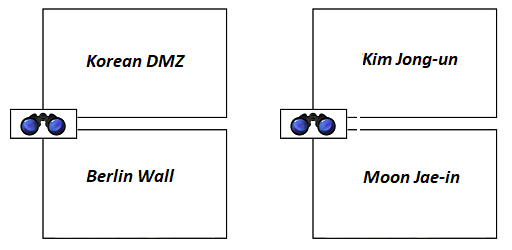
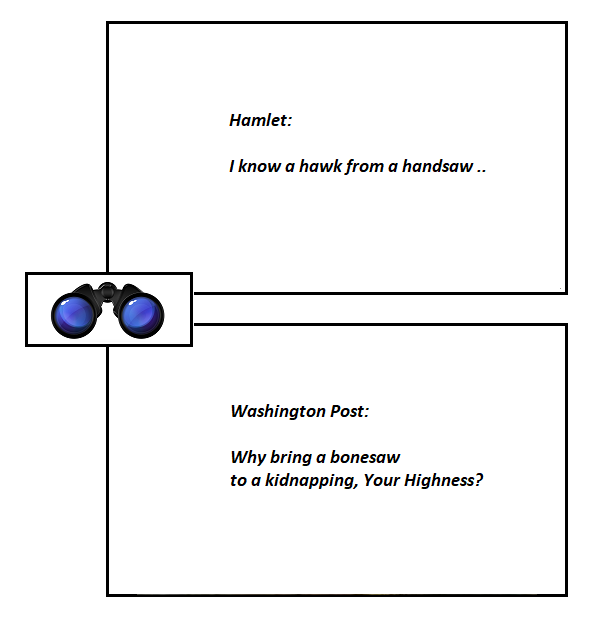
Some bring Shakespeare to bear on current events — in this case, Saudi Crown Prince MBS and the Khashoggi murder:
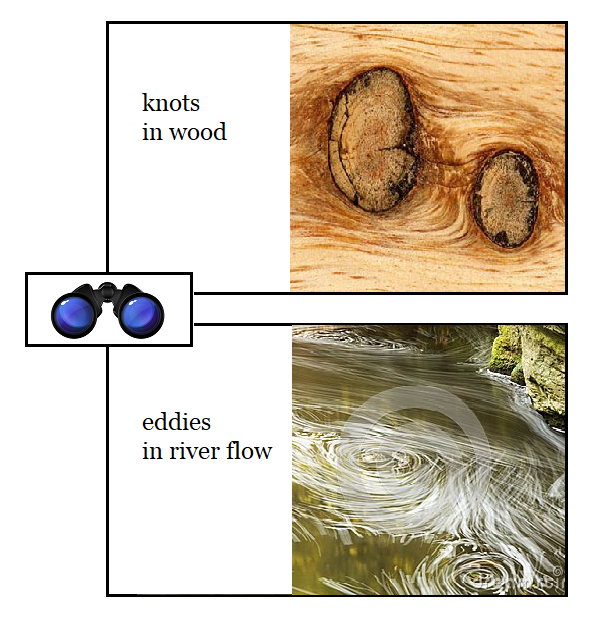
Some showing similarities in different materials:
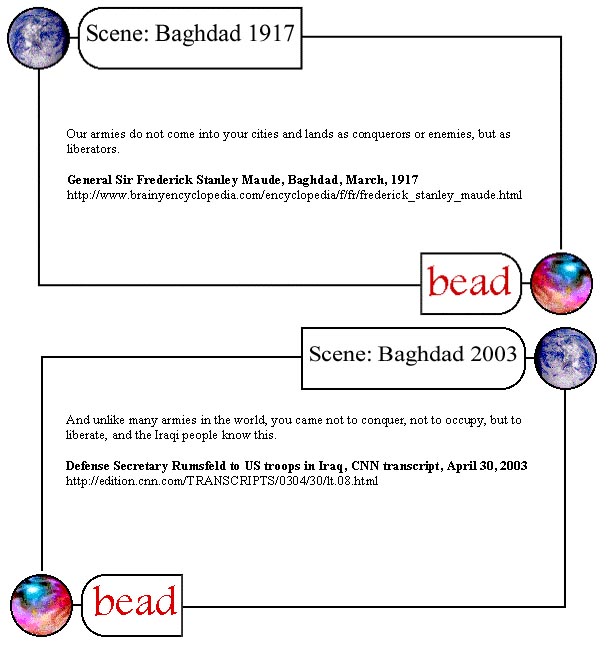
Some making historical comparisons — this one’s in an earlier version of the same board —
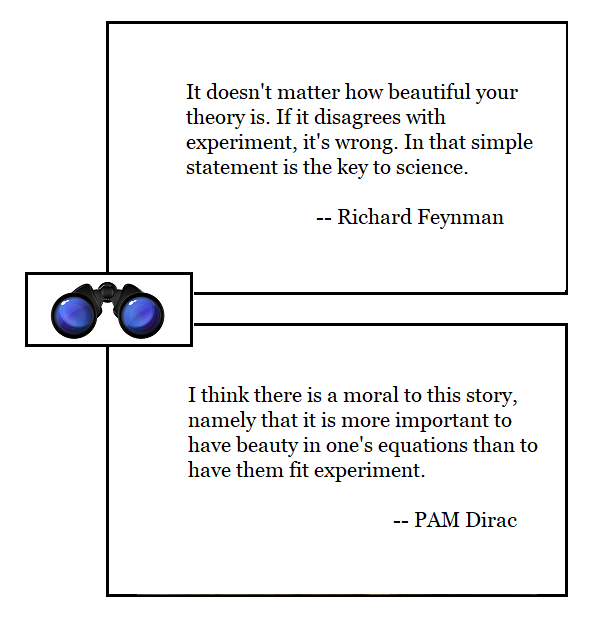
or opposite opinions and creative practices of two of the world’s most distinguished physicists:
or — and this is my personal favorite, crossing as it does the great disciplinary boundary — between CP Snow’s Two Cultures — between art and science:
**

But either I’ve been very unclear, or you get the idea.

Here’s the blank DoubleQuotes board again, for you to download and drop your own examples into.

At gmail I’m hipbonegamer — feel free to send me your own, with any explanation you feel like making, and in a later post I’ll put them up here.


Vital stats in South Asia

A bunch of vital stats from South Asia from Google Data Explorer. Since Zach and I started looking at these data since the early 2000s Pakistan and Bangladesh have diverged, unfortunately. I don’t understand what’s going on with Bangladesh’s anomalously high adolescent fertility though. This could be a function of variation among women as they age, with those entering the labor force delaying childbirth and the number of children so much that it brings the whole average down.

And of course, the whole comparison between India and the other countries is difficult since the Indian statistics average together many different regions.

Continue reading Vital stats in South Asia

The damage done to third world countries by Harvard and UChicago

I recently read an article in The Economist about Jair Bolsonaro and one of his prominenet supportersĀ  (a UChicago economist) and it remineded me of the damage done by such ‘luminaries’ to other third world countries such as Pakistan.

“In July, at a convention of his small and inaptly named Social Liberal Party, Jair Bolsonaro unveiled his star hire. Paulo Guedes, a free-market economist from the University of Chicago, has done much to persuade Brazil’s business people that Mr Bolsonaro can be trusted with the country’s future, despite his insults to women, blacks and gays, his rhetorical fondness for dictatorship and the suddenness of his professed conversion to liberal economics. At the convention Mr Guedes praised Mr Bolsonaro as representing order and the preservation of life and property. His own entry into the campaign, he added, means ā€œthe union of order and progressā€.”

Further in the article,we learn more about the adventure of ‘Chicago Boys’

“[Chile’s dictator from 1973-90, Augusto] Pinochet sensed, rightly, that corporatism would require him to share power with his military colleagues. Instead, he called on a group of civilian economists, dubbed the ā€œChicago boysā€ because several had studied at the University of Chicago, where the libertarian economics of Friedrich Hayek and Milton Friedman held sway.

The Chicago boys applied these principles in Chile, whose economy had been wrecked by the irresponsibility of Salvador Allende, a democratic socialist overthrown by Pinochet. Their programme would eventually lay the foundations for Chile to become Latin America’s most dynamic economy at the turn of the century. But it was akin to a major operation by trial and error and without anaesthetic. They slashed import tariffs and the fiscal deficit, which fell from 25% of GDP in 1973 to 1% in 1975. They privatised hundreds of companies, with no regard for competition or regulation. Worried that inflation was slow to fall, they established a fixed and overvalued exchange rate. The result of all this was that the economy came to be dominated by a few conglomerates, heavily indebted in dollars and centred on the private banks.

In 1982, after a rise in interest rates in the United States, Chile defaulted on its debts and the economy slumped. Poverty engulfed 45% of the population and the unemployment rate rose to 30%. Pinochet eventually dumped the Chicago boys and turned to more pragmatic economists, whose policies contributed to Chile’s post-dictatorship prosperity.”

Pakistan was one of the countries that was ‘advised’ by economists from Harvard during the 1950s and 60s.

M. Ziauddin, veteran Pakistani journalist, wrote about the influence of Harvard and UChicago on Pakistan’s economy in his piece titled: Way Out of Deepening Inequality.

Some critique of the Harvard Advisory Group’s (HAG) broader actions can be found in a paper (found here and without paywall here) by Nadeem ul Haque and Mahmood Hasan Khan (Haque obtained a PhD from UChicago and Khan from a Dutch University).

“The HAG vision was flawed in three respects and sowed the seeds of the distorted development of the economics profession in these three respects.

First, it did not attempt to develop an economics profession that was rooted in the country. They left the universities and colleges in a state of neglect attracting resources to these new non-academic, semi-bureaucratic institutions and attempted to give them the lead in the profession. Without the seed of the pure profession being nurtured and jealously guarded in academia, the profession was bound to have a distorted growth.

Second, the HAG trained economists were very different from the economists of the time. The HAG training was very development oriented and specific to Pakistan. They were not encouraged to do any theoretical or pioneering research. Third, given the importance of HAG and the new institutions and the symbiotic relationship between these institutions and the bureaucratic and political setup of the time, these HAG trained economists acquired a large and visible role in the economy. These visible economists not only played an important role in Pakistan’s history but also distorted the country’s perception of an economist, the economics profession and economic policy.

By design, the HAG group was interventionist, plan and budget allocation oriented. They mistrusted the market and had the arrogance of having more information than the market and the rest of society. Interestingly enough, the HAG training of development economics was collapsing on itself. Because these people had no behavioral relationships in mind and no faith in markets, they did not merely push policy levers and study response lags and dynamics. Instead, they developed lengthy plans or wish lists and used the bureaucratic structures to control the environment to make these plans happen. This control-oriented and market-mistrusting civil service loved this new intellectual force given to their view.

A second element in the thinking of the HAG economist was the concern with inequality. Haq and Baqai (1986), two important economists of the HAG era, note with concern that “early writing on economics in Pakistan surprisingly did not contain much reference to poverty related themes.” It is very interesting that most of the early econometric or behavioral research is done mainly by the HAG advisor, whereas the work on measuring poverty, productivity (the ratio calculation work) is done by the Pakistani economist. Before anything about the economy was understood, poverty indices, regional inequality indices, and declines in real wages (when hard wage data was hardly available) were the main areas of concern.

The manner in which these economists were trained itself created a certain perception of economists in the country which lasts till today. These economists were trained to be policy-oriented development economists. A sharp distinction was made between such economists and those who studied more theoretical and academic economics. The erroneous impression was unintendedly cultivated that the study of theory or more rigorous economics is of limited use to the country. Such a pursuit was considered a luxury that the country could ill-afford. This view has persisted and developed over time and reinforced the perception that to be a good economist for Pakistan a grounding in economic theory is not only not required but perhaps may even be a hindrance. The result is that there is a tremendous disrespect for academic and theoretical economics. The term “ivory tower” intellectual was used to describe anyone who attempted to read and keep abreast of academic economics. Instead, an amalgam of general knowledge and mild development verbiage has been established as sound Pakistani development economics.’ Fragmentation of the Profession”.

Browncast Ep 42: American Arranged Marriage

Another BP Podcast is up. You can listen onĀ Libsyn, Apple,Ā Spotify, and Stitcher. Probably the easiest way to keep up the podcast since we don’t have a regular schedule is toĀ subscribeĀ at one of the links above.

You can also support the podcast as aĀ patronĀ (the primary benefit now is that you get the podcasts considerably earlier than everyone else…this podcast was posted a week ago).

Probably the number #1 reason that the “Browncast” is of interest to me is that I can talk to people who are different from me in some deep and important manner. This podcast is a conversation with Amit, an Indian American who is doing a medical residency. Raised on the “best coast” of the USA, after some conventional dating travails, he has decided he will go the route of an “arranged” matched.

If you listen, you will see that the process has been a positive one for Amit, and it includes much more flexibility and volition than most Americans might imagine.

I went into the discussion mildly skeptical and came out of it with an appreciation for how people can make different choices, but those choices are probably the best for them.

I would really appreciate if regular readers/commenters would leave more positive feedback/ratings, especially on Apple and Stitcher.

Brown Pundits