NASIM ZEHRAS TOO LATE AFTER THE EVENT KARGIL BOOK ANALYSED
Agha H Amin
My first issue with this book is that analysis delayed is analysis lost and Nasim Zehra is guilty of publishing this analysis some 20 years late. Before that she was in the good books of many culprits of Kargil who 20 years later are fired cartridges with near zero nuisance value. More seriously, I take analytical as well as conceptual dispute with her in regarding characters like Lieutenant General Javed Hassan as “ courageous and conscientious”
My pronunciation is in between the first two. There is some overlap between Persian and Pakistani (Indo-Persian) names of course. So I usually pronounce the name in the way I first heard it or heard it most.
Of course the “Hindi” pronunciation is different where the N in Jahanara is nasalised rather than pronounced.
The personal name “Jahan” seems to have retired from Persian and instead migrated to Hindustan. So I’m inclined to defer to the Urdu version of the name but nasaling the N is very unnatural to me as it reminds of the time at Urdu class. One of the students was counting the Urdu numbers with a Punjabi nasalisation and the teacher started chuckling.
I dropped the Urdu class after one semester even though I was making the fastest progress; Persian & Urdu are simmering languages for me, it’s easy to get to fluency but English almost always takes over.
As a final note; Urdu, by any other name would be just as sweet, but Persian is sweeter (I’ve mauled Iqbal & Shakespeare in a single sentence).
The irony is that Urdu was called Hindi since Urdu was initially used to refer the Persian of Shahjahanabad. Urdu is the regularisation of a Hindustani standard that came about through Amir Khusrao but was obviously was called Hindi as it was the local language.
As a final aside it is just astounding the extent to which India’s medieval history is in Persian. I *knew* that the official language was Persian but never understood what that meant entirely. The Indo-Muslim rulers were copious writers and along with their monuments left mountains of documents (Shah Alam’s unfinished Perso-Urdu verse ran to 600+ pages).
The reason Pakistanis and Urdu-speakers go on and on about Middle Eastern forebears is because their ancestors were certainly in that milieu for centuries. It’s a vestigial memory that has persisted.
Of course one can never deny Pakistan’s aristocratic heritage when our dear Captain decides to wear a cheesy Shalwar Kameez in an audience with HM the Queen:
When meeting Royalty one should at least be aware of the sartorial graces. It looks like something he would wear to a shaadi in the Pind. Also Virat Kohli may be brash but his socks, shoes and pants do not go together at all!
If anything learn from the wonderful Noorie Abbas in how to dress:
ISI/RAW have trained this vixen well. Interestingly though the choice of a Sari was very unorthodox; Pakistan girls her age will never wear a Sari to a formal event. I know that the older generation in Pakistan wear it (one socialite NGO makes a point of wearing it everywhere) but it’s pretty much died down; I wouldn’t be surprised if Noorie has inadvertently kick started it.
Her pastel shawl and gray-blue top set off extremely well. It was an interesting thing in the Prof. Devji podcast that the main gripe Hindutva had against Muslims pre-1947 was their “aristocratic connotations”. After Independence when most of these people went across to Pakistan; the image of the Muslim changed to gangster and poor.
Pakistan’s structural inequality, which we explored in our educational podcasts, means that even though there is a very high National Asabiyah (in core Pakistan; East of the Indus); the Islamicate class structure is very much dominant.
So you have these extremes in Pakistan, which are not so apparent in other countries. Since Bangladesh shackled the yoke; it’s made tremendous strides since it seems so much more egalitarian (it may also be that Perso-Urdu culture is inherently hierarchical considering its origins despite a strong socialist tradition of Urdu Poetry).
The rest of the Pakistan nation is as lemmings off a cliff:
Mrittunjoy Majumdar Guha · May 29, 2019 · 66 comments
Recently, after my speech at the Leicester Vichar Manthan on how a truly Dharmic society promotes the idea of unity in diversity, a Bangladeshi friend was surprised when I said I have had a lot of close Muslim friends since my childhood. The latter was probably a direct questioning of the former (and of someone who could adhere to such an orientation) that may have had its doubters in the audience at Leicester as well. In an age of hard-Right ultra-nationalism in many parts of the world and the rise of certain radical elements from the fringe Right in India, it is understandable to disregard the fact that India has always been about a coming-together of disparate identities and ideas, not only post 1947 but for millennia. In this context, it was surprising when one middle-eastern friend went so far as to categorize the entire nation of India as `bigoted’ to my great dismay and protest. It is easy for people to homogenize a nation’s thoughts and orientations and, in doing so, being unfair to its people. For him and for various others, I am sure it is tough to understand how a modern `Hindu’ and an Indian could argue on the nuanced point that Indian pluralism is non-negotiable, given what they see as a recent surge of Hindu-identity politics in India. It is exactly because being Hindu and an Indian naturally makes you inclusive and pluralistic…if you are true to the foundational ideas of India and even what can be regarded as `Hinduism’, which I argue is a highly recent and amorphous term.
Before moving any further, I would just like to highlight some subtle differences in my usage of terms from what is regarded as conventional. When I just speak of Dharma, it is not in the religious context but rather as more – as the natural order and balance in society, sustained by values that uphold the multiplicity of voices and perspectives within it. When I speak of what we usually call Hinduism, I would rather call those sets of values and ideas broadly Vaidika Dharma or Sanatana Dharma, a way of life and not quite a modern religion even, since there was no one homogeneous religion called Hinduism before the eighteenth and nineteenth century and all there was were sects and schools of philosophy. If the Persians are to be believed, Hindus are those living to the east of the Indus river, and therefore as some would say, it almost signifies a cultural or even civilization connotation for the Indian subcontinent. But that debate is for later. In this article, I would rather not delve on that.
Having got that out of the way, let us look at the foundations of India.
We are doing a podcast with Prof. Devji right now.
He’s a Professor of Indian Studies at Oxford and head of the Asian Studies.
Really lovely and dense; will be released in June. Professor Devji’s knowledge is really impressive..
Kushal and I had a *friendly* shouting match (we get on quite well actually) because I used the title “Maharajah Modi,” thereby undermining Indian democratic traditions (he alluded to India’s modern Maharani but I found her the most effective post-independence leader).
Interestingly enough Professor Devji just alluded that Hindutva, colloquially, to use royal titles for its leaders.
Interesting as an aside that the Left-Liberal elite (the “Lutyens crowd” in Indian parlance) is completely entrenched in Cambridge; even soft-BJP types have to tone it down otherwise they get shouted at. Lots of self-censorship..
There was a comment below which I am now reflecting on…that this “This blog pertains to South Asians.” The comment was sincerely made, and I take no deep issue with it.
Rather, I wonder what the purview of pertaining to South Asians is for each of us. Do we all see the same sky above us? Or does where we stand alter the constellations above? Both?
There are so many faces to this question. Some might echo Naipul and suggest that those of us from Muslim backgrounds are shorn from our Indian roots, that we are a people without a spirit. Others might assert a racial component, which in the Western context becomes cloying and exceedingly restrictive. Liminal populations are matters of dispute.
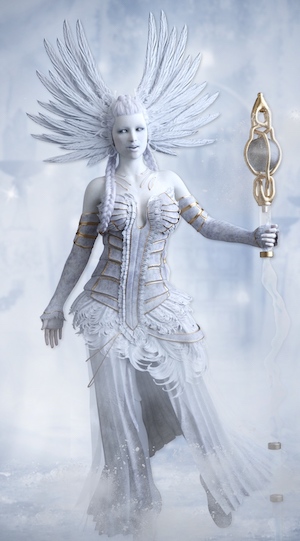
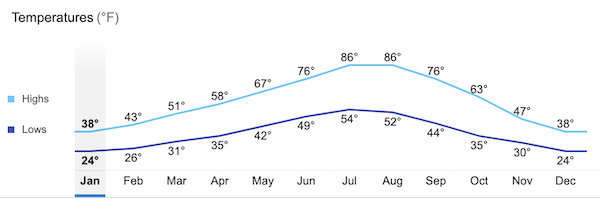
And yet I reflect on my own life, my own orientation, my own upbringing. I spent long enough in Bangladesh as a small child to remember the taste of jackfruit in my mouth…but below are the climatic conditions I grew up with as an elementary and secondary school child and teenager.
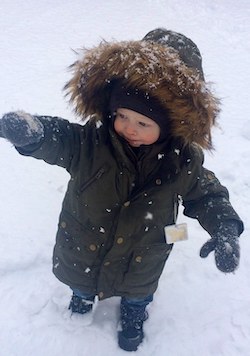
I wasn’t born in the cold and ice. But I was raised in it. I was moulded by it. I do not miss the seasons. I do not miss the ice. But the ice is part of who I am.
The cold of winter is deep in my experience, and that is almost one reason that I shudder to think of the cold, and I positively avoid it now that I have a choice as an adult.
And yet this is not typical of the South Asian, Indian, subcontinental, background. It is not part of our deep cultural memory, it is particular to many of us who grew up in the 1970s and 1980s, young children of hopeful immigrants fleeing countries of grinding poverty and deep sclerosis, embedding themselves in frozen landscapes where they traded warmth for hope.
Readers of my other weblog (which as of this current writing is undergoing some maintenance by yours truly) sometimes ask me when I choose to post here, and when I choose to the post there. To be honest that distinction is harder to make for the non-science content.
If there is an election in India. If there are tensions on the border between Pakistan and India. If someone wants to engage in a troll-fest on the Kashmir question. This blog will be a space where those issues are mooted.
But there are more things in heaven and earth, Harjeet, than are dreamt of in your Darśana.
I think a reasonable position may be “this is a South Asian weblog, this is why we are talking about this.” But, I am very wary of the proposition, “this is a South Asian weblog, this is why we should not be talking about this.”
Seek illumination even if you have to go as far as China, for seeking knowledge is a duty on every human.
Razib Khan · May 27, 2019 · Comments Off on Browncast into June….
Thanks to everyone who is a patron on the Browncast. I’ll be posting a few more in there today (or very early tomorrow). We won’t be posting anything in public until June 1st. Our podcasts tend to go longer, rather than shorter. Perhaps it’s a brown thing? In any case, regular podcasts of 1+ hours mean that our month quota gets used up regularly.
I won’t be recording too many podcasts for the next month (I may jump on one here and there depending on my availability), but that’s fine because there are already several in the pipeline. Here is a preview:
Discussion about the Indian elections. Kushal and Zach almost get into a (friendly) shouting match on this one
I talk about Game of Thrones, fantasy, and neuroscience, with Adam Calhoun
A discussion with an Israeli American about living in Israel, and perceptions of Israel abroad.
A discussion about open science with “data thug” Jordan Anaya
A discussion between me and two young millennial tech-bro browns about navigating American society
A discussion of Game of Thrones with a historian and a geneticist (this is not recorded yet)
One of the reasons I’ll be taking a break is that I’ve been podcasting pretty intensively recently. I’ve been putting out a podcast every week for my main science one since the end of January, and have gotten about 2 months ahead there (that’s what recording on weekends and two or three times a week sometimes will do).
I will be focusing on other projects for a bit, and not podcasting will make my schedule more flexible.
One of my favorite podcasts is Two for Tea, which tends toward “centrist-edgelordism”. The latest guest is, Armin Navabi, who I have nicknamed the Ayatollah. Armin is literally one of the most logical people I have ever known of, at least in the domain of those who are not visibly already extremely at one end of the spectrum. His views on religion come from this rationalist perspective, and that is where I part ways with him because I don’t see rationality as powerful a force as he does in shaping human behavior.
But in this post, I want to disagree with something Armin said in relation to the history of religion: that universalism and post-tribal religion was invented by Christianity and the Abrahamic tradition. This is clearly false.
From Ashoka’s Edict 13, put down in the 3rd century before Christ:
Now, it is the conquest by the Dharma that the Beloved of the Gods considers as the best conquest. And this one (the conquest by the Dharma) was won here, on the borders, and even 600 yojanas (leagues) from here, where the king Antiochos reigns, and beyond where reign the four kings Ptolemy, Antigonos, Magas and Alexander, likewise in the south, where live the Cholas, the Pandyas, and as far as Tamraparni.
My quick Election 2019 reaction article “The rock that broke liberalism” in the local English daily Dhaka Tribune seemed to have blown up in social media. As I woke up this morning, the article has nearly 9000 shares and still growing by the hour. Most probably the blow-up happened because some prominent Indian media personality with lot of followers shared the article.
I want to apologize here to BP and also to Omar Ali bhai for not mentioning Brown Pundits or his his name directly. Althought by mentioning the key words in the BP 2016 article and also the thesis question, I made it very easy to find the article with minimum enterprise through Google search (Links at the end). I wrote the article with Bangladeshi audience in mind, I did not expect it to go ‘international’. Thus I unintentionally deprived Brown Pundits from some desereved publicity and Omar Ali bhai from due direct recognition.
The reason why I was shy about mentioning Brown Pundits is that I wanted to keep my column writing profile in Bangladesh and occasional Brown Pundits contributor and commenter seperate. Firstly, I regard BP as a forum where one can freely speak their minds about sensitive issues (very unwise I know. In internet nothing is safely hidden and everything is permanent). Secondly, as a Bangladeshi who wishes to travel to home country regularly, speaking freely about sensitive issue is a very ill-advised for me. Thus my reluctance to let my contributions/ comments in BP be known among home-circles.
This is the dilemmna of the era for us. We want to talk, yes just talk, debate, analyze, about issues that interest us but there are great number of people from all sides for whom talking freely is the biggest existential threat in the world. Of course Razib is a prime example of the reality of the threat. Awarded NYTimes op-ed contributor just for a day because the internet outrage mob mobilized in milliseconds.
Now there is coverage of Muslim girls going to China. The model is the same as the Christian girls, rural Chinese men who aren’t as wealthy as they present themselves, go through nominal conversions or affirmations of faith, and take the women back. Here for me is the interesting part:
Then, after a four-hour drive past fields of wheat and corn, they arrived at Dongzhang village in Shandong Province, where she saw her husband’s duck farm. It was not the sprawling operation of a wealthy man that she had envisioned, but a modest family farm where he lived with his parents and two brothers.
…
The New York Times was unable to independently verify Mr. Zhang’s income. But on a recent visit to the Zhang family home, a Times’ reporter found a newly built housing compound with multiple bedrooms and shiny tile floors.
Outside the family home, Mr. Zhang’s mother, who is in her 60s, recalled being puzzled by Ms. Kanwal’s reactions.
“She is religious, so when she came here I went out of my way not to give her any pork,” she said, as a small guard dog barked nearby. “I stir-fried chicken and made egg omelets for her. But no matter what I served her, she just refused to eat.”
Some of the more sordid stories of prostitution are likely true. And, it seems from the story above that some of the girls who moved to China are pregnant, and reasonably happy where they are. But many of the stories are grayer and not so clear.
The mother-in-law above seems well-meaning, after a fashion, but one can see the perspective of a young Muslim girl from Pakistan, encountering a world filled with pork, dogs, and without the washing facilities she was used to. Additionally, the reporters seem to agree that the farmer was prosperous, if not necessarily wealthy. With no real linguistic common ground, it’s pretty easy to imagine that wires could get crossed her. The huge cultural chasm, where most Chinese do not take religion that seriously, is probably almost impossible for a Pakistani girl from a non-cosmopolitan background to fathom.
Right now these stories are exotic. But if more and more girls stay and settled down in China, that will result in positive word of mouth. The precedent with other Asian countries is tragic and horrible stories will continue. But that may not be the whole, or the main, story.




 There was a comment below which I am now reflecting on…that this “This blog pertains to South Asians.” The comment was sincerely made, and I take no deep issue with it.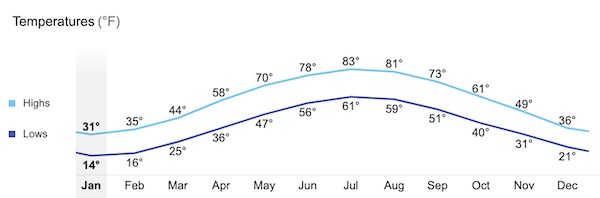
 I wasn’t born in the cold and ice. But I was raised in it. I was moulded by it. I do not miss the seasons. I do not miss the ice. But the ice is part of who I am.