
I find the best analogy for the caste system happens to be Latin America. There was intense mixing in Latin American; there is creolic elements (I mean creole in the general sense not specific) throughout the continent. Continue reading South Asia is Latin America minus 2,000years
Bring the Kalash to Ladakh!
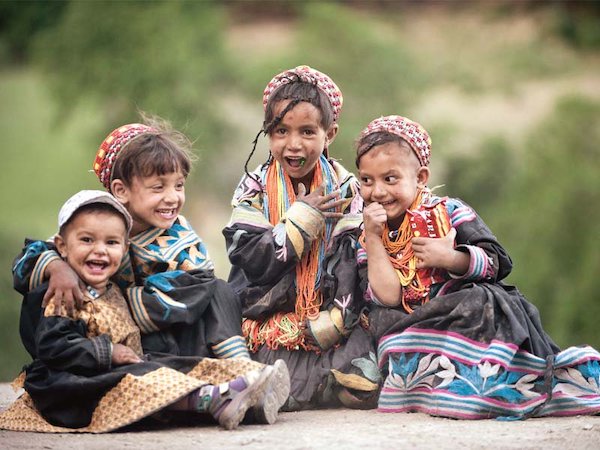
This was something that was suggested on Twitter (or emerged out of a discussion on Twitter): why can’t the Kalash have the option of relocating to Ladakh? It’s not that different of an ecosystem, and there would be less cultural pressure to change and/or threat of assimilation.
The Indian government imposes a no-contact policy for the Sentinelese for the sake of their cultural and biological integrity (they would probably die of disease). I’m not proposing this for the Kalash, but at least bringing them to Ladakh would prevent the imminent threat of assimilation, though the individual appeal of Delhi would still be there.
There’s a lot of anger from Hindu nationalists online. Often toward Muslims. I get the reasons. But this is something that is constructive and positive. The Kalash are not a fossil race. But they preserve something that is unique and soon to be lost to the world.
The end of the Kalash is nigh
 Verily I say unto you, this generation shall not pass, till all the Kafir Kalash bend the knee to the one true God!
I think anyone who has given it any thought knew that this was inevitable and just a matter of time. That time seems to be now. The Kalash compensated for conversion with higher endogenous fertility, but if it is true that educated young women are converting to Islam, their ability to reproduce their numbers will decrease rapidly.
Anxious Times In Pakistan’s Pagan Valley Rising Islamic Influence Pressures An Ancient People:
Naveed is a member of the Kalash, a pagan community known for their fair skin that has long inhabited this area near the border with Afghanistan. The Kalash people, many of whom believe they are the descendants of the armies of Alexander the Great, have held on to their religious beliefs and colorful rituals for centuries, even as a sea of Islam has encircled them.
But the unique traditions of the Kalash are coming under mounting cultural pressure as the pace of conversions to Islam accelerates within Pakistan’s smallest ethnoreligious community. The Kalash population currently numbers between 3,000-4,000, and locals estimate that some 300 of their members have converted to Islam over the past three years, The Washington Post reported in November. Some local reports, however, have said the figure is not that high.
First, to preempt genetic comments: the Kalash do not descend from Europeans like Alexander’s Macedonians, as such. Rather, they are a mix of Indo-Aryan steppe ancestry, with a base of Iranian farmer (the largest component probably), along with a residual but non-trivial amount of indigenous deep South Asia ancestry (AASI in other posts). It is probably fair to say that they are among the most Indo-Aryan peoples in the Indian subcontinent, but the recent work on the Ror people indicates that some Jatt groups are similar.
Second, the fact that they are not Muslim to this day is simply due to the contingencies of history. The Afghan conquest of nearby Nuristan in the last decade of the 19th century resulted in the wholesale conversion of the pagans of that region. The fact that the Kafir Kalash were on the British side of the border meant that they were spared forced conversion.
And so almost magically deep into the 21st century, we got a window into the world of Indo-European customs and practices of the descendants of the Andronovo and Sintashta cultures, relatively isolated from the primary stream of what became Hinduism to the south and east and Zoroastrianism to the west (both of which interacted with non-Indo-European indigenous elements). The sun is setting on these people, whether through forced conversion, or the attractiveness of modernization and assimilation into the dominant culture of Pakistan.
In a few generations, they will be but faint memories to their descendants, and a single thread of the many threads of human cultural history will vanish forever.
Greater (South) India
Tribal Woman in Coimbatore Who Is Standing Up to Isha Foundation
Excerpts from an article I read
Muthamma lived with her husband in the forested and hilly tribal areas surrounding Coimbatore. About 20 years ago, she and her husband started working for a yoga ashram in the area as a daily labourer. Subsequently, she had three children – two sons, now 24 and 19 years old, and a daughter who is 20. They have also been working in the ashram since their childhood and continue to do so today, as does her husband. Muthamma says that those that get work sporadically earn between Rs 250 and Rs 300 daily, while those doing regular work earn about Rs 130-150 a day. Muthamma herself stopped working at the ashram when she joined one of 18 self-help groups (SHGs) set up by a local NGO about ten years ago. She remembers that when she left, she was earning Rs 15 a day.
The SHG collapsed after a few years when its members were told that they would have to ask for tenders to have access to the forest produce and this was beyond their means.

The ashram stepped in and started using Muthamma and others like her to accompany its members into the forest to share their inherited knowledge of medicinal plants. Once this knowledge was transferred, they were abandoned and, since they were ‘illegal trespassers, it was the ashram members, armed with the traditional tribal knowledge that they had accessed in an underhand way, who were given access to the forest and its bounty.
Along with the nearly 200 tribal families, Muthamma and their newly-found allies put in an RTI application and gained copies of the documents connected with the 44 acres of land. They then approached the district administration to allot the land to them for house sites, which they needed desperately
The tribals are not alone in the struggle against the activities of the ashram. The Vellingiri Hill Tribal Protection Society filed a PIL in the Madras high court in March against the unauthorised structures that have been constructed on the wetlands at Ikkarai Poluvampatti by the ashram.
But the ashram has powerful friends. It is owned by the Isha Foundation headed by Jaggi Vasudev, who is now as much in the news as any of his fellow celebrity ‘holy men’. Just a few days before the March PIL was filed, the prime minister himself unveiled a 112-foot-high bust of the ‘Adi Yogi’ Shiva at the ashram – despite being requested by environmental activists not to be present at an occasion when a new violation of building norms was added to a long list of earlier violations.
https://thewire.in/politics/isha-foundation-coimbatore-land-grabbing
Indian Muslims are more latitudinarian than Pakistani Muslims
There is a lot of talk on this weblog. Probably because this is South Asian focus, and we tend to be a loquacious people on the whole (some more than others). But I decided to look in the World Values Survey in regards to the question of whether believers believed their religion was the only acceptable religion.
Before some of you ask about methods and cross-tabs, the website has a late 1990s interface. You too can use it and look up facts!
(also, Hindu intolerance surprised me a bit, though not too much)
Continue reading Indian Muslims are more latitudinarian than Pakistani Muslims
How serious is the Hindu-Muslim conflict in India ?
Writing in the journal India Review, Korean scholar Heewon Kim says,
This article reviews the approaches used to understand the BJP-led NDA government’s policies toward religious minorities and argues that far from marking a radical departure, there are more continuities than discontinuities in these policies with previous administrations.
For all kinds of keyboard internet warriors, this conclusion would come as a disappointment. But it is only the boring conclusion to a truly banal argument.
There seems to be an understanding among many that Hindu-Muslim conflict is primordial, immemorial and ultimately irreconcilable. Partition is seen as incontrovertible proof of this view.
I would like to offer another perspective. In my view, taking into context the entire history of the twentieth century, the Hindu-Muslim conflict in India is rather benign, mainly due to the low real stakes in this conflict. I base this view on my readings of Russian, Chinese and Mexican history, especially the scale and intensity of armed conflict seen in inter group rivalries within those countries.
The forces of industrialization and democratization unleashed by England starting from 18th century proved immensely destabilizing to all world civilizations. This period saw extremely volatile political competition between groups harboring competing, irreconcilable visions for the future of various countries. In Russia, China and Mexico, this competition took the form of conservatives (usually capitalists), versus radicals (usually leftists). In the Muslim world, such competition has appeared in the form of secular regimes being pitted against Islamist movements, and increasingly, sectarian conflicts amongst various conservative movements.
The stakes for both sides in these conflicts were extremely high, and no accommodation with the opposing group was sought. This is evident from the sheer scale of warfare seen in these conflicts. The death tolls in each country ran into the multi millions, with decades of devastation.

Such high levels of conflict are not seen amongst Hindus and Muslims in India. The real stakes in Hindu-Muslim arguments are simply too low to militarize the conflict. On the table in other world conflicts, were programs of massive wealth transfer via land reform, extreme and eternal concentration of political power and utter suppression of language and religion. In contrast, Hindus and Muslims mostly argue about long dead kings, culinary choices and obscure theological points.
The simple truth is that even the establishment of a Hindu state will not alter the ground realities for India’s Muslims. Nepal was a Hindu monarchy for many decades, and its 5% Muslim population showed no interest in challenging the regime. Interestingly, the eventual overthrow of Nepal’s Hindu monarchy was carried out by a leftist movement (comprised of Hindus) in a civil war, much like the pattern seen in Russia, China and Mexico.
In many ways, India’s immense diversity and the sheer scale of its minority population, has restricted conflict to elite sparring rather than total war, which has very much been the norm across the world. But it has also prevented a genuine confrontation between the masses and the elites, the often mentioned lack of a revolution in Indian society. For a left vs right conflict in India, Hindu would need to fight Hindu. But the very presence of the Muslim seems to have softened any edge in this conflict.
Browncast Episode 31: Jalliawala Bagh Podcast
Another BP Podcast is up. You can listen on Libsyn, iTunes, Spotify, and Stitcher. Probably the easiest way to keep up the podcast since we don’t have a regular schedule is to subscribe at one of the links above.
You can also support the podcast as a patron (the primary benefit now is that you get the podcasts considerably earlier than everyone else…).
Now, in Memoriam….
I had been very persistent in wanting to do a podcast to mark 100 years.
In the end I managed to stitch together a rather interesting ensemble.
The talk could be divided into two parts. Initially the four of us (Vidhi, MJ, Subhash and myself) discusses about the shame of Britain not apologising for the massacre.
We managed to find some sort of consensus and agreement among ourselves that as Asians in Britain; it was necessary for Britain to apologise.
As Vidhi left the podcast, Razib joined in shortly thereafter. I had already meandered by then and my own “political awakening” started to stir.
We touched on identity issues, the Hindu Rage (and election) and living in a “white Man’s world.”
As mentioned in the previous post; this is the first time I’ve had “Cambridge Voices” in the podcast and long May it continue.
Vidhi and MJ provide a very strong addition in that she is a Congress-lite supporter and he’s a BJPite so their views are a soft spectrum. Subhash was able to add a gentler British Asian viewpoint (he has extensive India experience as he traversed both North & South for his expat career).
Razib was a bit of shock jock and sort of jolted us from our British centric perspectives. Interestingly though in Britain, the feeling that we are the Greece to America’s Rome is so embedded that the Rest just don’t really factor.
I’m much more confident in my “Britishness” to now challenge it. I vote Tory, support the Monarchy, wish for a return to a Hereditary House of Lord and support the Union. I worry about Brexit but would rather have No-Deal delivered swiftly rather than this lingering wound.
There is an invisible colour line that bars entry to the Aristocracy and Royalty (Meghan, the Duchess of Sussex, is a suitable consort for Prince Harry but not William because her descendants are not in the direct line of succession).
It’s one of the invisible angles that I tack on as I merge my offline Tharoorian stands with my online Turanianism (the Turanian triangle have such fiercely proud cultures).
Finally this was a real collision of my offline and online worlds since each of the podcast participants happen to be very closely connected. I wonder if I’m running foul of Kangana Ranaut and her charge of nepotism but I suspect not..
Manifesto Musings
The Indian General Election season is here!
Will it be ‘Abki baar (phir) Modi sarkaar’ (‘this time (again) it is time for a Modi government’) or ‘Jaat par na pat par, mohar lagega haath par’ (‘neither based on caste nor on creed, my vote will be on the hand’; the hand is the symbol of the Indian National Congress)? Will India finally vote for a regime mainly on development issues or are we still some way off from such a scenario? How important will caste dynamics be? Will communal and sectarian politics play a role?
These are all questions that shall matter immensely as the country gears up for the General Elections 2019, beginning from 11 April 2019.
The manifestos for Indian General Elections 2019 of the major Indian national parties: Bharatiya Janata Party and the Indian National Congress, have now been released. Both parties have looked into various aspects of life and society in their respective manifestos, right from the economy and jobs to foreign affairs and defense. While one focuses on its leader (the BJP’s with the focus being on Narendra Modi), the other seems to focus on people, in general. One talks of resolutions (‘Sankalp‘) while the other talks of its ability to deliver (the Indian National Congress).
As the country gears up to vote, I would like to look at the key points that are covered (or not covered) in the manifestos, in a series of articles called #ManifestoMusings. As both parties pitch their manifestos for claiming power in 2019, let us see what the two parties have to say on this.
Pakistan’s tourism industry
Sharing this here as she’s an ally not a Coloniser:
We just wrapped a couple of podcasts this week (I have to write shownotes) but we started the “Brown CamCast” (sounds like a Sunny Leone video) last night to commemorate the 100 year anniversary of Jallianwala Bagh.
I was always having difficulty finding podcaster since I’m not a prominent Twitter personality but it’s dawned on me that being in Cambridge and “being married to gown” (we were lucky Vidhi had time to join in yesterday’s podcast) allows me access to intellectual capital at my doorstep.
Razib stepped in as soon as Vidhi exited (I think there was a technical issue since I’m rubbish at hosting) but we had a good ongoing discussion.
Vidhi wants to do a podcast on “the evolution of Bollywood” and why it doesn’t get the acclaim/acknowledgements that say Iranian cinema gets.
MJ is doing a write-up on the BJP manifesto for his blog the Bengal Chronicle and we’re probably going to do an election podcast soon.