
Was trying to add the saved video as an comment.
What can I say, typical Shudra/Dalit behavior on my part.
We are all Aryans now
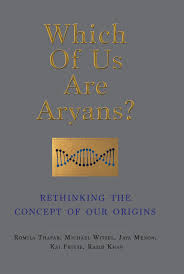 Last year I contributed a chapter to a book soon to be published in India, Which of Us are Aryans? In answer to the question, the straightforward answer is that almost all of us are Aryans. That is, the thin but persistent layer of Indo-Aryan (“steppe”) ancestry is present across the subcontinent. In higher fractions among Brahmins and Kshatriyas than in Dalits, in the northwest than the southeast, and among Indo-European speakers than Dravidians. But this ancestral component and its cultural correlates are found across southern Asia.
Secondarily, there has been some discussion about the negative valence in the West about the term “Aryans.” In particular, its “cultural appropriation” by German Nazis by way of Theosophy and various spiritual and quasi-spiritual movements in the early 20th century.
As an American to see the word “Aryan” bandied about like this is strange and a bit uncomfortable. But there are now more than 1 billion Indians, so I don’t believe we in the West are a position dictate in terms of the lexicon that we borrowed from Indians in the first place, often without clear attribution (most Americans and Europeans would be surprised that “Aryan” is an Indian and Iranian term).
BrownCast Podcast episode 14: conversation with a Hindu nationalist
 Another BP Podcast is up. You can listen on Libsyn, iTunes and Stitcher. Probably the easiest way to keep up the podcast since we don’t have a regular schedule is to subscribe at one of the links above. You can also support the podcast as a patron (the primary benefit now is that you get the podcasts considerably earlier than everyone else…this podcast has been up for nearly a week on the patron page).
I asked our interlocuter for some reading material. Here’s what he suggested:
– The Sarva-Darsana-Samgraha Review of the Different Systems of Hindu Philosophy
Obviously, there wasn’t going to be any resolution after an hour and a half long conversation. Instead, questions and confusions were clarified. Disagreements were aired. That being said, I did leave the discussion crystal clear about what Pinaka opposed, rather than what he supported. At least in the specifics. I would hold that one reason that this is so is that it is easier to say what Hindu culture and religion is not more than what it is.
The ghost of empire and the origin of all repression
 The New York Times published an op-ed, How British Feminism Became Anti-Trans, where India implicitly makes a showing:
It’s also worth noting that the obsession with supposed “biological realities” of people like Ms. Parker are part of a long tradition of British feminism interacting with colonialism and empire. Imperial Britain imposed policies to enforce heterosexuality and the gender binary, while simultaneously constructing the racial “other” as not only fundamentally different, but freighted with sexual menace; from there, it’s not a big leap to see sexual menace in any sort of “other,” and “biological realities” as essential and immutable….
These views are very common on the cultural Left. When progressive social activists make these assertions, and I argue that they are factually wrong, I’ve often encounter surprise and annoyance. There are two things I suspect going on here:
– These people are not genuine propagandists, they actually believe their own fictions. Faced with facts that are novel to them don’t know how to react. They live in a factual bubble where it is taken for granted that the idea of binary gender as a dominant paradigm was introduced by Westerners to South Asians, whose own conceptions were fluid, open, and tolerant.
– The facts of the history of non-Western cultures are fundamentally irrelevant because they exist only to support narratives relevant within Western cultures. Those narratives and the trajectory of Western culture is their true passion. Their fundamental Eurocentrism means that falsehood about non-Western cultures is not particularly of great concern. That is not “their history.” Minor details to be ignored and brushed aside.
 Gibbon famously asserted that the Pope, and implicitly the Roman Catholic Church, was the “ghost of the Roman Empire.” A living, breathing, vestige of an institution and society long gone. Much of modern Western Left social progressivism, informed by critical theory and post-colonialism, is a ghost of 19th and 20th-century empire. It is the warped inversion and reflection of Western chauvinism and populism.
It is highly peculiar to me that on the precipice of the 21st Asian age Western intellectuals bask and wallow in the reflected glory of Victorian-era empires as if they are determinative of all the goings on today. Part of this is surely due to the reality that intellectual currents are lagging indicators, and empires always persist longer in memory and self-regard than in reality. And part of it is the human needs for “noble savages” and “pure” Others against which their own sins may be measured and contrasted.
Our most popular podcasts & a personal dilemma
Our Genetics & India post just crossed a very major milestone (Omar’s China episode is closely racing it) and 13 episodes on I thought it would be good to share our most downloaded podcasts. Our podcast listening figures are many multiples of the readership of this blog so kudos to Razib for suggesting it and to Omar & myself for hitching along for the ride.
Omar’s most recent podcast on India Military History has only just been released this morning and is already very well-downloaded. It’s interesting to see just how interested our listeners are in China, Islam and the military; not so much in Indian specific topics, art or culture. I guess people are most interested in the near exotic rather than the familiar.
I believe we have a podcast on the Patron page and another one is expected to be done tomorrow (I can only join in because the time zones align being back in Chennai again- for work this time).
I’m finalising a few of my own podcasts; I’m reworking the Dravidian one into a Deccan languages one. I’m also looking for a very well versed economist to speak with on the Indian economy both in a global and South Asian context.
I’m still very much a technophobe; my after dinner electronic ban has led to an efflorescence of intellectual thought (if I say so myself). I’m handwriting my novel & then interspersing my journal entries as a break between writing blocks.
I tried handwriting BP posts but they end up so familiar & intime that I have to post them to my locked private blog; it’s astonishing just how difficult it is to be trollish/opinionated about topics by hand, it just seems absurd on the written word as opposed to a computer.
I’ve discovered the medium of technology profoundly influences the writing style (twitter and its propensity for flame wars is a good example). Knowing that I have a ready audience with only the click of the button I will write for the reader than for myself. However the handwritten style, where the reader is a distant stranger, lends to a profound intimacy.
I’m very proud of my prolific output even though my handwritten notes rapidly degenerate into hieroglyphics if not typed out and it will require constant editing (not surprisingly I tend to be of the James Joyce style, a stream of consciousness).
In many ways I remind myself of a D-lister who have made their career playing Marvel characters is now trying to be taken seriously as an actor.
By masalafying BP and spicing up the comment threads, I’ve trolled my way to the top in the niche world of Brown Pundity. Now in my own search for authenticity I find myself compelled to play a role all of my own making. An existential crisis worthy of a good novel..
Review: Directorate S
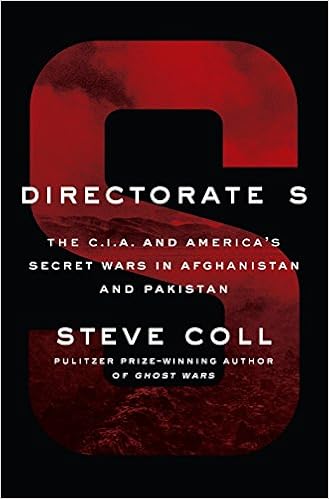
Review from Major Amin: Directorate S –The CIA and Americas Secret Wars in Afghanistan and Pakistan, 2001-2016-Steve Coll -Allen Lane- Penguin Books-2018-ISBN-978-1-846-14660-2 ISBN-13: 978-1987659184 ISBN-10: 198765918X
A leading US-Israeli Intelligence analyst and operator recently summed up pathetic state of US intelligence operators in Pakistan as following:–
“ They are afraid of their own shadows”
As great powers decline , their quality of strategic judgement and decision making and their operational effectiveness also markedly declines.
Steve Coll’s voluminous and bulky book reconfirms this fact .
The first defect of this book is that it does not contain a single relevant map connected to the subject i.e Directorate S.
On page 12 the writer repeats a false and unsubstantiated claim that CIA pilots had to fly Russian MI series helicopters for Northern Alliance , whereas in reality Afghanistan never had any shortage of Afghan helicopter pilots.
On page 14 the author confirms his absolute lack of knowledge of geography when he fallaciously claims that Panjsher valley slices north towards Tajikistan , whereas in reality Panjsher valley inclines towards Chitral in Pakistan towards the Northeast , ending at Anjuman Pass.
The authors analysis is a clear testament to the fallacious assessments of US policy makers about Afghanistan like on page-17 he discusses Al Qaeda and US policy makers obsession with Al Qaeda.
As a matter of fact Al Qaeda was never the real player in Afghanistan all along . It was a puny group with limited strategic ability. The real players in Afghanistan all along were Taliban supported by Directorate S of the ISI.
This basic US perceptual error repeatedly appears in Steve Colls voluminous narrative and Steve Coll himself is quite confused about it.
Steve Colls factually flawed statements like page-17 where he states “Recalling the miserable fates of Imperial Britain” while referring to Britain”s Afghan wars. Why Coll has to make such baseless statements is perplexing. As a matter of fact all three Afghan wars were a strategic success , the first being waged by a British private company. All three Afghan wars made British strategic position in India and West Asia stronger and created a more stable Afghanistan.I guess it is fashionable in western authors to make such statements about what a terrible place Afghanistan was and is . Continue reading Review: Directorate S
BrownCast Podcast episode 13: The British Indian Army
 Another BP Podcast is up. You can listen on Libsyn, iTunes and Stitcher. Probably the easiest way to keep up the podcast since we don’t have a regular schedule is to subscribe at one of the links above. You can also support the podcast as a patron (the primary benefit now is that you get the podcasts considerably earlier than everyone else).
If you aren’t in a position to be a patron, please give us 5-star ratings and a positive review!
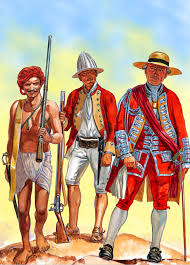
In this episode Omar talks to Major Agha Humayun Amin and Dr Hamid Hussain. Both gentlemen are deeply interested in military history and know everything there is to know about the British Indian army and its daughter armies in India and Pakistan. We talk about the army of the East India Company and its domination of the Indian subcontinent, the 1857 mutiny, the army after 1857 and finally a few words about partition and in particular about the role played by British officers in the Pakistani army and in the capture of Gilgit and Baltistan (a region that is now central to our plans to form an alliance with China). We hope to have more podcasts in the future about the various India-Pakistan wars.
The Art of Ta’arof
Some years ago in Tehran a 90 something gentleman got up to greet someone half his age since he said those are the manners he was taught as a young lad. I instagrammed it as “amazing ta’arof” and my Persian friends immediately corrected me that was not ta’arof but genuine.
So Ta’arof is not always a positive force since it’s mixed in with traces of deception. This article below was a very old post in my blog and thought I would share it since it’s so well-written.

One of the most complicated aspects of Persian culture — and language — is the untranslatable ta’arof. Depending on the circumstance, it can mean any number of things: To offer, to compliment and/or exchange pleasantries. But that’s only the tip of the iceberg. I doubt if any study can lead to a full understanding of Ta’arof. A born and raised Persian, even I find myself losing my grasp on it from time to time.
Open Thread – Brown Pundits
Please keep the other posts on topic. Use this for talking about whatever you want to talk about.
 Just a note, that two future podcast episodes are up in the patron’s page. One of them on Indian military history and another a discussion with a Hindu nationalist. We plan on doing follow-ups to both.
Brown Pundits on Instagram!
Contributors, commenters, lurkers:
Happy to announce that Brown Pundits is officially on Instagram! You can find the profile here: https://www.instagram.com/brown_pundits. Please do give the account a follow.
I’ve noticed in my social media travels that the desi presence on Instagram these days is quite strong. There’s been a proliferation of profiles dedicated to desi history and culture that have seen some pretty expansive growth (e.g. Brown History, southasia.art). And as the sole and best source of heterodox views on all things South Asia, it’s only fair that BP gets it on the fun.
The primary purpose of the page will be boost the signal of the Brown Pundits Podcast, which is off to a great start and has already recorded a number of fantastic episodes. But of course, the page will be a work in progress.
Please do leave any comments or suggestions you have in the comments. Also open to any suggested “tag lines” we can include in the bio: as a starter, I went with “Punditry by Browns, for Browns.”