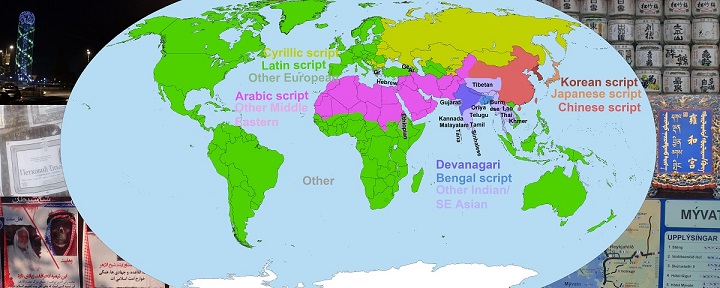
Since the above map is only really visible on clicking I thought I would share another map that was better colour-coded.
Turan & Turkey needs to go Purple asap..
A book that deeply influenced me as a child was the Clash of Civilisations. I thought Samuel Huntington’s contention that Civilisations correlate to religions was a bit too blunt. However what also influenced me was the first chaptre of Ludwig Von Mises’s book, “Nation, State & Economy.”
I’ve started to use Twitter alot more as I’ve was rather tied up (to my loss I still haven’t been able to meet Kabir Sahib in person). I have begun to prepare for a national franchising of one of my brand’s Bubble Tap.
Incidentally my life comes to full circle as I mirror what my Irani great grandfather did in Kohlapur upon pioneering there*; he opened an ice-cream shop I opened a Dessert shop upon moving to Cambridge.
At any rate as is pretty evident my political instincts are quite High Tory. I only assume the SJW mantle to fight back against White Liberals since I dislike Munfaqeenism (to thine ownself be true). A classic example.
Sing, Goddess, Achilles’ rage,
Black and murderous, that cost the Greeks
Incalculable pain, pitched countless souls
Of heroes into Hades’ dark,
And left their bodies to rot as feasts
For dogs and birds, as Zeus’ will was done.
Who are the Greeks? Where did they come from?
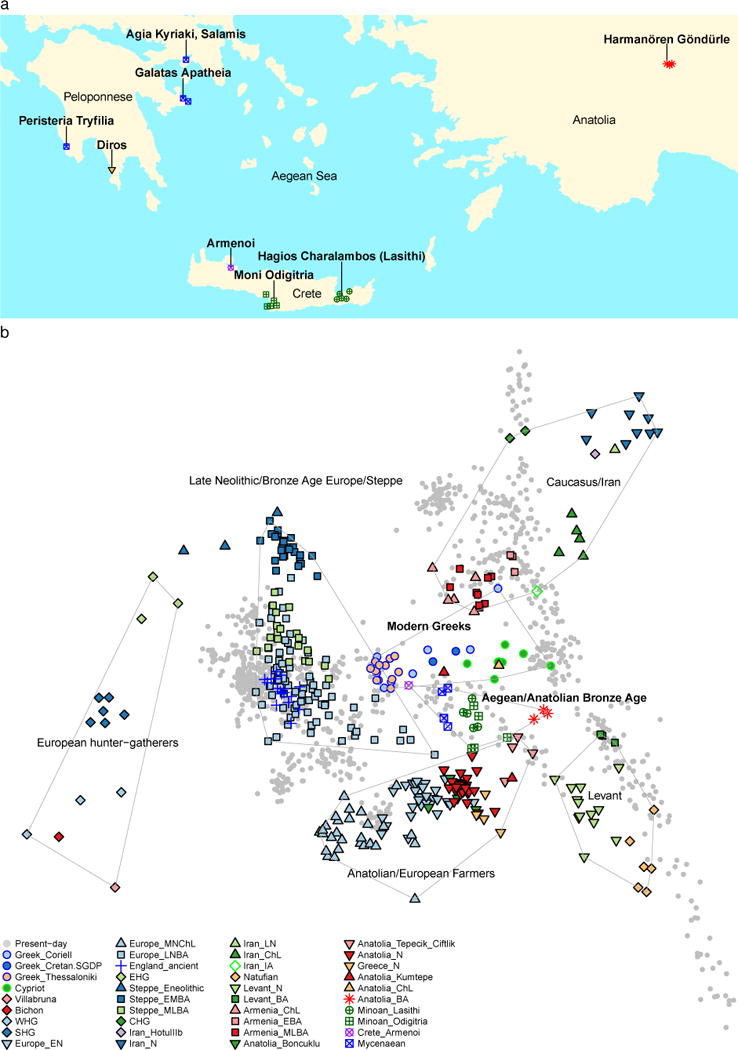
We have enough ancient DNA now to answer many of these questions. It seems that the largest component of Greek ancestry derives from the expansion of farmers out of Anatolia ~9,000 years ago. But at some point in the latter phases of prehistory, another wave of migrants pushed out from the east, with affinities to peoples as far away as Iran. And then during the Bronze Age, another pulse of migration arrived, likely correlated with the arrival of Greek-speaking peoples as such, the Mycenaeans. Finally, there is a fair amount of circumstantial evidence that the peregrinations of the pagan Slavs during Late Antiquity and the early Medieval period left their imprint on many Hellenes, in particular in the north of the country, around Salonika.
But that’s just genetics. What about culture? In terms of religion, Greek paganism is a composite. Zeus pater is clearly a standard Indo-European sky-god. Jupiter in Latin. Dyáuṣ Pitṛ́ for the ancient Aryans. In contrast, gods such as Athena seem to have synthetic, and at least partly pre-Indo-European origins. Finally, Dionysius was possibly an eastern import relatively late in prehistory.
Though the Greek language is definitely Indo-European, there are also extensive loanwords indicating an indigenous substrate. For example, words with the syllabic fragment –nth, such as in Hyacinth, are likely native. The Greeks settled amongst peoples who had a long history of settled life, and had developed their own civilization.
The point is that it is probably not even wrong to say that the Greeks as we understand came from elsewhere, or, that they were indigenous. To be Greek probably emerged in the period after 2500 BC, as Indo-Europeans mixed with the local cultures, and created something new. Autochthonous.
So at some point the Brown Pundits“browncast” (as opposed to brown caste) is a go. I’m not going to submit to Itunes or Stitcher until we have a podcast recorded and up.
ISNArecently had a meeting in Houston. Many of the “muslim” attendees were closet atheist ex muslims, atheist muslims, liberal muslims and minority muslims. Most of them treated ex muslim atheists respectfully and warmly. The extent to which even ISNA–which until recently was a conservative muslim organization–has moved on LBGTQ, atheism, European enlightenment liberalism, human rights, shariah, Islamism, Jihad, feminism is remarkable. Now in America, Canada, India even conservative mosques have meetings where they discuss how to interact with atheist ex muslims. Part of the reasons suggested in the panel discussion is because muslim Americans in particular socio-economically outperform caucasian Americans. But whatever the reason might be, atheist ex-muslims have received less push back from muslims than expected. And this is good.
However nonmuslims have treated atheist ex muslims with great anger, racism, bigotry, prejudice and sectarianism. For example Starbucks asked atheist ex muslims to leave their coffee shop. The extent of anger is so intense, that even ex muslims’ historic allies and friends–prominent global atheist organizations–have asked the atheist ex muslims to get out. Atheists are too afraid of backlash from xenophobic nonmuslims. Some of the reasons the three wise one (Ali, Armin and Muhammed Syed) speculated for why include:
Racism of low expectations. Authentic darkies can only support Islamists because they are not advanced enough or mature enough to support moderates, liberals or atheists. So nonmuslims need to back Islamists against moderates.
Only accept Islamists as “real muslims” or muslim leaders. Moderate muslims are not “real muslims” and are not muslim leaders.
“white guilt” which can only be assuaged by backing Islamists against moderate muslims
Only “white people” and non muslim Asians are powerful enough to influence or cause anything in the world. Everyone else is not powerful, intelligent or wise
Syed said that only “white people” matter
Ali says “America is not the only country in the world”
Only condemn white imperialism or non muslim Asian imperialism [I have seen young idealistic do gooder caucasian females condemn Japanese imperialism or Hinduism/Buddhism imperialism or the Chinese “rape” of Africa]
Islamist imperialism and empire is celebrated and fetished by many nonmuslims
Antifa, Black Panthers and Communists attacked the ex muslim atheists and were chanting the muslim azaan in a horrendous accent.
Muslim ISNA participants were horrified and scared by the crazies; and couldn’t believe they were on the side of muslims
A new video with footage about the Houston crazies is about to come out.
Life on the Outside: The Tamil Diaspora and Long Distance Nationalism by Øivind Fuglerud (1999).
Not a review of the book, just excerpts. I found the book unbiased in my opinion. The first chapters are a background of how the separatist movement evolved. The latter chapters are on the dynamics of the Tamil Diaspora in Norway. The excerpts are from that part of of the book.
Link to the pdf of the book at end of post.
YouTube video of life in the Tundra at end of post.
Vasanthan, Thank you very much for sending the book link
Excerpts
A more radical change in climate and nature than that between Sri Lanka and Norway is difficult to imagine and if one is going directly the journey may be made in less than twelve hours. One Tamil lady explained to me how, arriving in the middle of winter with the snowdrifts high against the houses, she believed that people in this part of the world lived in underground caves A refugee counsellor in the northern part of the country told me how a young Tamil boy due to be settled in the township where she worked had desperately clung on to the aeroplane steps, refusing to come with her into town. Seeing the barren, snow-covered environment he was convinced he was being banished to somewhere outside human habitation. When he was moving to another town I asked Sri, a moderate LTTE supporter, how he would go about getting acquainted if he met a fellow countryman at his new working place. He answered: I will begin by asking him if he has any news from home, that is our standard opening. Then I will ask him what he thinks about this or that of the recent development in Sri Lanka. If I understand he supports the movement I may invite him home. If he criticises the Tigers but is basically neutral, we may keep on talking at work. I am not a fanatic, I don’t mind that. If I understand he is a member of one of the other groups, however, I will break off. I don’t want to socialise with traitors. In dealing with fellow countrymen there is always the possibility that actions in Norway will have consequences in Sri Lanka. Tamil refugees are not fleeing a common enemy, the violence is within as much as on the outside. ‘They are here, don’t speak’, newcomers will be informed upon arrival. ‘LTTE is here, I cannot speak’ Even Wilson, a founding member of the LTTE who was permitted to leave the organisation after a dramatic escape from Batticaloa prison in the early 1980s, found that after finally obtaining a visitor’s visa for his mother she was being held back byhis former friends in Jaffna. ‘ Theyjust want to remind me that they know where I am’, he said to me. ‘They are afraid that after ten years in Norway I may be tempted to write a book or something.’ In fact, from 1990 this effort to execute control beyond their own borders has been institutionalised through a very strict exit control in the Tamil areas of Sri Lanka, which includes the obligatory signing of a ‘contract’ by a guarantor staying behind. As already indicated, in Norway many Tamil refugees have in fact violated the ‘first-country’ regulation on their way. To remain in Norwaytheymust make up a storyand stick to it. The idea that Tamils in exile tend to give each other away is part of the current self-understanding, a situation which prevents a communicative sharing of life histories. Most of my informants asked me not to tell their stories to other Tami Another man asked me to take care of his passport when he was kicked out by his wife and had to staywith friends for some time. ‘You cannot trust Tamils when it comes to passports’, was his laconic comment When the possibility of sending home Tamil asylum seekers came up for renewed discussion in 1994, a frenzybroke out in one of the small northern settlements. It incited people to go to the police on their own initiative and provide what little information they had about their neighbours. Within a few days local immigration authorities were able to establish that, of the 120 Tamils resident in the village, more than 40 had been living in Switzerland before coming to Norway. For example, it is a well-known fact among Tamils that in Norway the local LTTE people were for a number of years allowed to monopolise positions as interpreters for the immigration police. That interaction between a police officer and a refugee in a situation of interrogation is on unequal terms, defined by the context and scale of Western immigration, is readily understandable. But when the refugee is afraid of telling his story to the police officer because of the interpreter’s connections to the militant opposition in Sri Lanka and this interpreter is employed by the Norwegian police, where do we draw the boundary of the system? In terms of inter-personal relationships social fragmentation is not readily apparent to outsiders. To a Norwegian the first impression of Tamil life is one of dense sociality. the divide among Tamils in Norway has been on an LTTE /anti-LTTE basis. LTTE is today the only militant group with a properly working organisation in Norway, keeping offices in the main cities and having more or less official representatives in most Tamil settlements. Prabhakaran, lacking resources of his own, had temporarily joined the organisation TELO which was then under leadership of two militant leaders called Kuttimani and Thangathurai. Together with them he was supposed to have taken part in a famous armed robbery of the Neervely Bank in Jaffna. The second was that subsequently Prabhakaran had personally tipped off the Sri Lankan police on the whereabouts of Kuttimani and Thangathurai, this information leading to their arrest and, as a result of this arrest, their death in the Wellikade prison massacre. On 1 May 1994 the writer and publisher, Sabaratnam, was killed by unidentified gunmen at his home in Paris Critics of the LTTE in Norway pointed out to me that shortly before his death Sabaratnam had written an article in the Canadian magazine Thayagam. In this article Sabaratnam had observed that all who participated in the Neervely Bank robbery, except Prabhakaran himself, were now dead, killed either by the Sri Lankan authorities or by the LTTE. He implied that Prabhakaran saw it in his interest to remove the other participants in the action in order to conceal his own co-operation with TELO. Sabaratnam had promised to return with another article disclosing the real story behind the robbery and the capture of Kuttimani and Thangathurai, but was killed before this could take place – allegedly by the LTTE itself. By the adherents of the Thayagam version, the killing of Sabaratnam and Prabhakaran’s betrayal in the late 1970s were seen as closely connected events which should make people turn their backs on LTTE activities in exile. Not only did Prabhakaran’s tip-off constitute a collaboration with the enemy, but the killing of Sabaratnam reached the lowest possible level of human baseness. It was claimedby people familiar with the early history of the militant movement that in the mid-1970s, years before the Neervely robbery, when Sabaratnam himself was a political activist in Jaffna, he had taken Prabhakaran into his house while he was wanted by the police and had kept him in hiding for several weeks, putting his own life in danger. Repaying this old debt with murder constituted a breach with the militants’ most fundamental ‘code of arms’ and, by implication, left his organisation, LTTE, without any legitimate claim for support. Tamils are the group of immigrants with the highest rate of employment and with the lowest level of welfare support in Norway. One reason for this situation is the acceptance of the kind of work which is not in demand. In Oslo, according to a recent statistical survey (Djuve and Hagen 1995), only 1.3 per cent of Tamils’ income comes from welfare, as compared to, for instance, 41.7 per cen among Somalis and 37.5 per cent among Vietnamese. In fact, the Tamil level of welfare support is lower than among Norwegians (2 per cent). In this rather inhospitable area Sri Lankan Tamils have won a reputation as workers in the factories where fish is cut and packed. Even if the numbers are small, seldom more than 50 to 100 in one village, statistics will show that in several villages Tamils represent 5 to 10 per cent of the total population In the anthropological literature the dowry has generally been regarded as a pre-mortem inheritance to the daughters of a family (Comaroff 1980). In the prevailing war situation it is normally a chosen son who pre mortem inherits the realisable capital of the family and invests it in migration against taking further responsibility for his native family upon himself. This implies, inter alia, that he must procure his sisters’ dowries before establishing a family on his own. (my comment: This is one of the biggest differences between Tamil and Sinhalese culture, among the Tamils (and northern muslims) the house goes to the daughters, among the Sinhalese the house goes to the son)
most Tamil asylum seekers arriving in the early 1980s had been granted recognition as refugees while those arriving after 1986 had not. In their understanding this was related to the fact that most of these early applicants had been active LTTE-members, in other words that Norwegian authorities intervene and take sides in internal conflicts, caring less about the killed than about the killers. from people who have fled to get away from their dictatorship in Sri Lanka and have relatives still suffering under their rule there. It is here, at this precise point, that the spirit of selfsacrifice of the LTTE soldiers becomes important. The actual materiality of death makes it difficult not to believe the LTTE when they say that their fighters die on behalf of the Tamil nation. Even people who in public take upon themselves the burden of speaking against the LTTE may sometimes admit in private conversations that, emotionally, they are not able to free themselves from sympathy for the organisation and its cause. In 1903, for example, there were 2021 Jaffna-Tamils employed as functionaries in the federated Malay States Railways compared to 84 Sinhalese, 278 Malays and 1084 Chinese (Ramasamy 1988).In 1903, for example, there were 2021 Jaffna-Tamils employed as functionaries in the federated Malay States Railways compared to 84 Sinhalese, 278 Malays and 1084 Chinese (Ramasamy 1988). The main reasons why Ceylon Tamils were favoured by the British administrators were their recognised industriousness and their fluency in English. As noted in Chapter 2, at the turn of the century the Tamil community already had a long-standing relationship with English speaking missionaries. The acquiring of language proficiency was, however, not a passive process. Education was an asset seized upon by the ambitious, something that aspiring Jaffna families put their minds to without regard for the costs. Migration to areas like British Malaya was clearly one way of ‘converting . English education into cash’. The Money Order remittances returned to Ceylon in a good year like 1918 totalled 736,652 Ceylon rupees from the Federated Malay States and 289,651 rupees from the Straits Settlements, quite substantial amounts at that time. The importance of these remittances was such that on two occasions, with a twentyseven years’ interval, the government agent in the Northern Province found it necessary to point out that it was the money coming from Malaya which accounted for the relative prosperity of Jaffna (Ceylon Administrative Report 1903 and 1930).
These are my unedited thoughts (the sweet spot of BP is that we are read by enough people to make it lively but not enough to make us notorious).
(1.) I think there is no smoke without fire.
(2.) I also believe events may have exaggerated.
(3.) BK seems like a wannabe Alpha Male; doesn’t seem to be a nice chap at all either now or then.
(4.) Trump is a lot like Boris. A clownish public figure who has been relentless underestimated.
(5.) I do feel the BK nomination signals a darker turn in the Republic’s politics.
I do also think that men need to “guard themselves” the way women have done. Don’t drink irresponsibility, understand consent and frankly don’t “take liberties.”
I went to Peterborough yesterday to this charming cafe called “Chaiwallah.” The Karak chai was very good but the cafe was all male and they were speaking Mirpuri.
I don’t understand who let these people into the country. It’s a shame on the British Pakistani community that we, who are the children of Ghalib & the Mughals, are reduced to such a degraded state in the UK.
The only solution seems to be that British Muslim community vote for the Tory Party, grammar schools and ditch those retrograde aspects of the culture/religion that inhibits aspiration.


 how the separatist movement evolved. The latter chapters are on the dynamics of the Tamil Diaspora in Norway. The excerpts are from that part of of the book.