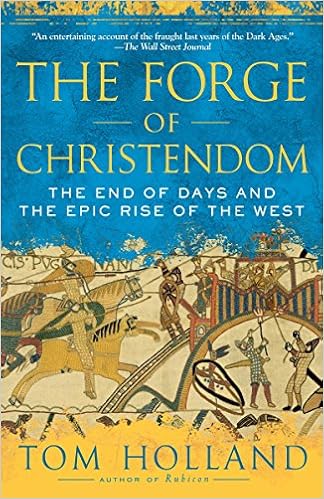
Review: The Forge of Christendom by Tom Holland

Tom Holland’s latest book is about the slow recovery of Western Europe between 900 and 1100 AD, a period that he sees as the beginning of Western Europe’s transformation from a decaying and dilapidated backwater to the mastery of the world. Tom Holland clearly thinks Christianity had much to do with this rise and presents the violent elimination of paganism in Scandinavia and Eastern Europe as positive achievements of the age. This is mostly done not by direct editorializing; it is done by using the language of the invading Christians (not as quotes from ancient books but as the text of the book itself) to describe the pagans. What the pagans thought of this transformation is rarely mentioned or is explicitly presented as a quote, not as the author’s own text.

He sort of claims that this great transformation had something to do with rising apocalyptic expectations about the end of the first Christian Millennium, the disappointment of which was followed by the channelization of these energies into this-worldly revival and expansion. He does not really prove this hypothesis and it may be that it is mostly a device to frame the book and is not taken completely seriously by Tom Holland himself. Certainly I more or less ignored it while reading the book and you can get some value out of the book without paying this theory any mind either.

(The book’s Amazon.com intro presents this as the central thesis of the book: “At the approach of the first millennium, the Christians of Europe did not seem likely candidates for future greatness. Weak, fractured, and hemmed in by hostile nations, they saw no future beyond the widely anticipated Second Coming of Christ. But when the world did not end, the peoples of Western Europe suddenly found themselves with no choice but to begin the heroic task of building a Jerusalem on earth.” I did not find it convincing and I think you can ignore it too). That said, the book is still fun to read. Tom Holland always wants to make history fun, to tell stories, to quote contemporary accounts and to paint vivid pictures of life in those times. He is always interesting, but the reader will have to read other books to find out if the slant presented here is the most reasonable one or if Mr Holland is letting his storytelling side (or his Christian/English side) dictate how events and characters are presented.

There is definitely an element of subtly (and occasionally not-so-subtly) challenging the more “woke” interpretations of history that are currently popular in some elite Western universities. He wants the readers to see Christianity (specifically Catholicism) as an overall force for good (separation of church and state, suppression of elite violence, etc) and as an important source of cultural unity, growth and creativity in those troubled time. He is not necessarily wrong about this, but he rarely makes a solid evidence-based case case (with alternative views systematically evaluated and rejected) for his preferences, relying instead on eloquence and (selective?) presentation to convince the reader.

If you don’t mind (or already approve of) his Christian and “Eurocentric” viewpoint, this is the book for you. Even if you do mind, it is a very entertaining read, full of zany anecdotes and interesting factoids. A reasonably good overview of the age and worth a read. But it will be a good idea to read other books about the period before you decide that the trends were exactly as described in this book.

Podcast on South Asian genetics this week

As some of you know I co-host a podcast on genetics and history with Spencer Wells. The very first podcast we recorded in late June of 2017 was about India, but we were still getting the hang of it to be honest, and we didn’t cover much territory.

A lot has happened between then and now, and so it’s time for an “update,” which is going to cover many more topics. That being said, we haven’t recorded yet and so I’m open to “questions from the audience” that we might integrate. So please use this post to leave comments about specific topics…. (please note we have only ~1 hour or so so might not get to everything)

Update: Podcast recorded.

Where readers come from

I looked at traffic from Jan 1 of 2018. Here are the top 30 cities, standardized by the # of users from the 30th, Indore:

City User #
Bengaluru 6.6
London 5.7
Mumbai 5.7
New Delhi 4.3
San Jose 4.3
New York 4.1
Lahore 3.9
Pune 2.9
Karachi 2.8
Chennai 2.7
Mountain View 2.4
Islamabad 2.3
Kolkata 2.0
Hyderabad 2.0
San Francisco 1.9
Toronto 1.9
Chandigarh 1.6
Chicago 1.6
Washington 1.5
Los Angeles 1.4
Cambridge 1.4
Spartanburg 1.3
Lucknow 1.3
Ahmedabad 1.3
Austin 1.2
Rawalpindi 1.2
Noida 1.0
Sydney 1.0
Melbourne 1.0
Indore 1.0

The average session form San Jose lasts more than 10 minutes and people look at 4+ pages. This is in contrast to all readers who are closer to 5 minutes. Also, I find it funny that we have more readers from Mountain View than San Francisco. I don’t think it’s just Google crawlers, the sessions average nearly 7 minutes.

If readers want to they can use this as an “unlurk” post too. Basically, you can say who you are if you are so inclined.

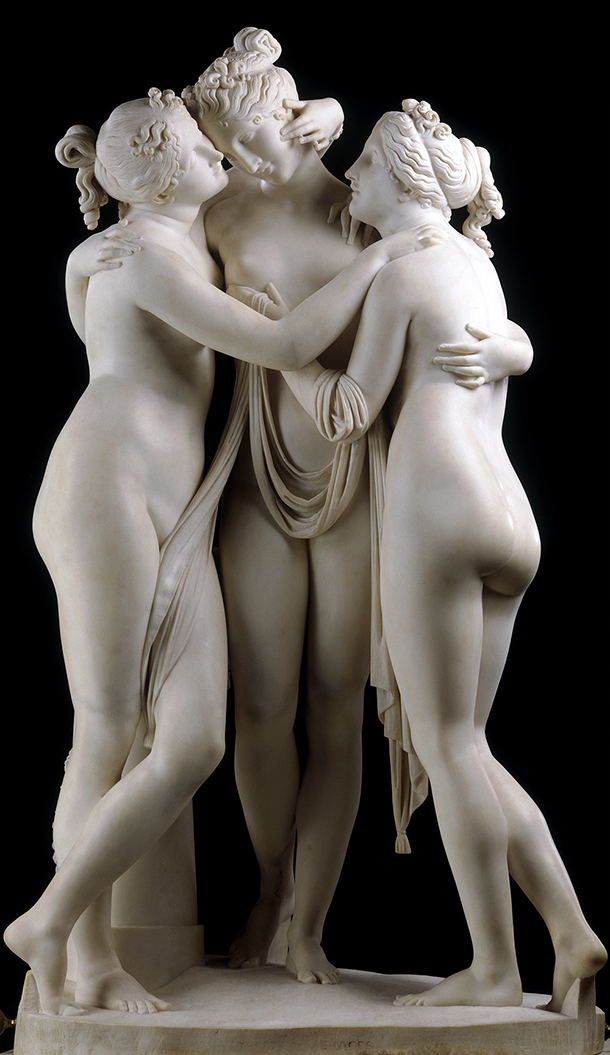
Three Graces of Islam

God’s new favorites; Persian, Arabic & Urdu
Image result for al uzza manat allat
Allah’s Satanic Exes: Have you thought of al-Lāt and al-‘Uzzá and Manāt, the third, the other? (Sura 53, 19-20)

Chinese Century with Muslim characteristics?

https://www.facebook.com/nasdaily/videos/486608898507368/

Razib admonishes all of us for not knowing nearly enough about China. To lighten the tone I’ve shared Nas’s video above about Singapore.

It sounds cliche but it does seem that these Chinese are onto something. As I quipped on Twitter:

On a more serious note, Razib’s Open Thread has some really interesting factoids on China; I had learnt about the Dzungharian genocide from his blog many moons ago.

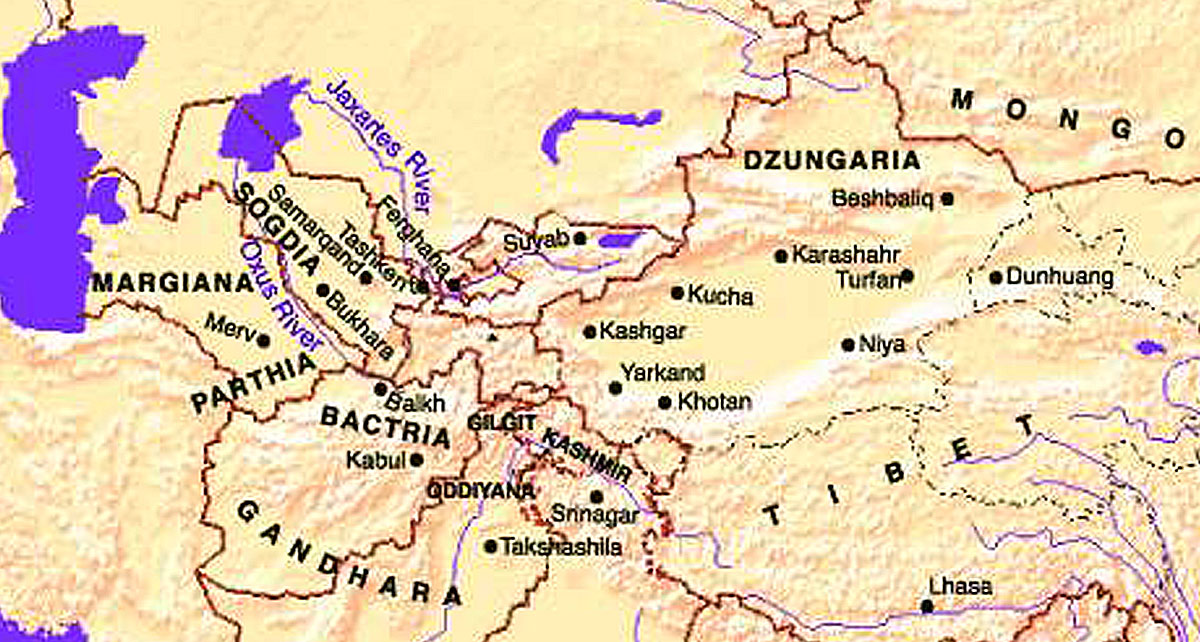
I used to love this turn-based game, when I was a lad, called Genghis and the adjacent territory next to Mongolia was Dzungharia. I never thought much about it but for the fact that it was always the first spot that Genghis would conquer as soon as the game began.  I never connected that Dzungharia was commingle with Uighurstan in Xinjiang; it seems a bit like Greater Armenia and the Kurds.

Image result for map of dzungaria

From a map of Inner Asia; it seems that Uighurstan is plugged into the Central Asian/Turanian network. Like the two Dashts in Iran that separate Iran from Khorasan it seems the Taklamakan Desert separates Turkestan from the Tibetan-Mongol orbit. Islam’s borders sometimes seems etched in geography; it’s not a coincidence that the Muslim further East in China practice “Islam with Chinese characteristics” as opposed to the more restive Uighurs.

I believe the map above has to date to pre 5th century Asia since Taxila was abandoned right about then. One interesting thing about maps is that depending on how you look at it there seems to be a strong clustering affect of Central Asia (Kashmir seems as Central Asian geographically as it does South Asian).

Unfortunately in our histories Iran has eclipsed the idea of Khorasan almost entirely and it’s importance to both South & Central Asian history.

Until the devastating Mongol invasion of the thirteenth century, Khorasan remained the cultural capital of Persia.[18] It has produced scientists such as Avicenna, Al-Farabi, Al-Biruni, Omar Khayyam, Al-Khwarizmi, Abu Ma’shar al-Balkhi (known as Albumasar or Albuxar in the west), Alfraganus, Abu Wafa, Nasir al-Din al-Tusi, Sharaf al-Dīn al-Ṭūsī, and many others who are widely well known for their significant contributions in various domains such as mathematics, astronomy, medicine, physics, geography, and geology. Khorasan artisans contributed to the spread of technology and goods along the ancient trade routes and decorative objects have been traced to this ancient culture, including art objects, textiles and metalworks. Decorative antecedents of the famous “singing bowls” of Asia may have been invented in ancient Khorasan.[citation needed]

The strange story behind the ‘Khorasan’ group’s name

After the region was taken over in an Arab conquest in the 7th century, Khorasan became a part of the Umayyad Caliphate, and with that, part of early Islamic culture. Notably, a widely discussed (though disputed) Hadith speaks of how “black banners will come out of Khorasan” in the end times. Will McCants of the Brookings Institute notes that the prophecies derive from the 8th century Abbasid revolution, a revolution that began in Khorasan and saw the end of the privileging of Arabs over non-Arabs in the Islamic empire.

Over the years, the Khorasan region had a fractious history, and was eventually swallowed up by a variety of different states. A part of Khorasan eventually became Khorasan state in modern Iran, and “Greater Khorasan” is generally used to refer to the larger historical region.

Brown Pundits