Pakistan, communists and a stained dawn

Abdul Majeed Abid

Yeh fasal umeedon ki hamdam,

Iss baar bhi ghaarat jaye gi,

Sab mehnat subhon shaamon ki,

Ab kay bhi akaarat jaye gi

(This crop of aspirations

will be ruined once again,

the toil of day and night

will be wasted another time.)

(Faiz, Montgomery Jail, 1955)

The view from jail

The year 2007 was eventful in Pakistan’s recent history. Political upheaval coupled with a rise in terrorism and a lawyers’ movement for the restoration of the judiciary gripped the country for most of the year. Musharraf, the military dictator, had forcibly removed the Chief Justice of Pakistan — sparking a movement led by lawyers across the country. Amidst all this kerfuffle arose a new band called ‘Laal’ with their song ‘Umeed e Seher’ (Hope for a new Dawn). The song became a sort of anthem for the lawyers’ movement alongside slogans against military dictatorship. The song was based on a poem written by Pakistan’s foremost progressive poet Faiz Ahmed Faiz and the band consisted of young academics who openly declared themselves Marxists. One of the band members was the General Secretary of a Communist Party in Pakistan. A communist party in Pakistan? That seems like an oxymoron, does it not?

Continue reading Pakistan, communists and a stained dawn

Indian Diplomats in Pakistan harassed

New Delhi: Some Indian High Commission officials out for shopping in Islamabad’s main business district were aggressively followed and abuses hurled at them, the Foreign Ministry complained to the Pakistan government today. 

This is the second incident of Indian diplomats being intimidated and harassed over the last three days, Foreign Ministry sources said in New Delhi.

An Indian diplomat and his family on their way to a restaurant in Pakistan were chased by two men on a motorbike on Thursday this week, hours after India had called “harassment the new normal for Indian High Commission personnel in Islamabad”.

Pakistan: Land of the Impure Continue reading Indian Diplomats in Pakistan harassed

Shocking Sexism towards Kareena Kapoor

My wife alerted me to this shocking 20 second clip:

Such an extraordinarily offensive question by Rajdeep Sardesai. He basically asks Kareena if she’s educated and whether she was intimidated in joining the Pataudi family, who apparently are Rhode Scholars & Oxford. A few obvious observations:

(1) I was at the memorial conference for Pataudi Snr in London a few years ago. The handlers had to ask the press not to focus on Kareena, who was there with Saif & Sharmilla. She’s like the Ash of the Bacchan family, her star eclipses the family she’s married into entirely (that’s why Amitabh omits her quite obviously and Shweta/Ash have a hate-hate relationship).

Where is Ash in this tribute? Continue reading Shocking Sexism towards Kareena Kapoor

Why tribalism wins

Why tribalism wins ?. For this we need to consider what would be the alternative of tribalism?. Individualism. However individuals collaborate to achieve goals . The act of collaboration leads to competition between different kinds of ideas . Here there is big difference between complicated ideas which require deep study which cannot be done over short period of time and simple ideas which require less study. The more complex an idea, the less numbers of people shall be able to follow and the simpler an idea, its easy enough to get many to support them. It should also be easier to get many to debunk them as well. But here we end up with cognitive biases of the mind. No matter the ease with which one might debunk the simple idea, one might still not win the case for the complex idea precisely because it is complex, one might debunk it in favor of another simple idea. This leads to evolution of rhetoric, branding, a way to compress very complex set of ideas into simple enough ideas that can gain support .

In all this, we are now faced with the logistics of how ideas are disseminated , the fidelity with which they are disseminated, all options are made available, how well are all options equally explained. All this requires commitment of workers. So, the requirement of nuance, the logistics of the entire exercise, the need to motivate workers , the simple minded ideas and rhetoric one needs to deploy to win over others to one’s side , especially if one’s own ideas are too complex. This leads to a need for improvisation, rhetoric, taking advantage of cognitive hacks of our minds.
And once these methods are put in place, this machine becomes self sustaining, the use of cognitive hacks will keep getting deployed. All this lead to dominance of tribes over individualism.As it will be the efficiency of how these are run that shall decide the success.

Individualism also leads to spectrum of different positions. As Steven Weinberg once put it, “Without religion, good people will be good and bad people bad, with religion, to get good people to do bad,that takes religion”. As simple as this might sound, One might discover that the personalities of these “good people” might diverge from each other as well. If so, one might find that these good people might further divide themselves as their individual exploration space would be different from each other, their cognitive capacity, their methods of reasoning and subjective experience might all differ. The narcissism of individualism leads to the bizarre culture of validating people for discovery of their personal truth , popularization of phrases like “speaking your truth” comes to the mind. The narcissism of individualism will lead to a culture of much internal bickering and be taken over by the more tribal groups, whether they be internal or external.

Truth is not easy to find for all. At some point one has to go by trust due to the impossibility of one individual gaining perfection in diverse fields .Even in one field, one is far away from experts. This is true at both at the level of knowledge but also at the level of governance. The requirements of building systems of governance to scale leads one to also trust large numbers of people as part of the system. The constraints alone make Tribalism seem necessary. Add to it the divergent thinking styles of people to it along with diverse beliefs of people, how can it not be the case that tribalism would win. Once a tribe is formed based on certain markers, it becomes self sustaining and change the world in unique way in consonance with those tribal markers.

The difference is one therefore as to how an eco system of tribes tame themselves over time and evolve strategies of not trying to out compete each other to harmful effects but to help enable each other and to also solve the trouble of freeloaders .

In absence of clear cut answers one can only go by heuristics and methods to help us. In science and math, it is the consistency of methods, experiments that helps us. They act as guard rails .  We need to educate people about guardrails, one such guard rail could be skin in the game and belief in progress in incremental steps, experimental groups one can track over period of time and test for intervention  rather than to force experiment on everyone with no way to convince others that one’s ideas are indeed true.

Padmavati quip; Jauhar or Jihad?

We watched Padmavati last night (I have a longer post on that) but I thought I would share this funny story.

I was reading up on the history of the Chittor Fort (where Padmavati is centred):

Beginning in the 7th century, the fort was controlled by the Mewar Kingdom. From the 9th to 13th centuries, the fort was ruled by Paramara dynasty. In 1303, the Turkic ruler of Delhi, Alauddin Khalji defeated Rana Ratan Singh’s forces at the fort. In 1535 Bahadur Shah, the Sultan of Gujarat, defeated Bikramjeet Singh and took the fort. In 1567 Akbar defeated Maharana Udai Singh II‘s troops. The fort’s defenders sallied forth to charge the attacking enemy but yet were not able to succeed. Following these defeats, the women are said to have committed jauhar or mass self-immolation. The rulers, soldiers, noblewomen and commoners considered death preferable to the dishonor of surrender.[1]

I made the slightly off-colour joke to my wife that Jauhar seemed to be the best strategy of Chittor.

Her immediate quip back: “in the 13th century Hindu women were commuting Jauhar, in the 20th century Muslim men are committing Jihad so you tell me Zach which culture is more advanced?”

Touché!

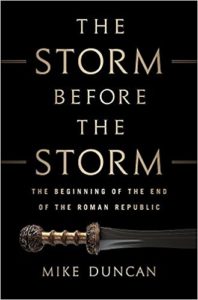
Review: The Storm Before the Storm

A relatively short (265 pages), fast paced and lively account of the Roman Republic from 146 BC (the fall of Carthage and Corinth) to 78 BC (the death of Sulla), covering the period in which the Republic saw major social upheaval, conflict and civil war and in which many of the constitutional checks and balances of the Republic fell by the wayside, setting the stage for the final overthrow of the Republic by Julius Ceasar and his grand nephew, Augustus Ceasar. Mike Duncan is known for his Roman history podcasts and in this book he makes the case that the decline of the mos maiorum (the “mores”) of the Roman Republic in this period of crisis was the crucial factor that led to the final fall a few decades later. WHY the mos maiorum fell apart is a big question, and it is not really answered in this book (a book that really tries to answer that question would probably be much denser and longer than this book) , but is beautifully described, and that is enough to earn 4 stars.


This period of Roman history and its main characters are not as prominent in popular memory as the final crisis of the Republic. Almost every educated person has heard of Julius Ceasar, the ides of March, Antony and Cleopatra, and Augustus, but relatively few people are familiar with characters such as the Gracchus brothers, Gaius Marius and Sulla, which is a tragedy, because their stories are as fascinating (if not more fascinating) than anything that happened in the final crisis of the Republic. if you are not a Roman history nerd and are not already familiar with these compelling characters, then this is a great introduction to the era and its most famous personalities. Colleen McCollough’s historical fiction (the “Masters of Rome” series) is far more detailed and richer in texture because in historical fiction she can fill in details where the historical record is silent (she is very careful to stay faithful to the historical record as far as it is known), but if you just want the story that is in the history books, this is a great place to start. Its all in here, the increasing immiseration of the peasant proprietors who were the base of the ancient Republic; the corruption that came with increasing wealth; the fight to extend citizenship to all Italians; the rise (and violent fall) of the Gracchi, aristocrats who championed the cause of the downtrodden; the incredible (and incredibly long) career of Gaius Marius, the “new man” (novus homo) who rose from outsider to outstanding general, savior of Rome and 7 time consul but just could not bear to retire; and last but not the least, the life of Lucius Cornelius Sulla, impoverished aristocrat, brilliant general, harsh conqueror and even harsher dictator, who tried to reform and re-animate the ancient Republic and actually managed to retire at the height of his power, but whose reforms failed to prevent (and whose personal example probably aggravated) the final crisis of the Republic. As you read, you cannot help wondering why 20 famous movies and TV serials have not been made about these people. Marius’s escape from Rome alone is worth at least one great movie, with more hair-raising chases, captures, escapes, betrayals and last minute twists of fortune than any fictitious adventure movie could possibly squeeze into one character’s life.
Overall, a great read, well worth a look.

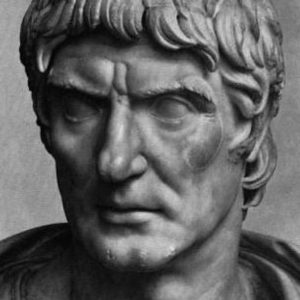
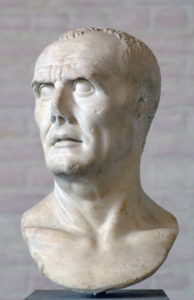
Lucius Cornelius Sulla
Gaius Marius

Where do humans come from?

We know very little about the past

All groups studied, from British and Bengali people to Peruvians and Puerto Ricans, had a dense cluster that closely matched the Altai Neanderthals. Some populations also had a cluster that matched the Altai Denisovans, which was particularly pronounced in East Asians.

The surprise was a third cluster — not like the Neanderthal DNA and only partially resembling the Altai Denisovans. This, the authors concluded, was a second and separate pulse of Denisovan genes into the DNA blender.

“The geography is quite suggestive,” Browning said. The authors hypothesize that, as ancestral humans migrated eastward, they came across two different Denisovan populations. One pulse, to the north, shows up in people from China, Japan and Vietnam.

Comment of the Day – the State of Sri Lanka

Alot of Brown Pundits focuses on the Hindustani question, which ultimately manifests as the IndoPak rivalry. I thought I would highlight sbarrkum’s thoughts:

Hmm, I assume none of commenters have been to Sri Lanka.

Seem to get the impression SL is part of greater India by the readers.

First and foremost we do not have upper caste varnas. The highest caste is Farmer/Govigama/Vellala. 50% of the society and within which old feudal class.
Almost on existent now among the Sinhalese. More prevalent among the Tamils.

Its a polyglot country where all and sundry have been visiting or invading over 2000+ years. 500 years under colonization, starting with Portuguese.

Of course everyone in this country is “Pure” Sinhalese or Tamil. Not much different from Americans. You are just supposed to become a Sinhalese (I am mutt, mainly Tamil/Kalinga)

Even with all that admixture, we are the darkest (in general) in South Asia and Asia. The Brahmin commenters run Sri Lankans/Sinhalese down as the low caste Dalits who emigrated from India with Aryan pretensions.

That said we dont seem to be doing too bad, even after a 30 year civil war. Compare and contrast the stats, Life Expectancy, Literacy. GDP/capita is no measure of the egalitarian country. The US has so much higher GDP/capita but misery and poverty of the inner cities has no comparison to rural poverty in SL.

ZachNote: I notice Sri Lankan Tamils in the West have alot of swag. They are into gangster culture and what not; completely different to their TN counterparts.

I copied the below data from Wikipedia; Sri Lanka, India & Bangladesh acquit themselves fairly well. Pakistan’s showing is absolutely disgraceful; shame on the Pakistani leadership.  Also Pakistan’s behavior in Afghanistan has dragged down that country to the shits as well; I understand Afghanistan was a proxy in the 80’s but supporting the Taliban after that, well that was an absolute effing disgrace!

A rough calc shows South Asia to be a 3 trillion dollar economy for appropriately 1.8 billion people. That’s an absolute disgrace by comparison since East Asia is an 18 trillion dollar economy with a slightly less population (the US is a 20 trillion dollar economy with a sixth of the population). It may just be that the festering sore of Indo-Pak relations may have a greater human and economic cost than one-offs like the American Civil War, the Great Leap Forward and Cultural Revolution.

Country
[172][172][173][174]
Capital
[174][175][176]
Area
(km2)
[177]
Population
(2017)[178]
Density
(per km2)
Nominal GDP
(2017)[179]
GDP per capita(2017)[180] HDI(2016)[181]
 Sri Lanka Colombo 65,610 20,905,335 318.6 $84.02 billion $3,930 0.766
 Maldives Malé 298 375,867 1,261.3 $3.58 billion $9,950 0.701
 India New Delhi 3,287,263 1,342,512,706 408.4 $2.450 trillion $1,850 0.624
 Bhutan Thimphu 38,394 792,877 20.6 $2.31 billion $2,870 0.607
 Bangladesh Dhaka 147,570 164,827,718 1,116.6 $248.85 billion $1,520 0.579
   Nepal Kathmandu 147,181 29,187,037 198.3 $23.32 billion $799 0.558
 Pakistan Islamabad 881,913 207,774,520 223.1 $304.4 billion $1,629 0.550
 Afghanistan Kabul 652,864 34,169,169 53.3 $20.57 billion $559 0.479

Do Muslim refugees have a right to Australia?

I don’t see what’s so wrong with Australia protecting her borders. The Ummah has a moral responsibility for Muslim refugees; why should the West have to take on this burden.

White South African Farmers have a right to escape to Australia. Pakistan & Iran can host Afghans & Iraqis; why do they need to travel all the way to Oz & Europe with their alien values?

If Australia was a neighbouring country to Afghanistan I can understand the need for refugee. This is why I’m quite sanguine about Latin American immigration to the US (it’s the same geographic region). Of course each country has a right to police its borders as it sees fit.

I’m all about Mughlai decadent culture but the West should not be raped any longer (as a corollary it should not rape either; what it did in Syria & the Arab Spring was unforgivable).

Is it time for Asian Americans and Latino Americans to ask to be considered “white”?

This article might seem provincial and mostly irrelevant to non Americans and maybe it is. But for Asian Americans and Latino Americans this is an increasingly important subject.

Indians and Indian Americans love the Clintons . . . including conservative Indians, and Republican Indians; but a line from Hillary Clinton’s speech in Mumbai has an eerie uncanny feel to it:

“You know you didn’t like black people getting rights, you don’t like women, you know, getting jobs, you don’t want to, you know, see Indian Americans succeeding more than you are.”

It is no secret that Asian Americans massively outperform caucasion Americans based on every available socio-economic statistic; including divorce rate, out of wedlock births, academic performance, mean and median income, mean and median wealth, rate of committing criminal offenses, incarceration rates, unemployment rates during recessions (unemployment rates during economic booms are similar), entrepreneurship.

These well known facts represents the greatest fear Asian Americans have. How to prevent a major anti Asian American xenophobic racist jealous backlash similar to what Jews are currently experiencing?

Has the time come for Asian Americans, Arab Americans, Muslim Americans and Latino Americans to ask to be considered “white” for all legal, affirmative action, business and secular purposes? Of course all academic, US census, DOJ tabulation of granular statistics for legitimate purposes should continue as is; and every American has the right to practice any global culture and faith they choose.

Continue reading Is it time for Asian Americans and Latino Americans to ask to be considered “white”?

Brown Pundits