Hinduism is a “banyan tree”

…..The essence of
Hinduism is that it has no essence……What defines Hinduism and sets it apart
from other major religions is its polycentricity, its admission of multiple
centers of belief and practice, with a consequent absence of any single
structure of theological or liturgical power….Hinduism is
a banyan tree, in the shade of whose canopy, supported by not one but many
trunks, a great diversity of thought and action is sustained….


A wart-free, sanitized version, but nevertheless (in our opinion) a good first primer…

Most Hindus would be hard-pressed to define Hinduism (we say this as a non-believer but with deepest sincerity). Having said that it is our observation that Hinduism is evolving fast and becoming a very different entity than what it was even a few decades ago. In our opinion (and in our little corner of the world) this is just as important as the transformation of Islam into a more austere, back to the roots version (which is also very different from what it was a few decades ago).

Take the example of caste. We are admittedly a bit too fond of the – ”Syrian Christians are Brahmins” – gag (thus, Arundhati Roy is a Brahmin from her mother’s side).  Even though people have called us haters for saying this but still…we have met a fair, few SyCh-s and they have (even in short conversations) always managed to bring up this “fact.” In a country where lot of people (majority) equate folk-lore with history, such a deeply held belief probably should be accepted as fact.

In our (non-scholarly) opinion, caste is but a tribe, we have a million castes and a zillion tribes in modern India. We would even go so far as to argue that the Kayasthas of Uttar Pradesh (Saxena, Srivastava, Mathur, Bhatnagar, Gaur, Asthana, Nigam, Kulshrestha,…) are a different tribe than the Kayasthas from Bengal (Ghosh, Basu, Mitra, Dutta,…), even though folk-lore states that Kayasthas (and other super-castes) were “imported” from UP to Bengal any centuries ago.
……
What is the relationship between Hinduism and caste? Without delving too deep into the question (we do not have the knowledge base to do so) we ask another related question. Which came first: association as Hindus or dissociation as castes? If caste=tribe assumption is correct, then it may well be that society was divided into castes before developing a common set of rituals that we now recognize to be as part of Hinduism. The philosophical foundations of caste were possibly added post-hoc by Hindu scholars.

What is the significance of Gotra? It is possible of people from different castes to have the same gotra (and vice versa). To us, this seems like a contradiction in terms, unless it is also recognized that caste is not defined (and was not originally) defined rigidly.

The march towards a common Canon-feasible? The left-liberals assure us that such a thing is inconceivable. However (again as an outsider) it seems that this is exactly what the Hindutva project is all about. To the extent this process is influenced by the Arya Samaj, Hinduism should be ready to abolish idolatry, caste and ancestral worship (starting with cremation rituals). The Hindu religion (official version) will look a bit like Islam!!! But unofficially, we doubt that Hindus will ever be able to get rid of idolatry- it is actually the one big differentiator.

Is it possible to abolish caste? We are seeing this in both ways. The opinion makers- the middle class (derived from all castes and from other religions) – have become more protective about caste identity. At the same time urban lifestyle (and western values that are creeping upon us all the time) is anti-caste. Remove the iron rod of religion and no guardian can stop a Hindu boy falling in love with a Muslim girl (to take the most extreme case of societal bridge building).

Eventually we are hopeful that caste will become ceremonial in nature: yes, we like to know where you came from. But that is not your only identity or even the primary identity. You are a human being, first and foremost. Make this society (and country and world) a better place to live (preferably through non-violent means), or step out of the way. This will only happen when the Dalits get their fair share (starting with a Dalit Prime Minister).

The USA has managed to elect a black man (twice) as top dog (if one chooses to be picky about ancestry, having a Kenyan papa is not the same as having a black-american dad). In India, a Maha-Dalit (the lowest in the caste ladder) became the Chief Minister of Bihar (after Nitish Kumar was crushed by the Tsunamo and stepped aside).

The USA is also getting prepared to elect a Madame President in 2016. If Mayawati manages to secure the top spot she would do so as the first unmarried, Dalit woman, who was also mentored by a Dalit (Kanshi Ram, no relation). That would be a truly defining moment for modern India.  

Religion will probably stay with us (unfortunately). It helps define the “other” as much as it defines ourselves. Canon or no canon, Hinduism will be defined as the un-Islam, Sikhism as un-Islam and un-Hindu, and so on….
……………….

Gary Gutting: How might looking at Hinduism
alter philosophical approaches to religion that take Christianity as their
primary example?

Jonardon Ganeri: Taking
Christianity as the exemplar of religion skews philosophical discussion towards
attempts to solve, resolve or dissolve difficult philosophical puzzles inherent
in monotheism: problems about God’s powers, goodness and knowledge; attempts to
provide rational arguments for God’s existence; the problem of evil; and so on.
Hindu philosophers have traditionally been far more interested in a quite
different array of problems, especially questions about the nature of religious
knowledge and religious language, initially arising from their concerns with
the Veda as a sacred eternal text and as a source of ritual and moral law.

G.G.: Does this mean that
Hinduism is a religion without God?

J.G.: Many Hindus believe in God, but not
all in the same God: For some it is Vishnu, for others Shiva, for others again
it is rather the Goddess. Some of the more important Hindu philosophers are
atheists, arguing that no sacred religious text such as the Veda could be the
word of God, since authorship, even divine authorship, implies the logical
possibility of error. Whether believed in or not, a personal God does not
figure prominently as the source of the idea of the divine, and instead
non-theistic concepts of the divine prevail.

…..
G.G.: What do you mean by
“non-theistic” concepts of the divine?

J.G.: One such concept
sees the text of the Veda as itself divine. Its language, on this view, has a
structure that is prior to and isomorphic with the structure of the world and
its grammar is complete (although parts may have been lost over the centuries).
The divinity of the text inverts the order of priority between text and author:
Now, at best, assignment of authorship is a cataloging device not the
identification of origin. Recitation of the text is itself a religious act.

Another Hindu conception of the divine is that it is
the essential reality in comparison to which all else is only concealing
appearance. This is the concept one finds in the Upanishads. Philosophically
the most important claim the Upanishads make is that the essence of each person
is also the essence of all things’; the human self and brahman (the
essential reality) are the same.

This identity claim leads to a
third conception of the divine: that inwardness or interiority or subjectivity
is itself a kind of divinity. On this view, religious practice is
contemplative, taking time to turn one’s gaze inwards to find one’s real self;
but — and this point is often missed — there is something strongly
anti-individualistic in this practice of inwardness, since the deep self one
discovers is the same self for all.

….
G.G.: Could you say
something about the Hindu view of life after death? In particular, are Hindu
philosophers able to make sense of the notion of reincarnation?

J.G.: Every religion has
something to say about death and the afterlife, and hence engages with
philosophical questions about the metaphysics of the self. While Christian
philosophy of self tends to be limited to a single conception of self as
immortal soul, Hindu philosophers have experimented with an astonishing range
of accounts of self, some of which are at the cutting edge in contemporary
philosophy of mind.

….
G.G.: Could you give an
example?

J.G.: The self as an
immaterial, immortal soul is consistent with the Hindu idea of survival through
reincarnation. But some Hindu philosophers have concluded that mind and the
mental must be embodied. If so, reincarnation requires that mental states must
be able to be “multiply realized” in different physical states. …
This led to the
idea, much later popular among analytic philosophers of mind, that the mental
is a set of functions that operate through the body. Such an approach supports
the idea that there is a place for the self within nature, that a self — even
one that exists over time in different bodies — need be not a supernatural
phenomenon.

…..
G.G.: What sort of ethical guidance does
Hinduism provide?

J.G.: One of the most important
texts in the religious life of many Hindus is the Bhagavadgita, the Song of the
Lord. The Gita is deeply philosophical, addressing in poetic, inspirational
language a fundamental conundrum of human existence: What to do when one is
pulled in different directions by different sorts of obligation, how to make
hard choices. The hard choice faced by the protagonist Arjuna is whether to go
to war against members of his own family, in violation of a universal duty not
to kill; or to abstain, letting a wrong go unrighted and breaking a duty that
is uniquely his. Lord Krishna counsels Arjuna with the philosophical advice
that the moral motivation for action should never consist in expected outcomes,
that one should act but not base one’s path of action on one’s wants or needs.

…..
G.G.: This sounds rather
like the Kantian view that morality means doing what’s right regardless of the
consequences.

J.G.: There are ongoing
debates about what sort of moral philosophy Krishna is proposing — Amartya Sen
has claimed that he’s a quasi-Kantian but others disagree. More important than
this scholarly debate, though, is what the text tells us about how to live:
that living is hard, and doing the right thing is difficult; that leading a moral
life is at best an enigmatic and ambiguous project. No escape route from moral
conflict by imitating the actions of a morally perfect individual is on offer
here. Krishna, unlike Christ, the Buddha or Mohammed is not portrayed as
morally perfect, and indeed the philosopher Bimal Matilal very aptly describes
him as the “devious divinity.” We can but try our best in treacherous
circumstances.

….
G.G.: How does the notion
of “karma” fit into the picture?

J.G.: Let me be clear. The
idea of karma is that every human action has consequences, but it is not at all
the claim that every human action is itself a consequence. So the idea of karma
does not imply a fatalistic outlook on life, according to which one’s past
deeds predetermine all one’s actions. The essence of the theory is simply that
one’s life will be better if one acts in ways that are ethical, and it will be
worse if one acts in ways that are unethical.

….
A claim like that can be
justified in many different ways. Buddhism, for example, tends to give it a
strictly causal interpretation (bad actions make bad things happen). But I
think that within Hinduism, karma is more like what Kant called a postulate of
practical reason, something one does well to believe in and act according to
(for Kant, belief in God was a practical postulate of this sort).

….
G.G.: How does Hinduism
regard other religions (for example, as teaching falsehoods, as worthy
alternative ways, as partial insights into its fuller truth)?

J.G.: The essence of
Hinduism is that it has no essence. What defines Hinduism and sets it apart
from other major religions is its polycentricity, its admission of multiple
centers of belief and practice, with a consequent absence of any single
structure of theological or liturgical power. Unlike Christianity, Buddhism or
Islam, there is no one single canonical text — the Bible, the Dialogues of the
Buddha, the Quran — that serves as a fundamental axis of hermeneutical or
doctrinal endeavor, recording the words of a foundational religious teacher.
(The Veda is only the earliest in a diverse corpus of Hindu texts.) Hinduism is
a banyan tree, in the shade of whose canopy, supported by not one but many
trunks, a great diversity of thought and action is sustained.

…..
G.G.: Would Hinduism
require rejecting the existence of the God worshiped by Christians, Jews or
Muslims?

J.G.: No, it wouldn’t. To
the extent that Hindus worship one God, they tend to be henotheists, that is,
worshiping their God but not denying the existence of others (“every individual
worships some God,” not “some God is worshipped by every individual”). The
henotheistic attitude can accept the worship of the Abrahamic God as another
practice of the same kind as the worship of Vishnu or Shiva (and Vaishnavism
and Shaivism are practically different religions under the catchall rubric
“Hinduism”).

….
Without a center, there can be no
periphery either, and so Hinduism’s approach to other religions tends to be
incorporationist. In practice this can imply a disrespect for the otherness of
non-Hindu religious traditions, and in particular of their ability to challenge
or call into question Hindu beliefs and practices. The positive side is that
there is in Hinduism a long heritage of tolerance of dissent and difference.

….
One explanation of this tolerance of difference is
that religious texts are often not viewed as making truth claims, which might
then easily contradict one another. Instead, they are seen as devices through
which one achieves self transformation. Reading a religious text, taking it to
heart, appreciating it, is a transformative experience, and in the transformed
state one might well become aware that the claims of the text would, were they
taken literally, be false. So religious texts are seen in Hinduism as “Trojan
texts” (like the Trojan horse, but breaking through mental walls in disguise).
Such texts enter the mind of the reader and help constitute the self.

The Hindu attitude to the Bible
or the Quran is the same, meaning that the sorts of disagreements that arise
from literalist readings of the texts tend not to arise.

….
G.G.: What ultimate good
does Hinduism promise those who follow it, and what is the path to attaining
this good?

J.G.: The claim is that
there are three pathways, of equal merit, leading in their own way to
liberation. Hindu philosophers have employed a good deal of logical skill in
their definitions of liberation. To cut a long story short, for some it is a
state defined as the endless but not beginingless absence of pain; others
characterize it as a state of bliss. The three pathways are the path of
knowledge, the path of religious performance and the path of devotion. The path
of knowledge requires philosophical reflection, that of religious performances
various rituals and good deeds, and that of devotion worship and service, often
of a particular deity such as Krishna.

….
G.G.: Could you say a bit
more about the path of knowledge and its relation to philosophy?

J.G.: Knowledge can
liberate because epistemic error is the primary source of anguish, and
knowledge is an antidote to error. I might err, for example, if I believe that
I only need to satisfy my current desires in order to be happy. The antidote is
the knowledge that the satisfaction of one desire serves only to generate
another.

According to the Nyaya
philosopher Vatsyayana, this is why philosophy is important. Doing philosophy
is the way we cultivate our epistemic skills, learning to tell sound doxastic
practices from bogus ones, and the cultivation of epistemic skills is what
stops the merry-go-round between cognitive error and mental distress. So it
isn’t that philosophy and religion are not distinct, but that there is a
meta-theory about their relationship.

….
G.G.: The liberation
you’ve described seems to be a matter of escaping from the cares of this world.
Doesn’t this lead to a lack of interest in social and political action to make
this world better?

J.G.: The great narrative texts of Hinduism are
the two epics, the Mahabharata and the Ramayana. These epics are drawn on as
resources in thinking about ethical conduct; forms of just society; and the
possibility of various kinds of political and social agency. They are vast
polycentric texts, and are read as such by Hindus. ….
One of the important virtues
of these epics is that they give voice to a range of participants within Hinduism
that tend to go unheard: women, the disenfranchised, the outsider, the migrant.
They provide these groups with important models for social and political
intervention. That’s one reason they have always been very popular works within
the Hindu diaspora.

….
The mirror image of the idea that
liberation consists in the absence of distress is that a free society consists
in the absence of injustice; thus the removal of injustice, rather than the
creation of a perfect or ideal society, is the target of political action. Just
as the absence of distress is a minimal condition compatible with many
different kinds of human well-being (we are back to the theme of
polycentricism), so the absence of injustice is compatible with many different
types of well-ordered community or society.

….
G.G.: How do you respond
to the charge that Hinduism has supported the injustices of the caste system in
India?

J.G.: I think it is
important to see that Hinduism contains within itself the philosophical
resources to sustain an internal critique of reprehensible and unjust social
practices that have sometimes emerged in Hindu societies. The Upanishadic idea
that all selves are equal, and one with brahman, for example, can be
drawn on to challenge the system of caste. There are thus forms of rational
self-criticism that the diverse riches of Hindu philosophy enable, and an
individual’s social identity as a Hindu is something to be actively fashioned
rather than merely inherited.

……

Link: http://opinionator.blogs.nytimes.com/what-would-krishna-do-or-shiva-or-vishnu

….

regards
What the West must do

The West needs to get over multi-culturalism and back to “Core” values (which transcend race & ethnicity) and I saw this as a Brit-Pak:
(1.) Immigration needs to be completely overhauled to be in the interest of the host society (intra-Western migration should be seamless, outside the West should be on a reciprocal basis, citizens allowed to immigrate should be from countries that won’t flood i.e Japan/Korea).
(2.) Race & ethnic quotas should be completely abolished. In the extraordinary case of US history proven descendants of slaves & Native Americans (at least quarter ancestry verifiable) should be eligible for some affirmative action but the system has gotten out of hand and is easily gamed.
(3.) Core Anglo-American values (or Western) should be emphasised. Sober historical assessments (sans jingoism or recrimination) reaffirm how lucky one is to be born or a citizen of the West.
Mind you this is what I would recommend for any country or civilisation. 

Hannibal re-born (in Jerusalem)

….after Goldin
was reported missing, the I.D.F. enacted the Hannibal Directive
.“No soldier will be kidnapped….he has to detonate
his own grenade along with those who try to capture him…..his unit will now have to fire at the getaway car”
…..

….. 
So…who is this Hannibal of Carthage (after whom the Hannibal Directive is named) who drank poison rather than be captured by Romans?
…..

……
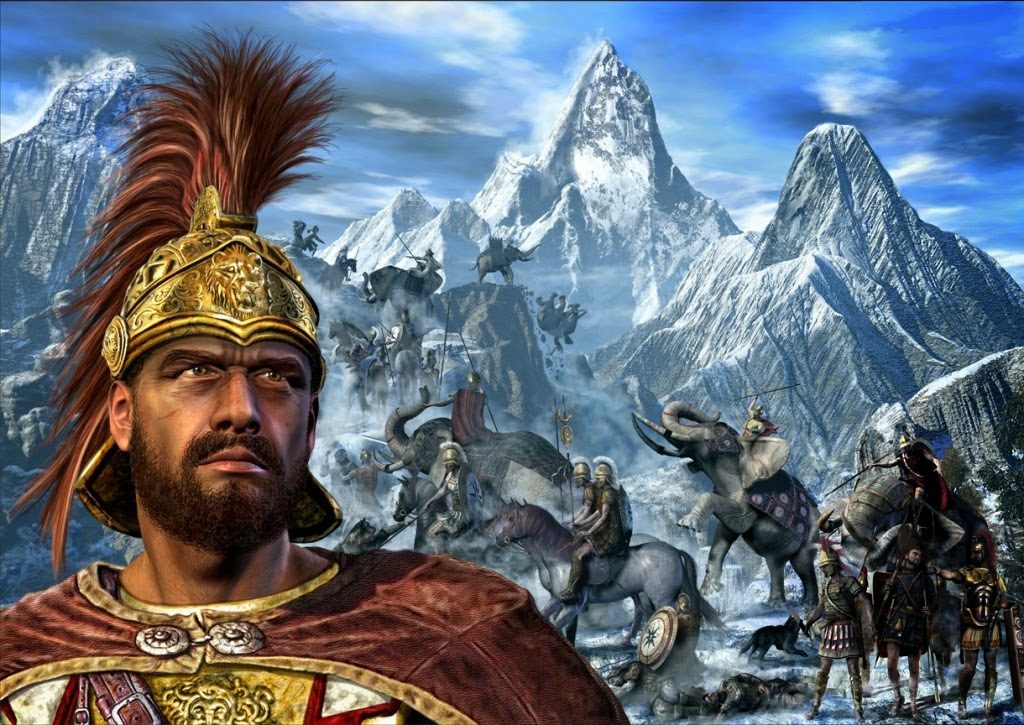
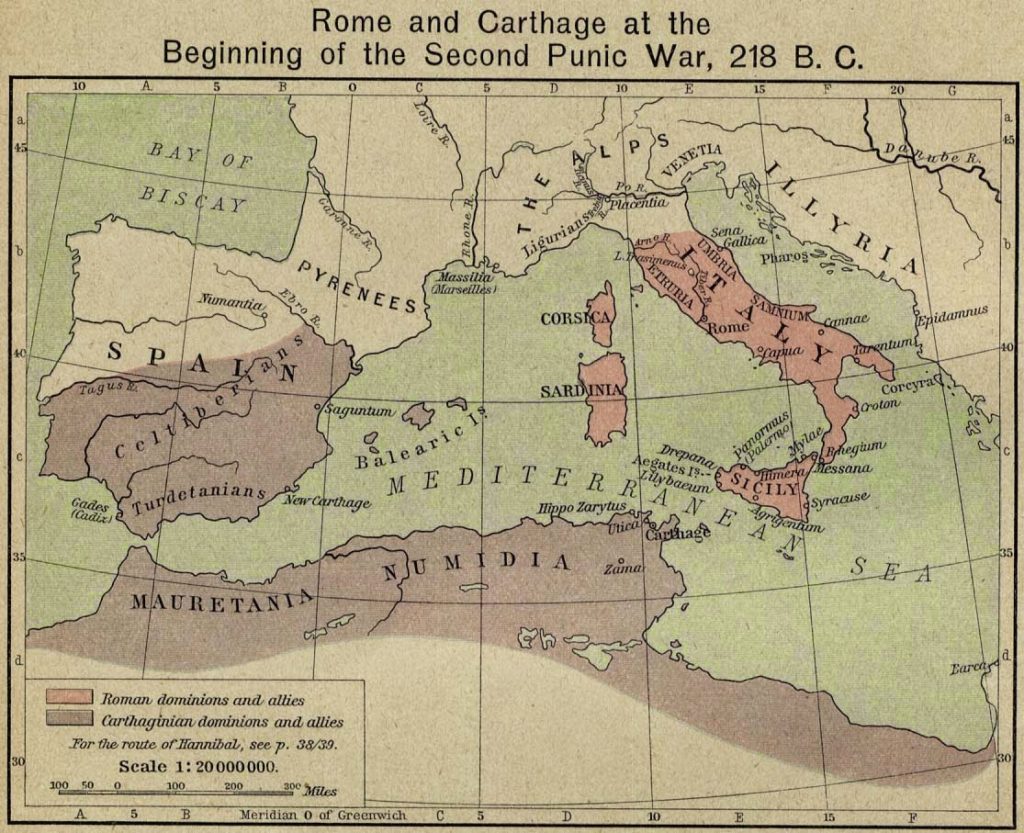
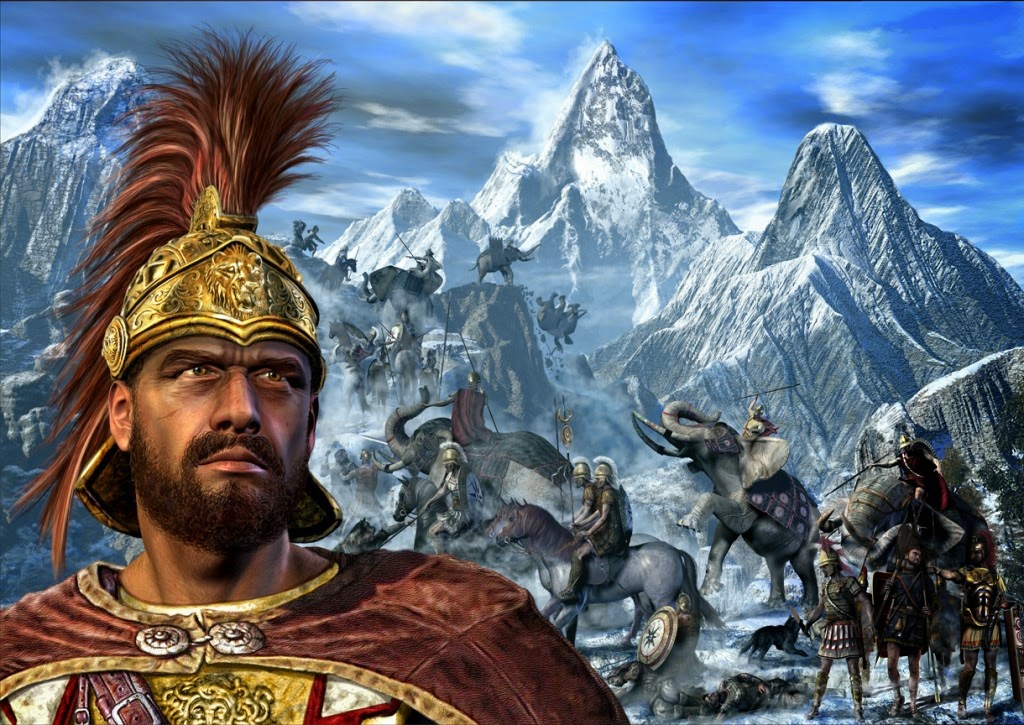
Hannibal, son of Hamilcar Barca (247 – 183/182/181 BC) was a Punic Carthaginian military commander, generally considered one of the greatest military commanders in history. His father, Hamilcar Barca, was the leading Carthaginian commander during the First Punic War.


Hannibal lived during a period of great tension in the Mediterranean, when the Roman Republic established its supremacy over other great powers such as Carthage, the Hellenistic kingdoms of Macedon, Syracuse, and the Seleucid empire. 
…..
One of his most famous achievements was at the outbreak of the Second Punic War, when he marched an army, which included elephants, from Iberia over the Pyrenees and the Alps into northern Italy. 
……..
After the war, Hannibal … fled into voluntary exile. During this time, he lived at the Seleucid court, where he acted as military advisor to Antiochus III in his war against Rome. After Antiochus met defeat at the Battle of Magnesia and was forced to accept Rome’s terms, Hannibal fled again, making a stop in Armenia.  
….
His flight ended in the court of Bithynia, where he achieved an outstanding naval victory against a fleet from Pergamon. He was afterwards betrayed to the Romans and committed suicide by poisoning himself.

……
Buried deep inside a Times report
last weekend about Hadar Goldin, the Israeli soldier who was reported
captured by Hamas, in the southern Gaza Strip, and then declared dead,
was the following paragraph:

The circumstances
surrounding his death remained cloudy. A military spokeswoman declined
to say whether Lieutenant Goldin had been killed along with two comrades
by a suicide bomb one of the militants exploded, or later by Israel’s
assault on the area to hunt for him; she also refused to answer whether
his remains had been recovered.

Just
what those circumstances were began to filter out early this week, and
they attest to deep contradictions in the Israeli military—and in
Israeli culture at large.


A
temporary ceasefire went into effect last Friday morning at eight. At
nine-fifteen, soldiers of the Israel Defense Forces headed toward a
house, in the city of Rafah, that served as an entry point to a tunnel
reportedly leading into Israel. 

As the I.D.F. troops advanced, a Hamas
militant emerged from the tunnel and opened fire. Two soldiers were
killed. A third, Goldin, was captured—whether dead or alive is
unclear—and taken into the tunnel. 

What is clear is that after Goldin
was reported missing, the I.D.F. enacted a highly controversial measure
known as the Hannibal Directive, firing at the area where Goldin was
last seen in order to stop Hamas from taking him captive. As a result,
according to Palestinian sources, seventy Palestinians were killed. By
Sunday, Goldin, too, had been declared dead.


Opinions differ over
how this protocol, which remained a military secret until 2003, came to
be known as Hannibal. There are indications that it was named for the
Carthaginian general, who chose to poison himself rather than fall
captive to the Romans, but I.D.F. officials insist that a computer
generated the name at random. Whatever its provenance, the moniker seems
chillingly apt. 

Developed by three senior I.D.F. commanders, in 1986,
following the capture of two Israeli soldiers by Hezbollah, the
directive established the steps the military must take in the event of a
soldier’s abduction. Its stated goal is to prevent Israeli troops from
falling into enemy hands, “even at the cost of hurting or wounding our
soldiers.” 


While normal I.D.F. procedures forbid soldiers from firing in
the general direction of their fellow-troops, including attacking a
getaway vehicle, such procedures, according to the Hannibal Directive,
are to be waived in the case of an abduction: “Everything must be done
to stop the vehicle and prevent it from escaping.”

……
Although the
order specifies that only selective light-arms fire should be used in
such cases, the message behind it is resounding. When a soldier has been
abducted, not only are all targets legitimate—including, as we saw over
the weekend, ambulances—but it’s permissible, and even implicitly
advisable, for soldiers to fire on their own. 

………
For more than a decade,
military censors blocked journalists from reporting on the protocol,
apparently because they feared it would demoralize the Israeli public.
In 2003, an Israeli doctor who had heard of the directive while serving
as a reservist, in Lebanon, began advocating for its annulment, leading
to its declassification. That year, a Haaretz investigation
of the directive concluded that “from the point of view of the army, a
dead soldier is better than a captive soldier who himself suffers and
forces the state to release thousands of captives in order to obtain his
release.”

…….
For years, Israeli soldiers on the battlefield had
hotly debated the directive and its use. At least one battalion
commander, according to the Haaretz investigation, refused to
brief his soldiers on it, arguing that it was “flagrantly illegal.” And a
rabbi, asked by a soldier about the order’s religious aspect, advised
him to disobey it. 

…….
Major General Yossi Peled, one of the commanders who
drafted the directive, told Haaretz that its purpose was to
assert how far the military could go to prevent abductions. “I wouldn’t
drop a one-ton bomb on the vehicle, but I would hit it with a tank shell
that could make a big hole in the vehicle, which would make it possible
for anyone who was not hit directly—if the vehicle did not blow up—to
emerge in one piece,” Peled said. It’s understandable that soldiers
would scratch their heads over formulations such as these.

 ……….
To be
clear, there is no evidence that Goldin was killed by friendly fire. But
military officials did confirm that commanders on the ground had
activated the Hannibal Directive and ordered “massive fire”—not for the
first time since Operation Protective Edge began, on July 8th. (One week
into the ground offensive, in the central Gaza Strip, forces reportedly enacted
the protocol when another soldier, Guy Levy, was believed missing.) 

……
Since the directive’s inception, the I.D.F. is known to have used it
only a handful of times, including in the case of Gilad Shalit. The
order came too late for Shalit and did not prevent his abduction—or his
eventual release, in 2011, in exchange for a thousand and twenty-seven
Palestinian prisoners. 

…….
That year, as part of the military’s inquiry into
the circumstances leading to Shalit’s capture, the I.D.F.’s Chief of
Staff, Benny Gantz, modified the directive. It now allows field
commanders to act without awaiting confirmation from their superiors; at
the same time, the directive’s language was tempered to make clear that
it does not call for the willful killing of captured soldiers. In
changing the wording of the protocol, Gantz introduced an ethical
principle known as the “double-effect doctrine,” which states that a bad
result (the killing of a captive soldier) is morally permissible only
as a side effect of promoting a good action (stopping his captors).

……..
Whether
soldiers have heeded this change in language, and how they now choose
to interpret the directive, is difficult to assess. If past experience
is any indication, the military hierarchy’s interpretation remains
unequivocal. During Israel’s last operation in Gaza, in 2011, one Golani
commander was caught on tape telling
his unit: “No soldier in the 51st Battalion will be kidnapped, at any
price or under any condition. Even if it means that he has to detonate
his own grenade along with those who try to capture him. Even if it
means that his unit will now have to fire at the getaway car.”

………..
On Sunday, a decade after its initial investigation of the Hannibal Directive, Haaretz revisited the subject with a piece
by Anshel Pfeffer that tried to explain why, despite the procedure’s
morally questionable nature, there hasn’t been significant opposition to
it. Pfeffer wrote:

Perhaps the most deeply engrained
reason that Israelis innately understand the needs for the Hannibal
Directive is the military ethos of never leaving wounded men on the
battlefield, which became the spirit following the War of Independence,
when hideously mutilated bodies of Israeli soldiers were recovered. So
Hannibal has stayed a fact of military life and the directive activated
more than once during this current campaign.

Ronen
Bergman, author of the book “By Any Means Necessary,” which examines
Israel’s history of dealing with captive soldiers, further explained
this rationale in a recent radio interview:
“There is a disproportionate sensitivity among Israelis [on the issue
of captive soldiers] that is hard to describe to foreigners.” Bergman
traced this sensitivity back to Maimonides, the medieval Torah scholar,
who wrote: “There is no greater Mitzvah than redeeming captives.”


….
This
line of argument, while historically true, is worth pausing over—if
only to unpack the moral paradox within it. In essence, what this
“military ethos” means is that Israel sanctifies the lives of its
soldiers so much, and would be willing to pay such an exorbitant price
for their release, that it will do everything in its power to prevent
such a scenario—including putting those same soldiers’ lives at
risk (not to mention wreaking havoc on the surrounding population). 

…….
This
is the dubious situation that Israel finds itself in: signalling to the
military that a dead soldier is preferable to a captive one, while at
the same time signalling to the Israeli public that no cost will be
spared to secure a captured soldier’s release. (It’s worth recalling
that, three years after Shalit was traded for more than a thousand
Palestinian prisoners, the captive U.S. Army Sergeant Bowe Bergdahl was
traded for five Taliban prisoners. This isn’t to suggest that Israel
cares more about its troops than the United States does, but rather that
no crime is greater, in the eyes of Israelis, than the kidnapping of
“our boys.”)


….
Daniel Nisman, who runs a geopolitical-security consultancy, told the Times that
the Hannibal Directive “sounds terrible, but you have to consider it
within the framework of the Shalit deal. That was five years of torment
for this country, where every newscast would end with how many days
Shalit had been in captivity. It’s like a wound that just never heals.”


….
On
Tuesday, as a seventy-two-hour ceasefire went into effect and the
I.D.F. pulled its ground forces out of Gaza, I spoke to Assaf Sharon,
the academic director of Molad, a progressive Israeli think tank that
focusses on social policy. While he accepted Nisman’s logic, he
questioned the Hannibal Directive’s social ramifications. “I don’t know
that you can draft clear-cut rules that would apply to any situation,
but I do think that a certain risk of a captured soldier’s life should
be allowed. I think the real problem starts with the hysterical
discourse, of the kind that says, ‘This must be stopped at any cost.’ 

…..
From there, the path to the horrors we’ve seen over the last few days,
in Rafah, is a short one. What we’ve seen wasn’t only putting a
soldier’s life at risk but intentionally targeting anything that
moved—whether relevant or irrelevant.”


Sharon added that the
mixed consequences of the directive are typical of the behavior that now
characterizes the Israeli public at large. “On the one hand, we are
willing to risk soldiers’ lives recklessly and without need, but on the
other hand we have zero tolerance for the price that this might entail.”


With
sixty-seven Israelis and more than eighteen hundred Palestinians
killed, ground forces have completed their withdrawal from the Gaza
Strip. The Hannibal Directive will soon be tucked away, along with the
worn bulletproof vests, until the next time the military wades into
hostile territory. But its moral implications will linger. It’s time for
the painful reconstruction, both in Gaza and in Israeli society, to
slowly start.

….

Link: http://www.newyorker.com/hadar-goldin-hannibal-directive

…..

regards

The Tunnels of False Hope

…Having
devoted so much  to war preparations, by some estimates 40 per cent of
its budget, Hamas created the capacity for a major strike on
Israel
…..the capacity to launch a  co-ordinated attack involving thousands
of the approximately 15,000 fighters…..

….
Imagine the 26/11 attack in Mumbai (2008) multiplied 100 times, this would be a veritable nightmare for Israel with hostage situations continuing for days and body-count in the 1000s. As an attack it would rate ahead of 9/11, 7/7 and all others. The ummah would be chanting the names of the Hamas fighters for the next thousand years.  

The problem is that while bending Israel, such an attack will probably not break it. In the larger scheme of things, tunnels, even sophisticated ones constructed more than 60ft below the ground can be blown up (again). Israel will be thinking out a cavalry of defensive measures (for example, strictly regulate the cement that passes through its checkpoints).

As of now Hamas has only two solid allies in the Sunni Middle-East: Qatar and Turkey. Shia Hezbollah sat out this war when it could have lent a hand. Shia Iran will not probably mind bank-rolling a few more misadventures but its own boundaries have suddenly become shaky. Israel may well choose to play a tit-for-tat game in Kurdistan – it supports full independence for the Kurds. Jordan and Egypt are definitely hostile to Hamas (and they matter the most as Israel’s neighbors). Syria is in utter chaos and will never recover to be a threat to Israel (if it ever was). All this will be a serious cause of concern for Hamas going forward.
……
Hamas also can not depend on anti-semitism in the West to be able to get to score free-kicks. The West may not like Jews, but it likes Muslims even less, forget islamists such as Hamas. To a non-muslim Westerner (majority Christian background), there is not much distinction between the Taliban (Malala shooters), Boko Haram (Chistian girl kidnappers), and the ISIS (Christian church destroyers).

How about China, Russia, India? Simply put, they all have their own Palestines and they hate islamists. Only in Latin America (and especially Brazil) do we see unequivocal support for Hamas/Palestine. 
…….
Israeli security thought it had adequate intelligence about Gaza. It
was in for a surprise. It was not just the labyrinth of tunnels
discovered, much more extensive than expected, but the stockpiles:
thousands of weapons, Russian anti-tank missiles, explosive devices, and
large amounts of tranquillisers, handcuffs, syringes, ropes. The tools
of capture on a large scale.


…..
Some of the tunnels are very deep,   big enough to hold vehicles.
They were dug with electric jackhammers, mostly about 20 metres below
ground, and reinforced with concrete made on site, in workshops adjacent
to the tunnels.


….
The tunnels served as command centres, infiltration points into
Israel, weapons stores, rocket-launcher hiding sites, and the means to
move and conceal fighters during urban combat. The tunnels dug into
Israel were created in parallel pairs, with multiple shafts to the
surface for multiple entry points. Inside urban Gaza, the labyrinth
could allow fighters to move unseen between homes and alleys.


….
Gaza had been wired for war. On a scale more advanced than Israeli
military intelligence realised, which is why the Israel Defence Forces
lost more than 40 soldiers in the first phase of Operation Protective
Edge.


….
Areas of cities were laced with hundreds of booby-traps. The
commander of the IDF Gaza Division, Brigadier-General Mickey Edelstein,
said that in a single street in Khan Yunis in southern Gaza, his
soldiers had found booby-traps in 19 of 28 homes. Three Israeli soldiers
were killed by an explosive device when they entered a building
designated as a United Nations Relief and Works Agency for Palestine
Refugees. The IDF has conceded it was surprised by the scale of the bomb
traps across Gaza.


….
Israel is thus engaging in very limited ground combat in Gaza, given
the whole area is a booby-trap of explosives, ambush and civilian
targets. The largest known military control centre for Hamas was placed
in the basement of a hospital.


….
The IDF’s use of bombing has created a heavy civilian cost.

‘‘Hamas planned these tunnels for years, and planned to use them to
kidnap soldiers,’’ chief spokesman for the IDF Brigadier-General  Moti
Almoz told a recent media briefing.


….
Actually, since then it has emerged that Hamas had a much broader
agenda. Kidnappings can deliver psychological blows to Israel but not
strategic ones. Hamas wanted strategic blows. It wants jihad. ….

Having
devoted so much  to war preparations, by some estimates 40 per cent of
its budget, Hamas, with Iran, created the capacity for a major strike on
Israel.


….
Israeli intelligence is assembling evidence from the tunnel labyrinth
and from captured Hamas members, that the scale of the effort was to
have the capacity to launch a  co-ordinated attack involving thousands
of the approximately 15,000 fighters Hamas has trained in Gaza.


….
Hamas had also doubled its rocket arsenal between 2012 and this year,
with hundreds of missiles with the range to reach Jerusalem and Tel
Aviv, according to head of IDF military intelligence research
Brigadier-General Itai Brun. Bigger missiles had been on their way in
March, supplied by Iran and sourced in Syria. But the cargo ship Klos-C,
an Iranian vessel under a Panamanian flag, carrying a load of M-302
surface-to-surface missiles, was intercepted by Israeli Navy special
forces in the Red Sea.


….
With each revelation in recent weeks, the mood in Israel is that
Operation Protective Edge has averted a catastrophe for the country, a
mass terror attack, emerging from underground, incubated by the
implacable hatred of Hamas.


….
The sheer scale of the war infrastructure revealed guarantees that
Israel is far from done with this operation. It does not yet know the
full scale of what was built and it wants this springboard of war and
attrition destroyed. Tunnels have also been discovered in the West Bank,
some stocked with bomb-making materials.


….
This is why the Israel government and  public reacted with fury when
US Secretary of State John Kerry suggested last week that Israel agree
to a ceasefire which included a cessation of its operation to find and
destroy tunnels. The proposal was deemed preposterous. (Numerous
references to Kerry’s facelift reflected the scorn with which his
intervention was held.) 

….
Even famously pacifist Israeli author Amos Oz
has been moved to condemn Hamas for creating a web of warfare through
the civilian population of Gaza. At the other end of the political
spectrum  Economy Minister Naftali Bennett, the leader of the
nationalist Jewish Home party, said of the war preparations uncovered:
‘‘Without the ground operation, we would have woken up one day to an
Israeli 9/11.’’


….
Such is the nature of the Israel-Palestinian debate that many people
regard all this as Israel reaping what it sows. Even as Israel strikes
against a war machine, it is blamed for creating the conditions which
created the threat.  

….
The result of this logic trap – and the differing
standard applied to killings by Jews and killing by Muslims – is that
more media coverage and outrage has been directed at Israel for the
unintended deaths of children in Gaza than has been directed at the
butchery of Muslims by Muslims, on a massive scale, in  Iraq and
elsewhere. In Syria alone, three years of  war have seen between 120,000
and 170,000 people killed, including more than 11,000 children. This
violence has spilled into Iraq, with atavistic massacres of prisoners by
jihadis from Islamic State.


….
The deep animosities which are the ultimate source of this bloody
absolutism could even be heard on the streets of Sydney last week, in
the chants of demonstrators, some waving the black flag of the Islamic
State: ‘‘Palestine is Muslim land … Jew and Christian will not stand
… From Lakemba to Gaza … You can never stop Islam.’’

…..

Link: http://www.smh.com.au/hamas-trap-hidden-labyrinth-was-wired-for-war

….

regards

A ring side view of the war

….the boom of artillery fire was briefly
drowned by the whoosh of Hamas rockets taking flight…..In the
street outside, whistles and cheers rose. Why the jubilation, I asked?
Surely the rockets were a prime reason for Gaza’s catastrophe?
…..You don’t understand, I was told. The Arab countries dare not throw
so much as a tennis ball at Israel. But Gaza can launch 100 rockets a day…..

…..
Now that the dust is settling down, difficult questions will be asked and will need honest answers. There will be very few unbiased people in this fight.

We fully expect (and so does the world) that there will be another war just around the corner. It is important (as they say) to keep learning the lessons that hopefully will postpone, delay, and slow down the conflict. It will be vital to keep reaching for the middle ground, even if it looks impossible and sounds foolish.
……………
I thought that killer drones were silent and practically invisible –
until I counted seven of the silver objects circling in the summer sky
overhead, buzzing endlessly like angry bees.


If you believe that all guns sound the same and one explosion is much
like another, then Gaza’s ceaseless symphony of war will provide an
education. Soon, you will be able to distinguish the staccato
thunderclaps of a naval bombardment from the deep and steady boom of an
artillery barrage.


You will learn that Hollywood is wrong and bombs do not whistle when
they fall – and you rarely see, or even hear, the jet fighter that
destroys the building in the next street. At first, this rib-shaking
explosion and its mini-mushroom cloud of black smoke appear to have
erupted from nowhere.


You will discover that salvos of Hamas rockets take off with a
prolonged “whoosh”, leaving trails of white smoke in the sky; that a
falling bomb does not explode on impact but drills a gaping void in the
centre of a building, smashing its way methodically through one storey
after another, before detonating under the foundations. Then you will
learn that when human beings are shredded and eviscerated, the street
runs with blood.


From previous wars, I knew that explosions have a strangely
capricious quality. But it was still a surprise to come across a single
surviving door, standing intact and defiant on a sea of rubble that had
once been a home. At another scene of destruction, a new television lay
beneath a mountain of white concrete, apparently unscathed; nearby, a
large bathtub had been hurled upwards to perch precariously on top of a
heap of debris.


After a few days in Gaza, however, you stop being surprised by the
extraordinary. Dinner takes place outdoors to the accompaniment of
explosions. Soon, you mentally phase out all but the most thunderous
blasts, just as someone who lives near a busy street will tune out the
sound of traffic.


But what if every blast is thunderous? That happened on Tuesday
morning when an ear-splitting, heart-pounding, wall-shaking bombardment
broke over Gaza City from midnight until 5.30am with barely a pause. 

For
those hours, I had some sense of what London must have sounded like
during the Blitz.


Most of all, you learn that conflict in Gaza is fundamentally
different – more intense, more soul-destroying and more perilous for
ordinary people – than just about anywhere else in the world.


….
Why is that? First and foremost because Gaza serves as Exhibit A for
the dictum that you can run, but you can’t hide. In other wars I have
covered, civilians who find themselves in the path of battle simply take
what they can and move. They walk to safety, travelling as far as they
need to go.


In January, I was in South Sudan at the outset of that country’s
civil war. When the town of Bor was besieged and bombarded, most of its
people crossed to the far bank of the White Nile and set up a vast
refugee camp.


This was a dangerous journey and the conditions that awaited them
were terrible. But at least they were safe on arrival. Once on the west
bank of the river, only the distant boom of artillery reminded the
refugees of the perils from which they had fled.


The 1.8 million people of Gaza have no such option. Their world
measures 25 miles in length and seven in breadth at its very widest
point – and just about every location within that tiny area has come
under attack. Thanks to the partial blockade enforced by Israel and
Egypt, Gaza’s inhabitants cannot leave: they have no means of escape.


The best that families can do is take refuge in the nearest United Nations property, usually a school, and hope for the best.


During my 12 days in Gaza, the number of people displaced in this way
grew by leaps and bounds. When I arrived, some 30,000 refugees were
sheltering in UN premises; by Friday, that total was close to 240,000 –
or 13 per cent of the territory’s entire population.


And that does not count the hundreds of people sleeping in the open
outside Shifa Hospital in Gaza City, nor the tens of thousands more who
have packed into the homes of relatives.


….
Remember one other fact: about half of Gaza’s people are under the
age of 18. No one fights in Gaza without maiming, killing, displacing or
traumatising legions of children. This not a campaign waged in empty
desert, mountain or plain – forget Iraq or Afghanistan – but a battle
fought in narrow alleyways crowded with infants and families.


So when Israel sends troops and tanks into Gaza, understand what that
means. First of all, the inhabitants of the targeted area receive an
order to leave, delivered by voicemail, text message or a leaflet
fluttering from the sky. I happened to arrive a few hours before the
ground invasion began and the 100,000 people of the towns of Beit Hanoun
and Beit Lahiya, lying squarely in Israel’s intended line of advance,
were receiving these alerts.


….
Israel says that its prime concern is the safety of the people: only
by emptying an area can its troops fight Hamas without killing even more
civilians. The warnings also offer clear reassurance that everyone will
be able to return once the operation is over.


….
I do not question the sincerity of Israel’s argument and I recognise
the dilemma of its battlefield commanders. 

I would simply offer three
observations.


….
First, these eviction orders presently apply to everyone inside an
Israeli-controlled buffer zone stretching for two miles along Gaza’s
northern and eastern borders. That amounts to 44 per cent of the
territory’s entire surface area. So almost half of Gaza has been
deliberately – if temporarily – cleared of its people.


….
Second, events have demonstrated the stark truth that nowhere is
safe. Twice, Israeli forces have bombarded UN schools housing the
displaced; in Jabaliya on Wednesday, they killed at least 16 people,
including children in their sleep.


Third, if Israel’s leaders act on their threat to expand the ground
operation and send their troops and tanks still deeper into Gaza, even
more Palestinians will be forced from their homes. Suppose Israel
decides to increase the area under military control from 44 per cent to,
say, 50 or 60 per cent. Every street and every block that Israeli
forces capture will represent thousands more refugees.


Where will they all go? Every available UN school is already packed.
Whatever threadbare system exists for sheltering the fugitives is, in
the words of Chris Gunness, the local UN spokesman, “overwhelmed” and
“at breaking point”.


….
Make no mistake: if Israel escalates this operation still further,
then the people of Gaza will be herded and corralled into
ever-shrinking, and ever more squalid, pockets of supposed safety.


….
What cause could possibly justify such suffering? This brings us to
the second reason why Gaza’s tragedy is different. Even by the standards
of wars down the ages, this one is singularly futile.


….
Israel, on its own account, is not fighting to destroy Hamas or solve
the humanitarian and security problem posed by Gaza. No, the purpose of
its campaign is to punish the radical Islamist movement for firing
rockets at Israeli cities, destroy its tunnels and delay the moment –
note the word delay – when Hamas will be able to resume launching
missiles. This is a struggle not for victory, but for temporary tactical
advantage in a campaign that Israel expects to have to repeat, time and
again, into the indefinite future.


….
And Hamas? Its rocket barrage is primarily intended not to solve a
problem, but to achieve psychological solace. Over dinner in a
Palestinian home last week, the boom of artillery fire was briefly
drowned by the whoosh of Hamas rockets taking flight nearby. In the
street outside, whistles and cheers rose. Why the jubilation, I asked?
Surely the rockets were a prime reason for Gaza’s catastrophe?


….
You don’t understand, I was told. The Arab countries dare not throw
so much as a tennis ball at Israel. But Gaza – little, impoverished,
blockaded Gaza – can launch 100 rockets a day. Never mind that Israel’s
“Iron Dome” missile shield minimises the damage they cause. What matters
is that they are fired at all.


….
My hosts, I hasten to add, did not share this view – and Palestinians
are enduring their nightmare with profound courage and stoicism. Even
in the midst of privation and terror, they greet visitors with dignity
and courtesy. Yet they are trapped in a vortex of suffering – and one
that has no discernible end.

…..

Link: http://blogs.telegraph.co.uk/news/davidblair/100282273/you-learn-a-lot-very-quickly-in-gaza/

……

regards

A (muslim) man looks for the (secular) truth

..“In order for Israel to become part of the alliance against religious barbarism… it’ll have to dispense with the occupation…..it can’t govern other people against
their will….It can’t continue to steal their land in the way that it
does every day…… And it’s unbelievably irresponsible of Israelis….to continue to behave in this unconscionable way”


Pro-Palestine or Pro-Israel? A silly question (yet one with deadly import) in the middle of a vicious tribal war. The real question: do we identify with Muslims or Jews as victims, from this key point all other conclusions (blindly) follow.

But then we are not really interested in the (rhetorical) questions. We are looking for honest answers. And as they say, the truth is the first casualty in war. We are tired of all the lies that are flying around.

What do we mean by secular truth? Well, if you are from South Asia you know that there is (at the least) a Hindu truth and a Muslim truth – this is the 1-line definition of the 2-nation theory. There are as many versions of truth as there are divisions between people. A secular truth springs from the concept that no special privilege is to be given to religion or to the religious. No special justifications, narratives, victims,…etc. based on religion.

Regardless of which camp we belong to, we all agree that the killings (of civilians on both sides) must cease. But as Palestinians correctly point out, even with a cease-fire in place the oppression will not cease. They expect (at the least) border restrictions by Egypt and Israel to be lifted for good, compensation money for re-building, and war crimes trials against Israel.

Then again, as many non-muslim groups will point out how they have encountered one Nakba after another at the hand of unrepentant muslims. If Palestinians do not identify with the Sindhis (Hindus) of India why should they expect solidarity in reverse? How about the hundreds of Ahmadis and Christians from Pakistan who are currently claiming asylum in Sri Lanka due to persecution back home (which is no less deadly  than Gaza). Should the Islamic “civil rights” organizations in the USA (many of whom have a substantial desi presence) worry about such trivialities, or do they have a single point agenda??

We have seen on BP a number of masterly, eloquent articles by Dr Omar Ali and Prof Ali Minai on the Gaza conflict. Here is one more by Ali Rizvi that we really liked, one which deals with the truth in an unvarnished manner.

We do want to comment on one metric that has proven to be very popular:  in terms of per capita massacre (meaning people killed per unit population), Gaza is worse than…Syrian war, World War I…etc. We respect the argument but we still feel it trivializes war  and conflicts.  
………..
The idea should be that even one life is so precious that it should not be lost in vain. The better argument is for non-violence. Mandela was for violence before he turned to non-violence and defeated apartheid.

Non-violence is the true weapon of the weak and it is also the best. But you have to believe in it, sincerely and in full measure. Are any of the middle-eastern tribes even willing to give it a try? All the evidence points to the fact that they would not only not try it, they would completely reject it. 

The truth is that Palestinians still yearn for a full-on military victory against Israel, one that will push every single Jew into the sea. That may yet happen, if Iran hands over an A-bomb to Hamas (this is the scenario in which the entire Middle East blows up, including the Temple and the Mosque). For all of you arm-chair warriors, think about such a doomsday scenario, as you plan ahead for the next war (it will happen for sure).
…………..

1. Why is everything so much worse when there are Jews involved?

Over 700 people have died in Gaza as of this writing. Muslims have
woken up around the world. But is it really because of the numbers?


Bashar al-Assad has killed over 180,000 Syrians, mostly Muslim, in
two years — more than the number killed in Palestine in two decades.
Thousands of Muslims in Iraq and Syria have been killed by ISIS in the
last two months. Tens of thousands have been killed by the Taliban.
Half a million black Muslims were killed by Arab Muslims in Sudan. The
list goes on.


….
But Gaza makes Muslims around the world, both Sunni and Shia, speak
up in a way they never do otherwise. Up-to-date death counts and
horrific pictures of the mangled corpses of Gazan children flood their
social media timelines every day. If it was just about the numbers,
wouldn’t the other conflicts take precedence? What is it about then?


If I were Assad or ISIS right now, I’d be thanking God I’m not Jewish.


Amazingly, many of the graphic images of dead children attributed to Israeli bombardment that are circulating online are from Syria, based on a BBC report.
Many of the pictures you’re seeing are of children killed by Assad,
who is supported by Iran, which also funds Hezbollah and Hamas. What
could be more exploitative of dead children than attributing the
pictures of innocents killed by your own supporters to your enemy
simply because you weren’t paying enough attention when your own were
killing your own?


….
This doesn’t, by any means, excuse the recklessness, negligence, and sometimes outright cruelty
of Israeli forces. But it clearly points to the likelihood that the
Muslim world’s opposition to Israel isn’t just about the number of
dead.


….
Here is a question for those who grew up in the Middle East and other
Muslim-majority countries like I did: if Israel withdrew from the
occupied territories tomorrow, all in one go — and went back to the 1967 borders — and
gave the Palestinians East Jerusalem — do you honestly think Hamas
wouldn’t find something else to pick a fight about? Do you honestly
think that this has absolutely nothing to do with the fact that they are
Jews? Do you recall what you watched and heard on public TV growing up
in Palestine, Saudi Arabia, Egypt?


Yes, there’s an unfair and illegal occupation there, and yes, it’s a
human rights disaster. But it is also true that much of the other side
is deeply driven by anti-Semitism. Anyone who has lived in the
Arab/Muslim world for more than a few years knows that. It isn’t always
a clean, one-or-the-other blame split in these situations like your
Chomskys and Greenwalds would have you believe. It’s both.


2. Why does everyone keep saying this is not a religious conflict?

There are three pervasive myths that are widely circulated about the “roots” of the Middle East conflict:


  • Myth 1: Judaism has nothing to do with Zionism.
  • Myth 2: Islam has nothing to do with Jihadism or anti-Semitism.
  • Myth 3: This conflict has nothing to do with religion.


To the “I oppose Zionism, not Judaism!” crowd, is it mere coincidence
that this passage from the Old Testament (emphasis added) describes so
accurately what’s happening today?


“I will establish your borders from the Red Sea to the Mediterranean Sea, and from the desert to the Euphrates River. I will give into your hands the people who live in the land, and you will drive them out before you. Do not make a covenant with them or with their gods.” – Exodus 23:31-32


Or this one?


“See, I have given you this land. Go in and take possession of
the land the Lord swore he would give to your fathers — to Abraham,
Isaac and Jacob — and to their descendants after them.” – Deuteronomy 1:8


There’s more: Genesis 15:18-21, and Numbers 34 for more detail on the
borders. Zionism is not the “politicization” or “distortion” of
Judaism. It is the revival of it.


And to the “This is not about Islam, it’s about politics!” crowd, is this verse from the Quran (emphasis added) meaningless?


“O you who have believed, do not take the Jews and the Christians as allies.
They are [in fact] allies of one another. And whoever is an ally to
them among you–then indeed, he is [one] of them. Indeed, Allah guides
not the wrongdoing people.” – Quran, 5:51


What about the numerous verses and hadith quoted in Hamas’ charter? And the famous hadith of the Gharqad tree explicitly commanding Muslims to kill Jews?


Please tell me — in light of these passages written centuries and
millennia before the creation of Israel or the occupation — how can
anyone conclude that religion isn’t at the root of this, or at least a
key driving factor? You may roll your eyes at these verses, but they
are taken very seriously by many of the players in this conflict, on
both sides. Shouldn’t they be acknowledged and addressed? When is the
last time you heard a good rational, secular argument supporting
settlement expansion in the West Bank?


….
Denying religion’s role seems to be a way to be able to criticize the
politics while remaining apologetically “respectful” of people’s
beliefs for fear of “offending” them. But is this apologism and “respect” for inhuman ideas worth the deaths of human beings?


….
People have all kinds of beliefs — from insisting the Earth is flat
to denying the Holocaust. You may respect their right to hold these
beliefs, but you’re not obligated to respect the beliefs themselves.
It’s 2014, and religions don’t need to be “respected” any more than any
other political ideology or philosophical thought system. Human beings
have rights. Ideas don’t. The oft-cited politics/religion dichotomy in
Abrahamic religions is false and misleading. All of the Abrahamic
religions are inherently political.


3. Why would Israel deliberately want to kill civilians?

This is the single most important issue that gets everyone riled up, and rightfully so.


Again, there is no justification for innocent Gazans dying. And
there’s no excuse for Israel’s negligence in incidents like the killing
of four children on a Gazan beach. But let’s back up and think about
this for a minute.


….
Why on Earth would Israel deliberately want to kill civilians?


….
When civilians die, Israel looks like a monster. It draws the ire of even its closest allies.
Horrific images of injured and dead innocents flood the media.
Ever-growing anti-Israel protests are held everywhere from Norway to
New York. And the relatively low number of Israeli casualties (we’ll get
to that in a bit) repeatedly draws allegations of a “disproportionate”
response. Most importantly, civilian deaths help Hamas immensely.


….
How can any of this possibly ever be in Israel’s interest?


….
If Israel wanted to kill civilians, it is terrible at it. ISIS killed
more civilians in two days (700 plus) than Israel has in two weeks.
Imagine if ISIS or Hamas had Israel’s weapons, army, air force, US
support, and nuclear arsenal. Their enemies would’ve been annihilated
long ago. If Israel truly wanted to destroy Gaza, it could do so within
a day, right from the air. Why carry out a more painful, expensive
ground incursion that risks the lives of its soldiers?


4. Does Hamas really use its own civilians as human shields?

Ask Palestinian president Mahmoud Abbas how he feels about Hamas’ tactics.


“What are you trying to achieve by sending rockets?” he asks. “I don’t like trading in Palestinian blood.”


It isn’t just speculation anymore that Hamas puts its civilians in the line of fire.


Hamas spokesman Sami Abu Zuhri plainly admitted on Gazan national TV that the human shield strategy has proven “very effective.”


….
The UN relief organization UNRWA issued a furious condemnation of Hamas after discovering hidden rockets in not one, but two children’s schools in Gaza last week.


Hamas fires thousands of rockets into Israel, rarely killing any
civilians or causing any serious damage. It launches them from densely
populated areas, including hospitals and schools.


Why launch rockets without causing any real damage to the other side,
inviting great damage to your own people, then putting your own civilians
in the line of fire when the response comes? Even when the IDF warns
civilians to evacuate their homes before a strike, why does Hamas tell them to stay put?


….
Because Hamas knows its cause is helped when Gazans die. If there is
one thing that helps Hamas most — one thing that gives it any
legitimacy — it is dead civilians. Rockets in schools. Hamas exploits
the deaths of its children to gain the world’s sympathy. It uses them
as a weapon.


….
You don’t have to like what Israel is doing to abhor Hamas. Arguably,
Israel and Fatah are morally equivalent. Both have a lot of right on
their side. Hamas, on the other hand, doesn’t have a shred of it.


5. Why are people asking for Israel to end the “occupation” in Gaza?

Because they have short memories.


In 2005, Israel ended the occupation in Gaza. It pulled out every
last Israeli soldier. It dismantled every last settlement. Many Israeli
settlers who refused to leave were forcefully evicted from their homes, kicking and screaming.


….
This was a unilateral move by Israel, part of a disengagement plan intended to reduce friction between Israelis and Palestinians.
It wasn’t perfect — Israel was still to control Gaza’s borders,
coastline, and airspace — but considering the history of the region,
it was a pretty significant first step.


After the evacuation, Israel opened up border crossings to facilitate commerce. The Palestinians were also given 3,000 greenhouses which had already been producing fruit and flowers for export for many years.


But Hamas chose not to invest in schools, trade, or infrastructure. Instead, it built an extensive network of tunnels to house thousands upon thousands of rockets and weapons, including newer, sophisticated ones from Iran and Syria. All the greenhouses were destroyed.


….
Hamas did not build any bomb shelters for its people. It did, however, build a few
for its leaders to hide out in during airstrikes. Civilians are not
given access to these shelters for precisely the same reason Hamas tells
them to stay home when the bombs come.


….
Gaza was given a great opportunity in 2005 that Hamas squandered by
transforming it into an anti-Israel weapons store instead of a thriving
Palestinian state that, with time, may have served as a model for the
future of the West Bank as well. If Fatah needed yet another reason to
abhor Hamas, here it was.


6. Why are there so many more casualties in Gaza than in Israel?

The reason fewer Israeli civilians die is not because there are fewer
rockets raining down on them. It’s because they are better protected
by their government.


….
When Hamas’ missiles head towards Israel, sirens go off, the Iron
Dome goes into effect, and civilians are rushed into bomb shelters.
When Israeli missiles head towards Gaza, Hamas tells civilians to stay in their homes and face them.


….
While Israel’s government urges its civilians to get away from rockets targeted at them, Gaza’s government urges its civilians to get in front of missiles not targeted at them.


….
The popular explanation for this is that Hamas is poor and lacks the
resources to protect its people like Israel does. The real reason,
however, seems to have more to do with disordered priorities than
deficient resources (see #5). This is about will, not ability. All
those rockets, missiles, and tunnels aren’t cheap to build or acquire.
But they are priorities. And it’s not like Palestinians don’t have a handful of oil-rich neighbors to help them the way Israel has the US.


….
The problem is, if civilian casualties in Gaza drop, Hamas loses the
only weapon it has in its incredibly effective PR war. It is in
Israel’s national interest to protect its civilians and minimize the
deaths of those in Gaza. It is in Hamas’ interest to do exactly the
opposite on both fronts.


7. If Hamas is so bad, why isn’t everyone pro-Israel in this conflict?

Because Israel’s flaws, while smaller in number, are massive in impact.


Many Israelis seem to have the same tribal mentality that their Palestinian counterparts do. They celebrate the bombing of Gaza the same way many Arabs celebrated 9/11. A UN report recently found that Israeli forces tortured Palestinian children and used them as human shields. They beat up teenagers. They are often reckless with their airstrikes. They have academics who explain how rape may be the only truly effective weapon against their enemy. And many of them callously and publicly revel in the deaths of innocent Palestinian children.


….
To be fair, these kinds of things do happen on both sides. They are
an inevitable consequence of multiple generations raised to hate the
other over the course of 65 plus years. To hold Israel up to a higher
standard would mean approaching the Palestinians with the racism of
lowered expectations.


….
However, if Israel holds itself to a higher standard like it claims — it needs to do much more to show it isn’t the same as the worst of its neighbors.


….
Israel is leading itself towards increasing international isolation
and national suicide because of two things: 1. The occupation; and 2.
Settlement expansion.


….
Settlement expansion is simply incomprehensible. No one really
understands the point of it. Virtually every US administration — from
Nixon to Bush to Obama — has unequivocally opposed it.
There is no justification for it except a Biblical one (see #2), which
makes it slightly more difficult to see Israel’s motives as purely
secular.


….
The occupation is more complicated. The late Christopher Hitchens was right when he said this about Israel’s occupation of Palestinian territories:


“In order for Israel to become part of the alliance against whatever
we want to call it, religious barbarism, theocratic, possibly
thermonuclear theocratic or nuclear theocratic aggression, it can’t,
it’ll have to dispense with the occupation. It’s as simple as that.


It can be, you can think of it as a kind of European style, Western
style country if you want, but it can’t govern other people against
their will.

It can’t continue to steal their land in the way that it
does every day.And it’s unbelievably irresponsible of Israelis,
knowing the position of the United States and its allies are in around
the world, to continue to behave in this unconscionable way.

And I’m
afraid I know too much about the history of the conflict to think of
Israel as just a tiny, little island surrounded by a sea of ravening
wolves and so on. I mean, I know quite a lot about how that state was
founded, and the amount of violence and dispossession that involved.
And I’m a prisoner of that knowledge. I can’t un-know it.”


As seen with Gaza in 2005, unilateral disengagement is probably
easier to talk about than actually carry out. But if it Israel doesn’t
work harder towards a two-state (maybe three-state, thanks to Hamas)
solution, it will eventually have to make that ugly choice between
being a Jewish-majority state or a democracy.


….
It’s still too early to call Israel an apartheid state, but when John Kerry said Israel could end up as one in the future,
he wasn’t completely off the mark. It’s simple math. There are only a
limited number of ways a bi-national Jewish state with a non-Jewish
majority population can retain its Jewish identity. And none of them
are pretty.


Let’s face it, the land belongs to both of them now. Israel was
carved out of Palestine for Jews with help from the British in the late
1940s just like my own birthplace of Pakistan was carved out of India
for Muslims around the same time. The process was painful, and
displaced millions in both instances. 

But it’s been almost 70 years.
There are now at least two or three generations of Israelis who were
born and raised in this land, to whom it really is a home, and who are
often held accountable and made to pay for for historical atrocities
that are no fault of their own. They are programmed to oppose “the
other” just as Palestinian children are. At its very core, this is a
tribal religious conflict that will never be resolved unless people
stop choosing sides.


….
So you really don’t have to choose between being “pro-Israel” or
“pro-Palestine.” If you support secularism, democracy, and a two-state
solution — and you oppose Hamas, settlement expansion, and the
occupation — you can be both.


…..

Link: http://www.outlookindia.com/printarticle.aspx?291576 
….

regards

No country for young Sikhs (or old)

Last week (July 26) we had three Sikhs dead in Saharanpur (Uttar Pradesh, India). Due to the way these action-reactions occur in South Asia (in the words of a very famous and powerful person), this week we encounter a repeat action in Peshawar (Khyber Pakhtunwa, Pakistan).
……

…. 
We extend our deepest sympathies to all minority communities without a safe haven to call their own. The list even includes Hindus (Pandits) in India, Muslims (Biharis) in Bangladesh, and many others…….

No one should have to die before their body and/or mind dies a natural death.
……………….
Members of the Sikh community in Peshawar came under attack on Wednesday, with one killed and two injured in a firing incident.
…… 
Police
officials said unidentified armed men opened fire at members of the
Sikh community when they were at Shabab market in the Hashtnagri area.

DawnNews
reported that Jasmot Singh, Bahram Singh and Manmit Singh were attacked
when they were at their respective shops in the market. The victims
were rushed to the Lady Reading Hospital immediately after the attack,
where one died.

Members of the Sikh community took to GT
Road to protest the attack on their community, with some burning tires
and vowing not to leave till they were given justice.

A large number of protestors shifted the
body of the deceased Sikh man to GT Road and demanded that the
government give them security. One member said that this is not the
first time the community has been attacked and that the government
should tell them an alternative if it cannot give them security.

After
a number of kidnappings from among the Sikh community in
Khyber-Pakhtunkhwa (KP) and other tribal areas, some members have
decided to wind up their shops in KP and relocate to Rawalpindi.

In a report
published earlier this week, one Sikh man Saroop Singh said,
“Hasanabdal is a much safer place for the Sikhs to live, as it is one of
our holiest sites. Our families feel much secure there, living among
other Sikhs in Gurdwara Punja Sahib. Peshawar is not safe,” said Singh.

…….

Link: gunmen-shoot-at-sikh-men-in-peshawar-market-one-dead

……

regards

How about Indians, Iranians…?

The following sounds like a hoax…but these are Saudis, so you never know.

A ban has been announced on Saudi gentlemen marrying ladies from Pakistan, Bangladesh, Chad and Myanmar.

People who have deep knowledge as to matrimonial connections can perhaps sniff out the common link. Is it the case that the denizens of those countries are deliberately under-cutting the marriage market for Saudi ladies? If that is indeed the case, is it not better to treat such concerns by means of immigration controls, rather than taking resort to blanket bans which carry the whiff of racism?

BTW most comments on the Dawn website stress on the following:
(1) Pakistanis are much more intelligent, more beautiful and more worthy than Saudi counterparts, and
(2) No Pakistani woman in her right mind would like to marry a Saudi and become a life-time slave

Top comment: Proof Arab discrimination against fellow Arabs.

Capturing the entirety of emotions, history, literature and politics hiding behind that one single statement (from a South Asian POV) will perhaps require the efforts of 10,000 (doctoral) students over 10,000 years. Seriously.

Finally this section of the order – If the applicant
is already married, he should attach a report from a hospital proving
that his wife is either disabled, suffering from a chronic disease or is
sterile –
wouldn’t it be loverly if this can be incorporated as part of Sharia code everywhere?


Saudi men have been prohibited from marrying women from Pakistan,
Bangladesh, Chad and Myanmar, says a report in Makkah daily quoting
Makkah Police Director Maj Gen Assaf Al-Qurashi.

According to unofficial figures, there are about 500,000 women from these four countries currently residing in the kingdom.

In
a move apparently aimed at discouraging Saudi men from marrying
foreigners, additional formalities have been placed before issuing the
permission for marriage with foreigners. Saudi men wishing to marry
foreigners now face tougher regulations.

Those wanting to marry
foreign women should first obtain the consent of the government and
submit marriage applications through official channels, Maj Gen Qurashi
was quoted as saying.


The
official said applicants should be over 25 and attach identification
documents signed by the local district mayor as well as all other
identity papers, including a copy of his family card. “If the applicant
is already married, he should attach a report from a hospital proving
that his wife is either disabled, suffering from a chronic disease or is
sterile,” he said.

Maj Gen Qurashi said divorced men would not be allowed to apply within six months of their divorce.

Link: http://www.dawn.com/news/1123519/saudis-told-not-to-marry-women-from-pakistan-3-other-states

….

regards

The Second Republic: back-story, future thoughts

…how bad things are between Washington and Delhi…this reluctant partnership might be best left to wither…scant evidence of being the man who will
shake up the economy……scuttling of a WTO deal…..calls into question……ardor for free trade……

……
This is a strange truth that no fiction can beat. The person who correctly visualized the future amidst the hellish fog that was Partition(I) was an Islamist philosopher-king named Abul Ala Maududi.
…….

….
A lot of truth and wisdom in the above quotation…except for one thing. What would the future hold for Islam and muslims (especially those in South Asia), which in those glorious post-partition days held the promise to sweep out capitalism, communism, “materialistic atheism,” racialism and nationalism?  

An honest analysis would point out that Maududi had the right instincts (partition will divide and weaken muslims) but the wrong principles (unite muslims by killing other muslims).
……..

Maududi was born in 1903 in Aurangabad, a city named after Aurangzeb, who was famous for his not-so-soft heart towards the majority of his citizens. Indeed, when the two nation theory talks eloquently about their villains being our heroes, Aurangzeb is Exhibit (A).

Hindus (left-liberals) hate the Last of the Great Badshahs and would like to believe that his actions destroyed the “secular” Mughal Empire. Hindus (conservatives) hate him and would like to dial back the clock to the Arab invasion of Sindh.

Muslims OTOH venerate Sultan Alamgir for having (violently) corrected the apostasies of his ancestors. They would like to believe that the green flag was planted across al-Hind for good, only to be undone by the treachery of a single (bengali) muslim: Mir Jafar.

Maududi opposed the formation of Pakistan because he instinctively understood that the power base for muslims in South Asia would be divided. However he was an exception. Muslims were a minority and out of power for 200 years, but they sincerely believed (and so did everybody else) in the one Muslim = 10 Hindus equation (Sikhs were a different story).
…….
The magic lines floated in the air: “Sylhet nilam vote-er jorey, Cachar nebo lathir jorey” – we muslims have won Sylhet district (Bangladesh), through elections and we will win Cachar district (Asom) using force. When the partition was formalized the confident leaders of Pakistan reassured the troops noting that muslims will be kings in Pakistan and king-makers in India. The confidence that comes from a hard battle won through a mix of votes and force seemed to settle all doubts.

Still Maududi worried about the division. One possible reason: his beloved home-land, Hyderabad (a princely state ruled by the Nizam) was unlikely to be a part of Pakistan and would be surrounded by the enemy on all sides. He may have worried about the unreliability of “impure” bengalis, of the possibility of millions of Mirjafars. He certainly worried about the un-islamic character (as he saw it) of  the man leading the charge for partition.  

Nevertheless Maududi had a change of heart and was confident enough to launch the first muslim-on-muslim riots in Pakistan in 1953. He was sentenced to death for his role in killing Ahmadis but the order was reversed. When this happened, the fate of Pakistan as a homeland for all muslims in South Asia was doomed.

If Muslims were out of power for 200 years, Hindus were under the colonial boot for a 1000 years. Plus there was the primacy of caste, there was really never one Hindu nation, just a thousand squabbling tribes. The only way to unite them was through careful inculcation of hate against muslims (not a difficult job, muslims helped out as well) and to create a fear factor around mad, bad Pakistan (not a difficult job, Pakistan helped out as well).

And so it is that finally in 2014, the nightmare that Maududi had envisioned, finally came into existence. The second republic is now born, there will be no muslim armies marching to take over the Red Fort.
………………………………………
These are early days but there are a few emerging clues as to the how the born-again nation will react (and reach out) to the world. Indeed the alarm bells have started ringing in unexpected places, while sworn enemies have remained quiet. What to make of all this?

What is quite clear is that the Hindu Desh wants to be friends with the family (Nepal, Bhutan, and…Sri Lanka…very tricky that one). They would even not mind breaking bread with the enemy (the Islamic nations in South Asia). We are talking of sincere, we do not want to be big brother, courteous hand of friendship, not the contemptuous, we are way bigger than you aloof attitude of the Congress wallahs. How can this be possible?

Well it is certainly not an unprecedented thing to have happened. Indo-Pak relations for example, have been generally more cordial when (on rare occasions) the Hindu Brotherhood has been at the high table. Thus Atal Bihari Vajpayee is rated highly by Pakistanis. The fire-breathing LK Advani went on a praise Jinnah tour, while Jaswat Singh came out with a Nehru villain book. Due to the curious nature of the politics of the sub-continent, Nehru the secularist is a villain for both conservative Hindus and Muslims – TNT version 2.0!!! The last screw in the coffin will be turned when Gujaratis of today will bow before Sardar Patel and say bye to Gandhi.

The consequence(s) of all this will be clear in due time, but some fictions have become facts on the ground. India is now officially declared to be a Hindu-first and Hindi-first nation. The only feeble resistance to this will come from Tamil Nadu, Kerala and Bengal (which form part of the un-India in this model) and the Kashmir valley and a few North-Eastern states. Asom, Punjab and Telengana- deeply disturbed spots all at some time or other- are now very much part of the national narrative.
…………………………
India already has open borders with Nepal and Bhutan, what is a (still remote) possibility now is an open border with Bangladesh. Only Modi can achieve this miracle. It is already the case that 10 million Bangla migrants are settled in India, and cattle-beef and food stuff goes the other way. The Hindus will at some point of time completely migrate out of Bangla, this will in turn help reduce tensions. Now the only people who will get killed are bengali muslims….in India (by Hindus, Sikhs, Tribals,…) and in Bangla (by other muslims).

The road to peace with Pakistan goes through Kashmir. The indications are that the original package will be revived: self-rule (but not independence) and a new twist: Union Territory for Pandits. Pakistan may agree to this, even if Kashmiris see a future Israel-Palestine play (they would be correct). But given the realities, Kashmiris may have no choice but to obey. A deciding factor will be China, it is doubtful that Pakistan Army will not raise objections if Beijing advises to the contrary. China is seriously bothered by the insurgencies in Xinjiang and will like to shut down all islamist adventures in the neighborhood.
…………………………………….
What about the USA and the West? Well….they are the last in the queue and they are very upset indeed. Modi will drive a hard bargain in the political sphere. He is a serious student of history and will not be caught sleeping while the opposition gets to champion the cause of the “little farmer.” He will use the carrot of defense sector privatization (49% FDI) and the opening of the insurance market (if he can get the Congress to go along in the Rajya Sabha). Before any Indian markets are opened, he will insist on a generous visa regime from USA and Europe. That may be a non-starter due to domestic complusions in those countries (excepting Germany).  

The expectation is that among the big powers Germany, China, France, Russia and Japan will be the new close friends….just because they can give India what she wants…energy, technology, and soft loans. 

It is unclear what is that special trick that will click it for India-USA (and India-UK). American technology is considered high cost and Americans do not like to share (unlike Russia and France). More H1-Bs may be the answer, but it is easier perhaps to persuade Google and IBM to move more of  their operations to India (shocking if true: one third of Apple techies are Indian).
…………………….

…..Should We Just Forget
About India?

Here’s how bad things are between
Washington and New Delhi these days: It’s news that Kerry even made the trip.
Why this reluctant partnership might be best left to wither.

So low is the bar in U.S.-India
relations right now that the best thing that can be said about John Kerry’s
two-day hop-over to New Delhi was that he went there at all. A relationship
that burst into true blossom under George W. Bush, one that held for many
Americans the promise of a mold-breaking alliance for the 21st century, lies
shabbily dormant. Indeed, the only memorable episode in Kerry’s visit was his
scolding by India’s foreign minister, Sushma Swaraj, for the NSA’s spying on
her political party.


….
Should America care? India has little or nothing to contribute to American
efforts to tackle the crises in Gaza, Ukraine, Syria, and Iraq. It is a reluctant
partner, at best, in Washington’s efforts to rein in Iran and will have no
truck with the West in any showdown with Vladimir Putin and Russia. Its incessant push for permanent membership of the United
Nations Security Council, while understandable for a country that is the
world’s second-most populous, isn’t exactly in America’s interests: New Delhi
and Washington frequently find themselves on different sides of votes on U.N.
resolutions.


….
The two countries converge in their legitimate fears of Chinese aggression
and expansion in Asia, but even here, India has been loath to embrace any
formal alliance that would act as a check on Beijing, for fear of provoking the
Chinese into military incursions into Indian territory that New Delhi is
shamefully unprepared to counter. Besides, in recent weeks, India has been
party to the setting up of a BRICS Bank, with Brazil, Russia, China, and South
Africa. 

….
This institution was conceived as a way to break America’s global
financial hegemony—a word beloved in bureaucratic Delhi, where America is still
regarded with a suspicion that is as potent as it is irrational.
 

….
The BRICS Bank
looks, for all its founding rhetoric, like a platform for Chinese hegemony
instead. Once more, China appears to have taken India for a ride. But that is
another story.


….
India offers America nothing of concrete strategic value that Washington
cannot, currently, live without. Not only does it balk at an alliance of any
kind, its political and intellectual elites are wedded still to nonalignment,
that antediluvian credo from the years of the Cold War. 

…..
Intellectual worthies
in New Delhi have cooked up something called “Non-alignment 2.0,” by which
“India must remain true to its aspiration of creating a new and alternative
universality.” For those masochists who want to acquaint themselves better with
this Cold War mummy come to life, I suggest a visit to this website. It will swiftly become clear
that there is no room in this starry-eyed arrangement for a compact with
Washington.


….
Forget matters strategic, you may say; banish from your head all thoughts of
a military or security handshake. What about economics? Doesn’t India matter to
America as a market, a place for wise and profitable investment? Here again,
Americans must resign themselves, for the moment, to disappointment.


….
For all Narendra Modi’s free-market rhetoric in the run-up to the
elections, for all the assurances given to investors in back rooms, he has
offered scant evidence, in his two months in power, of being the man who will
shake up the Indian economy and make his country a more rational place in which
to do business. His national budget was only marginally less squishy and Fabian
than other, recent Indian budgets, and Thursday’s capricious scuttling by India
of a World Trade Organization deal that would have vastly streamlined the global
trade system calls into question Modi’s professed ardor for free trade.


…..
American private enterprise has always tread cautiously in India, and there
is every indication that it will have to continue to tiptoe its way through,
around, and over the cactus grove of Indian regulations. 

…..
The job of the Obama
administration (and that of a likely Hillary administration) will be to
persuade India to change its ways. That will be immensely difficult if Mr. Modi
continues to backtrack on economic reform. (Why is he doing so? Is it his
belief that, having won an emphatic but contentious election, he needs to
“buy” social harmony by embracing the sops and subsidies he inherited from the
previous quasi-socialist government of Manmohan Singh?)


….
So, as things stand, America gets neither strategic comfort nor a fair
economic opportunity from India. Perhaps it’s time for Washington to shrug its
shoulders and move on, leaving a warmer relationship with India to a time when
Indians have made up their muddled minds about the kind of country theirs is—or
ought to be.

……
Prime Minister Narendra Modi’s two-day visit to Nepal, which
commenced yesterday, highlights yet again his government’s focus on
India’s immediate neighbourhood. Having made Bhutan his maiden foreign
port of call after assuming office, Modi is the first Indian PM to
undertake a bilateral Nepal visit since I K Gujral in 1997. 

….
Despite deep cultural bonds, over the years suspicion and distrust have
come to tarnish the bilateral relationship. Modi would do well to
address the criticism that New Delhi’s engagement with Kathmandu has
been marked by inequality and interference.


….
Generosity ought to be the pillar of India’s
outreach to Nepal and other Saarc neighbours. This would help dispel the
perception among the latter that New Delhi harbours a big-brotherly
attitude when it comes to dealing them. A vibrant Saarc combined with
the gains made at the recent Brics summit will hold India in good stead
in an increasingly multi-polar world defined by dynamic geopolitics.


….
Having said that, it would be imprudent for New Delhi to focus solely
on relations with its neighbours or other emerging economies at the
cost of ties with the West. India needs technology and investments from
the EU and US to kick-start its economy and tackle unemployment.
Moreover, terrorism is an international scourge New Delhi can’t tackle
alone. Hence, it simply can’t burn bridges with the West. 

……
In this
regard, the collapse of WTO discussions last week hurts India’s
reputation. India has been identified as the country that undermined a
settled deal — which it had committed to support last December in Bali.


………
A perception that India is an unreliable partner can make potential
western allies hesitant to commit political and financial capital to
nurture a strategic relationship. This is the last thing Modi needs as
he attempts to revamp India-US ties at his meeting with President Obama
later this year. New Delhi must strive for a golden mean and maintain a
balance between its relationship with the West and greater South-South
cooperation. This will raise India’s profile at the international high
table.

 ……………………………….

Each
time an election verdict is analysed, it is easy and convenient to
describe it as a new beginning. This is always true because any process
of winning and losing, of choosing and rejecting, inevitably involves
fresh starts.

Some elections also indicate a closure. While the Lok Sabha election
of 2014 is certainly a beginning — though exactly what it has begun is
something we will really and realistically figure out only in the coming
years — we do know what it has ended. It has brought to a close a
20-year cycle of politics that has dominated one-and-a-half generations
of Indians.

In the early 1990s, three social trends came to capture political
imagination in India. There was the BJP’s ascent on the back of
Hindutva, of Hindu anger, prejudice and assertion.

There was the Mandal project that symbolised the political
empowerment of the OBCs, particularly in north India, a phenomenon later
extended to Dalit pride by Mayawati and the BSP. Finally, there was
liberalisation and economic reform, the explosion of expectations and
the politics of growth. Mandir, Mandal and Market: So often in the
1990s, political assessments in India resorted to that lazy phrase.

Narendra Modi’s dramatic rise to power in 2014 and the impressive
mandate he has won have made that three-way split and that careful
separating of one motivation from another completely redundant. He is a
Hindu leader and mascot. He is an OBC from a traditionally
underprivileged caste background.

He is also the most passionate advocate of market-based
solutions, of enterprise and of the energies of the citizen — as opposed
to the eviscerating qualities of statism — that mass politics in India
has seen in a long, long time.

There is no point arguing whether Modi would be Right-wing or
capitalist in a western economic context, and whether he agrees with
every semicolon of Milton Friedman and every paragraph of Margaret
Thatcher. He doesn’t; but he shares their essential instincts and buys
into their broader logic much more than any other mainstream and
electable political leader in India today.

While Modi has made those abstruse debates about an ideological
battle between three (or more) ideas of India seem silly if not
irrelevant, what has he actually introduced and brought to the table?
The principal appeal of Modi in contemporary India is not religion or
caste or even hyper-nationalism.

It is class. The narrative of a self-made man, of the son of a
father who sold tea at a railway station and a mother who went house to
house washing dishes to pay school fees for her children, is a
compelling and extraordinarily powerful one.

The Congress leadership and the media completely missed how the
Modi narrative was resonating with the people. Mani Shankar Aiyar’s
puerile comment that the Congress would open a tea stall for Modi came
to showcase his party’s — and his peer group’s — complete alienation
from a certain popular urge and aspiration.

Aiyar saw it as a clever-clever line; the message it sent was one
of an unfeeling elite, happy to mock lesser citizens. It made being a
chaiwallah a badge of honour for Modi.

It established him as the underdog — a role he plays best, and
has played in successive elections in Gujarat, even while being chief
minister.

If this election was about Modi capitalising on a class revolt,
that expression has to be understood. The reference here is not to class
in a Marxian sense.

It is simply to primarily young, small town, semi-urban people —
or even rural folk, exposed to or associated with city life and the city
economy — usually from non-English speaking backgrounds. They are
hungry to learn the language, though — not to read Milton and join the
Anglosphere but simply to get a job.

They are too well-off to be satisfied by the rural employment
guarantee programme but too poor to be genuinely middle class. They see
themselves as socially underprivileged and perceive their progress to be
thwarted by an elite that has shut the gates and framed complicated,
impossible rules for entry — for professional advance as much as
political office — that usher in only the initiated. Remarkably
hamhanded in their politics, the Congress and the UPA allowed themselves
to be seen as the embodiment of this elite.

Modi’s voters make for a complex set of emotions.

There is undeniable ambition here, completely justified for
talented people who have simply not been given the opportunities they
deserve. There is also a degree of resentment and an anger, sometimes
overdone. Yet, it is equally true that this cohort, this middle India,
represents a far greater section of the Indian population than the
narrow apex of the pyramid that surrounds the Nehru-Gandhi family,
constitutes its reference points and writes its policies and legislation
in chambers in Delhi.

In that sense, this class divide is not between Bharat and India — it is between Delhi and the rest of the country.

Such a binary has caused upheaval in other societies as well. In
several countries of Africa and Asia, the first generation of genteel
post-colonial leaders and elites usually gave way to more angular native
(or nativist) politicians who grasped popular hopes and fears more
easily simply because they had lived these themselves. India has been
lucky and has landed on its feet. It has accomplished a similar change
through the voting machine.

Where other second-generation leaders of post-colonial societies
can be populist and even dictatorial, Modi is cut of a different cloth.

He has been schooled in Indian democracy and sculpted by a decade
of tests in governance and storms in politics. These have made him an
economic change-agent, not an economic waster; these have made him
authoritative, but not authoritarian. Fifty years after Jawaharlal Nehru
died, in the very month, Narendra Modi may as well have inaugurated
India’s second Republic. – See more at:
http://www.hindustantimes.com/comment/analysis/modi-may-be-inaugurating-india-s-second-republic/article1-1220071.aspx#sthash.HQizgfEB.dpuf

In the early 1990s, three social
trends came to capture political imagination in India. There was the BJP’s
ascent on the back of Hindutva, of Hindu anger, prejudice and assertion.

There was the Mandal project that
symbolised the political empowerment of the OBCs, particularly in north India,
a phenomenon later extended to Dalit pride by Mayawati and the BSP. 

….
Finally,
there was liberalisation and economic reform, the explosion of expectations and
the politics of growth. Mandir, Mandal and Market: So often in the 1990s,
political assessments in India resorted to that lazy phrase.

Narendra Modi’s dramatic rise to
power in 2014 and the impressive mandate he has won have made that three-way
split and that careful separating of one motivation from another completely
redundant. He is a Hindu leader and mascot. He is an OBC from a traditionally
underprivileged caste background.

He is also the most passionate
advocate of market-based solutions, of enterprise and of the energies of the
citizen — as opposed to the eviscerating qualities of statism — that mass
politics in India has seen in a long, long time.

There is no point arguing whether
Modi would be Right-wing or capitalist in a western economic context, and
whether he agrees with every semicolon of Milton Friedman and every paragraph
of Margaret Thatcher. He doesn’t; but he shares their essential instincts and
buys into their broader logic much more than any other mainstream and electable
political leader in India today.

While Modi has made those abstruse
debates about an ideological battle between three (or more) ideas of India seem
silly if not irrelevant, what has he actually introduced and brought to the
table? The principal appeal of Modi in contemporary India is not religion or
caste or even hyper-nationalism.

It is class. The narrative of a
self-made man, of the son of a father who sold tea at a railway station and a
mother who went house to house washing dishes to pay school fees for her
children, is a compelling and extraordinarily powerful one.


If this election was about Modi
capitalising on a class revolt, that expression has to be understood. The
reference here is not to class in a Marxian sense.

It is simply to primarily young,
small town, semi-urban people — or even rural folk, exposed to or associated
with city life and the city economy — usually from non-English speaking
backgrounds. They are hungry to learn the language, though — not to read Milton
and join the Anglosphere but simply to get a job.

They are too well-off to be
satisfied by the rural employment guarantee programme but too poor to be
genuinely middle class. They see themselves as socially underprivileged and
perceive their progress to be thwarted by an elite that has shut the gates and
framed complicated, impossible rules for entry — for professional advance as
much as political office — that usher in only the initiated. Remarkably
hamhanded in their politics, the Congress and the UPA allowed themselves to be
seen as the embodiment of this elite.

Modi’s voters make for a complex set
of emotions.

There is undeniable ambition here,
completely justified for talented people who have simply not been given the
opportunities they deserve. There is also a degree of resentment and an anger,
sometimes overdone. Yet, it is equally true that this cohort, this middle
India, represents a far greater section of the Indian population than the
narrow apex of the pyramid that surrounds the Nehru-Gandhi family, constitutes
its reference points and writes its policies and legislation in chambers in
Delhi.

……
Link(1):  john-kerry-just-visited-but-should-we-just-forget-about-india

Link(2): modis-focus-on-indias-neighbours-is-welcome-but-he-must-not-ignore-the-west/

Link (3): modi-may-be-inaugurating-india-s-second-republic
……..

regards

The Yellow River turns Red

…..breaking the levees and
diverting the river south into an older channel, he could effectively
cut off the rail route to Zhengzhou…..Previous military destruction of the levees had
helped armies in A.D. 1129 and 1642
……the decision took a great civilian toll and had only
moderate military success….Official estimates….800,000 Chinese died…..

……

….
It is only in recent times (and even then only amongst a few Chinese and Western academics and opinion makers) that the complete monstrosity of Mao’s actions have been discussed and appreciated. We would speculate that a majority of the academic left world-wide would still back Mao, if a bit less enthusiastically than in the past. The logic is presumably that as a Great Nation builder he had to do what he had to do. 

Arundhati Roy is quite the patron saint on the left (against evil american domination) and in the ummah (against evil Hindu domination) and can be used as a benchmark. She has published several articles deploring the fact that China has deviated from the true path as promised by the People’s Party and is now capitalist in all but name. But as far as the “excesses” or “mistakes” committed during the Cultural Revolution and the Great Leap Forward is concerned, she is curiously (and unusually) silent.

To the best of our knowledge AR reserves none of the vitriol for Mao and his merry band of followers, that she habitually displays towards Gandhi and Gandhians. To take one memorable and recent example, AR wants all the institutions (and roads, ships, bridges,…) named after Gandhi to be erased (metaphorically) because Gandhi was casteist. We have never heard any appeal from her that Mao’s names also similarly be deleted from (Indian) history books. And given her deep admiration for Mao wannabe and genocide loving Charu Majumdar, we doubt any such appeal will be forthcoming.

Then there is the middle-class, right of center population in India (and we expect in other post-colonial nations). On many occasions, we have been taken aback by the full-on admiration of Mao and his methods.
…………

India, in the opinion of such elites, would have already been a great country (like China) if we just had the fortitude to eliminate a few hundred millions of the (undeserving) poor. In contrast, Mao killed only 45 million. As they say of true believers, if you gave these people a free hand, they would out-Mao the Great Man himself.

Indeed, given the undiluted admiration that both the Indian Left and the Right feel for Mao (and their mutual disdain for Gandhi), we feel it would be appropriate to re-badge all the Gandhi-shrines as Mao-memorials. If nothing else this would privilege honesty over humbug (as AR would say).

The question that remains unresolved in our mind is this: was Mao really such an unique monster, or is the Han Chinese gene predisposed towards genocide (so to speak). Is it the case that they would willfully use genocide as part of state-craft (and war-craft)? If this is true, it would be very bad news for the Uighurs and the Tibetans today. They may as well go out and commit mass suicide tomorrow (the Chinese authorities would be glad to pay for all expenses).

To be sure, many generals would not think much about sacrificing a few thousand villages in order to get a decisive advantage in a war against a dreaded enemy. But, even while following a scorched-earth strategy we doubt that they would kill off all the villagers as well. And this is not just a one-off case. This strategy has been supposedly acted upon many times going back a thousand years. Perhaps the well informed military historians on this forum can point to other nations who have carried forward this glorious tradition of care-free elimination of millions of their own people.
……….
 
The Huang He (Yellow River) has been called “China’s Sorrow.” The
name pays tribute to the millions killed by the river’s churning, muddy
waters in a long history of dramatic diversions and massive floods. 

….
One
of the most notable recent events in the river’s troubled history
occurred in June 1938, when the Nationalist Chinese Army diverted the
river to block invading Japanese troops. In both number of deaths and
geographic scale, this event was the largest act of environmental
warfare in modern history.


 ….
The story of the diversion begins with the railroads, says Steven
Dutch, a geologist at the University of Wisconsin at Green Bay. In July
1937, Japan moved troops into China and began seizing power in the
northern territories, beginning the Second Sino-Japanese War. 

…..
By June of
the next year, Japanese troops had moved inland from occupied Shanghai
to Nanjing, Xuzhou and Kaifeng. Though many maps of the invasion show
Japanese control was widespread across these regions, Dutch says that
Japanese effective control was mostly along the rail corridor. In other
areas, Japanese power was less homogenous, interrupted by large areas
controlled by Chinese troops, guerilla groups or bandits.


….
After Kaifeng, the next stop along the railroad was Zhengzhou, Dutch
says. This was the last major rail station before the Japanese could
move south and attack Wuhan — the most important city politically and
militarily in central China. Chinese General Chiang Kai-shek desperately
needed to end Japan’s deadly march inland. And so the Chinese military
turned to the deadliest force within reach — the Huang He.


……….
The Huang He flows east out of the Chinese highlands across a plateau
of loess, or fine sediment, just northwest of Kaifeng. From this point,
the river meanders across a huge, flat alluvial fan. To the north and
south of the current channel stretch the long fingers of older abandoned
river channels, now empty or filled with smaller rivers. 


The Huang He
has flowed in at least nine different channels in the last 2,000 years,
on both sides of the Shandong Peninsula. For scale, Dutch says, imagine
the Mississippi River shifting back and forth between western Texas and
the Florida panhandle.


………
The enormous annual sediment load of the Huang He (providing the
characteristic yellow color of the Yellow River) has complicated human
efforts to control the river’s course through levees. These structures
have been raised higher and higher to keep pace with the bottom of the
river as it rises from sediment fill. 

…..
As a result, by the summer of
1938, the river reach between Kaifeng and Zhengzhou flowed significantly
above the surrounding land. This, combined with its position at the top
of the alluvial fan, made the river here extremely favorable for
diversion.


……..
General Chiang Kai-shek knew that by breaking the levees and
diverting the river south into an older channel, he could effectively
cut off the Japanese rail route to Zhengzhou, Dutch says. This strategy
was not entirely new. Previous military destruction of the levees had
helped armies in the area in A.D. 1129 and 1642. The Chinese hoped that a
similar strategy would turn the military conflict in their favor and
protect the heartland of China from the Japanese.


……..
Unfortunately, the decision took a great civilian toll and had only
moderate military success. Official Chinese estimates suggest that
nearly 800,000 Chinese civilians died. Even more were forced to flee
from their homes. Militarily, the Japanese suffered only minor losses of
troops and materials. 

……..
Although the Chinese did gain time to relocate
their wartime capital — which had been moved to Wuhan after the fall of
Nanjing earlier in the invasion — within three months, Wuhan fell under
Japanese control.


………
Though little detailed information on the effects of the flooding is
available, similar events suggest the kind of destruction the people
living near the Huang He probably experienced in 1938, Dutch says. As
the enormous volume of the Huang He rushed down into one of the smaller,
quieter rivers occupying the old channel, the riverbanks could do
little to hold the waters from spilling out into the broad floodplain,
destroying crops and killing thousands in its path. Once the worst of
the flooding subsided, waterborne diseases likely added more fatalities.


……….
Dutch suggests that one way to put the number of deaths in
perspective is population density. The fatalities were significant, but
this is understandable considering the huge number of people living in
areas impacted by the flood. Even though China had four times fewer
people in 1938 than live there today, the at-risk population was still
huge — nearly 15 million.


………
“Big floods are a fact of life in China,” Dutch notes, and
considering that there are now more people than ever in the region, it’s
easy to wonder whether a similar disaster awaits them today. But an
event such as the 1938 flood is less likely today, he says. Twenty-first
century geologists and disaster management officials in China have a
much better understanding of river dynamics and the impact of floods.
China also has a better infrastructure for issuing warnings, initiating
rescue operations and supporting relief efforts. Additionally, the
fatalities in 1938 were higher because the disaster occurred during war,
when the country’s infrastructure was already unstable.


……………
One thing is certain: Human intervention cannot forever halt the
natural cycle of river change on the Huang He. Dutch says that although
the Chinese system of levees may work fine for the near future, “no
levee will hold the river in one place indefinitely.”

…..

Link: http://www.earthmagazine.org/article/benchmarks-diverting-huang-he-river

…..

regards 

Brown Pundits