India- A Nutritional Basket Case

With almost every second child stunted in the country, India is virtually a nutritional basket case…The stasis in India’s nutritional indicators owes to three key factors.
First, the double whammy of high population density and unsanitary
conditions in India stunts the growth of children, who bear a
disproportionate burden of infectious diseases and lose their ability to
absorb nutrients…Second, India’s lopsided food policy has made cereals widely available
at the cost of other foods. The so-called green revolution focused on
cereals, and met the needs of a hungry nation but the nutrient deficit
remained unaddressed. Consumption figures reported by the National
Sample Survey Office (NSSO) reflect this. Barely 1% of households
reported skipping two square meals a day in the latest NSSO survey. Even
the average cereal consumption across income classes is roughly equal.
But many families in the lower income deciles are unable to afford
pulses, fruits and vegetables…The third key reason for the high malnutrition burden is the
extraordinarily low social status of women in India. Within families,
women receive fewer nutrients than men and since a majority of women are
anaemic and under-nourished, they bear babies with low birth weights.
India has among the highest proportions of low birth-weight babies, who
face a nutritional disadvantage right at birth. This problem is a
civilizational challenge for the country, and one that is unlikely to be
solved by government action alone.

More here.

“Look at me, I’m here to end all your woes”

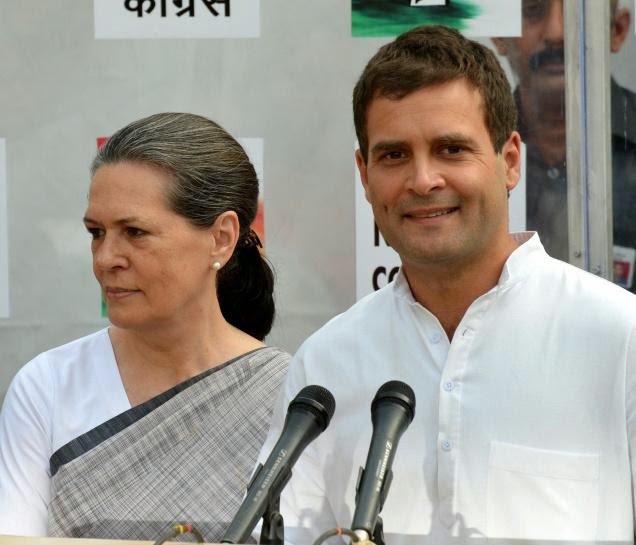
Rahul Pandita (and many others) have commented on the fact that Rahul Gandhi was smiling while speaking to the nation after the elections. It was not a humble smile. He was not being gracious in defeat. It was not even a defiant – sorry guys we lost it but we will come back – smile.

It was a – look at me, I am doing just fine – smile. It was evidence (if any was required) that he does not spend time worrying about the fact that an 128 year old organization (to be precise a branch of that old tree) which led India to freedom, “divided Pakistan into two” (his words) and brought computers and shopping malls to a shabby old socialist republic has been destroyed by a Naren Class neutron bomb- where all his supporters are dead but the buildings of a not-so-secular India are left standing.
………………
For many Indians — most Indians — Mr. Gandhi was the boy who had held on
to his father at his grandmother’s funeral in 1984. He was a “victim,”
who was forced to lead a barricaded life. In Uttar Pradesh, that had
sent his great-grandfather, grandmother and both parents to Parliament,
people were hopeful about him.
 

There, the Muslims had become tired of
the Samajwadi Party’s Mulayam Singh Yadav and had begun to snap at the
sheer mention of the Congress’ Salman Khurshid. Many among the Dalits
had begun to ask whether the Bahujan Samaj Party chief, Ms. Mayawati
cared more for them or her statues.


In 2004, Mr. Gandhi was 34; he was young and he was talking right. He
came across as an honest person who accepted he was at his position
because he belonged to the Gandhi family. 

Around this time, Mr. Gandhi also began touring villages. He portrayed
himself as the poor man’s friend; as someone who would always be ready
to bear a poor man’s load. But in the end, it was all reduced to a
farce.


In January 2008, four months after he was made the party’s general
secretary, Mr. Gandhi spent a night in Amethi in a hut belonging to a
Dalit woman, Sunita. During the recent campaigning, she told
mediapersons that after Mr. Gandhi’s visit, a job had been offered to
her husband from which he was later thrown out. She said she managed to
meet Mr. Gandhi after many failed attempts, but he wouldn’t even
recognise her.


In January 2009, Mr. Gandhi went to another Dalit woman’s hut in his
constituency, this time accompanied by the then British Foreign
Secretary, David Miliband. “Look at me, I’m here to end all your woes,”
Mr. Gandhi told a shivering Shiv Kumari. The Congress workers brought
fresh mattresses and pillows for the two VIPs to sleep on. When they
left the next day, these too were taken away.


In 2012, speaking to journalists, Ms. Kumari’s family members said the
family was in bad shape and unable to pay an agricultural loan of
Rs.50,000.


Mr. Miliband has, in the meantime, moved on after failing to win the elections in 2010. According to a 2013 Financial Times report,
his earnings since he left government were £9,85,315 — from “lucrative
directorships and speaking roles” (The report said that as a speaker,
Mr. Miliband commanded a fee of up to ÂŁ20,000).


According to the affidavit submitted by Mr. Gandhi before the Election
Commission of India, the value of his assets has doubled in the last
five years. In Mr. Gandhi’s case, though, it is quite doubtful if there
will be someone willing to pay to hear him speak – except loyalists like
Satish Sharma or Rita Bahuguna.


This month, Mr. Gandhi completed 10 years in Parliament. But even after
getting elected from Amethi for the third consecutive time, a majority
of votes that made him victorious were essentially cast for his surname. 
Why is it so hard for Mr. Gandhi to understand this? Why is it that
even after 10 years of attempting to prove that he is not incompetent
Mr. Gandhi still comes across as one?


The problem lies in the randomness with which Mr. Gandhi took up issues.
The problem is that he chose to take shortcuts for everything,
including the prime ministership. The truth is that he thought he would
paradrop himself in the middle of a “cause” and leave his mark.


Initially, when Mr. Gandhi would get down from his SUV and roll up his
sleeves, people thought he meant business. But gradually, they lost
hope. Mr. Gandhi came and saw and thought he had conquered. But he had
not. The coterie of party sycophants that surrounded him never told him
so.


In 2009, 15 Congress leaders, keen to exhibit their loyalty, decided to
do a sleepover at Dalit houses. But they turned it into slapstick. Most
of them brought their own food and plates. In Kanpur, the minister,
Sriprakash Jaiswal brought his movie equipment along with his food and
bedding to a Dalit’s hut and left many hours before sunrise.


In October 2013, Mr. Gandhi said the Dalits needed “escape velocity” of
Jupiter to achieve success. But instead of offering them that impetus,
he kept revolving in his own orbit of vacuousness.


It is with the same lack of follow-up that Mr. Gandhi approached other
serious issues. In October 2011, he urged the Union Health Minister to
visit encephalitis-hit Gorakhpur. The command was followed. But next
year, 557 people died of the disease — the maximum fatality in five
years. We never heard a word from him.


All these years Mr. Gandhi spoke about the social schemes the Congress
party had introduced in a manner similar to how quacks at roadside
Himalayan dawakhanas speak of their “herbs” to cure venereal
diseases. 
In the last few months, his laying down his vision for a
better India became a comic spectacle. He referred to poverty as a
“state of mind” and commented that “the poor can’t eat roads.”


As a result, the Congress party has suffered a humiliating defeat.
……………
…………
regards

Permit-raj for bonsais

For many decades after independence (and especially since the nationalization era) India suffered grievously under the so-called permit-raj system – even a land-line phone connection (equipment made by the State-owned Bharat Electronics Ltd) would require years. And that was not the end of it, long-distance connection (and to foreign lands) quality used to be atrocious. Calls to the USA (given the time difference) used to be a tense all-night affair as late as the 1990s.

Aatish Taseer reflects on the impact of permit-raj on the very entity that invented it – the Indian National Congress. This internal permit-raj regulated the injection of new political talent that would be required to keep the organizational wheels churning and the boilers firing. There was only one problem with the hot-housing effort: it was intentionally set-up to create bonsais not banyans. 

Every Congress leader,
as with certain bonsai, comes with, or will cultivate, a self-dwarfing
mechanism. He can grow, he knows, but never too big. He must be careful
not to put the heir in shadow; and, when the heir is something of a
bonsai himself, this is not always easy. 

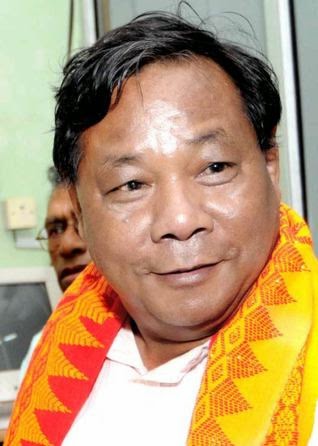
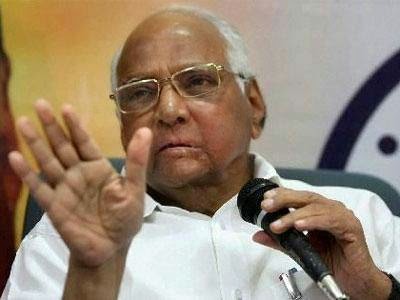
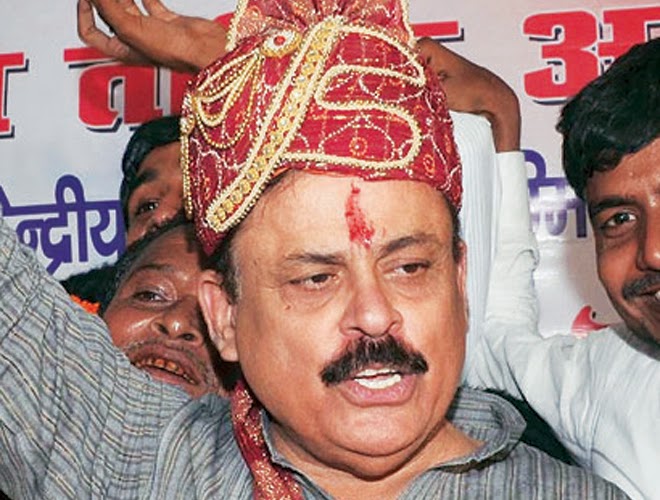
The last desperate call for reform was in 1999, when the Amar, Akbar, and Anthony trio of Sharad Pawar, Tariq Anwar and Purno Sangma raised the banner of revolt. Sonia they said was not fit for purpose. That was a good time as any to cut off the family with a (well deserved) pension. Too bad that it did not come to pass.

Today, fifteen years later, Pawar is left bloodied but unbowed in face of the Modi storm. His party won four seats in Maharashtra (including his daughter Supriya Sule from home-town Baramati) as compared to the two for Congress. Anwar won handsomely from Katihar, Bihar and Purno Sangma is aligned with the BJP. If you only permit bonsais be prepared for harakiri.
…………
It was a hot desolate morning. The countryside was very poor and
arid, and past a sloping expanse of fields, solid gold with ripened
wheat, an ancient and arresting vision:
the white sands and distant glitter of the Ganges. 

The road rose and
we came upon the Congress campaign. There was something almost quaint
about the sight of the Congress tricolour in the little village of
Kamarian. It was like one of those flags, which when ubiquitous and
powerful had offended the eye, but now, absent long enough to be robbed
of its associations, brought up—as with the hammer-and-sickle— a feeling
almost akin to nostalgia. The candidate was a political heir and the
son of a family friend.
 

A handsome man, he sat on the floor among a
smallish crowd of people with a Congress cloth, lined saffron and green,
tied like a turban round his head. He was soft spoken and listened
attentively to all that was said. Later, in the car, on the way to
another meeting, he said, in reply to a question about why he wanted to
be in politics:
“A while ago, I had an accident and broke my femur. I
was in bed for three months and began to think about what I would really
like to do. And I realised that I wanted to do something for the people
here. I know I can’t change India, but I would like, on a personal
level, at least, to do politics in a different way.”


A general observation: this is the kind of man—sincere, hardworking,
with a certain fineness of sensibility—that the Congress, much more than
the BJP, is able to attract. The tragedy is that it is never able to do
anything with this talent. Dynasty is to blame. 

Every Congress leader,
as with certain bonsai, comes with, or will cultivate, a self-dwarfing
mechanism. He can grow, he knows, but never too big. He must be careful
not to put the heir in shadow; and, when the heir is something of a
bonsai himself, this is not always easy. It takes a real invertebrate
like Manmohan Singh to meet the party’s idea of what the stature of the
extra-familial leader should be. In such an atmosphere, where illusions
must be kept alive, and where great lies have routinely to be told,
there are always men to tell them.

……
Link: http://www.openthemagazine.com/article/voices/mogambo-in-the-sacred-city
……

regards

Arvind Kejriwal

Aatish Taseer on the magic and madness behind Arvind Kejriwal. Wonderful stuff.

He is not so much the aam
aadmi as he is the caricature of an aam aadmi. He is like the Punjab
Power employee Shah Rukh Khan plays in Rab ne Bana di Jodi, who, out of a kind of shame at his ordinariness, adopts a Bergerac-esque proxy to win the love of his wife.

…………..
There is one charge, above all others, that has not left Arvind
Kejriwal’s side this election. It is that, when faced with the hard
practical reality of running an administration in Delhi, he fled the
field, returning once more to the only thing he knows: the life of
protest.
 

To this, Kejriwal has responded in an understandable way. He
has tried to turn a weakness into a strength.
Like the writer who, made
aware of a flaw in his book, pretends it is not a flaw at all but part
of the book’s strength, Kejriwal has, on numerous occasions, spoken of
the courage needed to leave the Chief Minister’s chair in Delhi. He has
invoked the life of renunciation. Doston, inko kya pata tyaag kya hota hai!
He has compared his leaving Delhi to Ram leaving Ayodhya.
It has been a
valiant effort, but, in my view, unconvincing. The charge is too
serious.


It is serious not just because it is on everyone’s lips; not just
because it has harmed him politically, earning him one of this
election’s most damning epithets: bhagoda; no, it is serious
because it goes to the heart of our fears about the Aam Aadmi Party.


These include fears of anarchy, intolerance, an inability to work with
others. But, of all these, one stands out in my mind. It is the fear
that Arvind Kejriwal is that most dangerous of all political animals:
the messiah. The man for whom any existing reality is too impure to be
corrected, and who strives for some necessarily vague Utopia, which he,
alone, by what feels like an act of faith, will bring into being. 

The
messiah is dangerous because he is at bottom a nihilist. I have written
before, in a different context: ‘Every man who ever dreamt up a
Utopia was animated far more by the wish to purge than to build. I would
say, too, that the great flaw in any Utopia is the intellectually lazy
notion—and one capable of unspeakable violence—that if only the society
were cleansed or purged of some particular undesirable element, the
Utopia would automatically— come into being. That nothing more would
need to be done.’


In the case of Arvind Kejriwal, that undesirable element—the
fire by which all aims will magically be realised, all evils
cleansed—is Corruption. It came up again and again in a speech I heard
him give in Harsos, a small village on the rural edge of this
constituency. It was the first time I was hearing him speak, and I was
at once alarmed and fascinated.


Let me say first that it is difficult to exaggerate the extent to
which this man is physically unimpressive. He has thin long arms; a
small frame and, one suspects, a flaccid body; he wears baggy clothes in
dull colours, and carries a blue Reynolds pen in his pocket. There is
the trace of a whine in his voice. He is not so much the aam aadmi as he is the caricature of an aam aadmi. He is like the Punjab Power employee Shah Rukh Khan plays in Rab ne Bana di Jodi, who, out of a kind of shame at his ordinariness, adopts a Bergerac-esque proxy to win the love of his wife.


Yet—and this is what makes his physicality so fascinating— under this
drab diminutive appearance, this Gogolian picture of the government
servant, there lies an iron-willed monster of perseverance and
doggedness.
When his party men say, “Modi will never find a fiercer,
more relentless opponent than Kejriwal,” I believe them. And when
Kejriwal himself says: “I have not run away. Antim saans taq tumhari chhati pe moong daalunga,”
I believe him too. It is, in fact, in this combination of physical
puniness and inward strength that the resemblance to Gandhi becomes
striking in more ways than one.
For, like Gandhi, Kejriwal’s vision of
what he seeks to dismantle is all too real and tangible, but what he
wishes to put in its place—that kingdom of heaven he wishes to lead us
into—is pure chimera.


One never hears him utter a harsh word against what must be the
fountainhead of corruption in this country, the Indian state. In fact,
if one were to close one’s eyes and imagine Kejriwal’s India, it would
be a giant expanse, reaching as far as the eye could see, of two- and
three-storey government flats, in Sovietised shades of blue, beige and
grey, packed full of pious government servants, leading a dreary
existence on subsidised gas, housing, water and electricity.


But haven’t we—you might well ask—already rejected this vision of
India? Isn’t that what this election is about? Hasn’t India, having
already sampled the genius of the Indian state, come out in significant
numbers to say: no, we do not want that India. And not simply because it
doesn’t work or is corrupt, but because it is shabby and lifeless and
stifles the spirit.
Have we not already opted for the other India?
Which, crude as it may still be, is the India of roads and malls and
IPLs—Sheila and Munni’s India! 

Do we not agree that, at this stage in
our development, we have more to fear from big government than big
business? Is it not generally acknowledged that the source of corruption
in this country is a State that preys on private enterprise, rather
than private enterprise preying on the State?
And is it not true that
India’s daily encounter with corruption occurs, not in the Reliance or
Vodafone shop, but in the government office?


Kejriwal—that scourge of Corruption—does not reflect this in his
politics at all. He is far more willing to demonise business than the
State.


In fact, one of the things that has intrigued me this election is the
kind of anger I sense for Kejriwal’s brand of austerity.
The AAP will
tell you that the violence against its volunteers is all
BJP-sponsored—and, no doubt, some of it is. But some of it is also
spontaneous. They seem to arouse a kind of contempt. I have witnessed it
in all quarters, now in a driver at the Harsos rally, who, on seeing
Kejriwal in his Scorpio, might say: “Yeh simplicity kuchh zyaada toh nahi ho gayi?” Now, in some BHU students, jeering at AAP workers taking a boat ride on the Ganga: “Lagta hai ke pehli baar boat mein jaa rahein hain.” Or, here, in a man who took me aside in Chitvan gym, to say: “Kejriwal se zyaada diwaaliya insaan maine kabhi nahi dekha hai. Voh maansik rogi hai.” And, even at the little protest outside my house, a BHU student muttered: “Isko toh main bhi thhapadh maar sakta hun.” 

India, it seems, knows what to do with simplicity when it comes in the
form of a holy man— Gandhi, Vinoba Bhave, Anna Hazare. It is far less
sure of what to do with it when it comes in the form of Arvind Kejriwal.


Still, it is something of a miracle that he exists at all. Wrong-
headed as his politics may be, there is no greater tribute to the
democracy we live in than its ability, less than two years after
Kejriwal was fasting in the streets of Delhi, to have absorbed him
electorally. I will say, too, that the people who comprise his
party—many of whom have left their jobs to serve the cause— are among
the most decent people to ever enter politics. And, whether they win or
lose, they will have forever altered the political culture of this
country.
Already, due largely to their advent, there is a growing
conviction that politics need not be the province of the cynical
professional, but that ordinary people, tired of what they see around
them, can and must step forward.


This is not AAP’s election. Many of them know as much. They would
like to be, they say, Modi’s main opposition. They are hoping for
100-150 seats. They are dreaming. It would have been much better had
they stayed in Delhi and proved that their politics was more than a
politics of protest. And yet, that morning when I left them in their
small silent circle on the edge of the Ganga, and found myself swept up
in Modi’s jansailaabh, an angry flood of youth, testosterone,
hope and pride, which was, by turns, exciting and scary, I could not
help but feel what a good thing it would be for Indian democracy if, in
Modi’s hour of triumph, the man tasked with whispering ‘memento mori’ in his ear was none other than this most formidable of former taxmen.

…..
Link: http://www.openthemagazine.com/article/voices/the-runaway-messiah
……..

regards

Aatish Taseer has the final word (NaMo vs. RaGa)

A masterful article which explains succinctly why elites like Rahul Gandhi lost (and will perhaps never rule India) and what is the exact problem with a man of the masses like Narendrabhai Modi.

‘Then, referring to Rahul Gandhi’s comment the other day—and he only ever refers to him as ‘shahzada’—that
poverty is “a state of mind”, he said: “Now what I want to know is: Is
this poverty that the Prime Minister is asking Obama to alleviate real?
Is it the poverty of our streets and neighbourboods? Is it real poverty?
Or is this also that state-of-mind poverty?”

……..
This election began for me with a Modi rally in Delhi last September.
I was struck at the time by a number of things. These are my
impressions from that day:
…..And then, just as P— and I were getting pretty restless, the
strangest thing happened. The sky darkened. A cool wind began to blow,
and the temperature seemed to drop by several degrees.  

A long narrow
poster of Modi tied to the metal frame of the tent came free and began
to blow in the wind. But in such a way that it seemed—because of the
little ripple that [ran] through the poster—that Modi was waving at us. 
In fact, many people from the press corps—you know how India loves a bit
of magic!—got up and began to photograph this strange phenomenon.
Not
just because on this day of ‘chamchamati dhoop’ it was suddenly
cooler, and the glare from the sky was gone, but because this
apparition of the leader seeming to wave at the press enclosure
coincided exactly with Modi’s arrival on stage!
 

And when I stood up on
my chair to see the reaction of the crowd, it was not so small. Not
small at all, in fact. 

.
‘He began in humour. And this is [rare]. This is not a funny country:
there are very few political leaders who can really make people laugh.
“The Prime Minister is in America at the moment,” he said, embarking on a
cruel impression of the PM. “He is grovelling before Obama. He is
telling him that we are a poor country, and that America should help us.
“‘We are,’” he went on, in a weak plaintive voice, “‘a nation of 125
crore, but we are poor. Please help us!’”


.
‘Then, referring to Rahul Gandhi’s comment the other day—and he only ever refers to him as ‘shahzada’—that
poverty is “a state of mind”, he said: “Now what I want to know is: Is
this poverty that the Prime Minister is asking Obama to alleviate real?
Is it the poverty of our streets and neighbourboods? Is it real poverty?
Or is this also that state-of-mind poverty?”


.
And for many minutes, this was all that he did. He just made us
laugh, at the expense of the discredited PM, and The Madonna with Child.


.

‘But then—and one could almost not tell when it happened— all the
humour fell away. And he was angry. Full of this emotion that I now
think of as distinctly his: this mixture of pain and sadness edged with
great anger.


..
‘… His victory will decimate the opposition. Not just in terms of
numbers, but philosophically too. It will be a long time before the
Congress finds its way again. The [pundits in Delhi] will say I’m wrong.
How will he find the numbers? they ask. But the numbers will come. This is going to be one of those elections when all the old calculations cease to apply.’


And, if I have sympathy for Modi, if I wish to see him
succeed, it is because of my sympathy for the people who support him.


It is this India—clear-headed, restless, hungry—that has energised
this election. It is the India that some of us have been waiting to see
come into being.


It is also my concern for this India that has prejudiced my view of
this election. The reason is that I grew up among a class of
Indians—privileged, exclusively English-speaking, intimately connected
to power and politics—who loathed this other India. They turned their
nose up at their bad English; they complained of their body odour; they
described them, while doing an impression before a hooting drawing room
of people
(I’m thinking now of a large mondaine of Delhi society) as
‘ball-scratchers.’ They hated their beliefs and practices; they held
their religion in contempt; they lived in open terror of their rise.


Only the Poor were beautiful. The people I grew up among had great
reserves of feeling for the rural poor.
And through their many schemes
and yojanas, their fraudulent plans for empowerment, their concern for
tribal art and religion, this crowd of ethnistas and Oxbridge Lefties
worked hard to make sure that the Poor never lost the thing that gave
them their great charm, namely their poverty.
Now while it would be
unfair to say that the members of this class supplied leaders
exclusively to the Congress party—many of them went on to join other
parties, some even to lead large states—it would not be an exaggeration
to say that if one party were to be singled out as sharing the beliefs
and prejudices of this class, it would be the Congress Party under the
leadership of the Gandhi family.


And the decline that was to
be observed between Jawaharlal Nehru’s generation and Rajiv Gandhi’s was
visible everywhere. No one perhaps expected that it would have brought
us so soon to Rahul Gandhi; one might be forgiven for thinking an
intervening stage was needed; but decline itself was inescapable.
It is
not possible for a class to remain vital if it cannot draw cultural
nourishment from the place it inhabits. That class then will produce
people without the means to deal with India; it will produce
Coomaraswamy’s intellectual pariah, ‘the nondescript superficial being’
who is neither of the East nor the West. 


Because the sense I had at that rally in Rohini—then subsequently, in
Kanpur, and then again, here, in Benares— was of a country unbound. A
country coming free of its historical obeisance to the class the Gandhi
family represented. The change was happening not because the new middle
classes sensed the danger the elite posed to their own growth. No: it
was much more basic than that. It was that the cultural gap had finally
grown too wide. And if they turned away from Rahul Gandhi, it was not
because they saw him as a threat to their own interests, it was because
they couldn’t understand a word he was saying. In the past, this might
have produced a feeling of apology in them; it now produced an equal and
corresponding feeling of contempt.


….
It was there in the voice of a young priest who came to see me the
other day. He was of a grand line of priests belonging to the Kashi
Vishwanath Mandir. He wore jeans and a kurta, pink-stemmed rimless
glasses; his ringtone was: ‘Yada yada hi dharmasya…’ There were
broad streaks of yellow on his forehead, pierced red at the centre, and
he wore a ring of Hessonite, for his Rahu was bad. We had not met to
discuss politics. 

But the young priest, after making apologies for being
apolitical, as men of God frequently do, could talk of nothing else. Of
Modi, he said: “Rahul Gandhi se toh zyaada sincere hain. Kam se kam unko bataana toh nahi padhha ke yeh Vishwanath hain. Rahul Gandhi ko bataana padhha ke yeh Vishwanath hain.”
Then, as if coming to the heart of the difference between the two men,
he said Modi knew how to perform all the rites at the temple. “Rahul
Gandhi,” the priest added cruelly, “toh sona-chaandi dekh rahe thhe. Unko toh Vishwanath se koi matlab hi nahi thha.”


This was what was new this election. In another time, Rahul Gandhi
would not only have been forgiven his deracination; he would have been
admired for it.


But cultural rootedness came with problems of its own; in fact, it
came with the problems of that culture. And, likeable as the priest was,
he was an effortless bigot.
He lamented the fact that all of India’s
Muslims had not been sent to Pakistan in 1947; he spoke of the need,
when Modi came to power, for one decisive riot that would show Muslims
their place. To hear him speak was to be reminded of how dangerous it
was to romanticise one India over another. It was also to be reminded of
the man the priest supported this election, the man from whom such a
wide range of things were expected.


….
Modi, that day in Rohini, when I first heard him speak, had said a
few things that worried me very much. He said that at that same
breakfast in New York where our Prime Minister had been insulted, some
Indian journalists had been present. Would they, he thundered,
those journalists, be answerable to the people of India for why they
had been eating Nawaz Sharif’s breakfast
while their Prime Minister was
being insulted?
….No press freedoms would need to be reeled in; the change of air
was often threat enough. But, more than all this, what really worried me
about what Modi said that day was that it suggested a certain kind of
man. Whose principal crime, in my eyes, is not so much that he is a
bigot, but a provincial.


The provincial is a problem not because you can’t have a glass of
wine with him, though that would be nice too. Nor is it simply that he
is not a man of the intellect—not a reader, not someone of subtle mind.
The provincial is a problem because his plan for Development, on which
his entire fame rests, often ends up being too shallow a plan. Too
limited in its scope. 

Modi, if he is to bring profound change, must not go the Erdogan or
Rajapaksa route. Because the conditions for the emergence of that kind
of leader do exist in India.
There is the malaise left behind by the
previous government; there is a loud majoritarian feeling; there is
disgust with the elite; and there are people baying for a strong leader.
It is very easy to imagine an India in which Modi, if he delivers on
Development, will be forgiven everything else.
And anyone with a harsh
word to say about him will be driven out of town. It would be terrible
if that atmosphere were allowed to grow in India. 

………
Link: http://www.openthemagazine.com/article/voices/the-light-of-benares
…..

regards

Kamila Shamsie pro-community, anti-nation

Kamila is standing up for free speech (or to be precise, the right to remain silent). This is, on the face of it, a noble cause. However as a member of the elite, she needs to check her privilege and fully appreciate the benefits of having one foot in the West and one in the East. Dual citizenship brings many material benefits yet appears to be problematic in many other ways (only one of which is to turn up one’s nose at old-fashioned concepts such as nationalism and patriotism).

If immigrants are only to subscribe to the (liberal) religion of community spirit and ignore the national treasures of their adopted nation (yes, the Queen is one), then what is the purpose of getting an UK citizenship anyway? Are there no communities to be built in Pakistan? We know the answer to that: people are seeking shelter from the evil Taliban (which itself was spawned by evil Amrika).

Of course, in this day and age immigrants are not expected to be grateful for having escaped a fate worse than death, rather the host country must be grateful because diversity has gone up and large groups of people do not speak English in public (in the UK). It seems to us however that Kamila is actually encouraging trickle-down of elite thought processes which will make integration of working class immigrants more difficult. Isolated from the mainstream, such people are likely to turn angry, frustrated and resentful (especially when financial success eludes them and cultural domination of the secular West terrifies them). What will all this anger do for fostering true community spirit, Kamila?
……………

I have had reason to think about national
anthems recently myself. Last year I became a British citizen, and
during the citizenship ceremony found myself merely moving my lips
during most of God Save the Queen. 


The only national anthem I have ever
sung in the UK is Pakistan’s – but before anyone leaps to conclusions
about what this might reveal about my attitudes towards the two nations
of which I am a citizen, let me explain.

In 2012, a theatrical
group from Pakistan performed at the Globe theatre, kicking off with a
rendition of the anthem. My first response was embarrassment.
But there
is something deeper in me than a thought-out response, developed in my
adult life, towards the symbols of nationalism: nostalgia.
Every week at
school we sang Pakistan’s national anthem, and my friend Zerxes,
playing the piano accompaniment, would add a humorous flourish between
chords.
I always hear those extra notes when I listen to the national
anthem, and it still makes me smile as I sing.
There is also this to be
said for Pakistan’s national anthem: the lyrics are in Persian, which
renders a good portion of it unintelligible to almost everyone in the
nation.
We can all therefore impose our own meaning on them: “Rise up,
it’s time for a Revolution!” or “More TV channels now!”

The
British national anthem, on the other hand, is problematic because it is
impossible for anyone with the most rudimentary understanding of
English to ignore what it is saying: God Save the Queen. I wish the
Queen no harm, but if you want me to sing something with feeling make it
“Prime minister, save our libraries”.
The truth is, you can probably
get me to sing along to most things if the musical arrangement is
attractive enough and the words don’t simultaneously
demand a
wholehearted appreciation of God, Queen and nation – really, it’s too
much.

I’ve never given the appearance of not singing the British
anthem when those around me are doing so. Instead, I move my lips
meaninglessly, and only sing out such bits as “men should brothers be”.
I’m conscious, you see, that my failure to sing might be seen as a
churlish rejection of the country in which I’ve chosen to live. I am
aware of a whole freighted business of the migrant’s relationship to
their adopted nation each time I encounter the national anthem.

I
expect I would sing La Marseillaise if I were in France. However, I
would do so not as a national anthem, but as a revolutionary song
(expect for bits such as “mâles accents”). We should each have the right
to decide what a song means to us, and what singing it at a particular
moment might symbolise. The underlying problem with all national
anthems, regardless of their lyrics, is that too much is assumed when
certain people choose not to sing them, and the assumptions are related
to how “true” a citizen of the state you are deemed to be.

A
Pakistani from the widely persecuted Ahmadiyya community not singing
Pakistan’s anthem would face greater hostility than I would, even though
I’m now living outside Pakistan. A French minister born in French
Guiana who remains silent during La Marseillaise at a public ceremony to
commemorate the abolition of slavery will face hostility even though
other ministers routinely don’t sing along. This is true even though –
or perhaps because – the minister in question was instrumental in
bringing about a law that recognised slavery as a crime.

Jingoism,
nationalism, patriotism, community spirit. I would immediately look
askance at anyone who lacks the last and possesses the first. The two
words in between are more complicated. The national anthem can represent
any one of those four terms – or none – to the citizens of a state. But
everyone in a nation should have the equal right to sing or not sing.
And surely, we should care more about the laws politicians propose than
what they do when a band strikes up. Or where they were born. Or their
skin colour.

……..
Link: http://www.theguardian.com/commentisfree/2014/may/14/dont-sing-national-anthem-if-you-dont-want-to
……..

regards

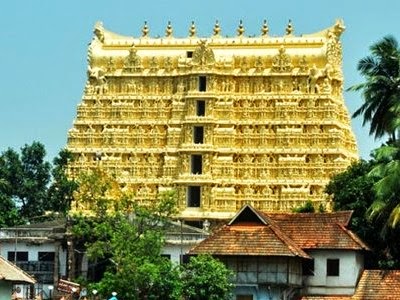
Jobs in religious engineering (5 Lakhs/month)

With India getting all set for Hindu/Hindutva rule new promising opportunities are on the horizon.

The economy is suffering and there are very few good jobs. Now the Supreme Court is ready to step in and contribute towards (very high-end) job creation. We need urgently programs/majors such as Religious Engineering and Religious Management. Will the Indian Institutes of Technology and Management (and many others) pay any attention?
………………
The
best graduates from IITs and IIMs dream of the salary amicus curiae
Gopal Subramaniam has recommended for head priests of Sree
Padmanabhaswamy temple in Thiruvananthapuram.

In his report to
the Supreme Court on management of the temple, which shot into the
limelight after wealth estimated at Rs 1 lakh crore was discovered,
Subramaniam listed the hierarchy of priests with thantris at the top
followed by periyanambi, panchakavyathunambi, thakkadam and thiruvambadi
nambis. He said the thantris should be paid Rs 5 lakh per month.


Starting with the thantris, the amicus said none of the four main
priests reside within the temple complex. This is because their earnings
from conducting rituals in the temple were meagre which forced them to
perform rituals outside. He said their residential quarters too were in
dilapidated condition.

“It is submitted that an amount that is
proportional to the stature of the thantris should be fixed by the
temple authorities, preferably a sum of Rs 5 lakh per month, to be paid
according to the directions of the (head) thantri,” the report said.

On their living quarters, the amicus said, “The temple authorities
should suitably renovate the residences of thantris. The thantris should
also be provided with two assistants (Brahmins) according to their
choice who can cook, clean and follow the ‘majhar’.”

Subramaniam said the salaries of the four periyanambis, the high priests
who maintain celibacy during their tenure in the temple to perform
archana and offer worship to the deity, was worse.

“The
salaries of nambis are very low, around Rs 12,500 per month and they are
not entitled to emoluments being temporary staff,” he said and provided
a graded salary structure for them as per their status in the conduct
of rituals in the temple.

The amicus recommended to the apex
court that “archana commission can be fixed at 7% after consultation
with the temple authorities and the salary of the periyanambi should be
around Rs 90,000 per month”. “The panchakavyathunambi should be
paid Rs 80,000 per month as salary while thakkadam and thiruvambadi
nambis should receive Rs 60,000 per month,” he said.

Apart from
steep hike in salary and renovation of their residential quarters, the
amicus curiae recommended examination of the feasibility of having an
adequate cooling system in the sanctum sanctorum.

“If feasible,
such a cooling system should be installed at the earliest. This will
help in protecting the health of the nambis, protect the deity from harm
and also ensure hygiene inside the temple,” he said.

The
nambis should also be provided with security, he suggested. “The nambis
are also concerned about their security as they feel news has spread
that the keys to the kallaras (vaults where the wealth is stored) are
kept with them. Consequently, the nambis believe that it has become
dangerous for them to step out without police security,” he said.

Subramaniam said, “Security concerns of the priests should be addressed
adequately. Policemen wearing traditional attire may accompany them.”

……
Link: http://timesofindia.indiatimes.com/india/Pay-Padmanabhaswamy-temple-priests-Rs-5-lakh-per-month-Amicus-tells-SC/articleshow/35127605.cms
……….

regards

Russians are losers

History of Russia- as an American sees it.

For all the sneerings there was a time when the Americans were scared shit about communism. Millions of people (including Bangladeshis, majority Hindus) were killed because America either stood by its bastards or actively participated in the tortures and massacres. And yes, the only people to launch a nuclear attack of dubious purpose was the Americans. Perhaps PJ can find time to write a funny article about that. History always sounds better when it is written by the victors.
………
The original Russian state, “Old Russia,” was established at Novgorod in
A.D. 862 by marauding Vikings.
They’d set off to discover Iceland, Greenland,
and America, took a wrong turn, and wound up with their dragon boat stuck on a
mud bar in the Dnieper. (Historians have their own theories, involving trade
and colonization, but this sounds more likely.)


The first ruler of Old Russia was the Viking Prince Ryurik. Imagine being so
disorganized that you need marauding Vikings to found your nation—them with
their battle axes, crazed pillaging, riotous Meade Hall feasts, and horns on
their helmets. (Actually, Vikings didn’t wear horns on their helmets—but they
would have if they’d thought of it, just like they would have worn meade
helmets if they’d thought of it.) Some government it must have been.


Viking Prince Ryurik: “Yah, let’s build Novgorod!”


Viking Chieftain Sven: “Yah, so we can burn it down and loot!”


The Russians weren’t converted to Christianity until A.D. 988—a thousand
years late to “Peace be unto you” party, the basic principles of which still
haven’t sunk in. (And maybe never had a chance to. Russia’s conversion came at
the hands of St. Vladimir, Grand Prince of Kiev, who was reputed to maintain a
harem of 800 concubines.)


..
The death of St. Vladimir, and every other ruler of Old Russia, was followed
by assassinations, mayhem, civil strife, and the other hallmarks of change in
Russian leadership evident to the present day. Oxford historian Ronald Hingley
notes that “the first and only Russian ruler to fashion an effective law of
succession” was Tsar Paul I (1796-1801). Tsar Paul was assassinated.


Anyway, things went along pretty well for almost 400 years. (Pretty well by
Russian standards—a free peasant was known as a smerd, meaning
“stinker.”) Then, in 1237, when the rest of the West was having a High Middle
Ages and getting fecund for cultural rebirth, a Tatar horde invaded Russia.


..
The Tatars were part of the Mongol Empire founded by Genghis Khan. They had
a two-pronged invasion strategy: Kill everybody and steal everything.
Kiev, Moscow, and most of Russia’s towns were obliterated. Tatar
control—part occupation and part suzerainty over impotent, tribute-paying
Russian principalities—lasted more than 200 years.


The Russians have heroic stories about fighting off the Tatars, but in fact
it seems like the Tatars gradually lost interest in the place and went off in a
horde back to where they came from.


Professor Hingley says the “Tatar Yoke” left Russia with “a model of extreme
authoritarian rule combined with control through terror.” It also left Russia
with a model of leadership best summarized by a passage from John Keegan’s A
History of Warfare:


..
“Genghis Khan, questioning his Mongol comrades-in-arms about life’s sweetest
pleasure and being told it lay in falconry, replied, ‘You are mistaken. Man’s
greatest good fortune is to chase and defeat his enemy, seize his total
possessions, leave his married women weeping and wailing, ride his gelding
[and] use the bodies of his women as a nightshirt and support.’”


Why Putin wants Angela Merkel for a nightshirt is beyond me. But that’s a
Russian dictator for you.


Around the time Europe was getting a New World, Russia was getting tsars.
Several were named Ivan, one more terrible than the next until we arrive at
Ivan the Terrible in 1533.


Ivan created a private force of five or six thousand thugs, the oprichnina,
who wore black, rode black horses, and carried, as emblems of authority, a
dog’s head and a broom. (The hammer and sickle of the day, presumably.)


Oprichniks were entitled to rob and kill anyone, and did so with a
will. Ivan suspected Novgorod of disloyalty, and the oprichnina spent
five weeks in the city slaughtering thousands and driving thousands more into
exile.


Ivan presided over and sometimes personally performed the roasting,
dismembering, and boiling alive of enemies and people who, left unboiled, might
possibly become enemies.


He killed his own son and heir by whacking him over the head with the
monarchal staff in a tsar-ish fit of temper.


He conducted a 24-year-long war against Sweden, Poland, Lithuania, and the
Teutonic Knights, and lost.


Russia’s economy was destroyed. Drought, famine, and plague beset the
country.


….
But Ivan put Russia on the map as an international player. He defeated what was
left of the Tatars, mostly by conniving with leaders of what was left of the
Tatars. He expanded Russian rule into Siberia, his success due to almost nobody
being there. And, draw what parallels you will, Ivan the Terrible’s popularity
rating was very high among the smerds.


….
After his reign, Russia, if you can believe it, got worse. “The Time of
Troubles” featured more drought, more famine, more plague, foreign invasions,
massacres, the occupation and sacking of Moscow, and tsars with names like
False Dmitry I and False Dmitry II. The population of Russia may have been
reduced by as much as one-third.


….
The remaining two-thirds reacted to increasing anarchy in traditional
Russian fashion, by increasing autocracy. The Russians aren’t stupid. We’re
talking about a country where chess is a spectator sport. Autocracy is just a
Russian bad habit, like smoking three packs of cigarettes a day and drinking a
liter of vodka.


….
In 1613 the Romanov dynasty was installed, providing Russia with a range of
talents from “Great” (Peter I, Catherine II) to “Late” (Ivan VI, Peter III, and
Paul I killed in palace intrigues; Alexander II blown to bits by a terrorist
bomb, and Nicholas II murdered with his family by the Bolsheviks).


The Romanovs adhered to what Harvard historian Richard Pipes calls a
“patrimonial” doctrine, meaning they owned Russia the way we own our house
(except to hell with the mortgage). They owned everything. And everybody. The
Romanov tsars imposed rigid serfdom just as that woeful institution was fading
almost everywhere else.


….
Russia never had a Renaissance, a Protestant Reformation, an Enlightenment,
or much of an Industrial Revolution until the Soviet Union. Soviet
industrialization produced such benefits to humanity as concrete worker housing
built without level or plumb bob, the AK-47, MiG fighter jets, and
proliferating nukes. (Although the only people the Soviets ever killed with a
nuclear device was themselves at Chernobyl, located, perhaps not
coincidentally, in what’s now Ukraine, for the time being at least.)


…..
Russia was out in the sticks of civilization, in a trailer park without
knowledge of how to build a trailer. But Russia kept getting bigger, mostly by
killing, oppressing, and annoying Russians.


Peter the Great (1682-1725) led a military expedition against the Turkish
fort of Azov that was a disaster. But Peter came right back and, getting more
Russians killed, overwhelmed the Turks. The same thing happened in the Northern
War against Sweden. Although it took 21 years after Peter ran away at the battle
of Narva, Russia finally got a Baltic coastline. Which Peter didn’t know what
to do with, so he built St. Petersburg in a swamp with conscripted serf labor.
The number of Russian serfs who died building things in the swamp equaled the
number Russian soldiers who died in the Northern War.


….
Peter the Great raised taxes, made the Russian nobles shave their beards,
and caused the death of his recalcitrant son and heir, like Ivan the Terrible
did, but on purpose.


….
Catherine the Great (1762-1796) doubled taxes on the Jews and declared they
weren’t Russians, as if anyone would want to be. She was the first but not last
leader of Russia to annex Crimea. NATO member alert, code red—she won two wars
against Turkey and partitioned Poland. (Like Peter the Great on the Baltic, she
got the swampy part.)


….
Under Catherine, Russian settlements pushed all the way east into Alaska,
the most valuable land Russia has occupied. (Annual GDP per capita, Alaska:
$61,156. Annual GDP per capita, Russia: $14,037.) But—E.U. shame alert—when
Russia was facing financial difficulties and geopolitical conflict, Tsar
Alexander II was forced to sell Alaska to the United States in 1867 for 2 cents
an acre. Later, as mentioned, Alexander got blown to bits.


And that’s pretty much it for Russia’s Golden Age. After the 18th century,
Russia devoted itself mostly to being big fat loserland, losing pace with the
modern world, wars, Alaska, a communist utopia, a million victims of Stalin’s
purges, 6 million victims of the famine of 1921, 8 million victims of the
famine of 1932-33, a “Kitchen Debate” between Nikita Khrushchev and Richard
Nixon, ICBMs in Cuba, the space race, the arms race, the Cold War, and finally,
14 independent countries that were once in the USSR.


….
Napoleon actually won the war part of his war with Russia. If “General
Winter” and the general tendency of Moscow to be periodically destroyed hadn’t,
for once, sided with the Russian people, you’d be able to get a good bottle of
CĂ´te de Volga and a baguette in Smolensk today.


Russia began a series of wars in the Caucasus that it has yet to win.


…..
In 1825, the Decembrists, a reform-minded group of military officers, staged
a demonstration in favor of constitutional monarchy and were hanged for taking
the trouble.


Political oppression, censorship, spying, and secret police activity reached
such a level of crime and punishment that Dostoyevsky himself was sentenced to
death for belonging to a discussion group. He was standing in front of the
firing squad when his sentence was commuted to exile in Siberia. (Whether to
thank Tsar Nicolas I depends upon how weighty a summer reading list you’ve been
given.)


….
“Exiled to Siberia” says everything about Russian economic and social
development in that land of mountains, lakes, and forests with a climate, in
its lower latitudes, no worse than the rest of Russia’s. I’ve been across it on
the Trans-Siberian Railroad. If this were America, the route from Irkutsk to
Vladivostok would be lined with vacation homes and trendy shops, and “exiled to
Siberia” would be translated as “exiled to Aspen.”


……
Russia lost the 1853-56 Crimean War. NATO member alert, code green—Russia
lost to Britain, France, and Turkey.


….
In 1861 Tsar Alexander II freed 50 million serfs. If “freed” is the word
that’s wanted. The serfs had no place to go except the land they were already
farming, and if they wanted any of that, they had to buy it with the nothing
they made as serfs. Later, as mentioned twice already, Alexander got blown to
bits.

Russia lost the Jews. Being robbed, beaten, and killed in pogroms was not a
sufficient incentive to stay. 

More than a million Jews emigrated, taking what
common sense the country had with them.


Russia lost the 1904-05 Russo-Japanese War in the best Russian loser fashion
at the naval battle of Tsushima.


Japanese Admiral Togo Heihachiro “crossed the T” of the Russian fleet, a
rare execution of a tactic where you get your ships in a horizontal line so
that your guns can be aimed at the enemy, whose ships are in a vertical line so
that their guns can’t be aimed at you.


The Russian fleet was demolished. Eight battleships and most of the smaller
ships were sunk. More than 5,000 Russian sailors died. Just three of 38 Russian
vessels escaped to Vladivostok.


….
Russia lost World War I, not an easy thing to do when you’re on the winning
side. After the October 1917 Bolshevik Revolution, Russia was too much of a
mess to keep fighting Germany. The Soviet government signed the Treaty of
Brest-Litovsk surrendering Latvia, Lithuania, Estonia, Russian Poland, and
Ukraine—containing in total a quarter of the population of Imperial Russia—to
the Central Powers just eight months before the Central Powers had to surrender
to everybody.

……………….
Link: http://www.thedailybeast.com/articles/2014/05/11/russian-history-is-on-our-side-putin-will-surely-screw-himself.html
…..

regards

The honorable Maulana is a traitor

Maulana Fazlur Rahman is a good man who can be persuaded to change his beliefs by suitable application of green wax. Tariq Ali fondly calls him Maulana Diesel based on his past dealings with the powers that be.

So, the remarkable news is that JUI-F knows about an “ISI within ISI.” It is one sense a dangerous comment to make and the honorable Maulana and his compatriots may suffer at the hand of true patriots. OTOH this frank talk may have been at the direction of Mian Nawaz Sharif who wants to grab the bull by the horns and finish off the deep state actors (before they finish him).

Also the following is a most profound statement. Can someone wise enough decode it for the rest of us?

“It was not decided since the independence (of Pakistan) that
who will rule the country … either it will be the Parliament or those
institutions whose employees get pays from the taxes of the nation,” he
said.

………………
The Jamiat Ulema-i-Islam – Fazl (JUI-F) on Tuesday alleged
that there is an “Inter-Services Intelligence (ISI) within the ISI”
which is involved in kidnapping and killings of innocent people across
Pakistan.


Commenting on a motion in the Senate regarding
ongoing political situation in the country, JUI-F Senator Hafiz
Hamdullah said the ISI was behind the incidents of missing persons and
mass graves in Balochistan.

Former military ruler Gen (retd)
Pervez Musharraf had said that there were some people within the ISI
ranks who were not under the control of its chief while former chief
justice Iftikhar Muhammad Chaudhry also said in his verdicts that the
ISI was involved in the cases of missing persons, the JUI-F senator
said.

“It was not decide since the independence (of Pakistan) that
who will rule the country … either it will be the Parliament or those
institutions whose employees get pays from the taxes of the nation,” he
said.

Hamdullah said it was an alarming situation that the
violators of Constitution were being considered as faithful and those
who introduced the Constitution of 1973 were being considered as traitor
in the country.

He also criticised the leadership of Pakistan
Tehreek-i-Insaf (PTI) which was protesting against the alleged rigging
in the May 11 elections.

“Imran Khan is dangling between the Parliament and the establishment,” he added.
The
JUI-F senator said that the survival of Pakistan was only in prevalence
of justice and supremacy of Parliament, adding that the JUI-F will only
support democracy in the country.

……..
Link: http://www.dawn.com/news/1107531/jui-f-blames-isi-within-isi-for-kidnappings-killings
……….

regards

Geo TV ordered off air by ISI (not yet)

Who ordered these private members – Israr Abbassi, Mian Shams and Fareeha
Iftikhar
– to take illegal decisions in such haste?
 
It appears that there is a tussle going on between Nawaz Sharif and Deep State and Mian Sahib intends to win this battle. The GEO vs ISI boxing match will be watched with intense interest. Our bet is that GEO will die but will come back stronger after the pause. The reason is that while people may worship the army (just like in India they worshipped the Nehru family), secret power centers will eventually fade away. The army will one day return to its rightful place- within the barracks. We can hope.
……………….
The Pakistan Electronic Media Regulatory Authority (Pemra) on
Tuesday disowned the decisions announced by its three members regarding
cancellation of licences of three television channels owned by the Geo
TV network.

In a press statement
issued here, the media regulatory body referred to the media talks held
by three private members – Israr Abbassi, Mian Shams and Fareeha
Iftikhar – in front of Pamra headquarters earlier today.


The members of the committee had announced the suspension and also ordered that Geo TV offices be sealed down.

A
spokesman for the regulatory body had also said in a statement that the
meeting called today had no legal validity “since it was not called
officially in spirit of Rule 3(4) of Pemra Rules 2009.”

According to the Pemra rules listed on its website, a meeting of the regulatory body can be convened on the request of at least one half of its total membership.


The press release issued by Pemra said the majority of authority
members in 95th meeting held on May 9 had decided to refer the case to
the ministry of law for legal opinion.

“The decision of seeking
opinion from the Law Division was taken in all fairness to avoid any
future legal consequences in such a critical issue.” The complaint against Geo Entertainment was already referred to the Council of Complaints (CoC) Sindh.

“The
CoC in its meeting called on Tuesday had already recommended about the
status of Geo’s licence. The minutes of the CoC were awaited and the
Authority would consider this matter in the next scheduled meeting,” the
press release added.

The Pamra clarified that Tuesday’s meeting was called without following the laid down procedures and thus had no legal standing. According
to Rule 3(4) of PEMRA Rules 2009, the Chairman or as the case may be
more than half of the total members can call the meeting i.e. out of
twelve members at least seven members can call a meeting. This was an informal meeting attended by five members, said the regulatory body.

“The
Executive Member was not even asked to officially convene the meeting
and notify it through the Secretary to the Authority, which was the set
procedure,” the release said.

The meeting convened by these
members was without any official intimation or invitation to other
members in accordance with the procedure, it added.

“The
Authority’s committee was functioning and was exercising the power of
Chairman in day to day affairs and taking decisions with requisite
quorum,” it said.


Speaking at the press conference, private Pemra member Israr Abbasi,
who attended the meeting, had said that one-third members were present
today, which he claimed was enough to complete the quorum.

Abbasi said government members did not attend the meeting.
During
their announcement, the members said that a final decision on the
revocation of the licences will be announced following a meeting on May
28, which will also be attended by government representatives.

The
committee formed by Pemra was tasked to review the Ministry of
Defence’s application filed against Geo TV network for leveling
allegations against an intelligence agency of Pakistan.


“All members (present) today unanimously decided that the licence for
Geo News be cancelled. However, due to a legal formality that could not
be completed, we have sent our recommendations to the Council of
Complaints, advising that they respond before May 28, the date for our
next meeting,” said Mian Shamsur Rehman, a member of the committee.

The
suspension is to stay in effect until May 28, when another session of
the committee will be called to decide on the final decision regarding
cancellation of the licences, they said.

“On May 28 during our
next meeting, we will give a final decision on (cancelling licences of)
Geo News, Geo Tez and Geo Entertainment,” said Shamsur Rehman.

Abbasi
said there were members representing the public and the provinces at
the meeting which resulted in the suspension of Geo News, Geo Tez and
Geo Entertainment.

Speaking to a private TV channel, Abbasi added
that in the next meeting the legal process against Geo would be decided
upon, and until then, the group’s licenses will remain suspended.

He
said that there was no need to refer this decision to the law division
as Pemra has been given the authority to take such a decision.

…….
Link: http://www.dawn.com/news/1107528/pemra-disowns-members-decision-to-suspend-geo-licences
…….

regards

Brown Pundits