

Genetic affinities and adaptation of the South West coast populations of India:
Evolutionary event has not only transformed the genetic structure of human populations but also associated with social and cultural transformation. South Asian populations were formed as a result of such evolutionary events of migration and admixture of genetically and culturally distinct groups. Most of the genetic studies pointed to large-scale admixture event between Ancestral North Indian (ANI) and Ancestral South Indian (ASI) groups, also additional layers of recent admixture. In the present study we have analyzed 213 individuals inhabited in South West coast India with traditional warriors and feudal lord status and historically associated with recent migrations events and possible admixture with Indo-Scythians, Saka, Huns and Kushans, whose genetic links are still missing. Analysis of autosomal SNP markers suggests that these groups possibly derived their ancestry from some groups of North West India having additional Middle Eastern genetic component and also their separation history suggests very early separation from North West Indian and Gangetic plain Indo-Europeans during late bronze or Iron age, most probably following central India and Godavari basin to South West coast. Higher distribution of west Eurasian mitochondrial haplogroups also points to admixture through maternal lineage. Selection screen using genome wide genealogy approach revealed genetic signatures related to their long-term coastal food habits. Thus, our study suggests that the South West coastal groups with traditional warriors and feudal lordsā status are of a distinct lineage compared to Dravidian and Gangetic plain Indo-Europeans and are remnants of very early migrations from North West India following Godavari basin to Karnataka and Kerala.
If you do a west-to-east transect there is more “ANI” ancestry in the west of the subcontinent. This is true in the north, obviously (Punjabis to Bengalis), but less appreciated is that the same seems true in the peninsula south of the Vindhya Range. To some extend this is due to more steppe ancestry in groups like Nairs because of “gene flow” from Namboothiri Brahmins and such. But, that’s not all. As noted in this paper some of these western coastal groups clearly have an excess of “Middle Eastern” ancestry. That’s not surprising for the Jews of Cochin or even the Nasrani Christians. But what about Bunts and Nairs? There are two main ways you can explain this in my opinion:
1) A pre-steppe IVC and post-IVC era migration of “Iranian” peoples associated with the Ashmound culture has a significant impact that is most preserved in the western part of the peninsula
2) Later connections between West Asian (Arab and pre-Arab) people who were integrated into the local cultures over time (due to the matrilineal nature, at least originally, of some of these southwestern groups one can imagine how easy it would be to integrate sailors from other societies, or at least their offspring)

A comment on the earlier open thread:
Interested to know what Razib and Omar sahab think of Holi, any experiences Razib?
I don’t have any experience and did not know it was Holi. Thanks for telling me!
I was going to visit India for business in 2020, but then COVID-19 happened, so I have never been to India. I have only been to Bangladesh twice in the last 40 years, so it did not overlap with Holi.
Another Browncast is up. You can listen onĀ Libsyn,Ā Apple,Ā Spotify, andĀ StitcherĀ (and a variety of other platforms). Probably the easiest way to keep up the podcast since we donāt have a regular schedule is toĀ subscribeĀ to one of the links above!
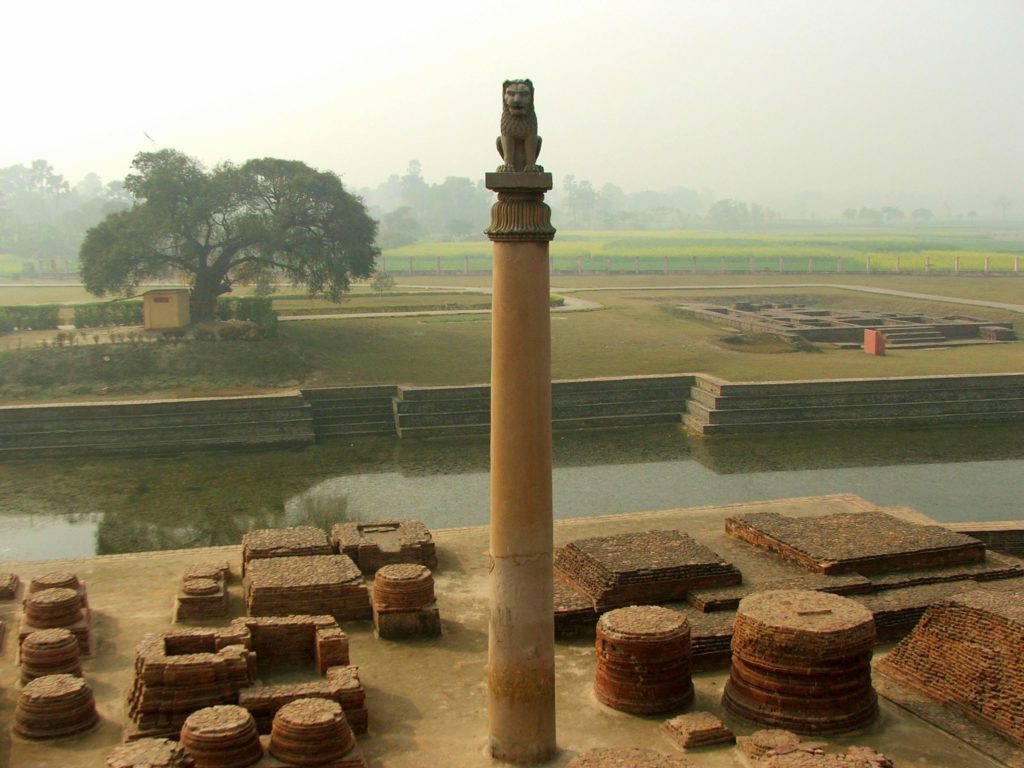
The History of the Indian sub-continent continues.Ā Shrikanth and Maneesh are joined by Jay Vardhan Singh to talk about all things North of the Vindhyas in the period 200 BC to 200 AD. Tales of Bactrians in modern day central India, descendants of King Ashoka and of a king whose name ended up on an unfortunate Aircraft. Kalyan, a suburb of Mumbai, makes an appearance too.
@shrikanth_krishĀ Ā @jayvtweetsĀ @maneesht
References and Source Material:
GENERAL BOOKS
1. Between the Empires: Society in India 300 BCE to 400 CE by Patrick Olivelle (Editor)
2. The age of imperial unity (The history and culture of the Indian people Vol 2)
3. Comprehensive History of India Vol.2, The Mauryas and the Satavahanas, Edited by K. A. Nilakanta Sastra
4. Political History of Ancient India, from the Accession of Parikshit to the Extinction of the Gupta Dynasty by Hem Chandra Raychaudhuri
LATER MAURYANS
1. AÅoka and the decline of the Mauryas by Romila Thapar
INDO-GREEKS
1. The Indo-Greeks by A. K. Narain
2. The Greek Experience of India: From Alexander to the Indo-Greeks by Richard Stoneman
3. The Greeks in India by George Woodcock
4. The Yavana Invader of the Gangetic Basin by Kailash Chandra Ojha (ARTICLE)
SHAKAS, PARTHIANS AND KUSHANAS
1. History of Civilization of Central Asia, Vol – II
2. The Empire of the Steppes: A History of Central Asia by RenƩ Grousset, Naomi Walford
3. The Dynastic Arts of the Kushans by John M. Rosenfield
4. ReOrienting the Sasanians: East Iran in Late Antiquity by Khodadad Rezakhani
5. The Age of the Parthians Edited By The Idea of Iran Volume II Vesta Sarkhosh Curtis and Sarah Stewart
6. The Khyber Pass: A History of Empire and Invasion by Paddy Docherty
7. Empires of Ancient Eurasia: The First Silk Roads Era, 100 BCE – 250 CE by Craig Benjamin
8. MathurÄ: The Cultural Heritage
9. India under the Kushanas by B.N. Puri
10. From the Kushans to the Western Turks by Khodadad Rezakhani (ARTICLE)
SATAVAHANAS AND WESTERN KSHATRAPS
1. Formative Phase of the Western Deccan Satavahanas and Kshaharatas by Ajay Mitra Shastri (ARTICLE)
2. Satavahana Chronology: A Re-examination by M. K. Dhavalikar (ARTICLE)
KHARAVELA
1. Epigraphica Indica Vol. XX
2. The Mahameghavahana dynasty by Shri Amar Chand (ARTICLE)
3. Bahasatimita of the Hathigumpha inscription by N.K Sahu (ARTICLE)
The article of Vidya Dahejia
http://vidyadehejia.com/wp-
Reference of Indian Steel exported to Rome
https://archive.org/details/
https://www.youtube.com/JayVardhanSingh

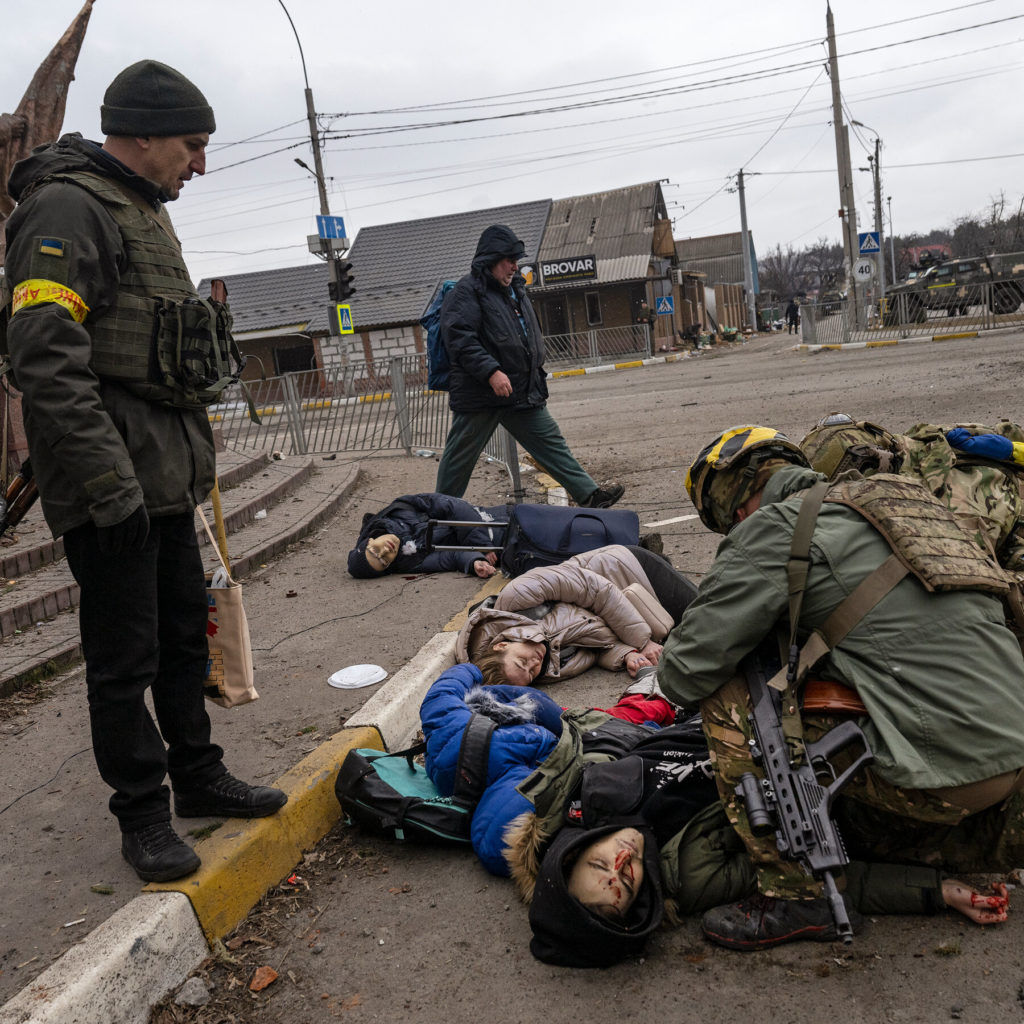
The shooting of this family in Ukraine is all over the front pages. Many Americans bemoan the humanitarian disaster. Russian restaurants are being boycotted in the US (many of the staff and owners are Ukrainian!).
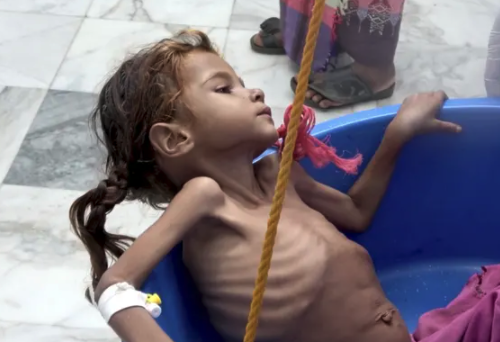
Below is a photo of a starving Yemeni child:

A bit under 100,000 children have starved in Yemen in the last 4 years due to a civil war, fueled in part by tacit American backing of the Saudi regime, which has been exacerbating and intervening in the conflict.
Why do we pay attention in one case and not the other?
This is all fine. I’m very scared of #1 and horrified by the existential risks and economic havoc that Putin’s choice to actually invade has wrought on the world. But I find the arguments of a sui generis or exceptional humanitarian situation in Ukraine implausible. People don’t want to admit that their feelings are shaped by cultural or racial affinity, or that it is pure self-interest in relation to nuclear war or maintenance of world order. So they make this the “next Holocaust.”
A lot of non-Europeans are skeptical of this posturing. At my other blog, I put up a post about why Bangladeshis have a soft spot for Russia, which might explain their reluctance to condemn the invasion of Ukraine. The same obviously applies to India to a great extent.
Another Browncast is up. You can listen onĀ Libsyn,Ā Apple,Ā Spotify, andĀ StitcherĀ (and a variety of other platforms). Probably the easiest way to keep up the podcast since we donāt have a regular schedule is toĀ subscribeĀ to one of the links above!
In this episode Amey, Conrad and I (Omar Ali) talk to Karol Karpinski about theĀ crisis, and particularly about the Eastern European perspective on it. This is sort of the counterpoint to our earlier recording with Major Amin (where he presented the hard Russian Nationalist viewpoint on the crisis). As usual, add your comments.. We hope to record another episode dedicated specifically to the question of sanctions; what is being done, how effective are they, and so on.
This research article will be submitted in the new journal Intersectional Gender and South Asian studies. Dedicated to VisionIAS - especially Smriti Shah
South Asia in general has been a diverse place demographically as well as geographically. Unlike the myth of ancient civilization conjured up by well-meaning anti-colonialists in the 19th and 20th centuries, South Asia neither had a coherent identity nor a dominant mass religion. It only became a political unit after the forceful amalgamation of different polities under the Colonial British Raj.Ā Since getting independence, Bangladesh has diverged a great deal not only from former West Pakistan but also from India. Not only in economical terms but also in terms of women empowerment. Unlike most democracies, Bangladesh has been governed by women for a significant duration of time since its independence.
What explains this divergence? Especially between North Western South Asia and North Central South Asia on one side and Eastern Central South Asia, Western Central South Asia and South Eastern South Asia on other ? Continue reading Posing as a South Asia expert: Brahminical patriarchy edition

The History podcast passes through the Magadh era. Mukunda Raghavan and Gaurav Lele talk to us about the sub-continent at the end of the Vedic age and take us all the way to the ruler whose symbols are part of the Modern Indian Republics mythology. Alexander and Vishnugupta Chankaya make an appearance and we speculate on the first recorded caesarean birth.
@raghman36 @gaurav_lele @maneesht
Links to the previous podcasts:Ā Episode 1;Ā Episode 2;Ā Episode 3Ā Episode 4;
Sources and References:
Books and Blogs
ļ· Upinder Singh ā Ancient India.
ļ· Upinder Singh ā Political violence in Ancient India.
ļ· Upinder Singh ā Culture of Contradictions.
ļ· Romila Thapar ā Ancient History
ļ· RS Sharma- Indiaās Ancient Past
ļ· Javaravaās Raves:Ā (Blogposts publications etc)
ļ· Greater Magadha ā Johannes Brockhorst
ļ· Live History India (Paid + unpaid)
ļ· Early Hinduism ā the epic stratification | by Gaurav Lele | Medium
ļ· Free Web Sites ā Buddhism ā LibGuides at Michigan State University Libraries (msu.edu)
ļ· Excerpts fromĀ : King, Governance, and Law in Ancient India: Kautilya & Arthasastra
PODCASTS:
ļ· The History of India Podcast ā Kit Patrick
ļ· Echoes of India Podcast ā Aniruddha Kanasetti


Another Browncast is up. You can listen onĀ Libsyn,Ā Apple,Ā Spotify, andĀ StitcherĀ (and a variety of other platforms). Probably the easiest way to keep up the podcast since we donāt have a regular schedule is toĀ subscribeĀ to one of the links above!
In this episode we talk to our regular guest, Major Amin. Major Amin is a military historian with long experience of working in Afghanistan and Russia. As a fan of military history he is also a huge fan of the Russian Army, the entity that executed such historic operations as Uranus and Bagration. This bias shows in the podcast today and many listeners will find things they vigorously disagree with, but his views probably reflect a lot of Putin’s (or Russian nationalist’s) own thinking in this affair. In any case, as always he is brutally frank and frequently provocative. Enjoy, and add your comments..

Auto generated Transcript: (unedited, full of errors, but those in a hurry may get the drift) Continue reading Browncast: Major Amin on the Ukraine Crisis