The Pew Survey on India is long. Here are my main impressions/surprises:
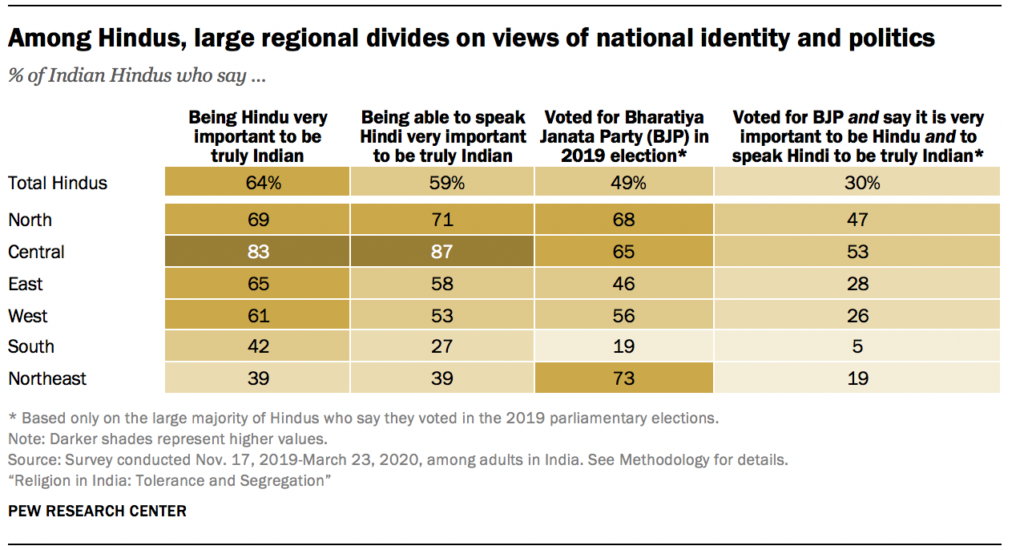
– The strong emphasis on Hindi in the Gangetic plain is pretty striking (“Central”)
– The stuff about mass conversions to Christianity in South India seems overdone. I understand people can/will lie on Census due to reservations, but this seems less plausible for a pollster. That being said, a disproportionate number of conversions are in the South
– South India is less religious, less nationalistic, etc. This seems to apply across religions (that is, Muslims in the South are less focused on religion just like Hindus in the South are)
– Opposition to “inter-caste” marriage is very strong. And, it is strong among non-Hindu groups too
Omar Ali · July 1, 2021 · Comments Off on A Shocking Decision
An interesting sidelight from Islamic history, by Ali MInai. Originally published on his blog “Barbarikon“, reposted here with Ali Minai’s permission.
The Caliph and the Imam
A Shocking Decision
Sometime in 816 CE – year 200 in the Hijri calendar of Islam – the seventh Abbasid Caliph al-Mamun made a very strange decision. If near-contemporary historical narratives are to be believed, he offered his throne – and thus power over lands from India to Morocco – to the leader of his fiercest opponents, the Shi’a. It was a breathtakingly audacious decision – so audacious that it failed almost immediately. The eighth infallible Imam of the Shi’a, ‘Ali bin Musa al-Rida, was not interested. Al-Mamun had to recalibrate, and he did so by nominating Ali al-Rida as his successor. The Imam demurred again, but this time the Caliph was adamant: The Imam must accept or he and his family would suffer. Imam Ali al-Rida’s family was no stranger to suffering. Almost all of his ancestors – direct descendants to the Prophet himself – had been persecuted, many martyred or imprisoned. His own father, the seventh Imam Musa al-Kadhim, had perished as a prisoner of al-Mamun’s father, the famous Harun al-Rashid of A Thousand and One Nights. Whatever the reasons, Ali al-Rida acquiesced, and on the 27th day of Ramadan in 201 AH (April 18, 817 CE), he was proclaimed “wali ‘ahd al-muslimin” – the designated successor to the 31-year old al-Mamun. Coins were soon minted asserting this new designation – the standard way of declaring authority – and the traditional black flags of the Abbasids were replaced by the green flags of the Shi’a Imams. A little more than a year later, the Imam was dead. Al-Mamun would rule for another fifteen years.
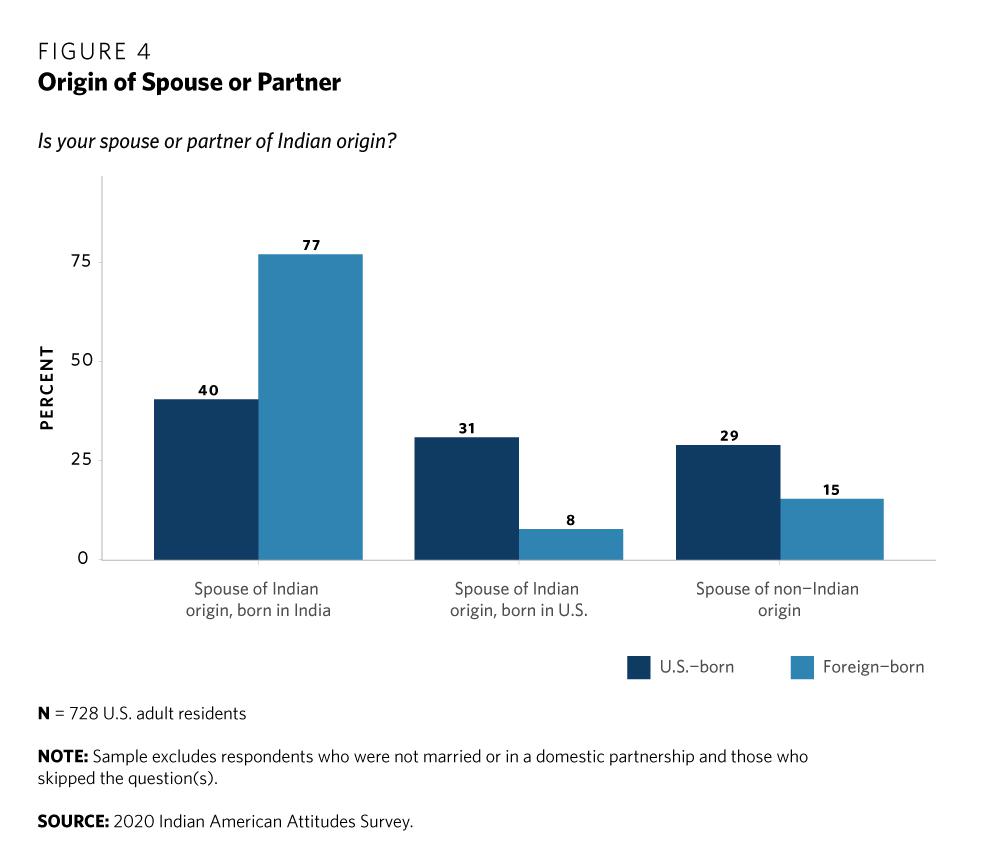
The sex-ratio skews male outmarriage for immigrants but balances out for native-born Indian Americans. The 30% rate is pretty low from what I expected. Also, surprised that 40% of spouses of Indian Americans were Indians born in India, but I wonder what percentage of these are 1.5 generation (born abroad, raised in the USA).
Looking at the Y chromosomes in the Indian subcontinent, it seems that haplogroups C (found in lots of Patels) and F are the only ones with “eastern” affinity that deeply rooted in the subcontinent. Thoughts? H is found in a lot of Adivasi, but seems more related to West Eurasian populations.
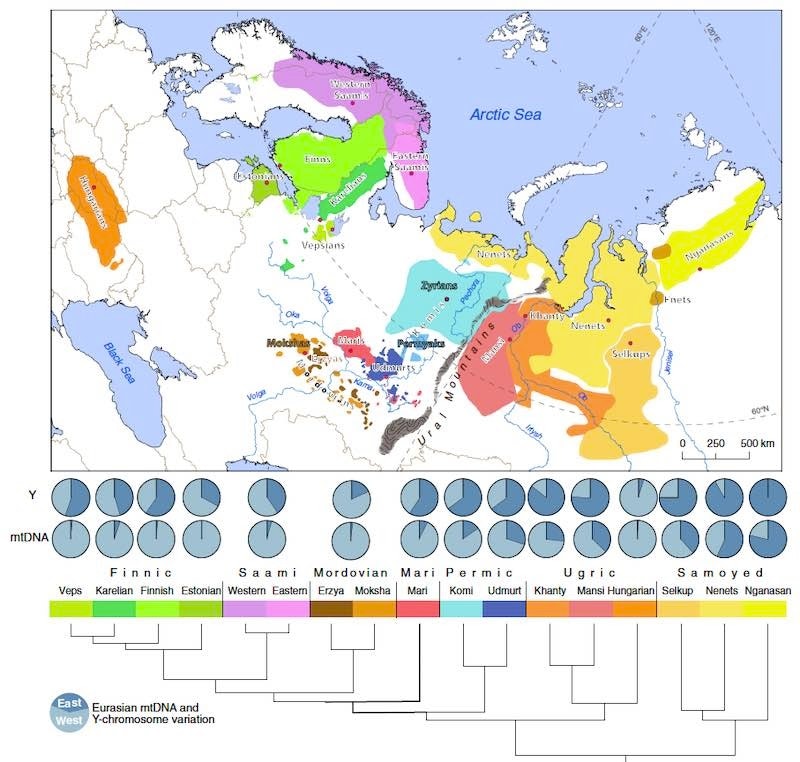
This is on my mind because the Uralic populations show the strong male-based spread of eastern Y chromosomes. Finns are 60% eastern on the Y and less than 1% on the mtDNA.
I am not an intuitive mathematician (nor an unintuitive one for that matter), but I have appreciated the importance of good guess value or nominal value developing software that uses computational geometry.
As a result, I have spent the better part of the previous 14 months wondering “why is the scientific community so slow in accepting potential aerosol dispersion of coronaviruses”. They say science progresses one funeral at a time, but since Jan 2020 we have had far too many funerals that should have sped up the progress. Ever since I read this piece – The “noble lie” on masks probably wasn’t a lie I had been spending limited time I had, browsing through old papers on the spread of respiratory illnesses to disappointing results. The wired piece helped deepen my understanding of how we may have got here. Where the 5-micron boundary for aerosols came from is an extremely fascinating story. Maybe we can expect some Netflix documentary or a long-form book on this issue in the near future.
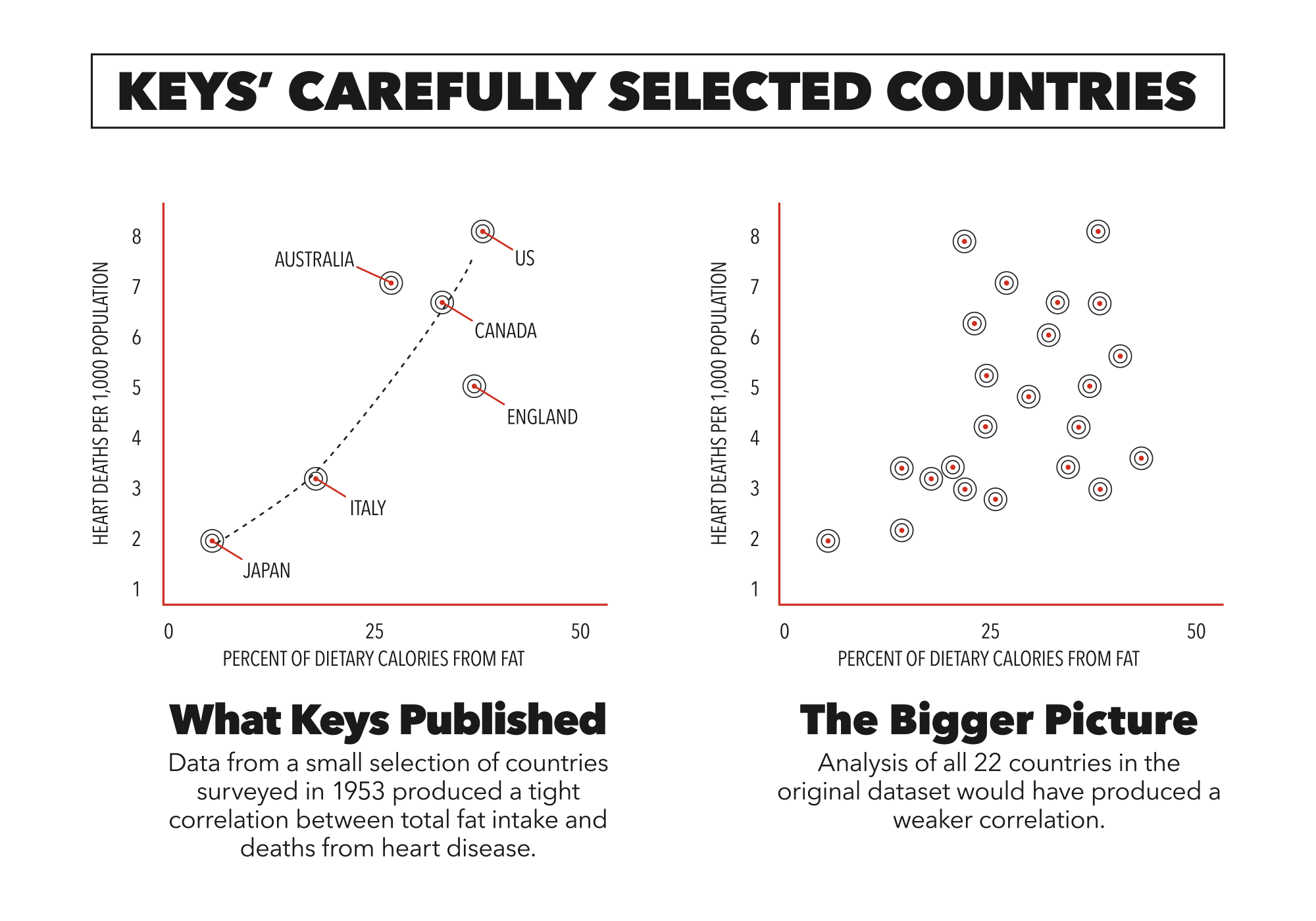
This entire episode appears exceedingly similar to the Dietary Fat is the villain dogma. Gary Taubes in his books – Good Calories, Bad calories and A Case against Sugar, has described this debate extremely well. As a video suggestion, I would recommend the youtube channel – What I have learned. In retrospect what seems appalling is how the scientific community basically accepted the faulty and weak fundamentals of the Fat theory – as initiated by Ancel Keys and propagated by hundreds after that. Ditto for the demonization of cholesterol and numerous other food items – including milk.
7 country study of Ancel Keys.
From these two examples at the very least, I would conclude the disproportionate importance of Priors and the outsized impact they have on the journey of academic and peer-reviewed science. Hopefully, the pandemic will correct some bugs in this mechanism, though this is by all accounts a slow and arduous process.
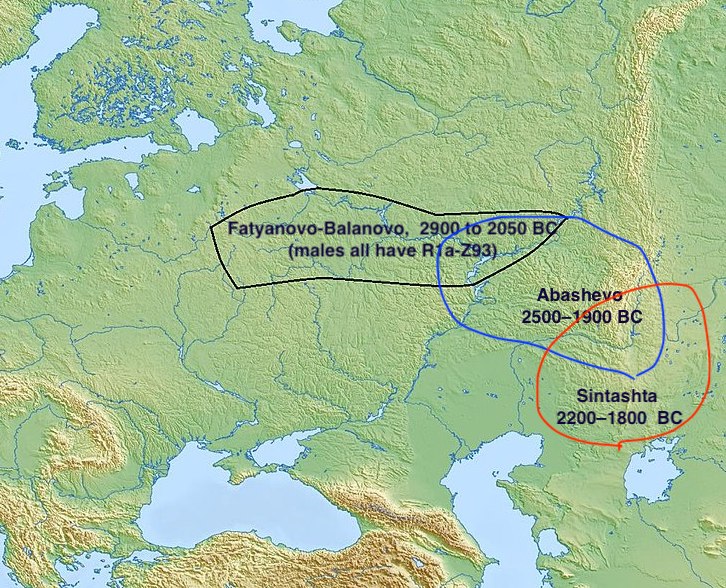
Incidentally, I was chatting with Kushal Mehra about his latest discussion with Shrikant Talageri and Kushal pointed out that he thinks the 1500 BCE dating of Rgveda is also one such Prior which has had an outsized impact on the journey of the Aryan Debate. Prima facie I found this point fair – thought I must say, the 1500BCE date has held up quite well over the centuries (especially since the recent genetic results). But has the date 1500 BCE anchored the research around it, making 1500 BCE appear the best fit for composition of Rgveda and the beginning of consolidation of the Arya into the Indian palimpsest ?
Post script:
I know this place has had a lot of AIT/OIT pieces including this one by me and lot of readers might be fed up by it (even I am to an extent). This isn’t aimed at AIT/OIT but is merely a passing reference to it.
I don’t know how Max Mueller and others came up with the date myself – but it would be an interesting story to research notwithstanding the current research. I would also highly recommend Razib’s podcast with Mallory which delves into the history of the larger indo european question.