
A calm and clear conversation with Sagar, senior staff writer at The Caravan. We speak about why Bihar is more than a broken state, how caste politics really works on the ground, and how election season gets distorted by the memification of leaders who should not be elevated in the first place. He explains the gap between lived reality and the stories told by mainstream media, the truth behind the jungle raj label, and why Bihar has been misread for so long. Tune in for a grounded look at a state that carries more history, complexity, and dignity than the usual headlines allow.
Tag: Bihar
Bihar Elections (Open Thread)
A Sweep in the Making as NDA Leads on 200+ Seats; RJD Ahead on Only 24
This thread is for your thoughts on the election results in Bihar. You can also use it as an Open Thread.
I will not be heavily moderating this thread but-as always- egregiously anti-Pakistan comments will be summarily deleted. Otherwise, go for it.
Open Thread: From Murder to Mercy — The Midwives of Bihar
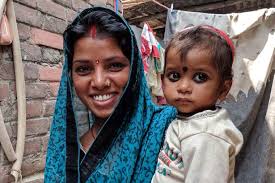
In the 1990s, rural midwives in Bihar were quietly killing baby girls under pressure from families. Some confessed to dozens of infanticides. Dowry, caste, poverty — all conspired to make daughters disposable.
Thirty years later, one of those girls has returned — adopted, loved, and thriving — to meet the women who chose to save rather than kill.
This story, told through BBC Eye’s The Midwife’s Confession, is brutal, human, and profoundly moving.
What does it say about India’s gender imbalance, social reform, and the moral grey zones of survival?
This thread is open for reflection. Please engage with care.
Triumph of the Gujarati
Election 2019 reflects a victory of the Gujarat model. But not the model you are thinking of. Not even that other, more sinister model. It is something very fundamental, rooted deeply in economic ecologies.
Human beings are shaped fundamentally by the networks they find themselves embedded in. In India, these networks overwhelmingly take the shape of caste groups marked by an occupational role, social status and marital rules.
For the North Indian peasant, with an economy driven by land and service to an imperial power, caste identity emphasizes kinship and honor. Biradari literally means brotherhood, and membership is conditioned on izzat.
For the Gujarati merchant, in a dry region of relatively unproductive land, caste identity emphasizes pooled resources, adherence to fiscal norms and shared interests. Even for the peasant Patels, caste is today fundamentally an economic union, channelized into farming and dairy cooperatives.
2019 might well be the year that the North Indian peasant realizes the futility of imbibing a kinship and honor based caste identity. On the one hand, these networks simply do not provide the resources to grow and thrive in a post-agrarian world. And even if optimally politicized, the sheer number of caste groups makes the gains from achieving political power limited and concentrated.
The North Indian does realize the need for new kinds of networks. And Modi’s opening up of North India to the world, via a liberal visa policy, river transport from the Bay of Bengal all the way upto Noida and big ticket global engagement platforms like the Mumbai-Ahmedabad Shinkansen would not have escaped the eye of the sharp Yadav and Jat, who realize that they will have to reach out to the world to grow.
After all, previous engagements with foreigners in the recent past have given Indians globally important automobile and IT industries.
India today is more open to the world than ever before. Everybody from Peru to Russia to Ghana to Indonesia can come in after submitting a simple electronic form. Less than 7 million people visited India in 2013, by 2016 that number more than doubled to 15 million. Modi’s Gujarati mind grasps the decisive role of networks in the growth of individual, and he might have well coaxed the North Indian to look beyond his caste tunnel.