Macaulay, English, and the Myth of Colonial Liberation

Rebuttal to When RSS-Modi Attack Macaulay and English, They Attack Upward Mobility of Dalits, Shudras, Adivasis

Follow-Up to Macaulay, Macaulayputras, and their discontents

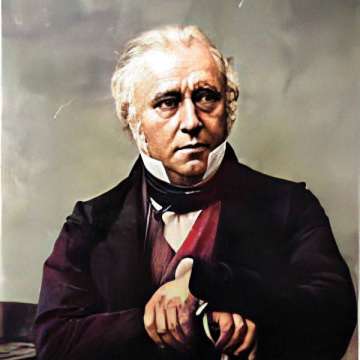
A new orthodoxy has taken hold. It claims that criticising Macaulay or colonial education is an attack on Dalit, Shudra, and Adivasi mobility. English, we are told, was not a colonial instrument but a liberatory gift. Macaulay is recast as an unintended ally of social justice. This view is wrong. More than that, it is historically careless and civilisationally corrosive.

The Core Error

The mistake is simple: confusing survival within a system with vindication of that system. No serious person denies that English became a tool of mobility in modern India. No serious person denies Ambedkar’s mastery of English or its role in courts and constitutional politics. But to leap from this fact to the claim that Macaulay was therefore justified is a category error. People adapt to power structures to survive them. That does not sanctify those structures. To argue otherwise is like saying famine roads liberated peasants because some learned masonry while starving. Adaptation is not endorsement.

Macaulay Was Explicit

There is no need to guess Macaulay’s intentions. He stated them plainly. He dismissed Indian knowledge as inferior. He wanted to create a small class: Continue reading Macaulay, English, and the Myth of Colonial Liberation
Where Do Brahmins Come From?

The Historical, Genetic, and Mythic Answer

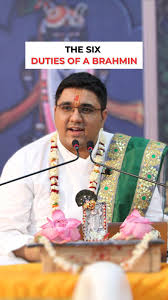
The idea that “all Brahmins come from Kannauj” is neat, flattering, and wrong. Kannauj is one important node in a much older, wider story. Brahmins do not descend from a single tribe or city. But they do share ancestry. That ancestry is older than Kannauj, older than caste, and visible in both texts and genes. To understand it, we must keep two truths in view at once: Brahmins have many regional origins, yet they descend—paternally—from a small circle of Vedic founders whose lineages spread across India.

This is the cleanest way to explain it without euphemism or ideology.

1. What the Kannauj Narrative Actually Refers To

When groups claim origin from Kānyakubja (Kannauj), they refer to the medieval centre that produced, housed, and exported Brahmins—especially after the Ghaznavid and Ghurid invasions pushed scribal and priestly families south and west. These migrants seeded communities in Maharashtra, Gujarat, the Konkan, Karnataka, Tamil Nadu, and Andhra. Their prestige shaped memory: “coming from Kannauj” became a shorthand for ritual pedigree. But Kannauj was only one centre among many. It cannot explain the full map of Brahmin origins.

2. The Real Landscape: Many Independent Lineages Continue reading Where Do Brahmins Come From?

BP may have just jumped the shark

In the never-ending saga of BP, we may have just hit one of the more outlandish claims:

“Like I said, I’m not defending his comments. I wouldn’t have made them.

Regardless of any provocation, calling someone ‘subhuman’ and ‘neanderthal’ is not on—especially when those words are used by a Brahmin. It’s casteist.”

I’m fully in favour of interrogating caste. But the idea that the twice-born must exercise an extra layer of self-censorship before using a generic insult is excessive. An insult is an insult; attaching caste-specific moral disclaimers to ordinary online behaviour doesn’t clarify anything. It just adds ritual guilt where none is needed.

I support the critique of caste bias, but my fundamental sympathies are with Dharmic civilisation; precisely because Dharma is pluralistic enough to allow a hundred flowers to bloom. That pluralism should extend to how we discuss caste, not collapse into moral policing tied to someone’s birth category.

Why we must talk about caste

Every few months (years?), Brown Pundits goes through its own small earthquake. A post lands wrong, a comment thread ignites, and the whole Commentariat erupts.

The latest rupture began with a mild jibe on caste. I pointed out, in passing, that caste shapes political instincts far more than many admit. The backlash was instant. A section of the readers declared a quiet boycott. The threads went cold. No one wanted to break ranks. The more one claims to have transcended caste, the clearer its caste blind-spots become. Silence itself becomes a shibboleth.

And when the silence hit, the blog froze. Continue reading Why we must talk about caste

Caste, Civilisation, and the Courage to Own It

Kabir suggested that I apologise but for what, exactly? Why should Saffroniate be considered offensive? Own it. I don’t see anything inherently wrong with the idea of Akhand Bharat; the concept of a broader Dharmic civilisation makes eminent sense to me.

Likewise, I don’t understand why questioning caste identities provokes such sensitivity. Again, own it because the more caste is repressed, the more likely it is to resurface.

At heart, I’m a reformist, not a revolutionary. I believe in improving and refining what exists, not erasing it. Cultural features should only be abolished when they are truly harmful or deleterious, not simply because they make us uncomfortable.

Ambedkar himself admired ramanuja , advaita . He said in his annhilation of caste ” no foreign ideology is necessary…” . So, no, he didnt see Hinduism as without hope. As for moral development in India is concerned, Coming of Islam was a big factor in all round under development altogether. There are many more people in Hinduism who stood up on issues of caste and they were allowed to criticise religion in its entirety. Ambedkar was made chairman of constitution by Gandhi and congress whom he criticised a lot. He visited and praised rss in its service as well. One cant say that of Islam. Islam kills its critics. so, no, I dont hold the same degree of hope for thee. As for borg, that is more apt for christianity and islam. It is not Hinduism that seeks converts.

Islam comes into it just as british are brought into it to explain harmful effects of colonialism to understand the relative under development. Europe succeeded because of 3 things, science, printing and freedom to criticize, India was the pre eminent place for new math and astronomy, it allowed freedom to criticize, atheists existed in India till the coming of Islam. Ramanuja , was the second greatest theologian in last 1500 yrs possibly and he stood against caste discrimination and so did many others in past 1000 years. Without Islam to worry about, people would have possibly be worried about these issues instead. Atheists existed in India for longer period than entire history of christianity thus far or the entire peak period of greeko roman civilization. To understand the influence of Islam, one only needs to wonder, what would have happened to western civilization had it been occupied, its universities destroyed, oxford and Cambridge being replaced with taj mahal and qutb minar. It was knowledge that changed the west and it would have been knowledge that would have changed India too, and knowledge production under Islam in India was bad.

Genetical clarifications on caste

A quick follow-up on my previous post, Genetical observations on caste.

1) I am aware that the term “caste” was introduced by Europeans. Which is why I used the terms jati and varna. That being said, a word is a word. I you can replace the word with a symbol.

2) I am not very interested in the food-fights that crop up between Allah-idolaters and Vishu-idolaters about whether caste is constitutive to Hinduism or excluded from Islam. Since I’m American caste almost never impinges on my thoughts, and it doesn’t really impact most Indian Americans (granted, most are of “higher caste” as commonly understood).

3) The population-genetic structure in South Asia is very unique. Most populations across a reasonable geographical scale are “random-mating”, with genetic structure due to geography. This is what you see in China and Europe. In a place like the Middle East there is a lot of cousin-marriage, so clearly it is not random-mating. But the deviations from random-mating are not ethnically freighted. In places like North India, you have exogamous groups which are still very genetically distinct. And this is due to deep structure.

4)

The Indian caste of mind

Because I’m am open-minded person many of my white liberal friends express to me their true views of Islam. Progressives do a lot of ‘solidarity’ with Muslims, but privately many think Islam is a regressive religion. Which, on the whole, is true.

But this is a general phenomenon. People will tell me things they might not tell others because I don’t judge (unless they are stupid). A friend who is a big player in Democratic and progressive politics has been trying to get a sense of why India has caste, and other regions do not. I can’t give him a good explanation.

Ultimately though, he concludes from the existence of caste that Hinduism is a messed up religion

Brown Pundits