Vantara, Caste, and the Fragile Commons

I was speaking with Dr. Lalchand about a number of things, from Anant Ambani’s wildlife project to the recent caste discourse on Brown Pundits. Both, strangely enough, converge around the theme of scrutiny; of who gets to build, who gets to critique, and who sets the rules of engagement.

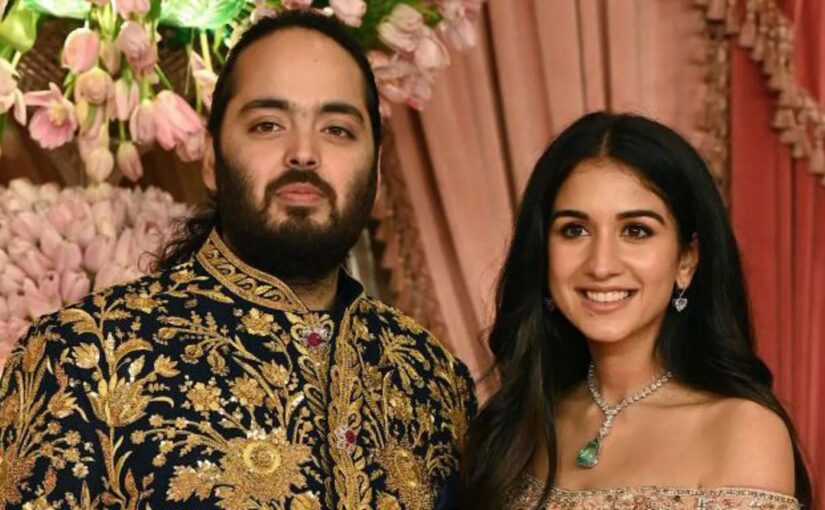
Let’s start with Vantara. Anant Ambani’s wildlife refuge is coming under sustained criticism. But I ask: why shouldn’t Bharat, arguably the only major civilisation that views animals as divinely inspired, have a world-class zoo or rescue center? If done with sensitivity and vision, this could be a profound expression of India’s Hindu civilisational ethos.

Vantara houses over 200 elephants, 50 bears, 160 tigers, 200 lions, 250 leopards, and 900 crocodiles; albeit imported from across the world into the baking flatlands beside an oil refinery. The scale is staggering. Yes, there are questions: about captive animal welfare, about the case of Pratima the elephant, about transparency. But we should also be able to think of Indian megafauna conservation at global scale especially in a nation where sacred animals are part of dharmic memory.

America had its Gilded Age. The robber barons left behind libraries, parks, and museums. Can’t India do the same? Or do we reflexively dismiss anything built by wealth as vanity? Can there not be a deeper Dharma behind patronage?

And that brings me yet again to caste, controversy, and the structure of Brown Pundits. Continue reading Vantara, Caste, and the Fragile Commons

Caste and the Structure of Discourse

I’ve come to realise that it’s often more productive to write full posts than to engage in fragmented comment threads. The richness of thought requires a form that can hold tension, contradiction, and nuance but comments, by design, resist that.

The Upper-Caste Template of South Asian Dharmic Discourse

Take, for example, sbarrkum, who shares personal reflections and images from his life on the common board. While one might raise questions about permissions or boundaries, it’s also important to respect dialectical differences in how people choose to engage. There’s no single valid mode of expression.

That brings me to a broader reflection: how the very structure of discourse in Dharmic South Asia has long been shaped by upper-caste templates; especially under Western influence. Over two centuries, upper castes have Brahmanised, Saffronised, Persianised, and then Westernised themselves, adopting and enforcing norms of discourse, authority, and ‘rationality.’

Why Intermarriage Doesn’t Erase Hierarchy Continue reading Caste and the Structure of Discourse

Homebound with Ishaan Khatter

Last night Dr. Lalchand & I watched Homebound, India’s submission to the Oscars, at Apple Cinemas in Cambridge, Mass. This sad film follows a Dalit (Chandan Kumar) and a Muslim (Mohammed Shoaib Ali) struggling against the odds during the pandemic, their solidarity fictionalized as a fragile bridge across India’s deepest divides.

On the surface, it is a familiar story: the disenfranchised facing systemic barriers. But what struck me was how privilege itself performed disenfranchisement. Ishaan Khatter, brother to Shahid Kapoor, plays the marginalized Muslim. Janhvi Kapoor, descended from Bollywood royalty, embodies a Dalit woman. Vishal Jethwa, a bright-eyed Gujarati, portrays the Bhojpuri Dalit lead. This is not unique to India; Hollywood, too, casts elites as workers. Yet it raises the question: when poverty is performed rather than lived, is it “Dalit-washing”?


Poverty, Emotion, and Representation

Watching the film, I reflected on poverty’s emotional landscape. For elites, emotions can be expansive, indulgent, aestheticized into art. For the working poor, emotions are often constrained by survival — narrowed into necessity. Homebound tried to humanize its characters, but I wondered whether it romanticized what in practice is a relentless narrowing of possibility.

The West rewards this narrative. Parasite in Korea, Iranian cinema, Slumdog Millionaire — poverty & Global South tribulations as spectacle becomes “poverty porn.” The Guardian gave Homebound four stars. Great art often tilts melancholic, yes, but here the melancholia is curated for Western consumption.


Identity, Vectors, and Islamicate Selfhood

More unexpectedly, the film stirred something personal. I realized how much I have vacated my own Islamic identity. It was not traumatic. As a Bahá’í with Persian cultural roots, I found overlap — even comfort — in Hindu traditions. Dalits, in their rapid Hinduization, represent one vector of assimilation; Muslims and scheduled-caste Muslims, often in tension, another. Homebound imagines solidarity, but in life these vectors pull unequally. Continue reading Homebound with Ishaan Khatter

India’s sugar was bitter, until her first female scientist made it sweet

The Untold Story of E.K. Janaki Ammal

via X

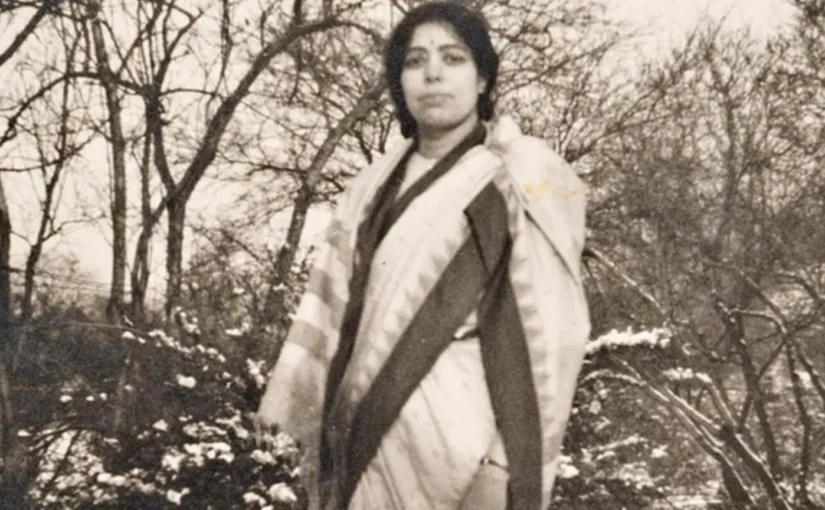
She was born in 1897 in Tellicherry, Kerala, the daughter of a high court sub-judge and one of nineteen children in a large, liberal household called Edam. Her family belonged to the Thiyya community, considered “socially backward” under the Hindu caste system. But within Edam, caste meant little. There was music, a sprawling library, a cultivated garden, and a quiet expectation of excellence.

Her sisters married. She did not. Instead, Janaki Ammal chose plants.

She trained first at Queen Mary’s and Presidency Colleges in Madras, then left colonial India in 1924 on a Barbour Scholarship to the University of Michigan, where she would become the first Indian woman to earn a doctorate in botanical science. She lived in an all-women’s dorm, smuggled a squirrel in her sari for company, and worked under renowned botanist Harley Harris Bartlett.

She returned to India and joined the Sugarcane Breeding Station in Coimbatore, where she changed the course of Indian agriculture. The country’s native sugarcane was hardy but lacked sweetness; imported varieties were sweeter but weak. Janaki crossbred both into something stronger, higher-yielding, and perfectly suited for Indian soil.

The sugar in Indian chai owes its taste to her. Continue reading India’s sugar was bitter, until her first female scientist made it sweet

Open Thread: From Murder to Mercy — The Midwives of Bihar

In the 1990s, rural midwives in Bihar were quietly killing baby girls under pressure from families. Some confessed to dozens of infanticides. Dowry, caste, poverty — all conspired to make daughters disposable.

Thirty years later, one of those girls has returned — adopted, loved, and thriving — to meet the women who chose to save rather than kill.

This story, told through BBC Eye’s The Midwife’s Confession, is brutal, human, and profoundly moving.

What does it say about India’s gender imbalance, social reform, and the moral grey zones of survival?

This thread is open for reflection. Please engage with care.

🎥 Watch on YouTube

📖 Read the full story

“Fully Booked”: How Colorism Shapes Who Gets In

This article, as the raw draft, inspired my light-hearted newsletter piece titled 'Mastering the Art of Complaining: How to Secure What You Deserve in an Unequal World.'

Carolina Almeida, a philosopher, internationalist, and political scientist, shared that as children, they are raised with the understanding that the farther they are away from Blackness, the greater the person they are going to be.

She says, “So, identifying as a Black woman or as a Black man in Brazil is a great step, actually a great social and, also, emotional step to be achieved, because we are constantly being persuaded by everything around us that being Black is bad, it’s ugly, it’s not interesting.”

Geledés: How Afro-Brazilians are combatting racism.

Earlier tonight, Dr. V and I decided to go out spontaneously for dinner in Boston. At the first restaurant, the hostess, polite but prim, told us the wait would be about an hour. Fair enough, it was busy. At the second restaurant, something felt off. The hostess, looking somewhat wary, directed us to the bar, insisting there were no available tables—even though several were clearly open. We weren’t the customers they wanted. Rather than argue, we left.

At the third restaurant, we were seated immediately—no questions, no hesitation—by a cheerful, welcoming hostess. It was only later that I realized the difference. The hostesses at the first two restaurants had both been white, while the one who seated us without issue was Asian American. The contrast was undeniable, and the pattern became clear: access was subtly controlled based on how we were perceived. It reflected how colorism works—quietly but unmistakably shaping who is welcomed and who is turned away.

I’ve written before about experiencing subtle discrimination in Boston. And while I’m usually one to complain when things are off, I didn’t make a fuss this time (I understand how these situations can escalate, and confronting the second hostess wouldn’t have ended well, she would have brooked no dissent over her dictactes). Plus, honestly, I can’t get too worked up about food in the U.S. These days, something just feels wrong about the ingredients, and the value-for-money equation is off, especially in New England’s food scene, which I’ve covered before.

This whole experience feels like a meditation on the evolving concept of whiteness—a category that has become increasingly easy to join. But while whiteness might be flexible, there remains a rigid, impenetrable spectrum of colorism within it, not unlike traditional caste systems.

Earlier, while I was trying to buy sunglasses, I noticed two Persian girls nearby, also browsing and chatting in Farsi. Even though they had likely only been in the U.S. for a few years, I could see they were already fitting into the “ethnic white” category. Despite sharing the same cultural heritage (I’m fluent in Farsi), it felt like we were on different sides of the ethno-cultural divide.

As the U.S. shifts from a binary racial nationstate to a more complex, multi-national Imperium—similar to South Asia or Latin America—these subtler forms of exclusion become more visible, yet harder to challenge.

Continue reading “Fully Booked”: How Colorism Shapes Who Gets In

Is Brahmin a controversial word

I was discussing the concept of Brahma but I wonder if it is controversial?

My fundamental belief rests on the equality and equity of all individuals, yet I recognize the capacity of British culture to reform and modernize outdated institutions while preserving their traditional essence.

I fail to understand why Hindus cannot adopt a similar approach, acknowledging the flaws of the caste system while reforming it to retain its beneficial aspects, such as buffering against the isolating effects of globalization.

These are just scattered thoughts, and I’m keenly aware of my position as an outsider in the immensely exquisite world of India, Bharat, and Hinduism. I am always willing to listen and learn.

Reinforcing Caste Boundaries in Everyday Social Interactions

I stumbled upon a thought-provoking but rather “vitriolic” thesis during my search. While I haven’t fully read it, it discusses the role of upper-class Bania women in reinforcing caste boundaries. The thesis suggests that while these women are subject to patriarchy, they actively contribute to upholding the caste system, benefiting upper castes. Through interviews with seven Bania women, the study explores their influence on everyday social interactions, including food practices, dating, marital relations, and interactions with lower castes.

The thesis requires significant trimming due to its excessively exaggerated and offensive language, but one statistic stands out prominently:

Statistically, 46% of people in Corporate boards in India are Banias, followed by 44.6% of Brahmins, while the lower castes collectively make up only 3.8% (Patel, 2009).

These statistics predate the Modi era, so it would be intriguing to examine the extent of change over the past decade. Additionally, as an observational note, I’ve noticed that Indians often socialize within cliques based on caste, consisting of relatives and old friends, whereas Pakistanis tend to be more class-based, with a notable tendency towards incessant social climbing. While these observations are subjective and the usefulness of such generalizations in the era of extensive globalization is debatable, it’s worth considering whether the underlying structures of society endure despite such shifts?

Corporate Boards in India. Blocked by Caste?

An examination of the caste diversity of Indian corporate boards of a thousand top Indian companies – accounting for four-fifths of market capitalization of all companies listed in the major stock indices in India – measured by the Blau-index shows that their median score for 2010 is zero, indicating that there is no diversity at all. Indian corporate boards continue to remain “old boys clubs” based on caste affiliation rather than on other considerations (like merit or experience).

The creation of Homo General Category

This Politic piece on caste in America is pretty balanced. But one thing that this “Indian Americans are so casteist” discourse misses is that 85% of Indian American Hindus are “General Category”, with a few percent being Dalits or Scheduled Tribes (the remainder are OBC). There aren’t many low caste people to discriminate against, but secondarily, America is a caste shredder.

The latest surveys suggest that for Indian Americans born in the USA, 30% of their spouses are non-Indian, 30% of their spouses are US-born Indians, and 40% of their spouses are Indian-born Indians. I’m willing to bet that the vast majority of the the 30% who marry other US-born Indians are marrying outside of their jati-varna. I suspect that perhaps a majority of the remaining 40% who have Indian-born Indian spouses are jati-varna endogamous because of arranged marriages, but I know a substantial number of US-born Indian Americans, men and women, who met and married Indian-born Indian immigrants, usually meeting them through work or social contexts. I am pretty sure that the majority of US-born Indians are marrying outside of their jati, often outside of their region.

You can test this proposition at the high socioeconomic status groups by looking at the NY Times Wedding Announcements.

Look under some very distinctive names, and look who they are marrying.

– Mukerhjee
– Iyer
– Sen
– Mehta
– Patel
– Arora
– Reddy
– Singh
– Deshmukh
– Kulkarni

Brown Pundits