I’d said to myself: Why don’t I do my own Bhartiya-karan, that is, Indianise myself, before someone else thinks of doing it? The first problem was my name. Perhaps you don’t know: my name is Iqbal Chand. It occurred to me that “Iqbal” is an Arabic word. What kind of nationalism is it to live in India and have an Arabic name? And so, I changed my name to Kangaal Chand. As it happens, this name is far better suited to my financial condition considering that “kangaal” means “poor”. And why just me, it suits the rest of my country too.
The second problem that arose was of the dress. There was no trace of Indianness in the pants, coat and tie that I wore. In fact, all three were a reflection of my slave mentality. I was amazed that I had worn them all this while. I decided to wear pajamas instead of pants. But then, a certain Persian person told me that the pajama had come to India from Iran. And so, I began to wear dhoti and kurta. But not a kameez, as the word “kameez”, too, is of Arabic origin and it reeks of the stench and stink of an Arab!
The third problem was of hair! After all, was it not treachery against the country, a blatant form of antinationalism, to keep one’s hair fashioned in the English style? I instructed the barber to keep only one lock of long hair at the back of my head and shave off the rest. He did exactly that. I had seen images from ancient India showing men with long and lush moustaches. Following their example, I began to grow my moustache. When my friends saw the large moustache on my somewhat small face, they assumed that I had put on a fake one, possibly because I was acting in some play. Forget my friends, when I saw myself in this new look, I began to feel that I had been created not by God, but Shankar, the cartoonist. But I did not lose heart. One has to do all manner of things to be Indian.
An excerpt from a story by Kanhaiyalal Kapoor in ‘Whose Urdu Is It Anyway?: Stories by Non-Muslim Urdu Writers’, edited and translated by Rakhshanda Jalil.
As the posting on BP (and the comments) are pretty fast and furious; my capacity to edit and moderate is getting pretty stretched..
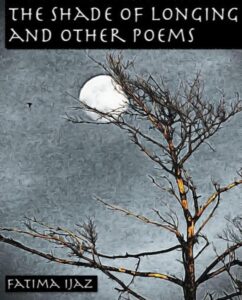
Fatima Ijaz, born in Karachi, studied linguistics in the United States and currently serves as the editor of The Pandemonium Journal. Her debut poetry collection, The Shade of Longing, offers a complex interplay of memory, language, and abstraction, often resisting closure and certainty.
In the preface, she articulates a powerful and poignant idea that serves as a compass for the book’s aesthetic and emotional journey:
“The contemplation of the past involves an evocative presence of a surreal present…In doing so, you are in a heightened state of present-past – a double consciousness that is more than the sum equal of its parts”
This is, in many ways, a deeply Hegelian thought. One is reminded of the famous assertion in The Phenomenology of Spirit that:
“That the True is actual only as system, or that Substance is essentially Subject, is expressed in the representation of the Absolute as Spirit-the most sublime Notion and the one which belongs to the modern age and its religion. “
In essence: the memories, she is talking about, are sort of in itself objects (fixed) and also subjects (variable—dependent on the person recollecting).
Reading this book feels like discovering a cache of love letters written in a fever of emotion, letters meant for someone dearly beloved. But just before mailing them, the writer realizes how insufficient they are. So she burns them all, and what emerges from the ashes are these poems: not just expressions of feeling, but indictments of language itself. A complaint, perhaps, that language lacks the fidelity to truly capture the depths of human experience.
By acknowledging the futility of language, she leans into abstraction. She chooses uncertainty over certainty and, the infinite over the finite, and invites the reader to participate in meaning-making. The gaps in her verse are not absences—they are openings. The reader is asked to bring their own memories, their own hauntings, to fill in the silences.
In the poem “Echo of a word, x memory,” the structure is minimal yet haunting. A single word—“(stray)”—is repeated eight times on one line, and this continues for thirteen lines. The effect is disorienting, hypnotic. Memory here is not narrative, it is reverberation, a stutter echoing in an unreachable corridor of time.
Celestial imagery recurs throughout the collection (stars, suns, moons) often to widen the emotional and metaphysical frame. She reaches for the planetary to express the personal, as in lines like:
“The face of the sun is smeared with the curse”
“I saw the shadow moon hunt down oblivion”
“Language emerges out of this exchange between fiery sun and eternal sky”
“The moon becomes a cosmic mirror on such…”
Another recurring anthropomorphic presence is that of bones and the black crow, symbols that oscillate between the sacred and the ominous.
“there wasn’t an ounce of regret in my bones / I knew I had practiced the art – and thus – the sacrifice.”
“Then there is the stubborn case of the black crow…”
In the poem “Tear-Drop,” regret and remorse seep through the lines:
“It does not matter, because I can touch / The midnight with my azure-blues / Perhaps the blame is on the harpsichord / Perhaps it’s on one of us / The black consciousness has entered / and there is no un-doing it.”
Her language—or rather, her suspicion of language—remains central. The “shade” she refers to is not just the shadow of longing but also a hue: the specific color of yearning that permeates the book. It’s a longing that refuses to be pinned down, named, or resolved.
In the penultimate poem, the titular piece, she writes,
“Do you think we become in the end / characters of our own stories? Do we finally / own them enough to discard them, have the infinite power / to reform our mind of its strange habitat?”
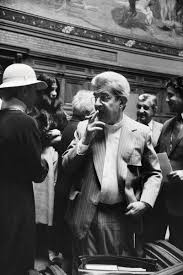
This is a moment of quiet brilliance. One could read this as a critique of ideology—first acknowledging the narrative scaffolding of the self (“I”) and then, in almost Lacanian fashion, gesturing toward the Real (one of Lacan’s three registers). To “discard” the story is to momentarily crumble the illusion of coherence.
Jacques Lacan (French psychoanalyst and psychiatrist)
Shade of Longing is not a book that yields itself easily. It is not meant to be understood in one sitting. It is a space to dwell in, misread, reread, and reinhabit. Like ghosts or witches watching from the periphery, these poems linger long after the final page is turned. Their magic lies not in answers, but in the haunting questions they leave behind.
Everyone, please take note of the following rules:
Authors may not void or edit the work\comments of other authors.
Maintain courtesy and respect in all interactions.
Nivedita has been made Editor. I believe it’s important to have a strong female editorial voice on the weblog. She has full discretion to void posts or comments she finds inappropriate; she has no need to appeal to me first. If you feel a decision was unfair, you’re welcome to raise it with me privately.
If anyone violates these rules, please contact me immediately. I’ll address the issue on a three-strike basis.
Lastly, a gentle reminder: please don’t post or comment in anger. It rarely leads anywhere constructive. I am present, I am paying attention, and I do my best to be fair. It’s late and I have an early start, but I’m a little concerned about the tone of the threads tonight; let’s keep this space thoughtful, not reactive.
I wrote this poem on May 14, 2025, after watching a deeply moving video of Robin Williams (1951–2014) hugging Koko (1971–2018). Somehow, the moment stirred something in me, and I was compelled to write.
Koko was a Western Lowland Gorilla, a critically endangered subspecies. Every year, thousands of these gentle beings are killed due to habitat loss and the illegal bushmeat trade in parts of Africa.
Robin met Koko in 2001, shortly after she had lost her closest gorilla friend, Michael. She hadn’t smiled since his passing. But on this day, with Robin, she laughed freely and fully. And so did he.
I’ve known Afshan Shafi for a while now as a mentor and a senior poet in the Pakistani Anglophone poetry scene (which is growing rapidly). Especially through the Dead Poets Society of Pakistan, a collective I founded, I’ve had the chance to learn from her presence and support. I still can’t believe we started just 2–3 months ago, and already we’ve grown to over 50 members, with nearly 30 actively contributing to our first anthology volume.
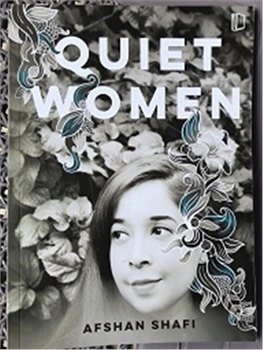
Anyway, I’ve tried here to annotate a poem from Afshan’s book Quiet Women, titled: Ganesh, in a confectionery mill.
Stanza I: Last November’s basilica is crumbling,
The taffy foundry found to the char, the last scruff of meal
rotten.
still aerate masses dispense themselves
Onto the curd, and enter the extruder to be filled with
Shiny viscera,
Palm oil kidneys blossoming under the churn,
The winds percolating soft while
The clouds widen their tangerine irises,
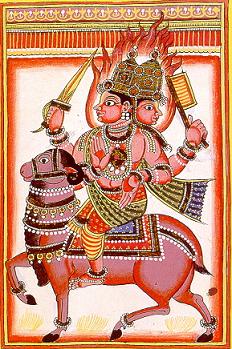
This modernist-lyrical poem positions the Hindu deity Ganesh, traditionally a remover of obstacles and God of beginnings, in an absurdly industrial, even grotesque setting: a confectionary mill. It layers Hindu symbolism with post-industrial imagery, a surrealist aesthetic, and biting socioeconomic subtext.
The opening line juxtaposes Ganesh, a spiritual figure, with confectionary mill—a symbol of capitalist excess, mechanized desire, and sweetness-turned-sinister. The “basilica” references crumbling sacred spaces, showing how religion itself is industrialized or decaying in a consumerist age. The “taffy foundry” being burnt and the meal rotting suggest both spiritual and material entropy.
Further, it presents visceral industrial birth. A grotesque fusion of biology and production. “Palm oil kidneys” evoke cheap globalized ingredients, outsourced and mechanized labor. The clouds’ “tangerine irises” lend a psychedelic, possibly apocalyptic aura, where even nature gazes on in artificial hues.
Stanza II:
Ganesh wakes with a strawberry smile
his Styrofoam lips expunge bliss from leather jowls,
lashes and white hoarfrost of the eye
refract petroleum flora and
The textile of his palm, offers a hilltop of
Pink candy and glucose intaglio.
no satyr could have envisaged him thus, with
this clutch of winching blades and death ribbons
in rococo hands; he loosely wills to the green lotus.
a noose, hammer, axe, tusk, and garland,
a comely exhibition of rage.
Ganesh is now awakened, but with synthetic, sterile parts: “Styrofoam lips,” “leather jowls,” “petroleum flora.” This re-engineering of divinity underscores how capitalism and mass production cannibalize the divine, reconfiguring joy as pre-packaged euphoria. “Glucose intaglio” suggests even meaning is etched in sugar, brittle and saccharine.
We see an inversion of traditional religious iconography; Ganesh’s usual items (lotus, tusk) are now joined by industrial tools and “death ribbons.” Rococo—an ornate, decadent European aesthetic—is ironically placed in the deity’s hands, symbolizing colonial residues and grotesque excess. His rage becomes a beautiful but hollow spectacle.
Stanza III:
he, who galumphed through the century’s rain-carousel,
like a little girl
in his emerald playground, iliac metal suffused
with humectants, sacred sugars cohering his cross bones
and the toppling caul of an
ancestral-star, across his neck.
his delicate calf, frozen, in supplication to the woodbulb
of his throne,
for a being so strong
his gaze is weary, adolescent,
has no gunpowder to sustain the promise
of violence and eldritch-rosy,
He does not even possess the tranquilized regret
of the aesthete or the shaman
though one can see him across the
astral esplanades, chalking out his charkas,
hope scotching across the sediment, not even
alert to the cosmic sanguinity of his pleasure,
roaring beyond
the elongated shadows.
Ganesh is reimagined as childlike and vulnerable, “galumphing” playfully—an echo of Carrollian absurdity—but in a world of “iliac metal” and “sacred sugars.” This verse mourns the death of sacred innocence in a world overrun by commodified spirituality and mechanical ritual. The “ancestral-star” falling suggests cosmic disinheritance.
There’s a paralysis of divine strength. Ganesh kneels before an industrial “woodbulb,” a bastardization of enlightenment or throne. His adolescent gaze captures a mood of spiritual fatigue and confusion, as if divine power itself is exhausted in late capitalism.
Even violence is rendered inert, “no gunpowder” to fuel change. Neither divine fury nor aesthetic contemplation is viable anymore. The aesthete and shaman, both archetypes of deep feeling and mystical insight, are absent, replaced by a numb spectator god.
The poem ends on a note of withdrawal and loss of awareness. Ganesh remains, perhaps in form, but is disconnected from his own pleasure, joy, or purpose. His “chalked chakras” become meaningless diagrams. “Hope” is burning uselessly, never catching flame.
Since 2020, $42 trillion in new wealth was created, with 63% ($26 trillion) captured by the top 1%.
From 1995–2021, the top 1% gained 38% of global wealth growth, while the bottom 50% got only 2%.
In Pakistan, the richest 10% earning 16x the poorest, and landed aristocracy (nearly 52% of National Assembly members) exempting itself from tax.
Land Ownership in Pakistan: 5% of large landowners hold 64% of farmland; 65% of small farmers own just 15% of land.
Public neglect of social welfare: education spending slashed, health stagnant, and the HDI plunging.
CODA: The holy has decayed, not because gods have abandoned humans, but because humans have converted gods into icons of consumption. This poem is not just an abstract surrealist poem. It is a lament and a critique, a religious and political satire, invoking a plastic deity in a sugarcoated hell. It mourns the erosion of the divine, critiques structural injustice, and questions whether even the gods plasticized and commodified, can feel pleasure or rage anymore.
Today, I was travelling to Tarkha, a small village near Taru Jabba, all situated in KP (erstwhile NWFP), from Peshawar, which is considered the oldest living city of South Asia.
There, I saw a flying peacock. It was a once-in-a-lifetime experience. I had never seen one fly before, except in caged settings. A dog kept pestering her, making her dart from one place to another. And then, there was a donkey too, without reins! Perhaps the spectre of capitalism was absent. In that rural pocket, so close to the bustling and chaotic city of Peshawar, constantly a victim of radical urbanisation (over 45%), there was still something untamed.
Here’s the poem, inspired by the errand, along with the picture I took. Pardon my pathetic aesthetic, I’m learning this craft for my IG.
Reading Kabir’s thoughtful post on the “soft Hindutva” bias at Brown Pundits, I found myself both agreeing with parts of his argument and diverging from its framing. My own journey with BP goes back to its inception. The blog was born in Twixmas December 2010; 10 days after I had met Dr. Lalchand, whose presence has profoundly shaped my civilizational views.
I say this not as a biographical aside but because BP, at its best, is where the personal and civilizational collide. We bring who we are; our marriages, our migrations, our contradictions, into this messy, brilliant conversation.
At the time, like many Pakistanis, I held a deep-seated assumption: that Hindus were fundamentally “other.” It wasn’t overt hatred; just a civilizational distance, internalized from birth. But Dr. V & Brown Pundits challenged that.
A Forum With Bias? Yes. But Which One?
The heart of BP is not neutrality; it’s the willingness to host contradiction. That is its genius, and it must be protected.