Book Review sent in by Maj Agha Amin. Unfortunately the pictures in the original are low quality and I was unable to fix that problem. Still, you will get the gist of it.
This is a very interesting book by a Montana University (adjunct) Professor (Owen Sirrs).
The author explains that the genesis of this book was his:– (page-9)
“Two- month stay at the Counterinsurgency Training Center in Kabul, Afghanistan during the summer of 2009. It was there that I learned a great deal more about Afghanistan–Pakistan relations in general and ISI operations in Afghanistan in particular.”
The book examines the following issues in the writers own words:–
How has ISI evolved as an institution exercising intelligence and security responsibilities at home and abroad? What were the driving forces behind that evolutionary process?
How does ISI fit into the larger Pakistani Intelligence Community?
What does the decades- old relationship between ISI and the CIA tell us about the larger US–Pakistan security relationship?
What is ISI’s record in providing accurate and timely early warning intelligence to decision- makers?
To what extent has ISI disrupted and abused Pakistan’s democratic processes?
Is ISI a rogue agency or a state within a state?
Can ISI be reined in and the PIC (Pakistani Intelligence community) reformed?
How has ISI employed UW (Unconventional warfare) in support of the state’s national security objectives? To what extent has UW been a successful strategy for Pakistan?
Readers of this blog are familiar with Pakistani military historian Major Agha Humayun Amin. Major Amin has recorded a number of podcasts on the Anchor app and they are worth a listen if you are interested in military history, Indian history and related topics.
This podcast in particular is a good introduction to Major Amin’s own background (he has worked with the Northern Alliance in Afghanistan, has been a Taliban prisoner, and then a contractor in post-American Afghanistan, with extensive experience in the region). He also mentions his mentor Edward Luttwak.
In this podcast he makes many interesting observations and has his usual blunt and sometimes harsh opinions. Some of his topics here include:
His view is that there is no such thing as a “non-state actor”. All actors in Afghanistan are proxies of some state or the other. In the case of the Taliban, that means Pakistan.
How the Americans were fooled into bombing (via drones) and paying for bombing (Pakistani armed forces) the FATA region, while Taliban were actually located in Balochistan.
How Kiyani prolonged the FATA operations to milk American coalition support funds.
FATA Pakhtoons as “Red Indians” , subject to endless operations, not just today but many years ago, regarded as “our firing range”. Regarded as such not just by non-Pakhtoons, but also by many “settled area” Pakhtoons.
Some of the nuts and bolts of this endless war.
Pakistan’s theory of nuclear brinkmanship, developed initially with American acquiescence (because they did not want India to attack Pakistan and disrupt their Afghanistan operation).
Siachen, Kargil.
The renewed Kashmir infiltration in the last few years.
Pakistan army’s mindset and some of the more interesting nonsense that is promoted in its cause (such as Javed Hasan’s classic “India, a study in profile”).
The security setups of both sides leak like a sieve. Nothing is really secret, yet most things are unknown to their own politicians and common people.
No Indo-Pak war is likely, but proxy war will accelerate.
Trump will abandon Afghanistan for electoral reasons, civil war will accelerate.
You don’t have to agree with Major Amin’s views. But his detailed knowledge of this murky world is worth a listen. At a minimum it should make you wary of all state propaganda narratives.
There were plenty of indications that some kind of incident was going to occur. Some Muslim Leaders/Politicians had warned the govt of possible terror attack, some even naming possible suspects*. The incidents or information were either ignored or worse perpetrators were released.
*This is quite different from main stream Tamil politicians who kept shielding at minimum or encouraging the LTTE who were referred to as our “boys”. eg SJV Chelvanayagam, Amirthalingam etc who finally were assassinated by the “boys”.
Possible reasons for Inaction by the Govt
a) In fighting within the govt and finger pointing at the previous Rajapakse regime.
b) Current govt and President were elected on a minority vote and reluctance to clamp down on a segment of their constituency.
A simple timeline
a) December 2018. Buddhist Statues vandalized in Mawanella
d) March 2019: Mohamed Razak Taslim, Minister Kabir Hasims’s Coordinating Secretary is shot by muslim extremists. Taslim had been assisting the CID in investigating December 2018 vandalizing of Buddhist statutes.
e) April 2019: Easter Sunday Massacre targeting Christians and Westerners: 300+ killed.
**Wanathavilluwa is kind of middle of nowhere, big (for SL) rolling coconut Farms/estates and scrub jungle, but still a center. 10 km from Wilpattu National Park (Jungle). 140 km from the Colombo center. From nearby Kalpitiya or Karaithivu by boat approx 100 km to Dhanuskodi or Toothukudi
Ancillary Information
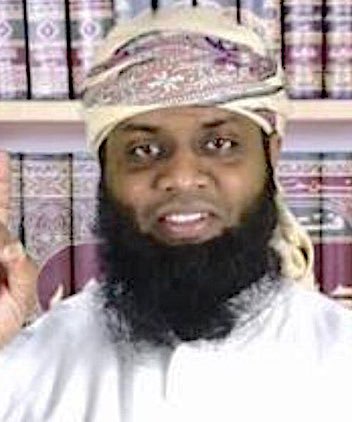
a) National Thowheed Jamath (NTJ) and leader Mohamed Zahran (Abu Ubaida) also called Moulvi Zahran Hashim were responsible for the massacre.
Mohamed Zahran (Abu Ubaida) also called Moulvi Zahran Hashim
b) Note there is Sri Lanka Towheeth Jamaath (SLTJ)., Ceylon Towheeth Jamaath (CTJ) and a Tamil Nadu Thowheed Jamaath.
c) Apparently Moulvi Zahran Hashim and NTJ have/had YouTube videos in Tamil calling for killing of Kafirs (non Muslims) and jihad. The local villagers say those videos were common and had watched at least some of them.
What can be done
a) Stop teaching of Arabic after school.
All the Muslim children in this village do two hours of Arabic lessons after school. Prevention is better than cure
b) Moulavi/Lebbes/Imams visiting Pakistan or Saudi Arabia should be kept under investigation.
c) Madrassas should be investigated.
d) Either heavy military presence in mono ethnic enclaves, including Jaffna. Or change in population composition, if needs be by State intervention, so be it.
e) Foreign Aid, donations cannot be to a single ethnic group or religion.
Some excerpts from News http://www.ft.lk/top-story/Blame-game-over-terror-attacks/26-676853 Meanwhile, Highways and Road Development Minister Kabir Hashim claimed that some of the members linked to the NTJ and suspected to be responsible for the terror attacks on Sunday had earlier been arrested over the Wanathawilluwa explosives raid on 18 January but were later released. “I have been informed that one or two persons that were arrested during Wanathawilluwa explosive haul were released by the Police because of political influence. There is speculation that one person that got released was involved in a suicide attack on Sunday,” he added. However, Hashim said that he could only confirm this information within the next couple of days. Police also identified the suicide bomber of the Shangri-La Hotel as Imzaan Seelavan. Presenting evidence before the Colombo Magistrate’s Court on Tuesday, Police said that Seelavan’s wife, his brother and two children had died in the explosion in Dematagoda on Sunday. Seelavan, who was an owner of a factory in the Wellmapitiya area, had about 100 people in his employment, Police told courts. Nine of his employees had been arrested during a joint operation by the Colombo Crimes Division and Terrorist Investigation Department (TID). The nine suspects were remanded till 6 May. Court ordered Police to conduct an in-depth investigation and present the findings to Court. The magistrate also gave permission for Police to obtain phone records of the nine suspects. The three Policemen who died in the Dematagoda blasts were posthumously awarded promotions.
More than 137 people have been killed and more than 150 injured after coordinated bomb blasts hit a number of high-end hotels and churches in Sri Lanka on Sunday.
The blasts, reported to have occurred in the cities of Negombo, Batticalo and the capital Colombo, targeted at least three hotels and three churches as worshippers attended Easter services.
Bodies of the dead have been received at Colombo National Hospital, according to hospital sources. Most of those injured were also taken there, hospital officials said.
Please post updates in the comments.
Update: New York Times seems to be reporting Islamists.
There is a lot of talk on this weblog. Probably because this is South Asian focus, and we tend to be a loquacious people on the whole (some more than others). But I decided to look in the World Values Survey in regards to the question of whether believers believed their religion was the only acceptable religion.
Before some of you ask about methods and cross-tabs, the website has a late 1990s interface. You too can use it and look up facts!
(also, Hindu intolerance surprised me a bit, though not too much)
Sharing this here as she’s an ally not a Coloniser:
We just wrapped a couple of podcasts this week (I have to write shownotes) but we started the “Brown CamCast” (sounds like a Sunny Leone video) last night to commemorate the 100 year anniversary of Jallianwala Bagh.
I was always having difficulty finding podcaster since I’m not a prominent Twitter personality but it’s dawned on me that being in Cambridge and “being married to gown” (we were lucky Vidhi had time to join in yesterday’s podcast) allows me access to intellectual capital at my doorstep.
Razib stepped in as soon as Vidhi exited (I think there was a technical issue since I’m rubbish at hosting) but we had a good ongoing discussion.
Vidhi wants to do a podcast on “the evolution of Bollywood” and why it doesn’t get the acclaim/acknowledgements that say Iranian cinema gets.
MJ is doing a write-up on the BJP manifesto for his blog the Bengal Chronicle and we’re probably going to do an election podcast soon.
Another BP Podcast is up. You can listen on Libsyn, iTunes, Spotify, and Stitcher. Probably the easiest way to keep up the podcast since we don’t have a regular schedule is to subscribe at one of the links above.
You can also support the podcast as a patron (the primary benefit now is that you get the podcasts considerably earlier than everyone else…). Would appreciate more positive reviews.
Today Zach and I talk about his evolution in relation to Islam. In particular, why Zach has become vocally and unapologetically Islamophobic recently, and what the difference between Islamophobia and anti-Muslim prejudice is. I also ask Zach what his problem white people, and in particular PewDiePie, is.
And he will be a wild man; his hand will be against every man, and every man’s hand against him; and he shall dwell in the presence of all his brethren.
Lovely video – I notice though that Kathak (this was Kathak right) has fallen out of favour in India for bharatnatyam. The irony Islamicate culture suffers for being “Islamic” in india and not Islamic enough in a Pakistan..
Islam will kill Islamicate culture in Pakistan unless Islam is neutered (we can always hope).
I enjoyed IndThing’s comments on the Marathas, there is no doubt if the Mughals were “Hindu”, the Bharat contingent would be adulating them.
We did some Persian events this weekend (one Baha’i one non-Bahá’í). I remarked to Vidhi the paucity of Persian culture, Persians do Western food and fashion as a sign of their high culture. Continue reading How Islamicate culture will die?
The reason that this work is interesting is that Al-Andalus is a frontier society that’s been well studied. Liminal to both Islam and Western Latin Christendom, for various political reasons it is of particular interest in modern times.
One of the themes is Catlos’ work is though that we tend to refract the history of the Iberian peninsula between 700 and 1500 in simple stark modern dichotomous terms, the reality was that confessional identities were simply one of many loyalties. And yet if you read his work you see the meta-ethnic/civilizational identities are what determine the long-term arc of history, the hinges around which it turns.
In the initial decades after the conquest, local Christian elites and power structures remained intact, and the Arab conquest elites utilized them as administrative intermediaries. But after 800 AD a combination of local Iberian converts and Muslims from other parts of the Islamic world were numerous enough that Christian society begins to be pushed to the margins, even if numerically they remained a majority in the 800s.
Additionally, Catlos emphasizes the deep ethnic divisions between old Arab families, who monopolized religious offices 300 years after the conquest, tribes of Berber origin who occupied a position between the indigenes and the Arabs, and finally, Arabicized converts and Christians, Mozarabs. While the high culture became Arab, Latin speech persisted among the rural peasantry. Even the remnant Christian elites within Al-Andalus were literate primarily in Arabic.
One of the major insights from Kingdoms of Faith is that the conversion of Latin elites, whether Basque, Visigoth, or post-Roman, to Islam, resulted in corrosion of Christianity within Iberia. That corrosion was reversed only with political reconquest, and migration of Christian peasants from the north and the gradual conversion of Muslims in the centuries before the final expulsion of the remnant Moriscos.
Kingdoms of Faith is a useful read, not because of what it tells us about the history of Spain, but how we can compare to other regions of the world….
I’ll add a very short thought here. What happens to Pakistan when they interact with other Muslims (especially Arabs, Persians & Turks) is that all of the national identity issues come to the fore.
Pakistanis obviously do not spring from those cultures and as a people virtually all of our holidays are Islamic in origin. Pakistan may seem as an Islamic culture in South Asia but it’s profound “Hinduness/Indianess” refracts in a Muslim setting.
That is a core reason as to why Pakistanis do not garner respect. For instance the Persians (who anyway are the leaders of their own sect of Islam) will always emphasize their own identity and festivals in all contexts. The Turks are supremely proud of being Turkish and the Arabs are of course the archetypal Muslims.
Pakistanis should have been incorporating the “colourful” Hindu festivals (Diwali, Holi, Cheti Chand, Basant) into our cultural matrix and even looked towards appropriating Sanskrit and the Vedas (as Bollywood has done to Urdu). Unfortunately this lack of perspective means we have only substracted from our cultural base as a “tit-for-tat” response.
Pakistan is not only an insufficiently imagined nation but furthermore a hollow one. Many gods have lived on the Indus and unless we welcome them back home, Pakistan’s psyche will be always be on the verge of psychosis (no other nation has happily condemned an innocent Mother of 5 for a decade and kept quiet about it).



 Another BP Podcast is up. You can listen on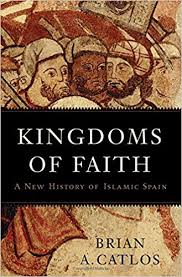
Pats the head of a little child before he walks into the church and detonates the bomb.
https://edition.cnn.com/videos/world/2019/04/22/sri-lanka-attack-new-surveillance-video-kiley-pkg-lead-vpx.cnnAnswer to Indthings, whatever/whoever that is.
Not quite. for the post cannot link to YouTube.
Listen to the words, Purusha, Sayura Mauri, Safari.
Mali so distant away seems so like Like a desert Sri Lanka.