Book Review: The Sensational Life & Death of Qandeel Baloch

Qandeel baloch was murdered in cold blood two years ago. She had rose to prominence as a ‘bold’ social media personality, challenging Pakistani society’s consensus on ‘morality’. Her selfies, vlogs, Live videos and twitter posts were shared and re-shared thousands of times as soon as she posted them. Sanam Meher’s book on her life is a poignant portrait of Qandeel’s (real name: Fauzia Azeem) life, where she started, whom she encountered on her ascent up the ladder of popularity and the obstacles she faced by Pakistan’s entrenched patriarchal culture. The book is important not only because of Qandeel’s story but because it focusses on other people, such as Digital Rights Activtist Nighat Dad and a female police officer who was tasked with investigating Qandeel’s murder. While she was alive, I personally didn’t care much for her but I remember receiving the news of her killing while I was in a library preparing for my USMLE Step 1 and the shock that I felt. She has been re-branded as an icon of feminism after her death and the National Assembly closed a loophole in the law regarding ‘Honour Killings’ soon after her death.

P.S

Islamabad-based band Bambu Sauce sang a song titled ‘Wazir-e-Azam Qandeel Baloch’ a few days before she was killed. You can listen to it here:


 

Drinking (alcohol) During Ramadan

The Washington Post has an article by Khalid Diab about the complications that arise around the issue of obtaining alcohol during Ramadan. Excerpts are posted later. As Shahab Ahmed points out in his magnum opus (What is Islam), drinking alcohol is prohibited in Islam, but it is also an established feature of Islamicate culture; i.e. not only is it regularly used (by a minority), it is celebrated in poems and songs, there are rituals associated with its use, everyone knows someone who drinks and drinkers have their own (albeit not always comfortable) place in society. In some countries (Saudi Arabia, Iran) it is strictly prohibited and users can expect serious penalties if caught, but even in those countries a great deal of regular communal drinking does go on. A few more countries (like Pakistan) have prohibition, but with more exceptions than exist in Iran and Saudi Arabia (non-Muslims and foreigners can buy alcohol, some high end hotels have bars, and so on). In several other countries (Egypt, Tunisia, Indonesia, etc) alcohol is widely available and can be purchased in supermarkets and even in small roadside kiosks (what would be called a Khoka in Pakistan). But in all these countries, there is a visible change during Ramadan: many regular drinkers voluntarily give up alcohol for the month and those who continue to drink may go deeper underground than usual. I have friends who cannot go to sleep without one (or several) nightcaps, but who will not touch  drop during Ramadan. They invariably get drunk on Eid.

Some excerpts from Khalid Diab’s article follow:

Although alcohol is considered haram (prohibited or sinful) by the majority of Muslims, a significant minority drinks, and those who do often outdrink their Western counterparts. Among drinkers, Chad and a number of other Muslim-majority countries top the global ranking for alcohol consumption.

Have a Murree with your curry.. Beer from Pakistan

Continue reading Drinking (alcohol) During Ramadan

Political Engineering in Pakistan. The Military View

From our regular contributor, Dr Hamid Hussain

Following piece about recent clouds on Pakistan’s scene was mainly for non-Pakistani audience as many questions/confusions came my way. 

 This is an attempt to understand the view from barracks although I strongly oppose such moves from military.  This is first of two part. Second part will deal with modus operandi.

 Hamid

Political Engineering – View from the Barracks

Hamid Hussain

In July 2017, disqualification of Pakistan’s Prime Minister Mian Nawaz Sharif by Supreme Court again opened the debate about the role of country’s powerful army.  This was one of the most politicized decision of country’s Supreme Court.  In April 2017, Supreme Court not only ordered formation of a Joint Investigation Team (JIT) but went ahead and nominated its members.  It included a serving Brigadier Kamran Khurshid of Military Intelligence (MI) and a retired Brigadier Nauman Saeed of Inter-Services Intelligence (ISI). Supreme Court disqualified Sharif based on JIT investigation.  In the aftermath of Sharif disqualification, many political changes including change of provincial government in Baluchistan achieved by defection of several members, defeat of government’s nominee for Senate chairman position and defection of many politicians from ruling political party Pakistan Muslim League (Nawaz) (PML-N) to rival Pakistan Terek-e-Insaaf (PTI) were alleged to be orchestrated by the army brass.

Continue reading Political Engineering in Pakistan. The Military View

Kargil War

This topic comes up every once in a while on twitter, so I am reposting an old post with a few new links and videos added at the end.. The main point is simple: Musharraf and a few of his cronies (Javed Hasan, General Aziz, General Mahmood), without having thought it through, conducted a foolish operation in Kargil that cost hundreds of lives on both sides and set back (perhaps destroyed forever) the chances of peace between India and Pakistan (set in motion by Vajpayee’s historic bus journey to Lahore). The operation was not only a strategic disaster, it was a tactical disaster..

First, some links with details about the operations: Continue reading Kargil War

Comment of the Day

Since BP in general lacks positively-inclined Pak-nuanced voices; I thought this was an important comment to highlight.

There was more than Jinnah involved in the ‘Pakistan Movement’ even if it was a one man show when it came to actual negotiations with the British.

Maulana Shabbir Ahmad Usmani was instrumental in mass mobilization (using Islam khatray mein heh! naturally) and countering Congress’s anti-Jinnah propaganda campaign orchestrated by Maulana Husain Ahmad Madani of the JUH. This was the so called Muttahida Qaumiat movement that held that Jinnah and Aligarh Islamic Modernism was more dangerous than an independent India dominated by the Hindus.

In a nutshell, the insurmountable problem was simply this. Jinnah and some others (non-caste Hindus) wanted absolute safeguards for minorities before independence; Congress and caste-Hindus wanted independence first and then would decide whatever safeguards the minorities would get. As a part of this, Jinnah and others wanted a weak Centre and power devolution to the provinces/groupings while Congress (Nehru and Patel but not Gandhi, who was a hopeless romantic when it came to actual politics anyway) wanted a strong Centre and the provinces to have whatever powers the Centre didn’t want.

If you look at the Cabinet Mission Plan, that is EXACTLY what is being offered: a weak Centre. Of course Congress rejected it and Jinnah embraced it.

What must always be remembered is that the Pakistan Movement meant many different things to many different people.

What the world can do to help Palestine?

I believe the world should attempt to surge the capacity and competence of Palestinians in collaboration with Palestinians. Foreign aid should be conditional on difficult Palestinian reforms to establish a globalized neo-liberal economic system based on meritocratic hierarchies of competence and capability. As this happens, the Palestinians will have the leverage and influence to negotiate a deal with Israel on their own terms and many of Palestine’s other problems will take care of themselves. This FT article covers some of challenges in surging Palestinian capacity.

When Faris Zaher, a Palestinian Jerusalemite, graduated in Hong Kong with a masters degree and returned home at the peak of the financial crisis, he drifted for a bit, working in consulting and property, and starting a website for classified ads.

Then he hit on his big idea: a start-up travel portal catering to the $50bn market for hotel bookings in the Middle East. There was no regional competitor back then and with the web opening up the prospect of borderless business, the West Bank city of Ramallah was as good a place as any to set up.

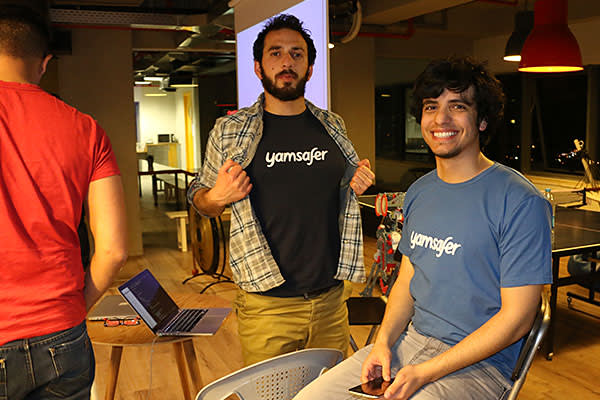
Less than five years later, Yamsafer is one of the region’s largest hotel booking sites, according to its founder. It recently closed a $3.5m funding round in one of the biggest venture capital deals the Israeli-occupied Palestinian territories have seen.

Yamsafer employs 70 people in Ramallah, a place where too many young university graduates are chasing too few jobs. “The people we hire are more hungry than people you would have hired in Dubai, Jordan or elsewhere,” Zahar, who is 29, told me recently.

Continue reading What the world can do to help Palestine?

Jinnah the actor & Quaid the Performer

Tomorrow is the Royal Wedding and the rumour is that Priyanka Chopra may be a bridesmaid, which would be huge.

At any rate on our Pakistani Literati group this was circulated around and I found the initial bit about Quaid e Azam (personally using Jinnah is like using Holy Prophet without the PBUH; there is a sliver of me that is a parochial Paki) about wanting to be an actor is fascinating.

I find the trope of QeA not wanting Partition to be a tiring; then why didn’t the Master Negotiator back down from his demands if he found them so unreasonable. If QeA and his ilk hadn’t messed it up; the HM the Queen’s Bahu would have probably been a desi and Harry would have been short for Harinder!

How Pakistan ended up trapping Muhammad Ali Jinnah

Jinnah’s close friend Kanji Dwarkadas agreed that Jinnah was not in earnest in his demand for Pakistan. After a 90-minute talk with Jinnah on August 28, 1942, Kanji wrote: “Jinnah was not thinking in terms of Pakistan. Nor did he think of becoming the head of a new state of Pakistan. In fact, Jinnah never imagined that Pakistan would ever come into being.”

When Kanji asked Jinnah about Pakistan, the latter replied: “My dear Kanji, one gesture, one friendly gesture was all that I was asking for and it was not forthcoming from the Congress. If the Congress would make this gesture, the whole problem would not be difficult to solve.”

Feeling trapped into accepting a Pakistan he had no intention of creating, Jinnah was yet too proud to call it off. Instead, he put up a brave front, as he told a Hindu friend in Karachi, Hashoo Kewal Ramani, an industrialist: “Look here, I never wanted this damn Partition! It was forced upon me by Sardar Patel. And now they want me to eat humble pie and raise my hands in defeat.”

The Quaid-i-Azam was the role of a lifetime that Jinnah found hard to turn down. But once he took on and played the part so convincingly, the “mad mullahs and extremists”, as Jinnah disdainfully called them, made sure he would never slip out of it again, keeping him a “virtual prisoner in his palace” and censoring all lines that went contrary to the script they had in mind.

Pressure on Social Media in Pakistan

A recent BBC report discussed how contractors employed by ISPR (Inter-Services Public Relations, the media arm of the Pakistani armed forces) monitor and harass people who are perceived as being disloyal or anti-military. Today I saw an email from a friend who is a very patriotic Pakistani with mainstream (pro-democracy) views, who was just kicked out of an “elite” Whatsapp group because the group admin was under pressure from “sources”. I am excerpting the relevant part of the email here with his identity removed; to me the interesting part is that this is a relatively small group of people, and they are not Left wing activists or ethnic nationalists or starry eyed peaceniks, they are mostly bankers and Westernized members of the elite, deeply committed to Pakistan and the idea of Pakistan.. that someone was looking at them and making specific requests to remove members is a new and rather extreme step in the spread of XiJinping thought in Pakistan..

“Yesterday, this member-moderator along with two others became its victims when we were unceremoniously removed from a so-called “prestigious” WhatsApp group of “who’s who” by its moderator without notice or assigning any reason. Our sin? Arguing against the Miltablishment’s policies in the context of Nawaz Sharif’s interview. One member out of 250 in this WhatsApp group took a principled stand by voluntarily opting out in our support. Some other members I understand are writing in our defense. Surprisingly, those Miltablishment supporters who had initiated the debate on this issue (Nawaz Sharif’s interview) and had used the filthiest and most polarizing of languages against the group’s stated policy were neither touched nor even reprimanded.

The moderator of this WhatsApp group subsequently and reportedly explained to someone that “continuous bashing of military (sic)….was landing the group in trouble” and that “he was under pressure from some quarters” to take action (remove the members) – this could be a reference to outside monitors (intelligence agencies) or inside die-hard supporters of Miltablishment. Either way, the thought-police is out in full force. If a WhatsApp group of 250 is monitored, the power of the Miltablishment is complete and total.

Having come back to the country after X-years, I have been incredibly saddened and depressed at the strident polarization one is a witness to. No one is listening to the other side and temperatures are as high as I clearly remember they were at the time of military action in Bangladesh in 1971, when a brother was pitted against a brother..”

An extract from the BBC report (which is worth reading in its entirety):

By establishing the email address associated with the metadata of the document, Amnesty researchers traced it to an Islamabad-based cyber security expert, Zahid Abbasi.

When confronted by the BBC, Mr Abbasi confirmed he had previously worked for a year for the Pakistani military’s public relations team (ISPR) and that the document was genuine.

He admitted his role included tracing the IP addresses of “people abusing institutions” online and “compromising their accounts” by, for example, sending them fake Facebook login pages.

Welcome back Mahathir Mohamad, Hero of Asia!

Welcome back Mahathir Mohamad, our favorite 92 year old PM of Malaysia! Malaysia was one of the centers of the great Arya civilization for thousands of years; now enriched by Confucianism, Taoism, Chinese Buddhism, Islam, and expats the world over. One of the most diverse and immigration friendly countries in the world. One of the most pro business, pro capitalist, pro globalization, pro neo-liberal, pro enlightenment values, and pro moderate Islam countries in the world. A country that fought against the full might of the Soviet Union, China and the global communist block and won. A shining city on a hill. A self assured, self confident Asian Tiger without inferiority complex. One of last great bastions resisting the global post modernist wave.

Continue reading Welcome back Mahathir Mohamad, Hero of Asia!

Brown Pundits