I have little value to add on the many comments around “Modi is bad to the bone” piece in The New Yorker, except that this passage jumped out at me:
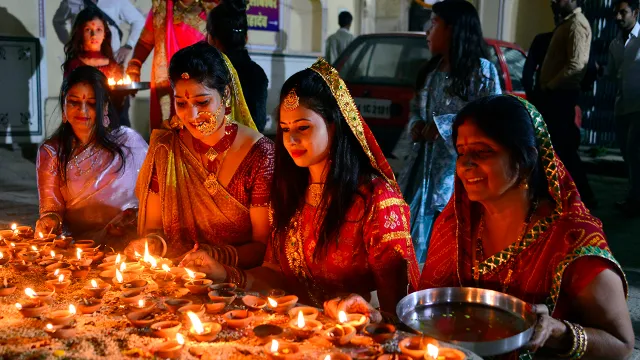
Other coverage on Republic TV showed people dancing ecstatically, along with the words “Jubilant Indians celebrate Modi’s Kashmir masterstroke.” A week earlier, Modi’s government had announced that it was suspending Article 370 of the constitution, which grants autonomy to Kashmir, India’s only Muslim-majority state. The provision, written to help preserve the state’s religious and ethnic identity, largely prohibits members of India’s Hindu majority from settling there. Modi, who rose to power trailed by allegations of encouraging anti-Muslim bigotry, said that the decision would help Kashmiris, by spurring development and discouraging a long-standing guerrilla insurgency. To insure a smooth reception, Modi had flooded Kashmir with troops and detained hundreds of prominent Muslims—a move that Republic TV described by saying that “the leaders who would have created trouble” had been placed in “government guesthouses.”
From the broadly Left/liberal internationalist perspective, Hindu nationalists express a majoritarian and ethnoreligious self-consciousness. They don’t want what in India is termed “secularism” to be ascendant. I believe that some Hindu nationalists do want for India what was the original vision of Pakistan, a nation-state that has at its core a particular ethnoreligious identity (I believe this is distinct from a “Islamic fundamentalist” vision properly understood in the modern context).
And yet this passage simply glosses over the fact that legal fiat was preserving a particular sub-national identity, that of Kashmiris, the vast majority of whom are Muslims.
I was a teenager in North-Central India (Uttar Pradesh) when the Kashmir Valley exploded into the national consciousness as a full-blown armed insurgency and secessionist movement in 1989-90. India at that time had state-controlled TV media and most adverse news out of J&K was suppressed. However, we had all heard about Islamic terror groups targeting Hindus. Many of these Hindus trickled into refugee camps in and around New Delhi which was a city I often visited to see relatives, so people had begun to be familiar with the scale of the violence against Hindus despite the attempts of state-controlled media to conceal it.
India’s Rationale for Preventing Kashmir’s Secession
In general, the attitude of most Indians since the late 1980s and early 1990s when the conflict became radicalized has been to hold on to the Kashmir Valley by any means necessary. There is a simple rationale for that position. Around 20% of the population of India is not Hindu (with religious minorities being broken up roughly in 70%/10%/10%/10% proportions of Muslim/Christian/Sikh/Other) and there are close to 200 million Muslims in India in a country of 1,400 million people. Indians have always been proud of having a secular Constitution and State, uniquely so in South Asia. India is the most ethnically and religiously diverse nation in the world bar none. Each and every resident of J&K has always been a full-fledged citizen of India.So, it is a hard pill for any Indian to swallow that 7 million Muslims in the Kashmir Valley feel that they cannot be equal citizens of India and must secede to Pakistan. It would raise questions about the unity of India and its tradition of religious and ethnic diversity. It would also put a question mark against the nearly 200 million Muslims in the rest of India. Consequently, almost all Indians feel an emotional and visceral reaction against allowing even just the overwhelmingly Muslim majority Kashmir Valley region of J&K to secede. India has Muslims in positions of power and influence in every field, ranging from Government to Sports and Entertainment. Some of the biggest Indian movie stars are Muslim minorities. Every Muslim of J&K had more than equal citizenship in secular India. There was simply no reason for a secession movement other than religious fascism.
Most Indians are united on Kashmir policy, regardless of political affiliation. Even If Modi lost the next election in 2024 and even if a Communist government was in power, there is very little chance that their actual policy on J&K would differ very much other than in public rhetoric. That is because a religion-based secession would be disastrous to India’s identity.Continue reading Article 370 Revocation Through the Eyes of an Indian-American Immigrant – Part II
On August 5, 2019 the Modi-led BJP government in India surprised most political observers by announcing its decision to revoke Article 370, a section of the Indian Constitution that had granted a special status to the state of Jammu & Kashmir (J&K) which allowed it significant autonomy from the federal government in India. This bold move sought to put an end to a lingering uncertainty and stalemate over the status of Indian-held J&K for nearly 72 years. Certain basic facts about the origins of this conflict are poorly understood by Western journalists and I dare say many Indians and Pakistanis themselves and bear repeating.
Laying My Cards On the Table
As an Indian-American who has now been living in the US for 25 years, I have gone through a cycle familiar to many a first-generation immigrant. I spent the first few years in America reacting to feelings of cultural disorientation in my new home by seeking to consciously renew my Indian identity and intensifying the emotional connection with the idealized homeland. Then in the middle act there was a period of beginning to feel more and more at ease in America, being able to view events in India with a greater sense of objectivity and less defensiveness, and then finally in the third and final act, a legal and emotional break with India by applying for US citizenship, an act which culminates in surrender of one’s Indian passport and renunciation of Indian citizenship.
During the first act of the three Act play above, it was a period marked by hyper-sensitivity to US and Western media coverage of India. I found the coverage offensive and lacking in any nuance. Overwhelmingly the coverage was critical and unflattering and coming across such examples was guaranteed to quicken the pulse, set the temple throbbing and unleash feelings of anger and rage. As one entered the second act, these symptoms declined in their intensity and usually I would decide to skim or even ignore reporting on India, which would inevitably be lacking in insight and empathy. Now well into the third and final act of the cycle above, it saddens me that the reporting on India continues to be low quality and lacking in insight and rigor. A quarter century later, nothing has really changed, even as India is undoubtedly transformed as a nation in the 25 years since I left the Matrabhumi (motherland).
When discussing controversial topics, I believe an author must be honest about their intellectual beliefs, predispositions and biases. I intentionally used the evocative term “Matrabhumi” to indicate that although I now see myself as an American first, and am legally not an Indian citizen anymore, the country of my birth continues to have an emotional resonance for me. As I have lived in America, I have come to appreciate how unique India is. There is simply no country that can compare when it comes to the extraordinary ethnic, religious and linguistic diversity of India. The only comparable global peer is America. Both of these countries serve as an example to the world and indeed an inspiration of how to weave a national identity out of more than the raw soil of tangible markers such as ethnicity, but from the intangibles of shared values, feelings and aspirations. I was born a Hindu and see myself as a Hindu today despite my complete lack of religious observance of any kind, and in fact my agnosticism. All of the above is to say in a somewhat long-winded fashion that I come to my views on the Kashmir conflict with a certain backdrop and world view, and readers are free to discount my views on that basis if they so wish. Continue reading Article 370 Revocation Through the Eyes of an Indian-American Immigrant – Part I
From our regular contributor and well respected Military historian Dr Hamid Husain
Following was outcome of exchanges with some informed individuals from both sides of the border about Kashmir. I was educated & enlightened. It is just a glimpse on my part about possible scenarios. It is first of a two part; second part deals with the legal aspect of the issue as Constitution bench of Indian Supreme Court has taken up the case.
“Borders are scratched across the hearts of men
By strangers with a calm, judicial pen
And when the borders bleed we watch with dread
The lines of ink along the map turn red”
Marya Mannes
Regards,
Hamid
Paradise Lost – Kashmir at Crossroads
Hamid Hussain
“Any intelligent fool can make things bigger, more complex and more violent; but it takes a touch of genius and lots of courage to move something in the opposite direction.” Albert Einstein
On 05 August 2019, newly elected government of India announced change in Kashmir status. President issued an order under Article 370 superseding a previous Presidential Order of 1954 thus removing restrictions on application of Constitution of India in the state of Jammu & Kashmir (J&K). This also removed Article 35 A that gave special status to residents of J&K. In addition, J&K was divided into two Union territories with separation of Ladakh.
Currently, three countries control parts of the territory that was once princely state of Kashmir during the Raj. Indian Controlled Kashmir (ICK) is fifty five percent of the territory, Pakistan Controlled Kashmir (PCK) is thirty five percent and Chinese Controlled Kashmir (CCK) is fifteen percent. There is no conflict at Indian-Chinese border in Kashmir called Line of Actual Control (LAC) and there has been no border incident in the last fifty years. I recall the only incident of military history several years ago when tempers escalated at that border, the soldiers simply threw stones at each other. The story of Line of Control (LOC) between India and Pakistan is totally different.
Kashmir is more of an ideological element between two countries. Both sides have a psychological entanglement where the raison d’etre of both countries is linked with it. India views continued control of Kashmir as vindication of its stand that Hindus and Muslims are not two separate nations and that is why a Muslim majority state is part of Indian union. Pakistan contests this narrative and see India’s control of Kashmir as challenging the very idea of Pakistan based on ‘two nation theory’. Both sides are intelligent enough to recognize the old dictum that ‘possession is the nine-tenth of the law’. Rhetoric aside, in real politic, both countries are fully aware that LOC is now a de facto border, and no one can force a military solution of the problem. When there is an interlude of peace between two countries, public opinion is in favor of compromise. However, with every crisis, jingoism runs supreme on both sides of the border.
India
‘Nationhood is rooted in rites of violence we all prefer to forget’. Quoted in Karl Meyer & Shareen B. Brysac’s King Makers
India’s recent efforts to remove special status of Kashmir is to fully integrate the state in Indian union with the hope that this will end separatism in ICK. Unique circumstances of Kashmir at the time of partition in 1947 necessitated a compromise. Article 270 of Indian constitution gave Kashmir a special status where Indian constitution was exempted from the state in governance of the state. In the last seventy years, 94 of the 97 entries of the Union List and 260 of the 395 articles of the constitution were extended to Kashmir. Ironically, it was all done through Article 370 as this was the only ‘tunnel’ through which center could act in Kashmir. The result is that in practical terms Article 370 had ceased to provide any special concessions to Kashmiris. More important is Article 35 A that was inserted by a Presidential Order in 1954 as a compromise between Indian Prime Minister Jawaharlal Nehru and Kashmiri leader Shaikh Abdullah. This clause gave the authority to state government to define ‘permanent resident of the state’. A Dogra rule era law of 1927 that prohibited acquisition of land in Kashmir by an outsider was incorporated in Constitution of J& K in 1956 that closed the door for acquisition of land by outsiders. Now only a permanent resident of the state was eligible for land acquisition, government jobs and scholarship in state educational institutions. Article 370 was a psychological and 35 A practical anchor of special status of Kashmir. Continue reading Kashmir, Analysis by Dr Hamid Husain
There is endless controversy in Pakistan about the way Gen Akhtar Malik, who led the opening phase of Pakistan’s invasion of Kashmir in 1965 (operation Grand Slam) was removed from command the day after the attack started. The Pakistan army had decisive superiority in tanks and artillery and on the first day captured Chamb and were threatening to break through towards Akhnur, but on the 2nd day of operations there was an abrupt change in command as Gen Malik was replaced by Gen Yahya Khan. This led to some delay and gave the Indians the chance to reinforce their defenses. Many in Pakistan blame this command change for the failure of Grand Slam. You can read more about the operation in another post. The controversy will no doubt continue. Here is a letter from Gen Malik to his brother, written 2 years after the war, which gives his version of events (I received this via Major Amin).
Gen Akhter Hussain Malik’s Letter to His Brother Gen Abdul Ali Malik
My Dear brother,
I hope you and the family are very well. Thank you for your letter of 14 Oct. 67. The answers to your questions are as follows:
a. The de facto command changed the very first day of the ops [operations] after the fall of Chamb when Azmat Hayat broke off wireless communications with me. I personally tried to find his HQ [headquarters] by chopper and failed. In late afternoon I sent Gulzar and Vahid, my MP [military police] officers, to try and locate him, but they too failed. The next day I tore into him and he sheepishly and nervously informed me that he was ‘Yahya’s brigadier’. I had no doubt left that Yahya had reached him the previous day and instructed him not to take further orders from me, while the formal change in command had yet to take place. This was a betrayal of many dimensions.
b. I reasoned and then pleaded with Yahya that if it was credit he was looking for, he should take the overall command but let me go up to Akhnur as his subordinate, but he refused. He went a step further and even changed the plan. He kept banging his head against Troti, letting the Indian fall back to Akhnur. We lost the initiative on the very first day of the war and never recovered it. Eventually it was the desperate stand at Chawinda that prevented the Indians from cutting through.
c. At no time was I assigned any reason for being removed from command by Ayub, Musa or Yahya. They were all sheepish at best. I think the reasons will be given when I am no more.
d. Not informing pro-Pak Kashmiri elements before launching Gibraltar was a command decision and it was mine. The aim of the op was to de freeze the Kashmir issue, raise it from its moribund state, and bring it to the notice of the world. To achieve this aim the first phase of the op was vital, that is, to effect undetected infiltration of thousands across the CFL [cease-fire line]. I was not willing to compromise this in any event. And the whole op could be made stillborn by just one double agent.
e. Haji Pir [Pass] did not cause me much anxiety. Because [the] impending Grand Slam Indian concentration in Haji Pir could only help us after Akhnur, and they would have to pull out troops from there to counter the new threats and surrender their gains, and maybe more, in the process. Actually it was only after the fall of Akhnur that we would have encashed the full value of Gibraltar, but that was not to be!
f. Bhutto kept insisting that his sources had assured him that India would not attack if we did not violate the international border. I however was certain that Gibraltar would lead to war and told GHQ so. I needed no op intelligence to come to this conclusion. It was simple common sense. If I got you by the throat, it would be silly for me to expect that you will kiss me for it. Because I was certain that war would follow, my first choice as objective for Grand Slam was Jammu. From there we could have exploited our success either toward Samba or Kashmir proper as the situation demanded. In any case whether it was Jammu or Akhnur, if we had taken the objective, I do not see how the Indians could have attacked Sialkot before clearing out either of these towns.
g. I have given serious consideration to writing a book, but given up the idea. The book would be the truth. And truth and the popular reaction to it would be good for my ego. But in the long run it would be an unpatriotic act. It will destroy the morale of the army, lower its prestige among the people, be banned in Pakistan, and become a textbook for the Indians. I have little doubt that the Indians will never forgive us the slight of 65 and will avenge it at the first opportunity. I am certain they will hit us in E. Pak [East Pakistan] and we will need all we have to save the situation. The first day of Grand Slam will be fateful in many ways. The worst has still to come and we have to prepare for it. The book is therefore out.
I hope this gives you the gist of what you needed to know. And yes, Ayub was fully involved in the enterprise. As a matter of fact it was his idea. And it was he who ordered me to by-pass Musa while Gibraltar etc. was being planned. I was dealing more with him and Sher Bahadur than with the C-in-C. It is tragic that despite having a good military mind, the FM’s [Foreign Minister Z.A. Bhutto’s] heart was prone to give way. The biggest tragedy is that in this instance it gave way before the eruption of a crisis. Or were they already celebrating a final victory!!
In case you need a more exact description of events, I will need war diaries and maps, which you could send me through the diplomatic bag.
Please remember me to all the family.
Yours,
Akhtar Hussain Malik
Our Brown Pundit Zachary Latif will hopefully share his perspectives on Pakistani Psychosis soon. Tarek Fatah gives a good synopsis of Pakistani Psychosis and Islamism in the above video. I am not an expert on Pakistani Pysochosis, and cannot validate many of Tarek Fatah’s perspectives on Pakistan. However, with respect to Islam, many muslims (including prominent religious leaders) privately share many of Tarek’s views, but the vast majority are too afraid to share their views publicly. Tarek Fatah is very knowledgeable about Arabic, Islamic scripture and Islamic law. If you have the time, please watch the entire video.
What is Pakistani psychosis? I am not completely certain and look forward to evolving my views with new information. To oversimplify, it is the combination of several things:
Extracts from Major Amin’s history of the 1947-48 war.
THE 1947-48 Kashmir War
Major Agha Humayun Amin
The war of lost opportunities History is made by those who seize fleeting opportunities in the critical time span in any particular situation and relentlessly execute their plans without second thoughts, subduing inner fears, overcoming procrastination and vacillation, and above all by those who are propelled by the burning desire to defeat the enemy rather than any half hearted judiciousness and timidity. Ninety years of loyalism and too much of constitutionalism had however made the Muslims of 1947 slow in taking the initiative and too much obsessed with consequences of every situation.This attitude was excellent as long as the British were the rulers, but not for a crisis situation, in which geography, time and space, alignment of communications and weather temporarily favoured Pakistan, in case initiative and boldness was exercised and simple but audacious plans were executed in the shortest possible time!
Today, it is fashionable to blame the Indians, Mountbatten, Gracey etc as far as the 1947-48 War is concerned. A dispassionate study of the events of 1947-48 clearly proves that victory was closer in 1947 than ever again as far as the Pakistan Army was concerned. Opportunities were lost because very few people who mattered at any level apart from Mr Jinnah, Brigadier Akbar Khan and some others were really interested in doing anything! Continue reading 1947-48 Kashmir War
The following is a long extract from Major Amin’s book on the India-Pakistan wars. Other extracts will be posted later. Since this is a very long chapter, I have highlighed and italicized certain sections that the reader can jump to and get the basic story, without bothering with the details. Of course, anyone interested in the details can read the whole thing.
OPERATION GRAND SLAM
By Major Agha Humayun Amin
Background
1965 was an eventful year in Indo-Pak history. The Pakistani military ruler Ayub emerged victorious in the Presidential elections held in January 1965 amidst allegations of rigging. This factor created a desire in Ayub to improve his political image by a limited gain in the realm of foreign relations. He got an opportunity to do so in April 1965 over a minor border dispute with India in the Rann of Kutch area. The Pakistan Army dominated the skirmishes in the Rann area as a result of which a climate of overconfidence was created in the Pakistani military and political establishment.7
In May 1965 following the jubilation in Pakistan because of the Rann affair Ayub became keen to launch the proposed “Operation Gibraltar”: a proposed plan to launch guerrillas into Indian held Kashmir with the objective of creating a popular uprising, finally forcing India to, abandon Kashmir. Ayub went to Murree on 13 May 1965 to attend a briefing on the conduct of Operation Gibraltar.8 We will not go into the controversy surrounding this plan, which is basically an exercise in futility, and mud slinging initiated by some self-styled experts, motivated largely by personal rivalry and ulterior biases, since the prime aim of this article is to discuss the military significance of Operation Grand Slam and its connection with “Operation Gibraltar”. In this briefing Ayub “examined” the “Operation Gibraltar” plan prepared by Major General Akhtar Malik, the General Officer Commanding (GOC) 12 Division. The 12 Division was responsible for the defence of the entire border of Pakistan occupied Kashmir from Ladakh in the north till Chamb near the internationally recognised border to the south. It was during this briefing that Ayub suggested that the 12 Division should also capture Akhnur.9 This attack was codenamed “Operation Grand Slam”. General Musa, the then C in C Army and Altaf Gauhar the then Information Secretary and Ayub’s close confidant, the two principal defenders of Ayub have not given any explanation about what exactly was the strategic rationale of “Grand Slam” and what was its proposed timing in relation to “Operation Gibraltar”. We will discuss this aspect in detail in the last portion of this article. Continue reading Operation Grand Slam (1965 War)
An awful lot can be said about the India-Pakistan conflict and what is said is heavily dependent on how the writer sees the world and what he or she wants it to become. Now that the latest round of proposed “National Security Adviser Talks” has fizzled, a lot is being said about who is to blame and what to do next. I thought it would be a good idea to just step back a little from the (necessarily and correctly) petty tactical maneuvers behind the talks and their cancellation and look at the (somewhat scary) big picture and then try to see what the possible futures look like. The last section is my personal obsession and can be skipped.
So here goes:
Kashmir is a disputed region that is claimed by both India and Pakistan. Pakistan holds one chunk of Kashmir (now administered as Gilgit-Baltistan and Azad Kashmir) and India hold another. Without going into the details of whose claims are how good and what the UN resolutions really say, let us note one fact: Pakistan wants to change the status quo in Kashmir. India pays lip-service to the notion that it wants the Pakistani part of Kashmir, but in practice India looks like it will go along with keeping the status quo. So as far as Kashmir is concerned, India’s interest is to have Pakistan STOP trying to change the status quo (especially via terrorism or military force; India knows that complaints in international forums and human rights clubs are not a significant issue if kinetic actions cease). Pakistan’s interest on the other hand is to force India to give up its part of Kashmir, i.e. to CHANGE the current borders and administrative arrangements. In this sense the positions are not symmetrical.
Pakistan has tried various things to change the status quo. When India was partitioned, the princely ruler of Kashmir dithered about his choice (whether to join India or Pakistan). At that point, we tried to force his hand by sending in tribal irregulars to grab Kashmir by force (and we nearly succeeded; tribal lashkar were entering Srinagar when the Indian army intervened and pushed them back). After the tribal lashkars were forced back, regular army units joined the fight and both sides fought to a standstill by 1948 and then agreed to take the issue to the UN. Neither side did what the UN resolutions demanded (details vary depending on whom you ask). But the bottom line is that India held one part of Kashmir and we held the other and of course, both sides refused to budge from where they were.
In 1965, we tried operation Gibraltar to “liberate” Kashmir by sending in commandos who were supposed to spark a general uprising. The general uprising never happened and a conventional military offensive (operation Grandslam) was stopped after some early success and led to a short general war (the 1965 war) which was pretty much stalemated when both sides threw in the towel and agreed to a ceasefire. Again, opinions and details vary depending on who you ask, but no one can deny that the borders looked about the same after the 1965 as they did before it, so our attempt to change the status quo had again failed.
In the 1971 war, India defeated our forces in East Pakistan but nothing much changed on the Western front. The status quo in Kashmir remained more or less the way it was before the war (though definitions and fine details of the boundary changed a little and diplomats argue forever about how many angels now dance on which pin).
In the late 1980s a widespread revolt did break out amongst the Muslim population of the vale of Kashmir and in the 1990s we vigorously promoted an Islamist-Jihadist insurgency staffed by Pakistani as well as Kashmiri militants. The revolt and the subsequent Islamist insurgency (the two are not the same, though details and definitions can be argued about endlessly) shook India’s hold on Kashmir for a while and both India and the local population paid a very heavy price, but by 1999 it seemed that the insurgency itself was not going to drive India out of Kashmir and our civilian PM was thinking of making peace. The army stepped in to nip this in the bud and launched a limited war in Kargil, but failed in it’s objectives (tactically and strategically unsound to begin with) and got a bit of a scolding from the Americans in the bargain; always a net negative for us because Uncle Sam has historically paid for a lot of our “national security” upkeep.
In 2001 our brothers in Afghanistan (who provided strategic depth and much more for the Kashmir Jihad) got into trouble with America and were forced to temporarily relocate to Pakistan. Pakistan was also forced to tamp down the Kashmir Jihad in the generally “Jihad-unfriendly” atmosphere that followed and India has been able to use the breathing space to restore some degree of peace in Kashmir. But while we have kept the Jihad on a tight-ish leash (Mumbai 2008 being the biggest, though not sole, exception), we have not shut down the Kashmir branch completely. And of course, we have not changed our “principled stand”. We still want to change the status quo in Kashmir. The problem is, how is that to be done?
Since 2001, there have been several rounds of peace talks and many proposals for a peace settlement in Kashmir. Pakistan is of the view that even though our guerrila and military efforts failed to dislodge India from Kashmir, we still have a good claim on the state and India should agree to a substantial change in the current status quo in order to make peace with us and to have peace in the subcontinent. On the other hand, the dominant Indian view seems to be that since Pakistan has already “tried it’s worst” and failed, it should not expect to receive on the negotiating table what it could not win on the ground by force.
Peaceniks and pragmatists on both sides have proposed that we could agree to keep the status quo on borders (India keeps their Kashmir, we keep ours) but should give substantial autonomy to each side and allow freer movement across the border,so obviating any need to adjust borders and fight wars.
This sound good (and I personally think it is the nearest thing to a doable deal) but hardliners on both sides reject any such deal. At it’s core, the objection from the Indian side is based on lack of trust. Some Indians think they detect a scheme to use autonomy and softer borders to prepare the ground for bigger future demands (supported by an anti-Indian Kashmiri Muslim populace). Extreme Hindutvadis may also feel that any compromise with Pakistan is unacceptable and the long term aim should always be to one day destroy Pakistan and reabsorb it into India (or to absorb at least the Indian half of it, the Afghan and Baloch half are welcome to their own states).
Hardline Pakistanis meanwhile think acceptance of the current boundaries means giving up on the dream of ever seeing a Kashmir united with Pakistan and is a betrayal of the ideals of the Pakistan movement. More to the point, the security establishment feels that if peace comes, can disarmament and loss of domestic power and status be far behind?
Pragmatic peaceniks know that the fears of hardliners are not unfounded. But we do feel that those fears are unhelpful for the bulk of the population and stand in the way of a doable deal that can be made to work for all sides.On peace being prelude to another attempt at taking Kashmir away, well, we would say that India is not run by children. If India could stop us in the 1990s when the world was not so anti-Jihad, when India was poorer, when its armed forces were less equipped and when it’s establishment was at least as corrupt and incompetent, why should it lose control in the future when all these factors may change in India’s favor?
For the Hindutvadis, I would say this. Yes, you may never see the Indus basin, home of the Rig Veda and site of so many historic Sikh and Hindu sites returned to Mother India, but worse things have happened in history. Maybe you can take it as the price “Mother India” has to pay for having been conquered and ruled by invaders for so many centuries and for not being able to assimilate them into India more fully. Maybe, as Don Corleone said, “there just wasn’t enough time”.. Meanwhile, enough local people were assimilated into the conqueror’s culture to such a degree that they no longer think of themselves as Indian. IF Indian-ness is truly deep rooted and desirable (and this conversion is actually a bad fit for our deeply Indian culture), then their descendants may drift back. If not, maybe it is time to move on.
On the Pakistani side, yes, I think the ideals of the Pakistan movement will be betrayed by such a deal. But really, even you guys cannot seem to agree on what those ideals were in the first place. Maybe the whole partition thing was a bad idea. Why make it worse? It cannot be reversed, but at least it should not be made worse. Let it go. What’s next? 200 million Indian Muslims added to Pakistan?
And yes, if we don’t get Kashmir the coming conflicts over water may find us forced to trust India and international mediation. But the Indus waters treaty has worked for 50 years. If we have peace and increased trust, we may be able to work it out in the future too. In any case, what is the alternative? It’s not like all our attempts to get Kashmir by force have been hugely successful to date. Sure, we would be nicely placed if we owned ALL the rivers from Tibet to the sea, but we don’t. China and India happen to be upstream. But then again, many other nations with rivers that run down from other countries don’t control their destiny all alone. They have to make deals and manage. Deals are easier when you are at peace.
And finally, the security establishment and it’s fear of irrelevancy and demotion: no such luck. This is not a valid fear at all. Guess who will get all the Amul franchises when peace breaks out? Yes, cousin Jimmy and retired Brigadier uncle! Money can be made in many ways. You can make it in peace rather than war. Collect tolls. Distribute movies. Arrange concerts. Set up businesses.You know you can do it. And security? it will be an even bigger headache after we betray the two-nation theory and try to hold Pakistan together for Chinese transit companies and Qingchi makers. Endless Islamist, Baloch and Mohajir insurgencies loom on the horizon. Maybe even a Maoist one will break out if poor people get shafted extra-hard. Your jobs are safe.
This is the case for peace. What is the hardline case?
Note that the two sides do not have symmetrical aims. Pakistan’s aim is to force India to make concessions using the threat of renewed support for Jihadis, Khalistanis, Maoists, NE Separatists etc, to force India to make concessions. India’s aim is to prevent Pakistan from making such an attempt. In order to see decisive change in this respect, India also wants clear and decisive action against the Mumbai attackers. Such action is not just desirable because a heinous terrorist crime was committed and its perpetrators have not yet been punished (though I personally think that is a good aim in itself) but because such action would be the best evidence that Pakistan is no longer committed to the Jihadist option against India. If Pakistan does this, India will almost certainly be willing to make at least a cold peace. Thus, when I speak of an Indian hardline case, I do not mean the extreme Hindutvadi case of wishing to reabsorb Pakistan “with extreme prejudice”.
The Pakistani hardliners case is qualitatively different. We are the party that wants a change in borders or at least some major move towards Kashmiri autonomy that we can accept as a halfway house to union with Pakistan. We have tried to force this change using proxies as well as the regular army and we have (till now) failed. But our hardliners think the failure is not as final as it seems. Our options are still open. Now that America is getting out of our hair, and China wants us more than ever (or so we think), we can deploy the threat of revived Jihad and Khalistan to ask for concessions. If India does not make concessions, we may have to move beyond the threat. Those willing to use these levers (rather than those just wanting to threaten to use them) are probably in a minority even in Pakistan. But the minority has the Paknationalist narrative on their side. So they can get their way because they control the Pakistaniat narrative and when push comes to shove, their opponents cannot muster good arguments without challenging the core narrative. All else being equal, the national narrative wins.
So let us suppose the hardliners win the argument. Do they have a case in the real world? i.e. can they win?
That depends on what weight one assigns to different factors. Pakistan has a proven record of deploying proxies and supporting insurgencies. All talk of Balochistan and MQM notwithstanding, India does not have such a record in West Pakistan. Even though Doval sahib has reportedly said “we can hurt them more than they can hurt us using these same tools”, an objective observer would have to say the edge lies with Pakistan. Our use of proxies has a record of “success”. India’s (in West Pakistan) does not. And Indian internal security institutions are already stretched thin and their state is known to be rickety and inefficient. Advantage Pakistan?
On the other hand, India is the bigger power. It has the bigger armed forces (even if they are weaker pound for pound; I am not saying they necessarily are. Maybe they are not. But the point is that even if they are somewhat less efficient than Pakistan’s armed forces (superior American weapons, less waste and corruption in procurement and weapons systems, higher asabiya??) they are so much bigger that they probably have a conventional edge. What if they actually use that advantage? Well, we don’t know for sure until they do, but these are two nuclear powers, Everyone gets nervous. So the threat of force is in India’s favor, but even India would prefer that it not be put to the test.
It may be that in a few years India will be in a position to impose penalties with less fear of things getting out of hand (or going unexpectedly badly) but it is not in that position yet (wet dreams of ultranationalist Indian notwithstanding). Even though India may be able to prevail in a conventional confrontation, it will not do so without considerable cost; costs that may set back the economic takeoff that is India’s best chance of breaking out of the glorious poverty that has long defined it.
So, the bottom line is, we don’t know if the hardliners on either side can win. It is best not to put their theories to the test.
Best case scenario: that MNS and his government manage to reach out to Modi and BOTH sides are mature enough to understand that it is in the interest of both nations not to put the hardline options to the test. Even while MNS is not in a position to bypass GHQ and the Paknationalists, he can arrange for lower profile meetings, smaller deals on trade, tourism and transit, and other baby steps.. And if things go well and Indian development continues to accelerate then Pakistani economic needs, increasing economic disparity and international pressure may force even GHQ to give up on Kashmir. Then we can think of flashier and bigger peace moves and start dreaming about a South Asian Economic Union.
What will really happen: probably a few more bumpy years, but no serious war. Things will limp along, till peace slowly settles around the exact same borders we have had since 1948.
Finally, a few words about why I regard the hardcore “ideology of Pakistan” as a threat to peace: The Turko-Afghan Delhi Sultanate is the charter state of “Hard Pakistani Nationalism”. Muslims live in all parts of India and (especially in parts of the South) their presence is not necessarily connected with the Turko-Afghan invasion and colonization of North India. But the Muslim intellectuals that laid the intellectual basis for the struggle for Pakistan saw themselves as the inheritors of the Delhi Sultanate and the Mughal empire.
This does not mean that the Delhi Sultanate was foremost in the minds of everyone who wanted Pakistan. Not at all. It may not have been the proximate motivation for most of the supporters of Pakistan. Left wingers for example point to the “Muslim salariat” and its fear of being outcompeted by the more educated Hindu middle class. Or at the fears of the North Indian Muslim-feudal elite that had been pampered and protected by the British but that saw unpleasant changes coming in the wake of independence and democracy if Hindu-dominated mass parties came to power. Others have more fanciful theories; e.g. a prominent progressive Pakistani politician has written a book trying to prove that Pakistan was just the natural outcome of “Indus man” going his own way, distinct from the rest of India, as he has always done. Why “Indus Man” was more North Indian Feudal and Bengali than Punjabi (and many other inconvenient facts about history) get in the way of that theory, but the point is, the theory is out there and like most theories (even the silliest ones) there is some evidence for it if that is all you want to look for.
There is even a popular theory that Jinnah never really wanted Pakistan and the demand was more or less a bargaining chip that got out of hand. But hardcore Pakistani nationalists understood then (and understand now) that Pakistan must identify itself with the Turko-Afghan invaders, must reject the previous culture and religion of the inhabitants of this region (as a pre-enlightened state that we gave up once we adopted the superior religion and culture brought in by Islamic invaders), and must see itself as the “Un-India”; not just a political unit of greater India that happens to be mostly Muslim, but a separate nation that consists of people who do not share a common culture with the rest of India.
This understanding appears, at one level, to be a fringe view. Among Pakistan’s small super-elite the most educated segment consists of Western-educated intellectuals who, like their Indian counterparts, get 90% or more of their knowledge of history, sociology, culture and even religion from Western sources, in Western languages. Among this super-elite, the dominant mode of thought is not “hard paknationalism” or Salafist Islam, it is Eurocentric neo-orientalism (a bad term, I know, but this post is not long enough to accomodate a detailed description, you can guess what I mean), leaning heavily towards postcolonialism and postmodern Marxism. Meanwhile among the barely literate or illiterate masses, the inherited wisdom of their own older cultures (from Pakhtunwali to rural Punjabi values to Sindhi and Baloch culture, with all their subsets and varieties) still guides life far more than any superficial snatches of propaganda they may have picked up from the modern mass media and mass education.
But “Pakistaniat”, based on the Delhi-sultanate-charter-state view that I sketched above, rules supreme in official propaganda, in mass media and especially in modern mass education. This version of Pakistaniat is so ridiculous in the eyes of the Western-educated super-elite commentators that they not only reject it as ridiculous, they find it hard to even take its presence seriously. Their books and articles (and these are, of course, most of the books and articles the highly educated read, within Pakistan and even more so, outside of it) do not engage with this Pakistaniat because “the eye cannot see what the mind does not know”. But enough about them. We can see this paradigm in operation if we wish, and it turns out to be the one guiding our foreign ministry, our defence services and our intelligence agencies. It is the historical myth promoted in our educational institutions. And it is the one we use when we name our most important weapons. It is a framework that matters. Not the only one, but very much an important one. And critical when it comes to relations with India. You can see more on this topic in my previous posts here and here, but it is easy to see why this narrative to the extent that it remains a real factor in Pakistani opinion, is a hurdle to peace. ..
I believe the Indian secular state narrative is not a mirror-image obstacle to peace. The hard-Hindutva narrative does have the potential to obstruct peace (not just because of what it says about Pakistan but because it raises the possibility of new partitions within India), but it is not yet the official core narrative of the Indian state and until it becomes so it is not the equivalent of the Paknationalist story. And no, I don’t think the election of Modi constitutes such a point in itself; even Modi pays lip service to secular democratic India, and in these things “lip-service” is the point; it sets the parameters for public debate and restrains excesses. A lot of what is still powerful in our religious culture (fanaticism, unwillingness to marry across religious boundaries, inability to tolerate literary and artistic expressions considered offensive, etc) is restrained by this modern Western import. At some point our modernizing indigenous culture will meet the decaying karma of British liberalism and hopefully this union will occur in a happy zone and not in the dumps. But until then, this Western liberal import is a positive factor that India maintains closer to the modern ideal than we do. And that is why their national narrative can live with the present borders, but ours finds it harder to do so because ours demands more than what we got in 1947.
PS: A couple of clarifications (since people have asked)
1. Don Corleone saying “there wasn’t enough time”. That quote is from the famous garden scene in The Godfather (see below at 2 minute onwards). The thought I had in my mind was that by 1800 the Turko-Afghan colonization of India had run out of steam. Large areas of India were dominated by the Sikhs and the Marhattas and the remaining Turko-Afghan elite were so Indianized that the thought of going home or asking for reinforcements from Central Asia was dying out. At the same time, much of India was pulling ahead of Central Asia in warmaking technology and even in Asabiya (clearly illustrated by the fact that the Sikh Kingdom ruled parts of Afghanistan instead of vice versa; a fact that gifted those parts to West Pakistan 😉 ). It was the British who froze the North Indian Muslim elite in place and allowed visions of “our greatness till the British came along” to take hold. Given more time, Indians (Hindus, Sikhs AND Muslims) may have fought over many things, but none of the rulers would have imagined they were Central Asian any more.
2. A number of friends have objected to my characterization of “extreme Hindutvadis” as desiring an eventual reabsorption of the Indus valley into Greater India. Two points: One, I did say “EXTREME Hindutvadis”. I am well aware that most Indians would prefer not to add to their current headaches by absorbing Pakistan into India. But the dreamers are out there. Take my word for it 🙂
Two: even the extreme ones rarely imagine a straightforward reunion of current West Pakistan with India. The idea is more like “you, being wrong in so many ways, will fall apart. All sorts of shit will happen. Then the kids may come home crying to mama”. I am not saying this will happen, just reporting that its out there 🙂
3. Others are offended that I have not mentioned the desires of the Kashmiri people. I think the desires of the Kashmiri people are rather mixed-up at this time. First of all, the Hindus and Buddhists would prefer to stay in India. The Muslim majority may wish to leave India, but it is not clear that a majority now want to go to Pakistan. That leaves independence and neither India nor Pakistan will permit that and both are strong enough to prevent it. Case closed.
4. About my “optimistic” best case scenario, see more here. It would have made this post too long (though the link is an old post, some of which I may modify if written today).
Everyone has a plan ’till they get
punched in the mouth. (Mike Tyson)
Post post-script: Friend and uber-intellectual Ali Minai added a comment that I am posting here in its entirety:
I would make two additional points:
1. There is another sense in which the Kashmir situation is asymmetrical, though you do allude to this indirectly. There is a real separatist movement in Indian Kashmir with real buy-in from a significant (possibly growing) segment of the population. There is no such separatist challenge on the Pakistani side. Thus, in real terms, Kashmir is a much more “actual” problem for India than for Pakistan. It is true that Pakistan has failed to change the status quo of the borders, but the price of that “failure” has been paid more by India than Pakistan – if we do not count the jihadi menace afflicting Pakistan now as part of that cost. As long as this calculus obtains, I don’t see the true decision-makers on the Pakistani side budging. India may think it can counter this by supporting separatism elsewhere in Pakistan, but it just isn’t the same.
2. The hysteria created by the Indian TV news media is truly a phenomenon in its own right. There is a corresponding process in Pakistan, but it pales in comparison. This may have gone into overdrive post-Mumbai, but is not caused by that horrific event. I have been watching the evolution of this ultra-hyper-super-duper-nationalist media in India with considerable horror for many years since long before Mumbai. Unlike the jingoism in the Pakistani media which is: a) mostly incompetent; and b) leavened by a fair amount of serious punditry, a lot (not all) of the TV news media on the Indian side is superficial and “Fox-y”. The print media, in contrast, is much better – better than Pakistan’s – but we all know that print is dead 🙂
Both you and I recently had a more-or-less friendly twitter argument with a well-known Pakistani anchor/pundit who thought that India may soon go the way of Nazi Germany. In my opinion (and yours, I think), that is absolute crap. It just cannot happen in India, with its huge population, its diversity, its inherent tumult, its philosophical traditions, its socioeconomic stratification, etc. However, India, Pakistan, and any other country, can be subject to nightmare transformations. Some would say that it has already happened in Pakistan, but such nightmares are possible also in India. It’s hard to predict what the form will be – it will definitely not be Nazi Germany! – but the danger is limitless with the involvement of two nuclear states. The world can barely survive a dysfunctional Pakistan; it cannot survive a dysfunctional India. As such, India has a greater responsibility to remain serious, gracious and sagacious even in the face of provocation. When it too turns to provocation, I think it is time for everyone to get very nervous.
I think a serious case can be made that we are at the beginning of a great worldwide “unravelling” – brought on by climate change, demographic pressures, terrorism, etc., all feeding into each other. Perhaps in a hundred years, the period when liberal democracy thrived in half the world and the rest aspired to it will be seen as a quaint interlude in a multi-millennia history of war, misery, oppression and autocracy. But that hasn’t happened yet, and what occurs between India and Pakistan may be one of the most important determinants of its likelihood.