
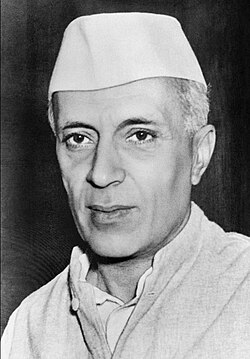
Kabir’s defence of Nehru as the moral compass of the Indian republic reveals something deeper than nostalgia for secularism. It exposes how much of India’s founding moment was shaped by a single man whose class background insulated him from the material and psychological stakes of Partition; stakes that Gandhi, Jinnah, Bose, Ambedkar, and even Savarkar understood far more viscerally.
Nehru was unique among the major players of his era. He was the only one born into national leadership, the only one who inherited a political position, and the only one whose life had been marked not by struggle but by access. While others were shaped by jail, exile, poverty, or ideological intensity, Nehru was shaped by privilege, and privilege has its own blind spots.
This matters because 1947 was not a moment for abstract idealism. It was a moment for negotiation between communities whose elites no longer trusted one another. On that task, Nehru was the least prepared of the principal actors.
I. Nehru’s Privilege Was a Constraint, Not a Qualification
Continue reading Nehru, Privilege, and the Missed Settlement of 1947