The usual.
But I’ll make a comment here. I am of the school that thinks facts matter a lot. Many of you trade in standard Hindu nationalist tropes and generalities about Islam. As someone who told Shadi Hamid on our interview, I am not a big personal fan of Islam, I don’t really mind people fearing Islam. I have personal experience of the religion after all.
But, facts matter. And a lot of the “facts” that get bandied about here are false. I won’t tolerate that. There are two general categories I will point to:
1. First, people take traditional Muslim historiography at face value. You shouldn’t. This is like taking Christians at face value when they talk about the Four Gospels are pure positive history, when they were finally compiled and redacted decades later. Whether Muhammad exists is an empirical question in the same way that whether Jesus exists is an empirical question. As it happens, I’m modestly confident both figures existed in some form but were quite different from what Christians and Muslims depict them as (I do suspect that Josephus was a later interpolation).
The broader issue here is that Muslims on the whole have not gone through the modernist transition in regards to a critical-rationalist take on their religion. In Christianity, traditionalist-fundamentalists exist, but they have to take dialogue with modernists as a given. They exist in large part as reactions to modernism. This is not the case with Islam. Muslims accept that non-Muslims reject their religion, but within Islam, there is not a strong rationalist engagement with their texts that applies the sort of criticism than the Germans pioneered within Protestantism in the 19th century. That means they present a “unified face” about their early history which too many non-Muslims take for granted. Islam with all of its constitutive elements is not truly recognizable to us until about 850 A.D.*
2. Because this is a blog with a South Asian focus a lot of Hindu nationalist tropes and facts get presented at face value. I don’t really mind them as mythologies that give people succor or create their identity, but a lot of them have as much factual basis as a pagan Mecca: not much.
Most of the Hindu nationalist commenters do reflect a reality of “lived experience.” As someone who grew up around South Asian Muslims, I can admit they have total contempt on the whole (there are exceptions) for Hindus and their “bizarre” beliefs. But, as someone who is personally anti-Islam and literally tolerant of diverse views, many people from Hindu backgrounds of all ideologies have told me what they really think of Muslims, and the contempt is returned.
My issue is always when people turn their personal experiences into deep historical insights. Do not do that if you don’t enjoy me jumping down your throat, because if I’m not busy, I will do so.
More broadly, lots of Indian readers would benefit from reading more history. Especially non-Indian history. A broad cross-cultural perspective is essential, so do more!
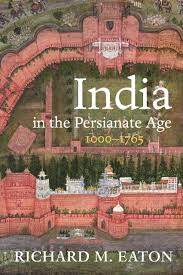
For the curious here are a few books:
– China: A New History
– History of Rome
– A History of the Byzantine State and Society
– A History of the Arab Peoples: Updated Edition
* The Shia-Sunni split starts to become discernible in a way we’d recognize, Hadith culture is already on track to marginalize the “philosophers” and Hellenists, and the ulema centered around madrassas spread from the east to the west.

 The thread is open. Three new podcasts this week in case you aren’t subscribed. Sometimes I get overwhelmed with things and I just can’t be bothere with detailed show notes.