
The third reader survey on this weblog. Please complete. The results are at this spreadsheet.
Tag: South Asian diaspora identity
AASI Y chromosomal lineage: haplogroup C

There was a conversation in the comments about which Y chromosomal lineages clearly descend from “Ancient Ancestral South Indians,” the people who have strong affinities to the eastern wave out of Africa. Though Y chromosomal lineage H is strongly localized to South Asia, it seems to have deep Pleistocene connections to West Asia, so that is not a clear candidate. Many “eastern” Y haplogroups have connections to East Asians, so it is not often clear which of the others might be AASI.
Reading a paper on Australian Aboriginal genetics clarified things. Many South Asian groups with no East Asian ancestry carry Y haplogroup C (e.g., Patels), which diversified 50,000 years ago between Australian/Papuans and Indians. This is clearly a reflection of deep-time connections across southern Eurasia and into Oceania.
Browncast Episode 97: Extraction!
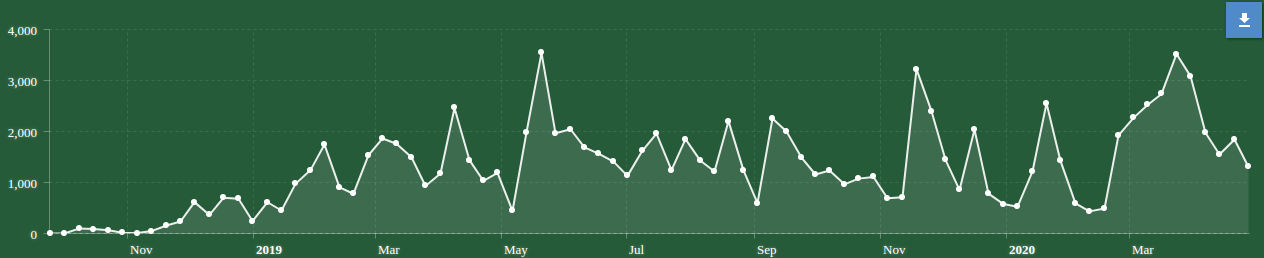
Another BP Podcast is up. You can listen on Libsyn, Apple, Spotify, and Stitcher (and a variety of other platforms). Probably the easiest way to keep up with the podcast since we don’t have a regular schedule is to subscribe to one of the links above!
Since we started the Brown Pundits Browncast we’ve seen significant listener growth. This is really a hobby and labor of love, so I’m pretty pleased with how it turned out. Though it’s by the Brown Pundits, the topic isn’t always “brown.” That being said, there is a significant number of listeners in India (especially with the topic is more Indocentric).
 Due to the costs of both recording software and storage space, I would appreciate if you could also support the podcast as a patron. The primary benefit now is that you get the podcasts considerably earlier than everyone else. It also compensates me for my admittedly mediocre editing (I’m a data scientist/geneticist). If we get more patrons I have reached out to have someone professional edit…but really we don’t have the funds now.
If you can’t give (in these times may cannot!), I would appreciate more positive reviews!
In this episode, I talk to my friend Sagar about the film Extraction, with Chris Hemsworth. It’s a short podcast, but fun and casual if you want to take a break from coronavirus (though I do ask Sagar about coronavirus in Finland).
Never Have I Ever
The new series on Netflix about a young Indian American teen is pretty good. Despite attempts to write about it in a political frame, I don’t see that it’s a political show really. There is also an element of verisimilitude to the show because the non-Indian love interests are of East Asian, Jewish, or mixed East Asian backgrounds. Too often when talking about dating and love outside of one South Asian culture there’s a temptation to assume “American” means Sven and/or the St. Pauli Girl. Southern California, where the show is set, is way more diverse than that, and unlike 90s sitcoms like Friends and Seinfeld Never Have I Ever actually seems like it was set in and around suburban SoCal.*
Oh, and I have to observe, that the protagonist is complected like a lot of the Indian Americans I grew up around.
* The protagonist did say “Hella,” which is very NorCal. I have no idea how that got past the writers’ room.
Razib Khan corona-casting in the time of coronavirus
I recently talked about coronavirus with our old friend Kushal Mehra. I decided this is probably a time where I can post all the different coronavirus related podcasts I’ve done. I started on February 17th, on my podcast with Spencer Wells. You can see all the podcasts in rough order of date recorded…
It’s not live yet, but I’m going to have an episode on Two for Tea soon (it was recorded before the two below, so I put it here).
Hindus are the most authentic Indians
 As someone who was raised in the United States as a person of brown complexion, I grew up as an “Indian.” This, despite the fact that the last time any of my ancestors were Indian nationals was before 1947. The main reason is that it is really hard to get people in 1980s America to know what “Bangladesh” was. Yes, there was a famine and a concert in the early 1970s, but this was not very well known. Since I had brown skin, and my parents ate spicy food, it seemed plausible to accept that I was Indian and just “go with it”.*
But, a problem with being Indian is that people assumed I was Hindu. I was raised Muslim (though never really a believer myself), so I had no ownership or connection to Hindu identity. Therefore, I would have to explain the religious discrepancy to my interlocutors. It wasn’t a major issue for me. After all, I wasn’t religious myself.
 As a grown adult, with children of mixed background who find my exotic antecedents amusing, I have had to reflect more on the relationship between India and its native religious traditions and identities. Hindus often make the accusation to Indian Muslims and Christians that these religion’s holy sites are elsewhere. In contrast, southern Asia is the locus of “Hindu” spirituality. The sacred geography of Islam in Arabia, the Levant, and for Shia and Sufis more broadly across the Near East (with some expansion in other areas for Sufis, though these are secondary). For Christians, the locus is in the Near East and Europe. But I think this focus on Islam and Christianity takes the eyes off the major prize.
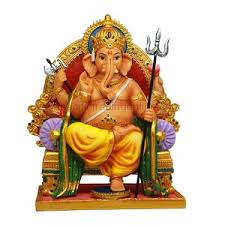 What does it mean to be Hindu?** I think that it is clear that Hinduism is a precipitation of the indigenous religious traditions of India, a fusion of numerous strands which are quite distinct. As a non-Hindu it is not my role to adjudicate on what is, or isn’t, Hindu, but it seems quite clear that there is something distinct from Islam and Christianity, and that that distinctiveness is usually due to indigenous aspects (some of which were exported through Buddhism out of India). Al-Biruni saw this. Hindus themselves saw this even if they did not think of themselves as a confessional religion.
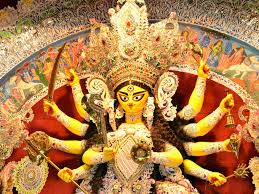 This doesn’t mean that non-Hindu Indians and subcontinentals are not distinctively South Asian. Look at a street scene in Pakistan, and it looks more like New Delhi than Tehran. The people, the color, the foods and density. But for various reasons Pakistanis have rooted their identity in Islam, and this makes identification as subcontinental awkward for many Pakistanis, because Hinduism suffuses subcontinental identity. The word Hindu after all originally just meant Indian.
Let’s use an analogy. Imagine that Iran was divided into multiple states. One to the west was mostly Shia. One to the east, inclusive of Tajiks, was mostly Sunni. Finally, in the middle was a numerically preponderant Zoroastrian state with a Muslim minority. I think it would be hard to deny that Zoroastrian Iranians would feel a stronger identification with being Iranian full-stop, because Zoroastrianism is a religion which emerged in an Iranian matrix (Bahai and secular Zoroastrians in the USA give their kids more “Iranian” names usually than even nominal Muslims). In contrast, Muslim Iranians would feel affinities with Arabs and Turks and other groups all around them through fellow-feeling of religious brotherhood.
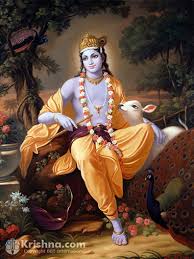 The point of this post is not to take a particular stance on whether India is or isn’t secular, or should or shouldn’t be secular (whatever that means in India, which is different from the United States). Rather, it’s to acknowledge the “elephant in the room.” Growing up around my parents’ Indian, Pakistani, and Bangladeshi friends, there was always the reality and tension that they had non-subcontinental attachments and identification, in theory. The theory part is made salient by the reality that my parents socialized with Hindu Indians and Bangladeshis (generally Bengali, but not always), but never with Muslims from other regions (the sole exception was when I had an Indonesian best friend, though my parents complained that the Indonesians weren’t very good Muslims anyway so what was the point?). They were foreigners in concrete terms, though there was an abstract brotherhood implied by faith.
Growing up in a family that is Muslim being exposed to the religion at the multiethnic masjid was a cosmopolitan experience. It was a West Asian dominated space. The difference with brown people that are Hindus is that with rare exceptions every religious space has a rootedness in being Indian. To be religious is to reinforce Indianness, subcontinentalness, South Asianness.
The title of the post is pretty explosive. But I am pretty sure none of my descendants that I will live to see (grandkids) will identify as Bangladeshi or subcontinent, so I think perhaps I can be a bit objective and detached. My legacy is going to be in North America, not South Asia. My family’s transition into being Muslim centuries ago opened up a whole new international world. But it also unmoored us from the soil in which we were nourished. Bangladeshi Muslims are still trying to deal with that and work through it.
* To be clear, I never said I was born and raised in India. I would simply say I was born in Bangladesh, which is near, and like, India.
** I can substitute “Dharmic” for Hindu and keep 90% of my argument the same
Browncast Episode 94: Amey and Amit, Indians, not South Asian
Another BP Podcast is up. You can listen on Libsyn, Apple, Spotify, and Stitcher (and a variety of other platforms). Probably the easiest way to keep up the podcast since we don’t have a regular schedule is to subscribe to one of the links above!
 You can also support the podcast as a patron. The primary benefit now is that you get the podcasts considerably earlier than everyone else. This website isn’t about shaking the cup, but I have noticed that the number of patrons plateaued a long time ago.
I would though appreciate more positive reviews! Alton Brown’s “Browncast” has 30 reviews on Stitcher alone! Help make us the biggest browncast! At least at some point.
This episode is a discussion with regular guests Amey and Amit, two Right(ish) and American(ish) people of Indian origin. Their main beef on this podcast is with terms such as “South Asian”, and it means and doesn’t mean…
Being right-wing is just a thing, no matter the color
The Juggernaut has an amusing piece Seema Verma and the #DesiWallofShame, which basically assumes that any brown person (Indian American) who has non-liberal beliefs must be exhibiting either false consciousness or self-interest. The piece reminded me of this PLOS ONE piece, The Moral Stereotypes of Liberals and Conservatives: Exaggeration of Differences across the Political Spectrum:
Across the political spectrum, moral stereotypes about “typical” liberals and conservatives correctly reflected the direction of actual differences in foundation endorsement but exaggerated the magnitude of these differences. Contrary to common theories of stereotyping, the moral stereotypes were not simple underestimations of the political outgroup’s morality. Both liberals and conservatives exaggerated the ideological extremity of moral concerns for the ingroup as well as the outgroup. Liberals were least accurate about both groups.
This part of the piece was quite funny to me:
In the months after Verma was confirmed in 2017, South Asian American activists such as Deepa {{{Iyer}}}, Anirvan {{{Chatterjee}}}, and Esha {{{Pandit}}} started noticing that there was an abundance of Indian Americans in the highest echelons of the Trump administration.
“It was so surprising and jarring to see someone brown supporting policies which harm South Asian communities, immigrant communities, refugees, Muslims, and other communities of color,” explained Iyer. For example, Trump’s efforts to deport DREAMers and other undocumented immigrants could affect over 22,000 Indians and Pakistanis. “A group of us that felt like it would be important to raise awareness and ask, ‘What does that mean when they’re supporting and advancing the goals of administration that is clearly pursuing an agenda of Islamophobia, xenophobia, racism?’”
Many years ago there was an attack on Michelle Malkin as the “Asian Ann Coulter.” Malkin, and even some liberals, suggested that really she was just Michelle Malkin. Her “Asian” ethnicity was immaterial.
Similarly, don’t be surprised that someone of a particular color or ethnicity has views that differ from your own. People are diverse in their views, no matter their physical type or cultural heritage. Since Deeper {{{Iyer}}} is a progressive she doesn’t think that she could ever be racist, but the idea that just because someone is of a particular color they should be the ideology that you prefer they be, that’s kind of racist.
The stupid part of the #DesiWallOfShame is that you should “shame” Veerma, Pai, or Haley, based on their beliefs and actions. Their ethnicity is irrelevant. There’s no #GermanAmericanWallOfShame for Donald Trump.
Browncast episode 89: Dr Sunny Anand, part 2
Our conversation with Dr Anand was interrupted due to technical problems, so we recorded another session. This is session two of our talk with Dr Anand..
You can listen on Libsyn, Apple, Spotify, and Stitcher (and a variety of other platforms). Probably the easiest way to keep up the podcast since we don’t have a regular schedule is to subscribe to one of the links above!
As mentioned in last week’s session, Dr Sunny Anand is a highly esteemed Pediatric intensivist at Stanford who also works with the heart to heart foundation and provides quality heart surgeries and cardiac care across India (and other countries) in collaboration with Sai Sanjeevani hospitals. He talks about his work, the services provided by this chain of completely free top-of-the-line heart surgery centers, healthcare in the India and the United States, etc.
Those wishing to learn more about the heart to heart foundation (chaired by legendary cricketer and gentleman Suni Gavaskar) can check out their website here.
The Problem With The Juggernaut Is Its South Asianness
For whatever reason, Facebook recently thought I might be interested in the subscription South Asian themed webzine and newsletter The Juggernaut. I don’t mind paying for media. I pay for The New York Times, Bloomberg, The Washington Post, and The Wall Street Journal. But why should you pay for The Juggernaut? Here’s a snippet from their about page:
It’s like your other email briefings. But browner. Join thousands and get the newsletter that curates the best global news on South Asia(ns) every Sunday. We also send updates on events, giveaways, our original reporting, and more. Unsubscribe anytime.
There are some good stories in The Juggernaut. I especially liked “Not Indian Enough” by Sabrina Malhi, a Guyanese American of East Indian ethnicity. This is a good piece of journalism because it shines the light on a topic and experience that’s underexposed, the liminality of being of Caribbean East Indian background. I learned a lot.
But the problem with The Juggernaut is that it strikes a pose as “South Asian,” which like “Social Justice” or “Family Values” is innocuous on the face of it, but connotes particular affinities, identities, and preoccupations, which are exclusionary of vast swaths of its potential audience. Back when the Sepia Mutiny blog was a thing I went to some meet-ups, and one thing that I noticed is that despite the focus on inclusive South Asian language on the internet, privately most people were conventionally nationalistic in regards to where their parents came from.
People didn’t talk about Desi or South Asian, they talked about Indian identity.
Since then the political and social cleavages have polarized. The Juggernaut is a pretty conventional distillation of progressive Diasporic poses. It focuses a great deal on marginalized elements of the brown experience and is lockstep with the global Left in a deep skepticism of Hindu nationalism.
There is nothing wrong with that. But it’s just one viewpoint and a viewpoint that seems extremely overrepresented among the Diasporic media class. There are potential readers who are somewhat outside of this progressive South Asian American exoteric box. I wish publications like The Juggernaut had enough viewpoint diversity to reflect and attract them.