
This post is triggered by some posts from XTM in the past and some discussions on the BP whatsapp group.
This is not a referenced essay but more of a summary of my evolving position on the history jAti and varNa. I am neither a history or genomics scholar and this is an essay of a reasonably well informed layperson who has gone deep in the speculative prehistory of Indian subcontinent.
The first thing to note is the difference between jAti and VarNa.
jAti is a endogamous population – maps on to English word Caste. Identity into a jAti is a lived reality for billion Indians.
varNa is a hierarchical abstraction which is presented in Vaidik texts which does and doesn’t always map neatly on to thousands of jAti groups. I would wager that varNa mattered for the Brahmanas and at times to the Kshatriyas as their jAtis map neatly on respective varNas.
This post will focus on varNa, I will cover jAti in some other post briefly.
For a bit more on jAti: Early Hinduism – the epic stratification – Brown Pundits
on varNa:
During the composition of the ṛgveda the priests and the warriors were the prime movers of the Arya society hence designated Brahmanas and Rajanyas. This bifurcation is common among a lot of society where the physical and spiritual power is owned by different elites who in a sense rule the society. These two communities were to become two Arya varNAs. The third varNa called the Vaishyas were originally the remaining people. The word Vaisya comes from Vish which means people. So all farmers, craftsman, artisans etc would come under the word Vaisya initially. This much can be asserted with certain degree of confidence.
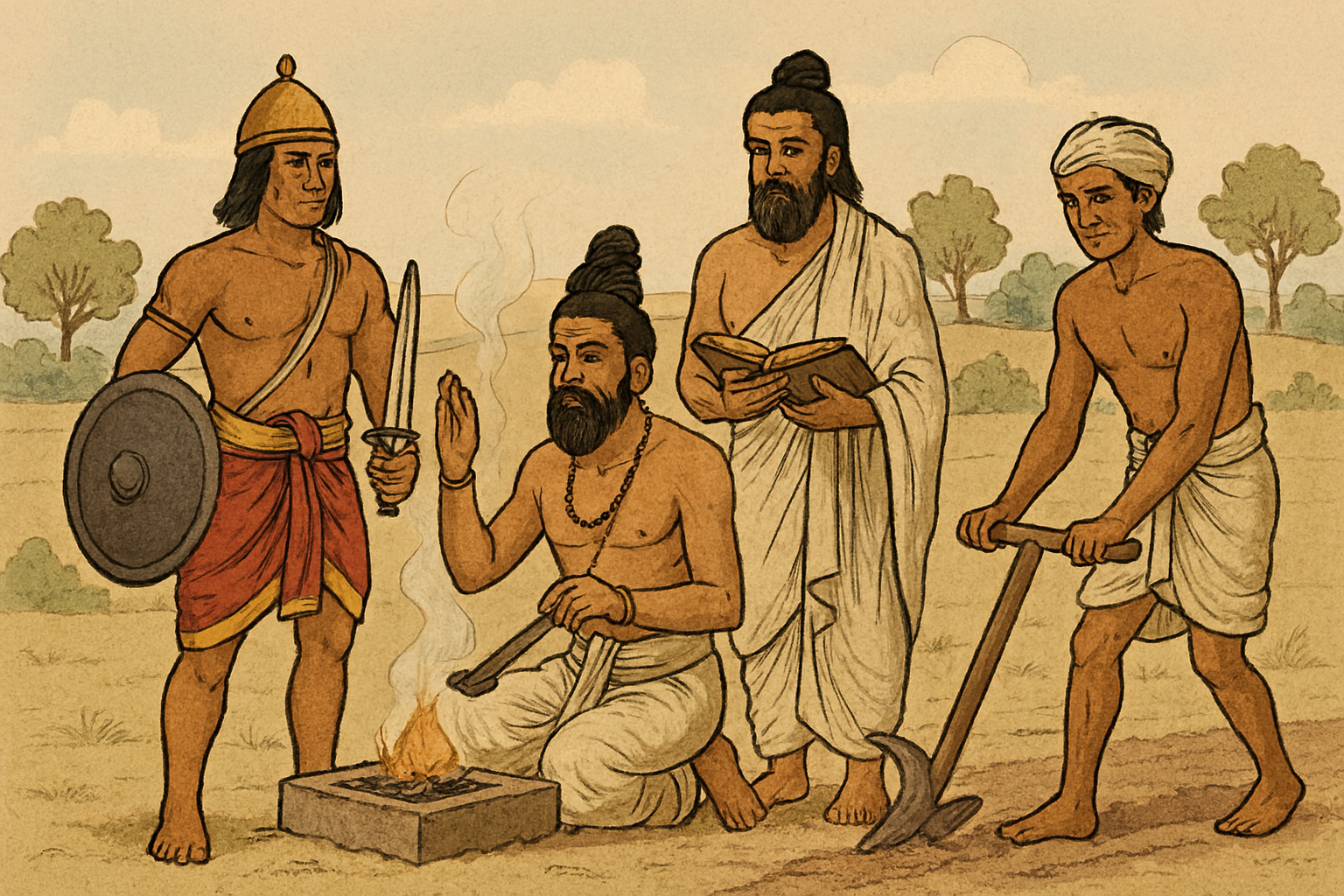
The origin is the fourth varNa – Shudras is not as crystal clear but its safe to bet that initially the outsiders (non Arya) were called Shudras. The word is used to denote someone who doesn’t follow the proper Arya rituals at places or someone who is a defeated enemy or someone who is a labourer. So as Arya communities were forming during the early Vaidik period after the collapse of Harappan civilization, the outsiders who were defeated and assimilated were termed Shudras. This label also applied to populations outside the core Vaidik area who were kings and rulers in their own right in complex pastoral and farming societies. The cultures of Deccan and Peninsular India at this time would also fall in this bracket (precursors to speakers of Dravidian languages of today).
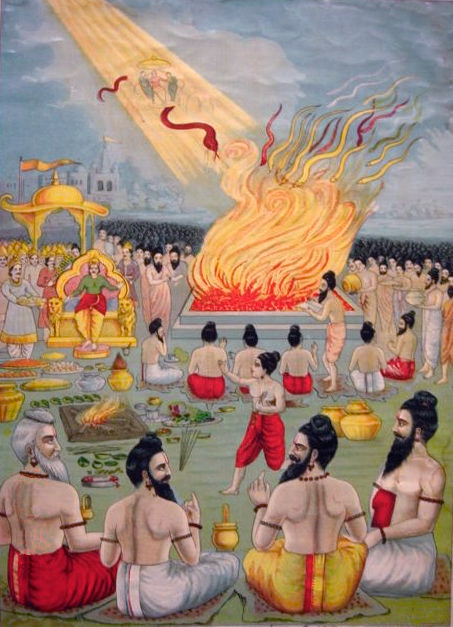
Aryavarta (Land of the Aryas) expanded mimetically through lavish sacrifices and tall poetic tales (later Epics). Instead of building complex structures, the Rajanya class (later Kshatriyas) from the core Indo-Gangetic region (Aryavarta), focussed their wealth on conducting extravagant sacrifices (Yajnas) like Asvamedha and Rajasuya to assert their strength. The template was set by Vaidik Rajanyas and slowly people outside the core Vaidik area began to emulate their peers. Non Arya rulers invited priests to conduct spectacular sacrifices to rival the Rajanyas. These Non Aryas were gradually assigned the Kshatriya varNa along with the original Rajanyas. I would wager that priests from non Arya cultures were assimilated into the Brahmanas. Those from outside who didn’t keep their power became the Shudras. But this designation also was by no means settled.
Every now and then we have Shudra monarchs especially in the Eastern and Southern part of the subcontinent. Its worth noting that even thought a dynasty may be of Shudra origins, they likely re-wrote their histories once they attained power. Some of these rulers claim to have conducted even grander sacrifices than the Kshatriyas 1.0 and 2.0. Conversely, Kshatriyas and Vaishyas who lost their power or wealth might have lost their varNa.
a-varNa
(Co-Pilot wouldn’t help me with a representative image as its termed offensive)
Even now a vast number of people were outside this matrix of abstract varNa and secular Kshatra. As AryaVarta continued to expand it encountered the people on the margins. The template of absorbing the elites into the elite varNas would slow down eventually. Every now and then the outsiders would not be integrated into the varNas but remain outside as a-varNas. When this became happening is debatable but its safe to assume that around the time of Manu smriti, Arya-Varta had a significant proportion of a-Varna population. Over time ritual status was assigned to the outsiders and they became the untouchables.
I think this practice evolved like slavery as suppling an eternal supply of low cost labor (especially for dirty tasks). The a-varNa need to be distinguished from the Shudras who could accumulate wealth and status. So it could be a combination of (a) tribes whose professions were deemed unclean (b) defeated people forced to do unclean professions or probably a combination of both.
Another group of people were to remain outside the Arya social system, the tribals. But it would be unfair to club the tribal communities with a-varNa. Tribal people had wide range of experience of interactions with the mainstream from domination and competition to servitude. Some tribes may have been absorbed into the a-varNa groups but that is not a generic template.
The varNa fluidity:
As Merchant guilds began becoming powerful around the times of Mahajanapadas, the Vaishya Varna began to become more associated with the Merchant class. Artisans, farmers and ordinary soldiers began to be associated with Shudra varNa. Today its quite common to associate the Vaishya varNa with traders and merchants but it wasn’t always so.
Similarly its quite possible that some a-varNa clans could lose their shackles but its fair to assume that this fluidity kept reducing in the common era. Last thousand years the varNas have not been fluid – especially for the a-varNas.
The Ossification:
I have written an entire blogpost on why the jAti-varNa matrix began to ossify and when.
Co-Pilot summary of this post:
The essay explores how early Hinduism’s caste stratification evolved through interactions between Vedic Brahmanical traditions and Sramana schools like Buddhism and Jainism. It argues that concepts of karma, rebirth, and dharma—emphasized by Sramanas—helped justify and ossify the Varna hierarchy, linking birth to karmic retribution. Over time, this moral dimension reinforced endogamy and rigid social divisions, especially during the Gupta era. The author speculates that pre-Aryan tribal endogamy combined with Vedic ritual purity and karmic philosophy created the uniquely enduring Jati-Varna system in India
The Kaliyug cope:
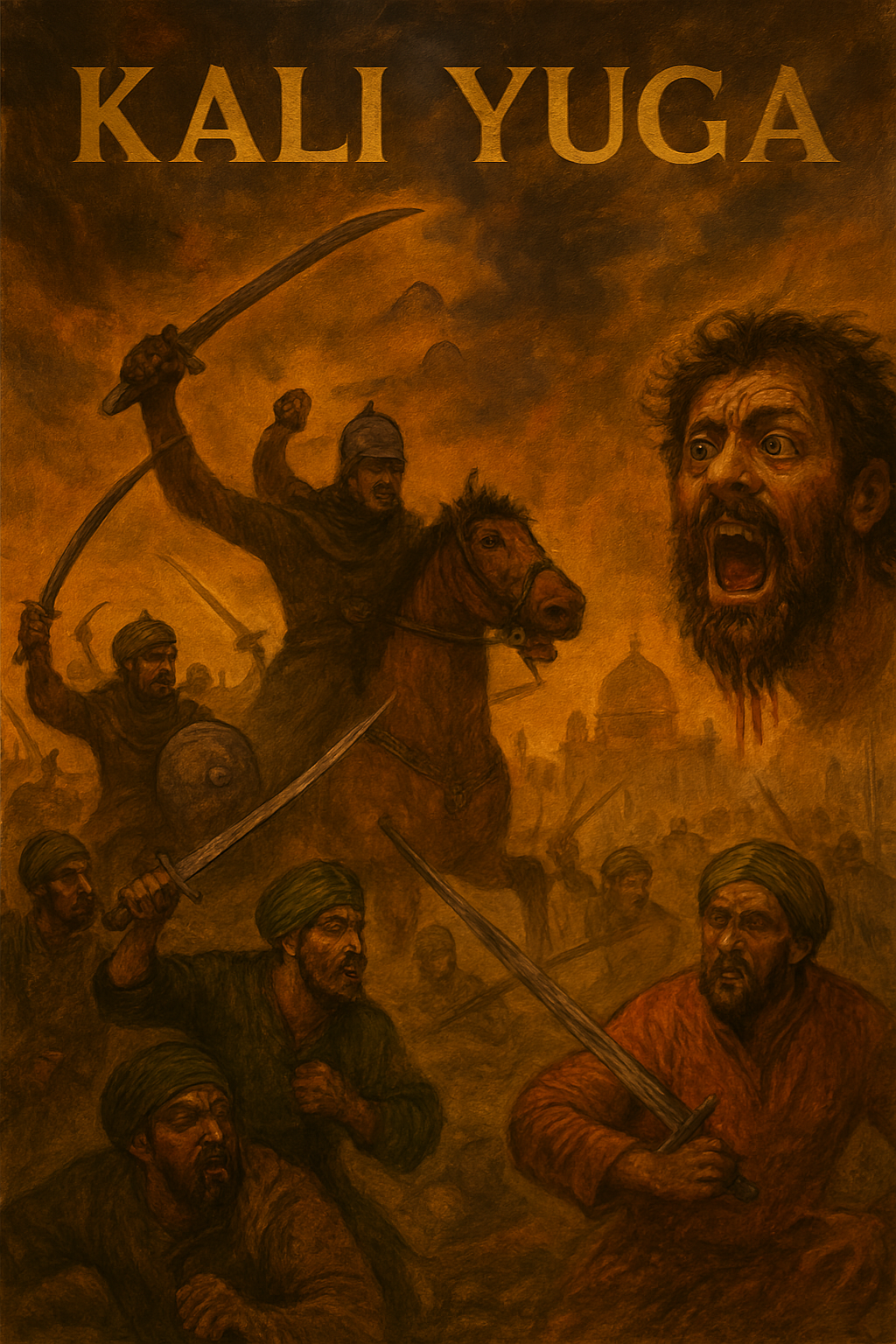
From the turn of the century, the subcontinent was always under attack from North West, Yavanas, Shakas, Kushanas, Hunas and final Arab and Turks. It is my belief (and also of some scholars) that the ideas of Kali-yug were a response to these invasions. A Yug when idealised Vaidik society was destroyed.
Islamic conquests of India began in the 7th century itself but it wasn’t till the 13th century that the entire subcontinent was touched by the crescent scimitar. While the concept of Kali-yug might be older than Islamic incursions into the subcontinent, I think they were imagined sufficiently during the Islamicate age. Some of the Brahamanas who survived (entire Shakhas of Vaidik learnings have been wiped out) saw Kaliyuga as the yuga where only 2 varNas exist – Brahmanas and Shudras. While some Kshatriya clans retained the memory of their ancestry during the Islamic time and reformulated as Rajputs, a lot of Kshatriyas and Vaishya lost the touch with their ancestry. While most of these groups have myths of their descent from Yadus or Ikshvakus, these claims did not get Brahmana (and Kshatriya) stamp of approval in the medieval times.
On psychological level one can understand this statement – Kali-yug contains only Brahmanas and Shudras as a coping mechanism opted under the yoke of Barbarians. Naturally wealthy landed castes who may have descended from Kshatriyas or Vaishyas were seen as Shudras. The Kadambas, Rashtrakutas, Yadavas, Chalukyas, Cholas, Gangas, Pandyas and Cheras all claimed Kshatriya descent. If this is assumed to have some merit, its not logical to assume that all the descendants of these dynasties and their power structures went extinct. Its more likely that the elites from medieval times became the wealthy landed and mercantile elites without some deviation (on the coattails of the brits).
Brits and modernity:

The Europeans began documenting varNa with the arrival of Portuguese (Casta). But the modern understanding began to truly take shape under the British rule. I will only quote the Co-pilot summary of Nicolas Dirk’s fantastic book here.
Nicholas Dirks’ Castes of Mind argues that the modern idea of caste as India’s defining social system was largely shaped by British colonial rule. While caste existed earlier, it was more fluid and intertwined with local, regional, and occupational identities. Colonial administrators, obsessed with classification, codified caste through censuses, ethnographic surveys, and legal frameworks, turning it into a rigid hierarchy. Dirks shows how this “ethnographic state” reified caste as the central lens for understanding Indian society, overshadowing other identities. The book highlights how colonial policies and scholarship created enduring structures that continue to influence politics and social life today.
In essence, varNa and social stratification is surely older than even the Roman colonisation of Britain, what we understand today as Caste is significantly shaped by the British intervention into India. The emerging economies have offered upward mobility for some while relegating others to medieval times. In many cases, artisan communities continue to see their economic status significantly degrade with mechanisation. Present Caste identities and economical realities are much more downstream of the economic exploitation and changing economy due to industrialization than abstractions like of Dharma-Shastras.
In the theatre of Indian democracy, the first-past-the-post script ensures caste takes center stage — louder, sharper, more enduring than ever before. And as present-day passions spill backward into history, they stir the ancient pot with fresh fervor, adding new tadka to a saga already simmering with spice and strife.
Post Script:
I am generally liberal with comments, but i will exercise moderation for repeated stupidity on this post.

But the modern understanding began to truly take shape under the British rule.
Long before the British.
You say
but its safe to assume that around the time of Manu smriti,
Arya-Varta had a significant proportion of a-Varna population.
The concept of Varna was very clearly defined in the Manu smriti,
Independent India had the opportunity to break from the past. But they still persist in taking Caste census.
Some questions points
a)It might help to give the Etymology of Varna and what it means to to Non Indians and non Hindus,
b) What is Aryavarta (Land of the Aryas)
Is Arya the same as Aryan (Iran is the land of he Aryans(
Are Arya people from another region.
Can they be defined by genetics or any other criteria
b) What is the proportion of a-Varna population in modern India. I guess you could use a caste census
What is Aryavarta (Land of the Aryas)
Its a more esoteric or political concept ; region over which Aryas resided. all Early Baudha and Jaina scholars also stressed on their Aryaness. Its more a cultural criterion.
What is the proportion of a-Varna population in modern India. I guess you could use a caste census
Its 12-15% with some variation across geographies.
Scheduled Castes and Scheduled Tribes – Wikipedia
Independent India had the opportunity to break from the past. But they still persist in taking Caste census.
Ironically its the “Progressives” today who want a census and Hindutvavdis who kinda want to move on.
India is a state which gives specific benefits to marginalised including representation; So it kind of makes sense to have these census. But as you rightly alluded – its detrimental to the social fabric in long run. But now the Jinn is out of the lamp
You forgot to answer these questions.Once you answer them I will comment on your answers above
Some questions points
a)It might help to give the Etymology of Varna and what it means to to Non Indians and non Hindus,
b) What is Aryavarta (Land of the Aryas)
Is Arya the same as Aryan (Iran is the land of he Aryans(
Are Arya people from another region.
Can they be defined by genetics or any other criteria
a. Can’t say. I have heard 2 supposed roots but can’t chose.
b. Is this a Question ? Or just rhetorical comment because this is pretty much common knowledge unless u are living under a rock.
Arya is a self designated term used by speakers of Indo Iranian languages – even later Scythians called themselves some form of Arya.
a( Etymology of Varna
As you seem coy about it, I have heard it means color
because this is pretty much common knowledge unless u are living under a rock
Please, I am not a Indian, Hindi speaker or Hindu.
So these are genuine questions
b) Is Arya the same as Aryan (Iran is the land of he Aryans(
b-ii) Are Arya people from another region.
Arya is a self designated term used by speakers of Indo Iranian languages
Can they be defined by genetics or any other criteria. Or does anyone say African who speaks say Hindi call oneself Arya and be accepted in the Arya people
My last comment on this thread as you seem to be bordering on bad faith:
a.
As you seem coy about it,
I have heard it means color=>
etymology is root not meaning ; in case u want to understand.
its root is from vr: it can mean a variety of things – like to
choose/classify => leads to work profession etc
cover/envelop => outward appearance => color.
So hence i cant say which is the reason for the word – its vague enough and not even linguists can be certain about these things;
Its very common in language for a word to mean one thing today and different in few centuries.
b.
Aryan is anglicised version of Arya – the same word;
Same word which gave rise to name Iran.
Ancient people used to call themselves Arya – no one seriously calls themselves Arya or India Aryavarta. And those who do are essentially writing their own definitions to suit their own narratives. I am using the term in an historic sense, in contemporary setting i would use the term Hindu not Arya.
Would orthodox Vaidikas accept a foreigner as Arya => probably NOT except in exceptional cases. A lot of orthodox Vaidikas wouldnt even accept me as their fellow but who cares ? its not up to them
Would a movement like Arya Samaj accept foreigners -> yes it does and has non Indian European and African members. Same is true for other proselytising arms of Vaidik(Hindu) culture
Journey Of A Hindu From Nigeria: My Tirtha To Bharat – Indica Today
Can they be defined by genetics or any other criteria.
I will answer this once as you claim to be not acting in bad faith
Typically by contemporary geneticists the “Sintasta-like” Steppe ancestry is considered a marker for ancient Arya. I believe that to be true but have to specify it with caveat as its not a 100% thing. The argument against this theory isnt as stupid as some consider. I would be 100% sure myself though i lean one way
{Deleted}
GL:
I am generally liberal with comments, but i will exercise moderation for repeated stupidity (and bad faith) on this post.
This is true that present Caste identities and economical realities are much more downstream of the economic exploitation and changing economy due to industrialization.
the ideology of caste was a powerful, oppressive force long before industrialization or colonialism. fundamental issues of purity, pollution, and untouchability were and are deeply ingrained features of the Brahmanical social order. The British did not create the oppression; they administered an existing oppressive system in a new, rigid way.
industrialization.was inevitable. I guess, whatever Dalit emancipation we see in India today became possible only after external modern institutions weakened the caste order; the traditional upper-caste–dominated social system had neither the will nor the capacity to reform itself.,
Author does not mention the role of Mandal. Just as British administrators transformed caste into a rigid bureaucratic identity, the Mandal framework also institutionalized caste categories. thus making making caste more visible, durable, and central. But it also had benefits. Empirical evidence indicates that OBCs experienced accelerated upward mobility after Mandal, particularly in education, public-sector employment, and income. States that implemented OBC reservations earlier or more robustly saw stronger gains, supporting a causal link between Mandal and mobility.
yes. i missed it but i had to finish the post by a certain time;
I guess the biggest reason for persistent issues would be the fact that India didnt grow at rates of Eastern Tigers in 50s – 80s.
Missed the chance of lifting a lot out of utter poverty.
Mandal might not have occurred with rapid growth which would be lessened the hardships for the OBCs and even SCs
I guess the biggest reason for persistent issues would be the fact that India didnt grow at rates of Eastern Tigers in 50s – 80s.
Cart before the horse.
Maybe the economy did not grow because 70% of the population (shudras and below) were marginalized
No – it didnt grow because India adopted stupid Socialist methods which dont work before wealth is generated.
Same population has seen massive growth post 1991 (post liberalization) when economy opened up.
Grind your Axe elsewhere.
{Deleted}
GL:
I am generally liberal with comments, but i will exercise moderation for repeated stupidity (and bad faith) on this post.
Interesting comment
in an agrarian economy every body had their roles and jobs. brahmins were clerks and accountants in south india ( kulkarnis, karniks, shanbougs) in addition to priests and teachers. there was no brahmin domination as being alleged now. the power was with the village headman or patel.
if the brahmins were so dominating, they would not have run away at the first instance of oposition to the syatem (karnataka land reforms, etc).
brahmins are not responding to this narrative as they don’t care and their voices do not matter. it might matter to an small extent in north india.
yes, there are two pyramids, one social and the other economic and power. with the advent of secular education ( which was to meet the needs of ‘modern’ rulers) macaulay putras were produced. those from the non brahmin castes while keeping their economic and political power ( patels, zamindars etc) wanted to occupy the social space of brahmins and demanded / are demanding that brahmins forgo their social capital. ironically they are not willing to give brahmins a a piece of their cake ( eg, even half acre of land with brahmins was given to relatively well off shudras under land to tiller acts).
this has created a new interesting scene, but that is for another day!!!.
Yes true , the social hierarchy Brahmins are born with may or may not be economic or political capital.. the Brahmins certainly had leading advantage in education and learning. But many upper and some OBC castes have more economic and political power than Brahmins.. unfortunately these dominant OBCs are most benefited from Mandal.. but Mandal reservation also gave some hope to not so economically powerful OBCs and they got interested in education and got jobs etc and social as well as economic upliftment.
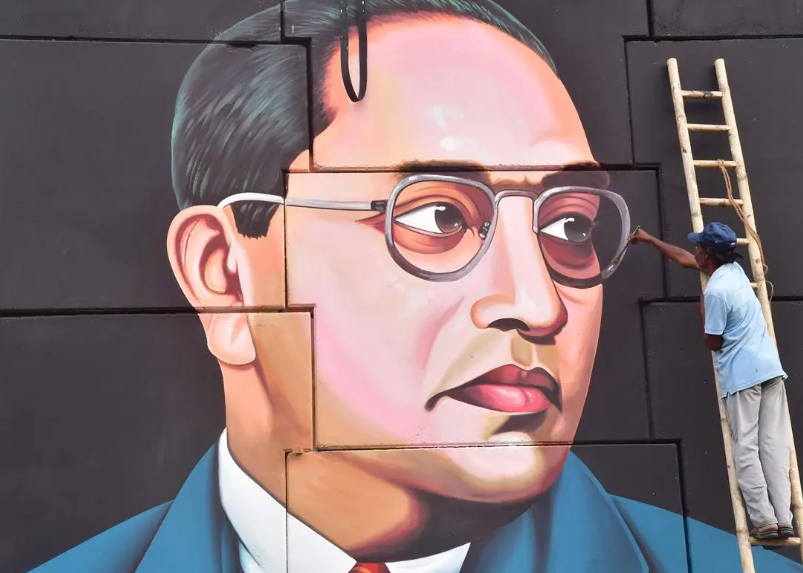
but Dalits had no land, no village power, no legitimacy . They were treated as polluting were excluded from education, institutions . Without Britishers and Ambedkar , Dalits had no hope.. only constitution has protected them. Dharma had completely abandoned them.
Non land owning upper castes has retained high power and private-sector dominance in the industrial society through early entry, education, and self-reinforcing networks. Moreover , caste still exists and so is their social hierarchy.
well worth repeating
Without Britishers and Ambedkar , Dalits had no hope.. only constitution has protected them. Dharma had completely abandoned them
Missionaries, yes,but its hard to think of a single well known colonial administrator that could be considered a pro-dalit activist.The list of native reformers, hindus and others, is long and diverse. Shahuji Maharaj of Kolhapur was a titan in this regard. the kings and princes of Baroda, Mysore, and Travancore made their contributions, the first being the primary sponsor of Ambedkar. Phule and Narayan Guru are biographies to explore as well. The Lingayat Maths were sponsoring hostels and mass education for rural dalit children more than a century ago. My general impression is that colonial authorities weren’t in a position to expend political capital for this sort of thing and perhaps left the social reforms to missionaries to pursue, if they were bothered at all.
girmit
well known colonial administrator that could be considered a pro-dalit activist.
More to the point was that the colonials did not actively discriminate against Dalits and Shudras. Quite different than the local heirachy.
Keep in mind Ambedkar was allowed his early education because he was a the son of a Maratha soldier in Brit Army,
Ambedkar studied economics at Columbia University and the London School of Economics, receiving Doctorates in 1927 and 1923,
Did Ambedkar get scholarships to LSE or as he sponsored by the likes of the King of Mysore.
Whatever, discrimination against 70% of its people has made India lose much of its human capital
Even now approx of 20-30% population of the larger states are illiterate
https://en.wikipedia.org/wiki/List_of_Indian_states_and_union_territories_by_literacy_rate
Very nice comment
The examples given here are very valid particularly Shahuji Maharaj. He was indeed exceptional. But its scale was very minimal. It was just a small kingdom. The political will of most kings , elites including the leaders of INC was different and they were not interested in any reforms like Shahuji.
Ambedkar’s view in the essence-
• Hindu society was the primary oppressor
• British rule was not liberating
• But it was less suffocating than upper-caste domination
His famous logic: Under Hindu rule, Dalits had no rights; under British rule, they had at least law..
In his view, Pre-colonial Hindu social order denied Dalits:
• legal personhood
• standing in courts
• enforceable remedies against upper castes
Colonial rule, for all its injustice, introduced:
• courts with written procedure
• equality in principle before law
• the possibility of appeal, contract, education, employment
British rule created a forum where caste could be challenged.
A language of rights and a record of discrimination was made.
Without that, Ambedkar could not have litigated . organized and drafted constitutional remedies later
In the Independent India , Ambedkar wanted:
• Strong state enforcement
• Social democracy
• Breaking caste power, not just managing it
What he got:
• Constitutional guarantees
• Reservations
• Abolition of untouchability
What he did not get:
• Systematic dismantling of priestly or landed caste dominance
• A Shahuji-style administrative purge of elite monopolies.
The caste system of India is a very big problem. There were no clean solutions because caste is not just an institution — it is a civilization-level inheritance system. Civilizations don’t undo those gently. The solutions that fully dismantle caste require either a coercive state like China, a victorious counter-religion, or a mass revolution. India chose none of the three.
Quite Comprehensive overview and in a very readable point form.(I am saving it)
The solutions that fully dismantle caste require either a coercive state like China
Totally agree.
China is officially Atheist and all CCP members are required to atheist.
To me the proof of the Pudding is the economic and social success
The solutions that fully dismantle caste require either a coercive state like China, a victorious counter-religion, or a mass revolution. India chose none of the three.
I think these all are bad options to have;
I still think the Ambedkar – INC compromise was the only feasible option and we have to see what good has been achieved under it. Conditions for Dalits are better today than any time in the history.
I would count it as a win – while stating there is a long way to go
Or maybe a British style soft monarchy could achieve more than truly Democratic India. But its a big Maybe
When have mass revolutions achieved what they sought to do ?
It did in China/
Ravaged by civil war and Japanese occupation
It was a very poor country with drug addiction (opium from India)
Literacy is estimated to be 20% in 1950
Look at China now. A real world power and the fastest in going from poverty to upper middle wealth
It is a success in one way but i dont think we can call China a success purely on eco parameters – but Tibetans and Uighurs dont think so.
Also comes with the death of god knows how many during the revolution – i dont think thats a success. I am in favor of piecemeal British approach to reform.
Also comes with the death of god knows how many during the revolution
Indians are dying daily due to poverty and malnutrition
Indian Infant mortality rate is 24/per 1,000 live births. (It was 70 a few years back)
You can work out how many have died as infants since independence (In the millions)
Tibetans and Uighurs are doing quite week on HDI measures compared to India
eg Tibet
Tibet GDP/capita USD 10,640 in 2024,
Tibet Avg Life expectancy 72.19 years in 2021
Tibet Infant mortality 7.6 to 11.59 per 1,000 live births
China grew after economic reform in 1980s.
Chinas great revolution in 1950s-60s has to be a giant failure on those metrics.
1980s reforms weren’t “revolution” but kinda incremental in a totalitarian setup.
FYI: china has forcibly sterilized people (Xighurs claim) and enforced extreme 1 child policy which involved even forcible abortions;
Would favor that ?
If India were to do something like that (succeesfully) you would see a sharp drop in infant mortality
Many Indians abort females. That is why more males than females (urban areas lag (985 females/1000 males)
China does too with one child policy. Push to have a male child.
If India were to do something like that (succeesfully) you would see a sharp drop in infant mortality
Infant mortality is a function of Public Health services Sri Lankas infant mortality 5 to 6 deaths per 1,000 live births. A first world HDI statistic
It might help if Indians compare their country to Sri Lanka and Thailand instead of Pakistan
It might help if Indians compare their country to Sri Lanka and Thailand instead of Pakistan
100% in agreement (u would be suprised i would agree with almost most of ur criticisms while adding a few of my own );
Comparing urself to Pakistan is just cope
would u prefer Chinese 1 child policy and the way its enforced?
Take it one step ahead and not allow to abort female child.
Would u support it?
would u prefer Chinese 1 child policy and the way its enforced?
Yes. An overpopulated country that the economy cannot support is a cursed place to live. The US is getting there, homelessnes, drug addiction
China’s (and Japan) future problem is that the young generation are not having children. Similar issue in some parts of Europe. Wealthy nations issue.
I personally think SL is overpopulated. 10-15 million OK. Educated women and family planning seems to help/
Overpopulated with monkeys and wild boar too, 40% of our agriculture is lost to wildlife. At some point SL will have to forget Buddhist principles and cull some of the wild life.
Note: I dont have children. So with another 10 or so classmates.
SL is still fine viz Population.
India should house 50crore imo. We are fast approaching 150. Let’s seen what happens
apples vs oranges. SL should be compared with KL in India. Both have same pros of High HDI but also similar cons of negligible industry and fiscal deficits requiring periodic external bailouts.
*High HDI powered by remittances from Gulf + West.
SL should be compared with Kerala in India. Both have same pros of High HDI
No questi9on. Better to have high HDI specially for the poor. Those who go to the mid east end up having washing machines, fridges and nice house. I am very happy for them
similar cons of negligible industry and fiscal deficits requiring periodic external bailouts
SL is generally self sufficient. Our big issue is corruption specially by big business many owned by 2nd generation Indians (Sindhis’ and Gujarati).
They stash their income offshore
USD 53 Billion over about 10 years. Enough to pay our external debt 3 times over
Big talk by politicians of repatriating and nothing will happen as politicians too are in the game.
Govt will formulate laws to repatriate USD 53 Billion
https://archives1.dailynews.lk/2022/12/07/local/292625/govt-will-formulate-laws-repatriate-usd-53-billion
no value judgement on what work people do. Just highlighting that SL and KL models may not be scalable to the entirety of IN.
I was just talking to a classmate.
He was saying many German Tech (Technology Diploma) chaps ended up in Australia in the early 80’s. There was about 1-2% Sri Lankan Burgher population in Australia too.
Those who migrate to the West (including Aus) dont really contribute to SL economy.. They do reduce the pressure on unemployment.
It is those who who go the mid east, Korea, China and Even Israel are the ones who contribute. 30% of our foreign exchange income
One of the best Investments SL made. Free Education for all. Makes even rural women confident to travel since the 80’s. Now, last 10+ years they get a training by the Govt before they leave.
SL and KL models may not be scalable to the entirety of IN
Yes, and worse would bring down wages. Too much supply
further, most of these reforms helped the landed gentry and merchant castes. these castes ‘ mis appropriated’ the sufferings of the untouchables and made a moral case for their positive discrimination. some thing that the dravidians and likes of siddaramiah do even today ( for eg. we were oppressed by brahmins and but for ambedkar we would be ‘buried alive’!!!)
effect of gandhi’s action should not be discounted. he advocated uplifting harijans ( as he called them) either for moral or political reasons. his faithful followers began meaningful interactions with the untouchables and made some improvements in their lives.
people like kudmul rangarao even married their daughters to untouchables.
i am using the word untouchables because the usage of dalits is contested at times and ironically in karnataka a third of this population is called ‘touchables’.
sorry ur comment wen two spam..
people like kudmul rangarao even married their daughters to untouchables.
I was impressed so looked it up
Is a zamindar an untouchable
By marrying off his own widowed daughter, Radhabai to P. Subbarayan, the zamindar of Kumaramangalam, he set an example of inter-caste marriage and Widow Re-Marriage in India.
https://en.wikipedia.org/wiki/Kudmul_Ranga_Rao
Yes. It’s unlikely to imagine Dalit emancipation without External (Brit) involvement.
But the progress shown by clerk castes (Brahmins Kayasthas some Vaishyas and many others) was not some grand plan – it just served Brits to have efficient obedient clerks and admins.
That’s what served as the backbone of post independence middle caste. Considerable number of “Sarvarnas” who didn’t pick up these skills (Brit education and co) are considerably left behind.
Their descendents in still having trouble – especially those who are in older professions and or owners of small pieces of lands (due to land breaking).
The point I was trying to make (and might have failed) is Dalits plight is more downstream of ancient history. That’s not true for significant proportion of others.
About Ambedkar-
For all his brilliance and vision – Ambedkar wouldn’t win in electoral setup against INC – it was only on Gandhi’s insistence in that Nehru let Ambedkar into the drafting committee.
So Gandhi (for all the hate he gets from Dalit activists) deserves a lot of credit along with rest of constituent assembly.
Even Dalits preferred INC over Ambedkar back then. Mayawati truly changed that.
Very good context – apologies getting back into it
Moderator please ban sbarrkum from this site. He is a complete nuisance.