
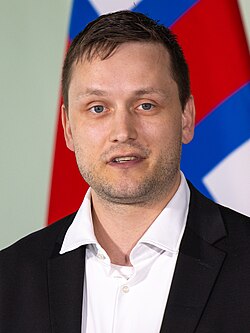
What people are missing in the Greenland debate is not a technicality of citizenship or electoral legality. It is the structure of power that keeps repeating itself across the settler-colonial West.
This is not really about whether the Greenlandic Prime Minister, Jens-Frederik Nielsen, can lawfully hold office.
Of course he can. He has a Danish father and a mother born and raised in Greenland, and he meets every formal requirement. That point is trivial, and focusing on it is a way of dodging the real issue. The real question is why, across every settler-colonial society; Indigenous welfare and political destiny are so reliably mediated by white-presenting figures, even when those societies are overwhelmingly Indigenous in population.
Greenland is 90 percent Inuit. Yet when power reaches its most visible, internationally legible form, it is once again carried by someone who presents as Danish, speaks the language of European governance fluently, and is immediately readable to Western capitals as “safe.” This is not accidental. It is structural.
We see the same pattern in North America, Australasia, and parts of Latin America. Indigenous people are allowed culture, symbolism, grievance, and memory. What they are rarely allowed is unfiltered sovereignty. When power approaches the level where it can disrupt Western interests, security, resources, alignment, it is softened, translated, and re-presented through figures who sit closer to the settler norm.
This is not old-style colonialism. It is not governors, flags, or overt domination. It is something quieter and more effective: managerial neo-colonialism. Indigenous societies are permitted self-rule so long as that rule is exercised through people who look, sound, and think familiar to the metropole.
Blood quantum debates miss the point, but so does pretending ancestry is irrelevant. In settler societies, ancestry has always mattered, just selectively. Indigenous identity is often invoked to discipline Indigenous people, while settler identity is quietly treated as neutral, universal, and unmarked. A white-presenting leader is assumed to be “post-racial,” “pragmatic,” and “modern.” An Indigenous-presenting one is assumed to be emotional, symbolic, or risky.
That asymmetry is the problem.
Greenland is not unique. What is unique is how clearly the pattern shows itself there. Unlike much of the Global South, Greenland did not experience mass demographic replacement. The people are still there. The land is still theirs. And yet the grammar of power remains settler-coded.
This is why comparisons with non-Western postcolonial states fail. In Asia, Africa, and the Middle East, decolonization replaced foreign rule with native elites who were visibly, undeniably of the place. They might have been Western-educated, but they did not dissolve into the colonizer’s image. Settler colonies work differently. They never fully leave. They normalize themselves as the default.
The uncomfortable truth is this: Indigenous peoples in the settler West are rarely allowed to be fully free of settler mediation. Their sovereignty is conditional. Their leadership is acceptable only when it reassures the outside world that nothing fundamental will change.
This is not about accusing any individual of bad faith. Systems do not require villains. They reproduce themselves through incentives, norms, and visibility. The fact that this pattern feels familiar across Greenland, Canada, Australia, and beyond should tell us everything.
The question, then, is not whether Greenland is “represented.” It is whether Indigenous self-rule in the settler world is ever permitted to exist without translation.
So far, history suggests the answer is no.
power is carried by someone who presents as Danish, speaks the language of European governance fluently
No different from Israel. Power is carried by European Jews in a Middle East country. That why the West Claimed it was the only. Democratic country in the Middle East.. In reality Israel has been a Apartheid State violently occupying the Middle East with violence and repression aided by arms from the West
This is a more visible issue in Latin America – multiple countries. Stretching from Mexico all the way down through Central and South America. You can see it overtly in places like Peru and Bolivia, less so in others.
There was an YouTube clip by a westerner who said that British were facilitated in plassey by a Bangladeshi, meaning mir jaffer.
The comments were interesting as usual. Many said that mirror Jaffer was not a Bengali but a Arab, who hailed from najaf.
Apparently the ruling Muslim class in Bengal was non Bengali till the end.
Mir Jafar was born in Delhi in 1691. His grandfather was Syed Husayn Tabatabaei, who migrated from Najaf in Iraq (then part of the Safavid Empire) and settled in Delhi on 24 April 1675 after being invited by the Mughal emperor Aurangzeb.[5] Tabatabaei married the emperor’s niece and served as a Qadi in the Mughal court. Jafar’s paternal aunt, Begum Sharfunnisa, was the wife of Nawab Alivardi Khan of Bengal.[6]
Tabatabaei is a BIG surname in Iran:
Tabatabaei (Arabic: طباطبائي, Ṭabāṭabāʾī; Persian: طباطبایی, Ṭabâṭabâyī) (also spelled Tabatabai, Tabatabaee, Tabatabaie, Tabatabaeyan) is a surname denoting descent from someone called Tabataba, in particular Ismail bin Ibrahim al-Ghamr (son of Hasan ibn Hasan), a great-grandson of Ali, the fourth and last of the Rightly Guided Caliphs. It is one of many families of Sayyid Shia Muslims, predominant in Iran, but also in Iraq, Lebanon, Kuwait and Pakistan.
The Indian subcontinent was where many from the ‘Ummah’ went to seek fortune. In some ways, not unlike the American west in the 19th century. Only difference being that the Indians in Asia were simply too many to be genocided, unlike the Native Americans…