AI vs Poet (Open Thread)

A University of Pittsburgh study presented participants with poems by ten renowned English-language poets—including Chaucer, Shakespeare, Whitman, Dickinson, and Plath—alongside AI-generated poems in their style using ChatGPT 3.5. Interestingly, AI poems were rated higher in overall quality than the human-written ones, contrary to previous findings.

I am perplexed about how we can assess an AI-generated poem as inferior to a human’s. As when we read a poem, we read it for its content, irrespective of anything else. The emotional valence of Iqbal’s Shikwa has nothing to do with his circumstances; whether he were a general in the British army or a debauched drunk, the poem would still be there to be read, cherished, and savoured. Extending this logic, how can AI-written poems be rated lower simply because they were not written by a human? I don’t know.

Anyone who wants to explain their take on this.

Two of my recent essays

I have two pieces of writing I want to share. The first is an essay I wrote on Iqbal for his birthday (9th November), exploring how we have misread him, and how, in a way, he misreads himself.

https://inkelab.substack.com/p/iqbal-an-uninteresting-poet

The second piece discusses how book reviews can nudge critical readership in Pakistan. It includes a situational analysis of reading habits in the country, the role of reviews and sugarcoating, and the emerging Bookstagram and BookTok communities.

https://dunyadigital.co/books/jumpstarting-critical-reading-the-power-of-a-book-review

Would love to know what you people think about both. Thanks!

Wag the dog?

This idea came to me randomly when two people, separately, asked why they should pay taxes if half the budget supposedly goes to the army—a claim that is factually untrue. I am here trying to play devil’s advocate. While writing this, I consulted people to understand why the proposition, “The establishment is the root cause of every Pakistani problem,” is so widely taken for granted, especially after Imran Khan’s exit.

By “establishment,” I am specifically referring to the military, the way it is colloquially understood nowadays, not the “elite” in the class or socioeconomic sense. I presented sector-wise facts to them, and most had no answer. That prompted me to pen this piece. Since mainstream discourse now often takes an anti-establishment position, I decided to challenge that perspective.

https://www.thenews.com.pk/latest/1354698-wag-the-dog

Continue reading Wag the dog?

Sunday reads

I recently read a piece I’d like to share: about the life of Bacha Khan and how he initiated an anticolonial school, the Azad School in Utmanzai, in 1921. It was a Pashto-medium institution where Manmohan Singh, the former Prime Minister of India, also studied. Nehru and Gandhi visited the school as well — Nehru in 1937 and Gandhi in 1938 — delivering speeches and spending time there. Due to his dissent against the British, he had to spend about 37 years in jail out of his 93-year life.

The Genius of Bacha Khan

“Most geniuses have one masterwork for which they are famous.  For Che and Fidel, that work was surely the Cuban Revolution and its international humanism, just as it was for Lenin, the Russian.  For CLR James, we can list “The Black Jacobins” as an extraordinary work of genius, as well as the underground Marxist group he co-led, known as the Johnson-Forest tendency.  For Selma James and many other women of the 1970s Marxist Feminist movement, it was about recognizing the economic contributions of housework and children and establishing organizations that advocated for fair compensation for caring and reproductive labor.  Their slogan, ‘invest in caring, not war’, remains the blueprint. For Spivak, it has been to chart a path for activism while working beyond Eurocentric Logocentrism.

The list is long, but I never thought that a tall, six-foot-three, broad-shouldered, soft-spoken Khan from Utmanzai, Hashnagar, a mere graduate of King Edward’s School, Peshawar, would, before he turned 30, have three works of genius to his name. Abdul Ghaffar Khan, honorifically known as Badshah Khan (King of the Khans) and also Bacha Khan, a title bestowed upon him at the mere age of 27, created three masterpieces. In order of creation, they were: Anjuman-i-Islahul Afaghina (The Society for the Reform of the Afghan), Pakhtun magazine, and the greatest non-violent organization the world has yet known, the Khudai Khidmatgar.  Here I want to write only of the first, Anjuman-i-Islahul Afaghina. “

Continue reading Sunday reads

Two Pieces Worth Reading

Two pieces I recently read and thought worth sharing

The first is a review of Kabir’s book, recently published in India on Scroll.in—a well-deserved feat that highlights his contribution to South Asia’s cultural and intellectual landscape.

Read: https://scroll.in/magazine/1086014/hindustani-musics-decline-in-pakistan-began-the-day-the-nation-was-born

The second is today’s piece, “Gender and the Fight Against Erasure.” Originally published as the Human Rights Commission of Pakistan’s report “‘X’ for Exclusion? How Pakistan’s Gender Minorities are Fighting Against Erasure,” it unpacks the structural silencing faced by gender minorities in Pakistan.

Read: https://www.dawn.com/news/1941712

Both pieces raise important questions about identity, culture, and belonging. Read them—and let us know what you think.

Open Thread: Pakistan Floods – Let’s Talk

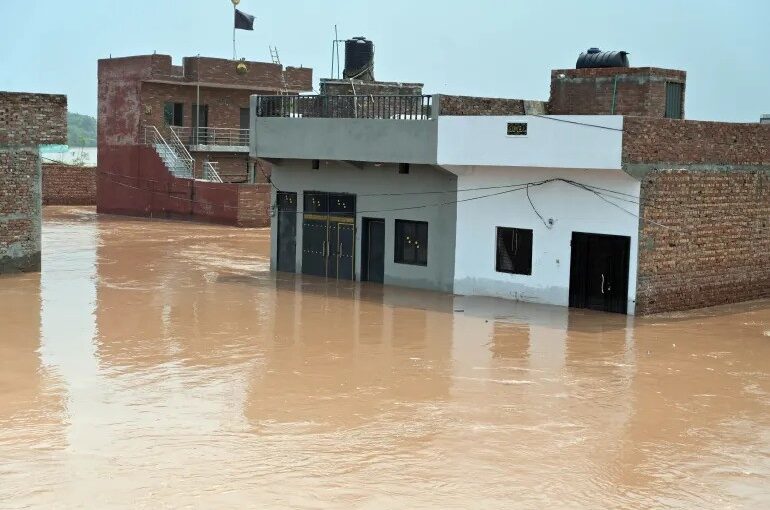
Massive floods have hit Pakistan’s Punjab province after record-breaking monsoon rains and the overflow of major rivers. Officials report nearly 300,000 people displaced from the province alone and more than a million affected as the Ravi, Sutlej, and Chenab overflowed their banks. Over 1,400 villages are underwater, and there are growing fears of disease outbreaks and food shortages.

👉 ‘The water left nothing’: Pakistan’s Punjab province reels from deadly floods (The Guardian)

This thread is for everyone to share thoughts, updates, and questions about what’s happening.

Jump in and share your perspective.

Why Travelogues?

For me, the logic is simple: if you’re someone like me who prefers the comfort of a room over venturing out, travelogues are the perfect gateway. They let you seep into panoramas you’ve never explored, experience cultures without packing a bag, and even gather cross-cultural insights before you actually travel.

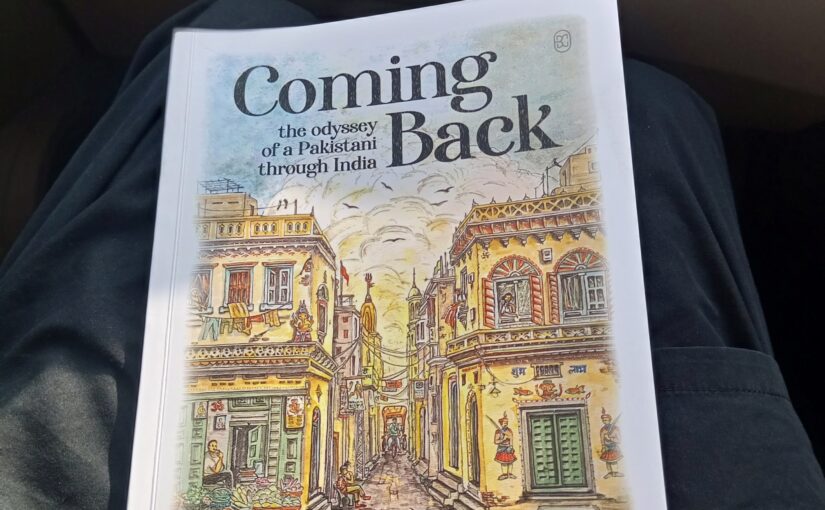
My recent read, “COMING BACK: The Odyssey of a Pakistani Through India” by Shueyb Gandapur, is a true tour de force. It chronicles a chartered accountant’s journey through India in 2017 – two and a half weeks, four cities, and countless encounters. The narrative beautifully captures the essence of shared histories and nuanced differences, making it more than just a travel diary; it’s an exploration of identity, culture, and connection.

Have you read any travelogues recently? Which ones would you recommend?

PS: Despite my dislike for traveling, the picture was taken while traveling from Mansehra to Islamabad. 😅

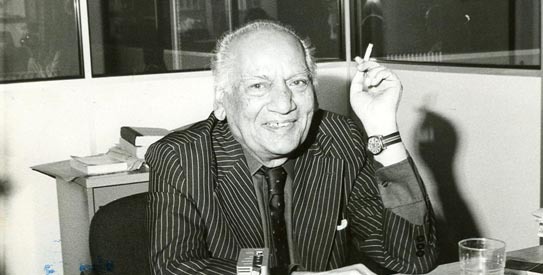
Faiz, Subh-e-Azadi, and Pakistan’s 78th Birthday:

Today (well, technically yesterday, since it’s past 12) is Pakistan’s Independence Day. I personally felt no extraordinary zeal or zest for the land of the pure. Is it my lack of patriotism (sun), my anxiety about belonging (moon), or rising sedition? (Please pardon my astrological metaphors; recently learned from a friend.)

I never—of course, I am exaggerating; that’s what poets do anyway—felt much for my own birthday. Perhaps I am still unable to grasp the importance (or the dread and brevity) of the flow of time.

If time is creativity unfolded, I don’t feel progress. If it is a movie playing with no rewind, I still lack the desire to go back.

Continue reading Faiz, Subh-e-Azadi, and Pakistan’s 78th Birthday:

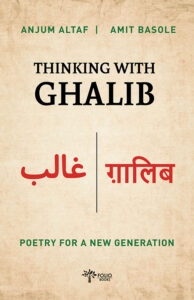
Ghalib for Gen Z

This review was originally published at The Friday Times.

Publisher: Folio Books

Publishing date: 2021

Authors:  Anjum Altaf & Amit Basole


“For Ghalib, life is an unending search. Neither the holy of holies in Mecca nor even the attainment of paradise is the end of it.” ~Ralph Russell

We’ve all heard of that crooked genius, Mirza Asadullah Beg Khan Ghalib — whether through our school Urdu courses (unfortunately encountered at an age when our consciousness is still unripe) or through pop culture. Sometimes it’s his well-known fantasy for mangoes; other times it’s when someone shares a couplet whose slightly convoluted vocabulary immediately earns it the label of “a Ghalib shayr”; and other times, his destitution and scrambling for a pension.

As a Gen Z myself, I can say that most of today’s youth are largely alienated from the Urdu language, let alone Persian. And of course, this doesn’t mean we’re reading Byron or Eliot instead; rather, it’s the excess of TikTok. Decoding Ghalib feels like a Herculean task for us. This dilemma not only distances us from a rich poetic tradition but also from the timeless lessons it has nurtured.

Continue reading Ghalib for Gen Z

Quite Hectic Days

Recently, I’ve been traveling a lot for my formal project: assessing the governance framework of 46 HEIs (universities) in Pakistan. We’re looking at the de jure autonomy of universities (in governance, finance, staffing, academics, and research) versus the de facto reality. Where, like many other sectors, higher education is overregulated.

We’re struggling a lot. Universities are mushrooming (95 in 2002 to 269 in 2024) without any meaningful output, just producing PhDs like rabbits (177 in 2002 to 3489 in 2024). Result: not a single Pakistani university ranks in the global top 350.

I’ve visited different universities. (inter-alia):

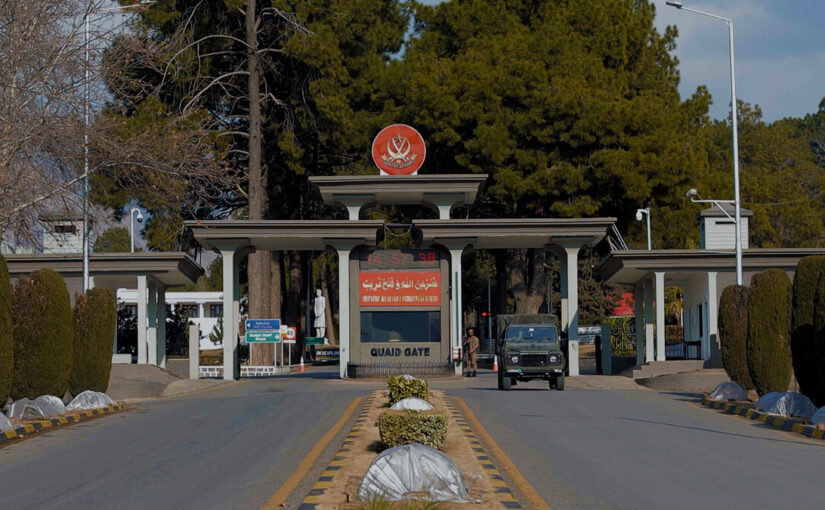
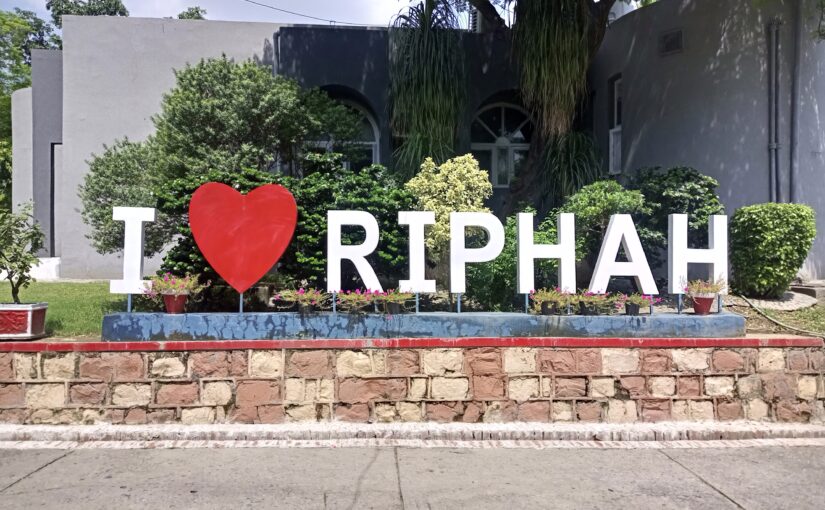
Riphah International University, Islamabad – a private HEI. The I-8 campus is small, but with multiple campuses they cater to around 30,000 students. What’s interesting is how deeply Islamic morality is embedded in their institutional values. It’s the only university (out of the 8–9 I’ve visited so far) whose vision and mission are explicitly integrated with Islamic principles. They even have around 10 credit hours dedicated to teaching morality. Quite remarkable in this era of modernity and expediency. Continue reading Quite Hectic Days

Brown Pundits