The truth still matters

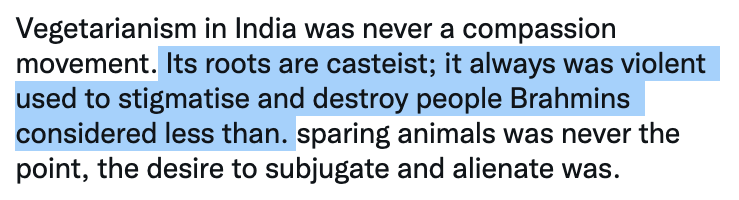
On Twitter I ran into a peculiar argument about vegetarianism and Brahmanism:

This is just factually wrong from what I know. The standard narrative I was taught is that the shift toward vegetarianism was driven by non-Brahmin-led religious movements, in particular the Sramanic sects like Jainism and Buddhism (that seem to have had a Kshatriya and Vaishya “class” base). Rather, post-Vedic Brahmanic ritualism was changed by the influence of these movements, with the Brahmin caste becoming followers and expositors. This probably aligns with the idea that much of late Indian Buddhism was actually incorporated into Advaita, so the idea that Buddhism is a “daughter” religion of Hinduism is actually not correct.

Now, it is totally true that today militant vegetarianism is often correlated with upper castes and is instrumentalized in an exclusionary manner.  But that is the endpoint and operationalization of vegetarianism, not its root. The original commenter was making a political and rhetorical point, so truth was pretty irrelevant. But those of us who value truth need to periodically bring up pedantic aspects because otherwise the lie becomes truth, and that is true perversion.

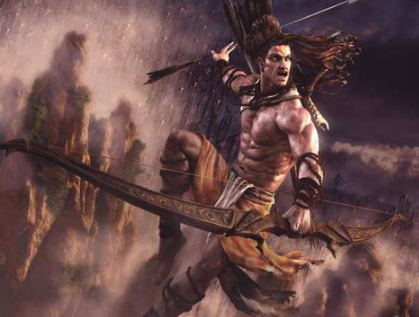
Happy Rama Navami!

A Hindu friend clued me into the fact that this was Lord Rama’s birthday. Since I’m not Hindu or from a Hindu background I had no clue (to be fair, Google calendar is how I know when Ramadan starts). I don’t know much about Rama as I have not read the Ramayana (after all these years I’m only 2/3rd of the way through an English translation of the Mahabharata), but, I’m pretty sure I know which Y haplogroup he was, so much respect!

Against blood quantum as a measure of indigeneity

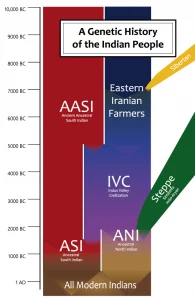
The figure to the right is from a Substack post I wrote last year, Stark Truth About Aryans: a story of India. In it, I posted about the different streams of ancestry that led to the variation in the modern Indian subcontinent. In short, there are three primary threads:

1) Steppe Indo-Aryans who are identical to the Sintashta Culture of the upper Volga ~4,000 and gave rise to the Andronovo Horizon

2) “Ancient Ancestral South Indians,” who have more affinity to the peoples to the east of Eurasia, and are distantly related to a clade of humans that brackets the Negritos of Southeast Asia, the Andamanese, and the people of Australia (this clade diversified between 35 and 45 thousand years ago, so these are not close connections). Though the modern Andamanese are often used as a substitute for AASI, the reality is that they diverged more than 30,000 years earlier and these tribal populations probably derive from modern Burma, rather than India (the Andaman Islands are an extension of the Burmese geological formation).

3) Lastly, there is a component that has been termed by some as “eastern Iranian,” but really defines a little-understood population that represents the easternmost extension of the Zagrosian farmer stock. These eastern people that extended likely into the northwest of the subcontinent are distinctive in that they lack any admixture from Anatolian farmers, which is ubiquitous to the west of Dasht-e-Kavir. Not only do these people not have any Anatolian admixture, but they also have enrichment for Paleo-Siberian ancestry, likely mediated along the pastoralist fringe of Central Asia

The vast majority of subcontinental populations have some thread of ancestry from these three groups. The major difference is proportions. You can see this in an admixture graph I ran a few years ago (yes, I need to update it). In the graph AHG = AASI, while steppe is pretty straightforward. But, the Indus_Periphery group is a mix of “eastern Iranian” and “AASI.” Concretely, I simply picked the highest quality and least AASI samples to capture as much eastern Iranian ancestry as I could. But I would estimate that 10% AASI is still a rational lower-bound (probably not higher than 20%) estimate for my Indus_Periphery construct. This means even the Kalash of Pakistan, who are ~0% AHG in my model, do have AASI ancestry, it’s just mediated through their 70% Indus_Periphery.

In regards to the steppe ancestry, the reality is that it is present across the vast majority of groups. The exceptions are a very few South India tribal and most Munda populations. Groups like Reddys and Nadars will clock in at 5-10% steppe ancestry. This makes sense when you note that Y chromosome R1a1a-Z93 is found in even tribal groups with the exception of the Mundas. There are other details that are curious. Many groups in the Sindh/Gujurat region are very enriched for Indus_Periphery but have very low AHG proportions and less steppe. In contrast, some Gangetic populations have far more steppe than these, but far more AHG.

This brings me to the point of the post: when people say that Dalits or Adivasis are the indigenous people of the subcontinent, I think it does not necessarily have as strong of a human demographic basis as one might think. That is because to a great extent Dalits and almost all Adivasis are made from the same threads as other subcontinental populations, even if the proportions may differ.

Let’s walk it back and understand the ethnogenesis of the subcontinent.

First, it is quite possible that the AASI are not indigenous to the portion of the subcontinent to the north and west of the Thar desert. Their natural ecological locus was likely in the east and the south. Biogeographically the northwest of the subcontinent is somewhat different than the south, center, and east, which resemble Southeast Asia more (albeit at a remove). During the peak of the Last Glacial Maximum, the Thar Desert was drier and larger, serving as a boundary zone between southwest Eurasia and southeast Eurasia.
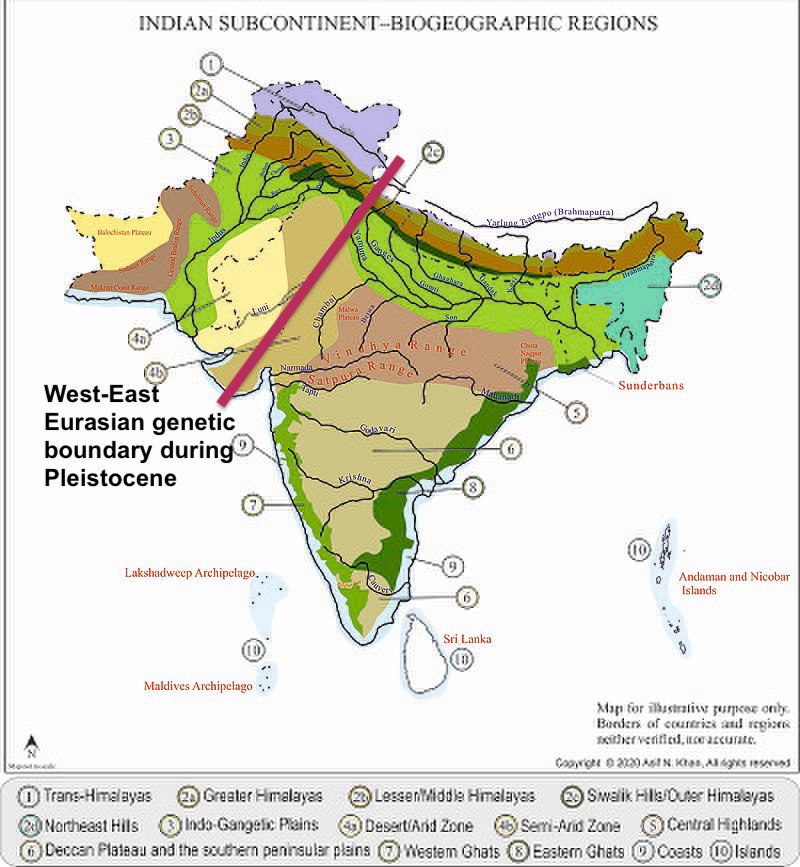
The ancient DNA from the Swat valley as well as the genetic character of modern Punjabi populations compared to the ancient samples from the IVC make a strong case that AASI ancestry is intrusive to the northwest. By this, I don’t mean that AASI tribes migrated in that direction, rather, as the IVC expanded it clearly mixed with AASI populations to its south and east, and as the IVC was an integrated cultural zone, mixed individuals moved north and west over time.

The Swat transect shows a decrease in IVC proportions between 1000 BC and 0 AD, and increased steppe and AASI ancestry. This is part of what I call the “integration phase” of Indian civilization, as gene flow occurred not just from the northwest with Indo-Aryan expansion, but Indo-Aryan reflux migration must have occurred into the west. These eastern Indo-Aryans mixed extensively with indigenous people in the Gangetic valley, explaining why Brahmin populations in this region have noticeable more steppe ancestry than groups like Sindhis, but also far more AASI ancestry. Indo-Aryan tribes all mixed with IVC people when they arrived in the subcontinent (while there are populations that are ~0 steppe, and others that are ~0 AHG, there are no populations in the subcontinent that are ~0 Indus), but a subset moved east and south fast so that they arrived with a higher steppe fraction when they settled down to mix with indigenous tribes.

Second, even outside of the northwest, it is not entirely clear that the AASI is not a recent early Holocene migration from Southeast Asia. Genetically they are part of the continuum with the indigenous Negrito people of Southeast Asia. I think it is less likely that there was massive Southeast Asia migration during the Holocene, but for most of the Pleistocene, Southeast Asia had many more humans than India because India was far drier.

Finally, outside of exceptional groups like the Munda, whose language and mythology seem derived from the 20-30% of their ancestry than is Austro-Asiatic Southeast Asian (and all-male), almost all subcontinental populations come out of the cultural matrix whereby Indo-Aryans synthesized with indigenous populations (much, but not all of whom, were Dravidian-speaking). The earliest Tamil has a clear Indo-Aryan influence, while the retroflex in Sanskrit is indicative of Indic influence very early on.

Where am I going with this? Genetically a Jat from Haryana is very different from a Dalit from Tamil Nadu. A Jat is 10-20% AASI (aggregating the AHG estimate with the AASH fraction in the Indus_Periphery), and 25-30% steppe. The Dalit is 75% or so AASI (again, aggregate), and only a few percent steppe. This is a massive genetic difference. But culturally it is clear that both come out of an Indian milieu that was shaped in the period between 1500 BC and 500 BC, as the Indus Valley Civilization collapsed, and its remnants were transmuted by Indo-Aryans. The tribes in the north that continued their Indo-Aryan language were clearly transformed, but the Dravidian-speaking polities of the south were also imprinted by the Indo-Aryans. It was reciprocal.

Both light-skinned northern Indians who like to claim “actually” they are “Iranian” and dark-skinned South Indians who claim to be “indigenous” emerge out of this process, this dynamic. And they share equally within it. India came out of the mixing of many disparate elements which then disaggregated in various ways, but all went through the same sieve.

So what’s wrong with being kaala?

In the comments below there’s a lot of discussion on colorism among brown subcontinentals as well as a fixation on particular facial features. Since I’m an American coconut I don’t really understand many of the nuances, though I’m curious from an anthropological perspective. Much of it obviously seems ludicrous for American browns. What’s the point in commenting on whether one sibling is lighter-skinned than another when you live in America and most of the population is far whiter than even “light-skinned” Indians could aspire to? (ironically, or not, the ‘black-fishing’ swarthy Kardashians look like a lot of light-skinned Indian celebrities to Americans)

But about half of the readership of this weblog now readers from India. Cultural values differ, and so does offense. For example, for Americans asking how much money you make is a very offensive question. For people in other societies, it is not. Why is it so offensive to Americans? Because money is really all we care about! The trigger tells you something deep about our values.

Recently I’ve been meeting many more Indians (from India) on Clubhouse, and I’ve been trying to interrogate differences in values. And one thing that I’ve encountered is a strong aversion to being called “kaala.” Even the most well-off and Westernized Indians seem to wince at the term, and will privately tell me to stop using it the way I am (addressed to people). I ask what the problem is, and they won’t want to get explicit, sometimes saying the connotation is negative. That’s obvious literally true, but how are you going to ever change the connotation unless you change practice?

This is obviously a form of cultural imperialism. Though blackness is not always positively connoted in the US, as a term it doesn’t have the same strongly negative valence as it does in Asia. During the summers I get very kaala in my exposed body parts because I don’t avoid the sun. When my mother asks how I’m doing I say I’m fine, but also I tell her next time she’ll see me I’m “kalo” (Bengali). She gets mad but is used to me talking in this way because being kalo is not really bad substantively (it isn’t). Americans care about whether you are fat or not. Though I don’t condome being mean to fat people, being fat is associated with lots of health ill-effects, and just the way you move is often unnatural (those of us who gain and lose weight can attest to the biomechanical variation). In contrast, being dark or light doesn’t matter too much now since most people don’t need to work outside.

Even in India (and Pakistan and Bangladesh) there will come to be a time when the generation of aunties who grew up in the 20th century will pass on. At that point, the generations who grew up when kaala was a term of opprobrium used by older generations should perhaps rethink their conditioning. I’m not judging, but it’s not really “natural,” it’s conditioning.

Indus Valley on Tides of History

Patrick Wyman interviewing a specialist on the IVC. Pretty interesting, though I’m mildly skeptical of the idea of what seems like a pre-state primitive democracy being the political system in the IVC.

How Indians view themselves vs. how Westerners view Indians


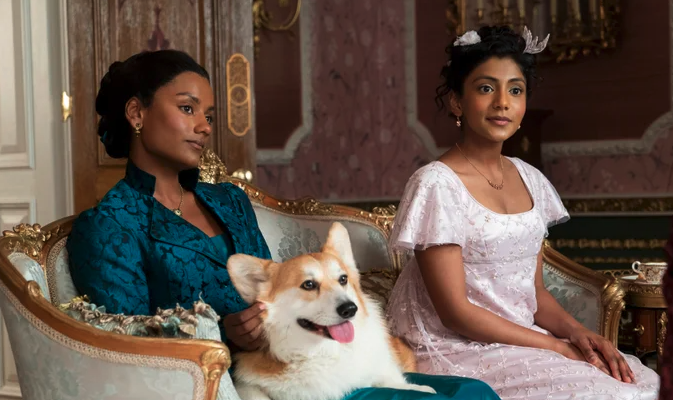
As A South Asian Woman, Seeing Two Darker-Skinned Women On Bridgerton Means Everything.

The headline is obviously a bit much. The casting of dark-skinned actresses of Indian-origin really isn’t going to change the norms of the Indian subcontinent, or the whole of Asia. But it’s an interesting window on aesthetic standards and cultural creation. Indians who I bring up this issue with routinely suggest “well, you don’t have ugly people in American films.” The implication for many people of subcontinental origin is that dark skin is ipso facto ugly (and in Asia more generally). This seems the ground truth and the rest is just commentary.

Open Thread – 4/1/2022 – Brown Pundits

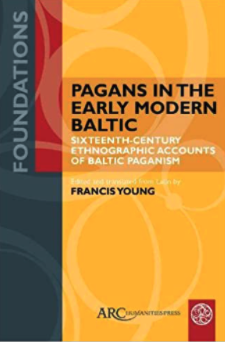
In the last week of this month I will be posting a podcast I did with Francis Young, author of Pagans in the Early Modern Baltic: Sixteenth-Century Ethnographic Accounts of Baltic Paganism (at my Substack). Over the hour and a half we talked about many topics, but one thing that struck me listening to him describe the details of the beliefs and practices of Lithuanian pagans, practices that persisted as living traditions centuries after the official Christian conversion of the state in ~1400 AD (Young estimates that in the 1500’s 30-40% of the population were what was then termed “Old Lithuanians,” baptized into Christianity but rural people who were almost totally uncatechized and continued to practice their ancestral religion), is how redolent they are of the Vedic religion. Young has convinced me that it is likely that the original Baltic branch of Indo-Europeans flourished somewhat to the south of their current distribution, which may be an outlier relic. If that is correct, they were likely positioned just to the west of the Indo-Iranian ur-heimat of the Fatyanovo-Balonov culture. Linguistically many scholars argue that Indo-Iranian and Balto-Slavic are a natural ‘clade’ within Indo-European languages.

The Wikipedia entry on Lithuanian neo-paganism (Romuva) has a section titled “Relation with Hinduism”:

…But for Lithuania’s Romuva community, which traces its traditions back to ancient folklore, it is evidence of a connection to India, Hinduism and Sanskrit that has become a part of their Romuva identity, along with its pantheon of gods and fairly standard pagan rituals. Some believe that the connection between Hinduism and Romuva made Romuva to be more than a “primitive, shamanic religious tradition”…

Similarly Ašvieniai are divine twins in the Lithuanian mythology, counterparts of Vedic Ashvins. The Ašvieniai are represented as pulling a carriage of Saulė (the Sun) through the sky. Ašvieniai, depicted as žirgeliai or little horses, are common motifs on Lithuanian rooftops…

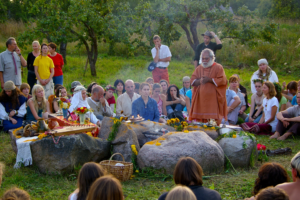
Romuva and Hindu groups have come together on numerous occasions to share prayers and participate in dialogue. These events have taken place in Lithuania, Atlantic City, New Jersey, Boston, Massachusetts, Epping, New Hampshire, and elsewhere.

Hindu priest presiding over Lithuanian Romuva ceremony

I had assumed that Lithuanian Catholicism derived its strength from the Counter-Reformation period (the last sacred snake groves were destroyed by priests in the 18th-century), but Young explained that the reality is that Catholicism and the Lithuanian national identity became associated only with the absorption of Lithuania into the Russian Empire, where the dominant religion was Eastern Orthodoxy. It was in the context of religious and ethnic marginalization in the 19th century that the two elements of modern Lithuanian identity finally began to become synergistic, and therefore heterodox peasants began to finally adhere more strictly to a Catholic identity.

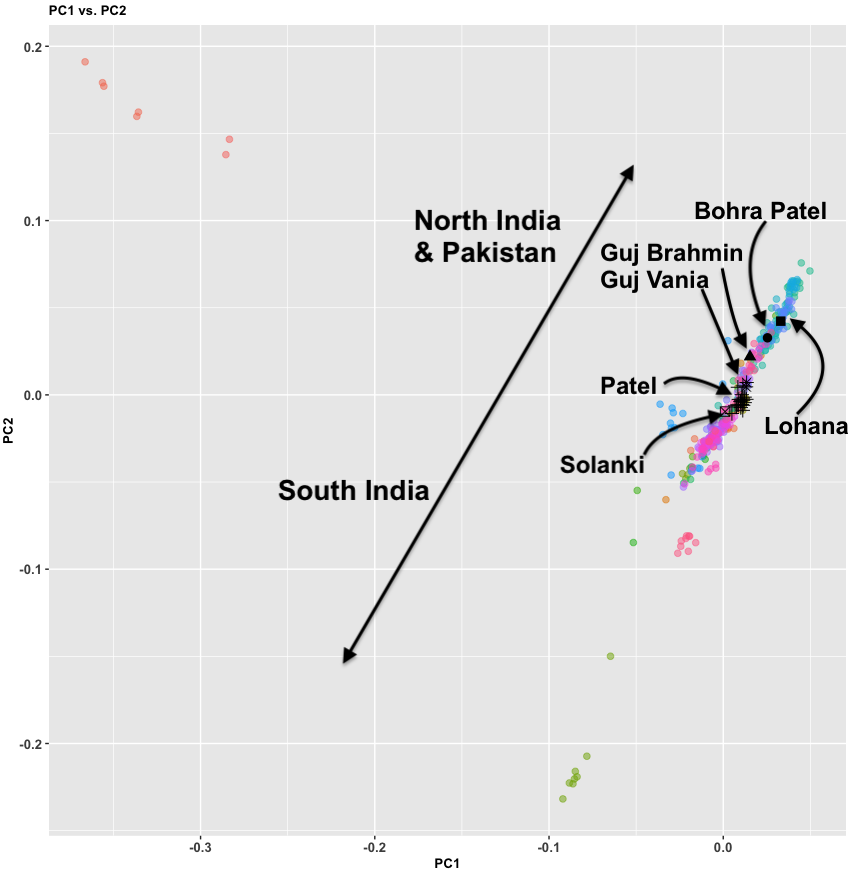
Gujurati genetics

I was working on a project and decided to check Gujus. A few things

1) A few years ago a Bohra emailed me kind of irritatingly saying I underestimated the non-South Asian ancestry in Bohras. I double-checked and that seems plausible. Looking at this Bohra Patel sample I have, that seems to be clear.

2) Guju Brahmins are positioned like North Indian Brahmins.

3) Most of you know more about Lohannas than I do. I will say that the Sindhi Lohanna sample I have is even more “north-shifted” than the Guju Lohanna.

4) Patels are a numerous cluster, obviously. The two Vania samples I have are north-shifted, but very close to the Patels (Patidars)

5) I have a Solanki sample that is clearly outside of the Patel cluster and south-shifted

The southwestern groups in the Indian subcontinent are enriched for “Middle Eastern” ancestry

Genetic affinities and adaptation of the South West coast populations of India:

Evolutionary event has not only transformed the genetic structure of human populations but also associated with social and cultural transformation. South Asian populations were formed as a result of such evolutionary events of migration and admixture of genetically and culturally distinct groups. Most of the genetic studies pointed to large-scale admixture event between Ancestral North Indian (ANI) and Ancestral South Indian (ASI) groups, also additional layers of recent admixture. In the present study we have analyzed 213 individuals inhabited in South West coast India with traditional warriors and feudal lord status and historically associated with recent migrations events and possible admixture with Indo-Scythians, Saka, Huns and Kushans, whose genetic links are still missing. Analysis of autosomal SNP markers suggests that these groups possibly derived their ancestry from some groups of North West India having additional Middle Eastern genetic component and also their separation history suggests very early separation from North West Indian and Gangetic plain Indo-Europeans during late bronze or Iron age, most probably following central India and Godavari basin to South West coast. Higher distribution of west Eurasian mitochondrial haplogroups also points to admixture through maternal lineage. Selection screen using genome wide genealogy approach revealed genetic signatures related to their long-term coastal food habits. Thus, our study suggests that the South West coastal groups with traditional warriors and feudal lords’ status are of a distinct lineage compared to Dravidian and Gangetic plain Indo-Europeans and are remnants of very early migrations from North West India following Godavari basin to Karnataka and Kerala.

If you do a west-to-east transect there is more “ANI” ancestry in the west of the subcontinent. This is true in the north, obviously (Punjabis to Bengalis), but less appreciated is that the same seems true in the peninsula south of the Vindhya Range. To some extend this is due to more steppe ancestry in groups like Nairs because of “gene flow” from Namboothiri Brahmins and such. But, that’s not all. As noted in this paper some of these western coastal groups clearly have an excess of “Middle Eastern” ancestry. That’s not surprising for the Jews of Cochin or even the Nasrani Christians. But what about Bunts and Nairs? There are two main ways you can explain this in my opinion:

1) A pre-steppe IVC and post-IVC era migration of “Iranian” peoples associated with the Ashmound culture has a significant impact that is most preserved in the western part of the peninsula

2) Later connections between West Asian (Arab and pre-Arab) people who were integrated into the local cultures over time (due to the matrilineal nature, at least originally, of some of these southwestern groups one can imagine how easy it would be to integrate sailors from other societies, or at least their offspring)

Brown Pundits