Endogamy and assimilation: Parsis in India

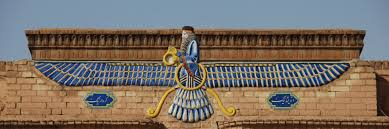
The Guardian has a long piece about Parsis, The last of the Zoroastrians. The author is the child of a Parsi mother who married a white Briton. Though he brings his own perspective into the piece, I appreciated that he did not let it overwhelm the overall narrative. The star are the Parsis themselves, not his own personal journey and viewpoints.

In relation to the Parsis, there are two aspects in the Indian context that warrant exploration

– high levels of cultural assimilation

– high levels of cultural separateness

These seem strange outside of India, but they make sense within India. The Zoroastrian priests who migrated to what became Gujurat integrated themselves into the local landscape as an endogamous community. From a genetic perspective, the best overview is “Like sugar in milk”: reconstructing the genetic history of the Parsi population:

Among present-day populations, the Parsis are genetically closest to Iranian and the Caucasus populations rather than their South Asian neighbors. They also share the highest number of haplotypes with present-day Iranians and we estimate that the admixture of the Parsis with Indian populations occurred ~1,200 years ago. Enriched homozygosity in the Parsi reflects their recent isolation and inbreeding. We also observed 48% South-Asian-specific mitochondrial lineages among the ancient samples, which might have resulted from the assimilation of local females during the initial settlement. Finally, we show that Parsis are genetically closer to Neolithic Iranians than to modern Iranians, who have witnessed a more recent wave of admixture from the Near East.

The major finding is that most of the ancestry, on the order of 75%, of Indian Parsis is generically Iranian. On the order of 25% is “indigenous”, probably Gujurati. The fact that the proportion of mtDNA, the maternal lineage, is closer to 50% in both modern and ancient samples, indicates that the mixing with Indians occurred through taking local women as brides. Further genetic investigation in the above paper suggests that this was not a recurrent feature. In other words, once the Zoroastrian community in Gujurat was large enough, it became entirely endogamous.

And yet the Parsis speak Gujurati (or in Pakistan Sindhi and Urdu), and in many ways are culturally quite indigenized.

I bring this up because this portion of the above piece I’ve seen elsewhere:

The small community of Iranian Zoroastrians is even more liberal, allowing female priests, and there are also nascent neo-Zoroastrian movements in parts of the Middle East.

I have read repeatedly that Iranian Zoroastrians are more “liberal” when it comes to the issue of religious endogamy. The term “liberal” indicates innovation. But if you look at the historiography it seems clear that though Zoroastrianism was strongly connected to Iranian-speaking people, it was not exclusive to them. Zoroastrianism was cultivated and encouraged by the Sassanians in much of the Caucasus, and it spread into Central Asia, even amongst some Turkic groups, before the rise of Islam.

Zoroastrianism was not aggressively proselytizing but before 600 A.D. neither was Christianity outside of the Roman Empire. This is not a well-known fact due to the religion’s gradual diffusion to non-Roman societies, such as Ireland and Ethiopia, but before Gregory the Great missions to barbarian peoples were not organized from the Metropole but were ad hoc (the Byzantines eventually began centrally organized missionary activities after 600 A.D., but they were never as thorough or enthusiastic as the Western Christians). Our understanding of Zoroastrianism then may not be clear because the religion went into decline during a transformative period in world history when the religious boundaries and formations we see around us were still inchoate.

The major takeaway from all this is that strenuous Parsi arguments for the ethnic character of Zoroastrianism are a reflection not of their Iranian religious background, but their Indian cultural milieu. Zoroastrian “traditionalists” in India are actually Indian traditionalists, who have internalized an innovation to allow for integration into South Asia. And, I would argue some of the same applies to Indian “traditionalists,” whose cultural adaptations to the “shock” of Turco-Muslim domination resulted in the strengthening of particular tendencies within Indian culture that were already preexistent.
What is indigenous about Indian civilization?

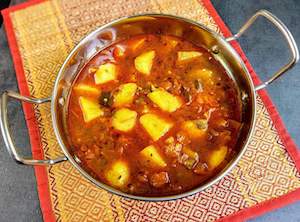
The curry to the right contains potatoes, tomatoes, and chili pepper. All of these are features of Indian cuisine from the last 500 years, as they are New World crops. Unsurprisingly, they were often brought by the Portuguese and spread out from Goa. But, at this point, it’s hard to deny these have been thoroughly indigenized. So this brings me to some questions I have for readers (non-troll answers only, I may start banning people who answer unseriously, since I’m very busy this week and don’t want to waste time with drivel):

Continue reading What is indigenous about Indian civilization?

Open Thread – 08/08/2020 – Brown Pundits

I’m traveling with my family a lot this week. Please stay under the control, because if you get out of control I’ll be more kludgey in my response than usual.

Also, to be frank, I would appreciate it if every thread doesn’t devolve into arguments between guys you can imagine whacking off to physical anthropology image plates illustrating racial types from National Geographic in 1930. As they’d say in 1930, everyone beyond Calais is a wog.

Hindu conversions to Islam in Pakistan

Since many of you are innumerate, I first want to make it clear that Sindh province is 10% Hindu. These Hindus are concentrated mostly in rural areas. As you likely know most elite Sindhi Hindus no longer live in Pakistan. These are poor and relatively powerless people.

This story makes a lot of sense in that context, Poor and Desperate, Pakistani Hindus Accept Islam to Get By:

The mass ceremony was the latest in what is a growing number of such conversions to Pakistan’s majority Muslim faith in recent years — although precise data is scarce. Some of these conversions are voluntary, some not.

News outlets in India, Pakistan’s majority-Hindu neighbor and archrival, were quick to denounce the conversions as forced. But what is happening is more subtle. Desperation, religious and political leaders on both sides of the debate say, has often been the driving force behind their change of religion.

Treated as second-class citizens, the Hindus of Pakistan are often systemically discriminated against in every walk of life — housing, jobs, access to government welfare. While minorities have long been drawn to convert in order to join the majority and escape discrimination and sectarian violence, Hindu community leaders say that the recent uptick in conversions has also been motivated by newfound economic pressures.

As someone who has read a great deal about religious dynamics, this is not subtle, but a very typical. Contrary to some claims, very few conversions to Islam were “forced” in a physical sense. Rather, historically, individuals converted out of self-interest or desperation. Often there were whole communities who make this choice.

A second issue is that there are attempts to present a symmetry between what is happening in India and Pakistan. This story illustrates how no such symmetry exists. Muslims in India are obviously at a disadvantage, but their situation is not analogous to Pakistani religious minorities.

Part of the story here is obviously about the treatment of religious minorities under Islam, which was not out of the ordinary in 1000 A.D., but 1,000 years later is anomalous, insofar as low-grade persecution is common. But it is also a story about the lack of Hindu solidarity with these people who were literally “left behind” as the Lohannas decamped for Mumbai.

A better commenting system

Readers have been posting stuff about better commenting-systems. I want to keep WordPress because I don’t have time/energy to run a new CMS.

In the comments below put up your suggestions, pros and cons.

I WILL DELETE OFF TOPIC COMMENTS.

Long long with caste be a bar? Perhaps more than three centuries!

In the 2000s I read a fair number of books such as Nicholas Dirks’ Castes of Mind. The impression one gets from these books is that jati-varna status and stratification are protean. Much of it a recent function of jockeying during the colonial and liminal colonial era. The “uplift” of groups such as Patidars and Marathas, for example. Or the emergence of Kayasthas as literate non-Brahmin service castes for Muslim rulers.

The genetic data that emerged in the 2000s though shocked me with two facts:

– There is within region a rough correlation, imperfect, but existent, of what we now call “steppe ancestry” and caste status

– Jati groups in a given region were shockingly distinct, and many exhibited a lot of genetic drift.

Endogamy was deep, ancient, powerful, and, genetic differences of the deep past persisted, rather than mixing away.

These are not perfect generalizations. The correlation between steppe and and status breaks down in the northwest to a great extent (thought still not totally). There are groups, such as Bengali Kayasthas, who approximate Brahmin status (even still being lower), but are genetically similar to non-elite non-Brahmins. Within the data there are castes which seem composites (Khamboj in some recent data).

This is a preface to the fact that I’ve gotten into recent arguments inadvertently online about caste, and its role in the Indian future. So I decided to look at the data. Here is my short conclusion: jati-varana is way more robust than I would have thought. Outmarriage rates were 5% as of 2011, and they didn’t vary that much by social status. At current rates it could take 500 years for caste not to be a big deal in India.
Continue reading Long long with caste be a bar? Perhaps more than three centuries!

Browncast Adjacent

Apple Podcast has a “Related” feature that shows up if your podcast gets enough subscribers.

If you look at “Related” for The Insight, the science podcast I host with Spencer Wells, you’ll see every “Related” podcast is science-focused except for the Browncast. The Brown Pundits Browncast is on the list because I’m involved with both podcasts.

Now that the Browncast is moderately popular it has an informative “Related” list. I’ve made a table below which shows by column:

– The podcasts suggested as “Related” for the Browncast
– If the Browncast shows up as “Related” for that podcast in a reciprocal fashion
– If someone involved with that podcast has been a guest on the Browncast
– If someone from the Browncast has been a “guest” on that podcast

Continue reading Browncast Adjacent

Browncast Episode 117: Meet the Maheshwaris!

Another BP Podcast is up. You can listen on Libsyn, Apple, Spotify,  and Stitcher (and a variety of other platforms). Probably the easiest way to keep up the podcast since we don’t have a regular schedule is to subscribe to one of the links above!

You can also support the podcast as a patron. The primary benefit now is that you get the podcasts considerably earlier than everyone else. This website isn’t about shaking the cup, but I have noticed that the number of patrons plateaued a long time ago.

On this podcast, Razib, Mukunda, and Omar talk to Nikhil M., the cousin of Sima Taparia. Though a younger generation, Nikhil offers up his opinion on how accurately the show depicts Sima (he has met her and their families are close). But a 27-year-old young professional who grew up in California, the conversation ranges widely on topics of relevance to the young and brown.

Also, lots of stuff about Marwaris and the phenomenon of “Indian Matchmaking”.

If you want more podcasting about Indian Matchmaking, please check out Big Brown Army. DeCruz interviews three of the stars, Vyasar Ganesan, Vinay Chadha, and Manish Das.

Open Thread – 08/01/2020 – Brown Pundits

I think when we started the Brown Pundits Browncast we planned a ~1 time a week affair. As it happens it’s not that regular. The Browncast will be gone for 3 weeks, and then come back every other day for a week. Really you should subscribe at one of the options (just click the link in the strip above the latest podcast).

If you want to hear the podcasts early, please become a Patron. I do post them early. Sometimes hours. Sometimes days. Now and then weeks. And on an occasion here and there months. There is also a podcast you can’t hear unless you are a patron since the person interviewed was up for a government position, and they thought it would be best to remove all public opinions for the moment.

The open threads are getting super long, and I will try some non-WP option at some point. Also something with a killfile. I’m pretty relaxed on censorship with the open threads…but at some point, the nastiness is going to turn people off.

I am frustrated by the historical ignorance of many readers of this weblog and “India” Twitter. So a question, if there are three history books someone should read on the West, India, and China, what would they be? I have plenty of suggestions but I’m wondering what the reader would say.

I’m not going to post a separate show notes episode for Kushal Mehra and myself talking about caste, but it’s up.

Brown Pundits