
Please keep the other posts on topic. Use this for talking about whatever you want to talk about.
Please note our podcast, Twitter, and RSS feed. Also, our Patreon.
 A few years ago I made a passing reference to the “Kali Yuga” (I had been reading the Mahabharata), and an interlocutor expressed alarm. “Isn’t that an ‘alt-right’ idea?”
The truth is that the concept has become entrenched in parts of the Western Right through the influence of Theosophy and Julius Evola, but its origins and primary usage is non-Western. Obviously. Westerners repurposed the concept for their own usage (“appropriated” one might say).
I thought of this when our resident archetype of a particular type of “social justice” narrowly “liberally” educated commentator made an observation that some phrases had particular connotations among white nationalists. This was true on the face of it, but it struck me as illustrative of the pantheon of the powerful in the mind of this individual. The phrases in question, relating to anti-Semitism, are actually much more common among non-Western people today.
But this is not of any great consequence for many. Non-Western people do not exist except in relation to Western people, and non-Western people and their views are seen as purely derivative and reactionary to Western people.
In other words, Western people are the agents of history, the only observers of Schrodinger’s Cat.
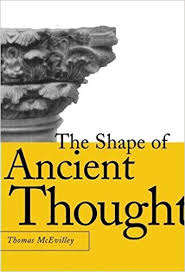
This is an ahistorical and non-empirical view. Whether you agree with the scholarship in The Shape of Ancient Thought: Comparative Studies in Greek and Indian Philosophies, the fact that this argument could be made in the first place stands testament to the rich textured complexity of the past.
Modern ideologies tend to flatten and diminish the complexity of history.
 I would be curious about reader experiences. The reason I ask is that a white friend who visits India for business told me the story of being asked about letting new male acquaintances suck his dick repeatedly. Apparently, since he had no local roots/connections these men felt ‘safe’ making this inquiry (one of the men apparently left a job in the Middle East because he kept sucking men’s dicks, and he was worried about “becoming gay”).
From an American perspective, this is peculiar behavior. But I understand it’s not that strange in a world-wide or historical context. I assume that large urban areas now have viable gay communities so that this sort of behavior is less common than it once was?

I’v bemoaned the hard-Left shift of Indian Americans in political organization and consulting (Bong-commies at every turn!). But there are still neolib centrists around! Tech Veteran’s Fundraising Team Rakes In Cash for Pete Buttigieg Campaign:
Three years ago, Swati Mylavarapu had never worked for a political campaign and attended just a single campaign fundraiser.
Now, the 36-year-old Silicon Valley investor is a financial force behind one of the best fundraisers in the Democratic presidential primary, serving as national investment chairwoman for Pete Buttigieg, a fellow Harvard graduate and Rhodes Scholar whom she has known for half her life.
Indian Americans are 1% of America’s population. And in the older generation of 1.5 and 2nd generation far less (“Generation X”). But they sure are punching above their weight!
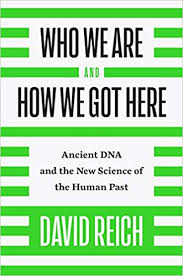 Many questions on this weblog would be answered if the individuals just read Who We Are and How We Got Here: Ancient DNA and the New Science of the Human Past. Not all questions would be answered. The book is dated in some ways, and there are certain lacunae. There are also things we still don’t know to any great satisfaction (e.g., Eastern Eurasia is under-understood). But to a first approximation, this book answers most big questions, at least from a scientific perspective.
Though American price on Kindle is $4.99, this may not be feasible for some readers. There are free preprints of almost all of the Reich lab’s publications on the lab’s website.
This post seems relevant since new readers may not be aware of the resources out there.
 At my other weblog I report on evidence that a sample from Cambodia dated to 100 to 300 AD seems to have considerable Indian ancestry. This is not a result in isolation. Lots of evidence points to non-trivial Indian gene flow. The devil is now in the details of when/who.
Second, there is lots of talk about “person X looks like population Y, so perhaps they have ancestry from population Y.” This is almost certainly wrong in most cases.
Looking at Indian populations there tends to be far more variation in physical appearance within a population than the variation of total ancestry. In other words, some Tamil Brahmins look like South Indian Tribal people and other Tamil Brahmins look like West Asians. But in terms of total ancestral components, there’s no difference.
The theoretical explanation for what’s going on is that the genetic loci which control “physical appearance” are much smaller in number than the whole genome (on the order of dozens of loci). As such, the sample variance is rather large (the N denominator is small).
South Asian populations differ across each other, but there is usually a quite large within-population variation on genetic variants implicated in physical characteristics. This means that there are a large range and quite a bit of variation.
Though a lot of the discussion involves Muslims, I have heard from multiple non-Muslim people of Northwest Indian stock (e.g., Pandits) that they must have “Persian ancestry” because they look so Persian. The genetics refutes this rather strongly. Rather, modern Persians and many Northwest Indians share deep ancestry which diverged after the Last Glacial Maximum 20,000 years ago.
One of the weirdest emails I’ve ever received.
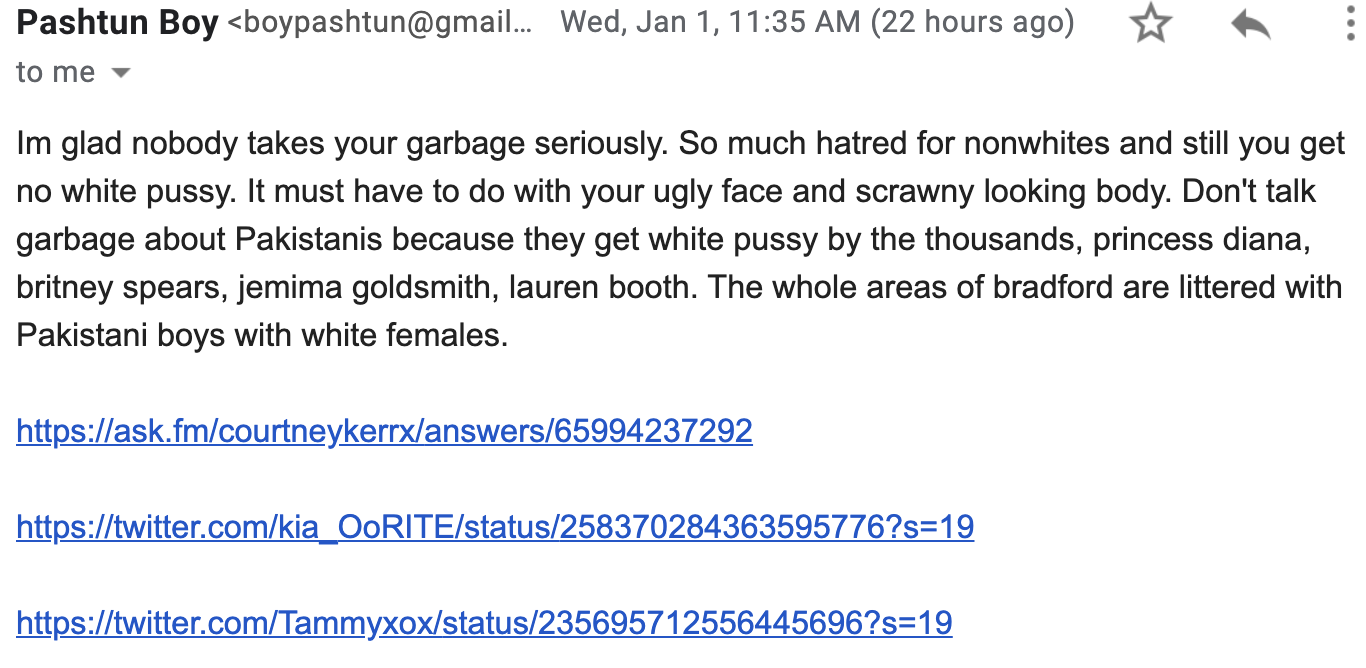
The insults directed to me by people who are Pakistani or by people who are Hindus are peculiar, because they presuppose a sense of communal identity which I mostly lack. Insults toward Bengalis and Muslims just leave me scratching my head. Also, now that I am no longer 15 I don’t think that the measure of a man is how much “pussy” they bag….
 I was having a discussion with a young person of subcontinental origin who is completing a STEM Ph.D. An open-minded and curious person and they asked me to exposit to them why a post-colonial paradigm that reduces all non-Western/white peoples to being objects in a narrative driven by Western/white agents is built on false premises. My candid opinion is that this is not something that one can explain in a single conversation, or in a single article. The reason is simple: if you don’t know much you are ultimately relying on someone else’s credibility.
I think I’m a credible person, but obviously I would think that. Unfortunately, history is messy, complex, and filled with shades and textures that can only be appreciated through direct consumption, not description. You need to read the history yourself and reflect upon it deeply in a first-person sense.
The reality is that there are plainly mendacious actors out there who launder their credentials to promote lies. This behavior knows no ideology but is quite common and pervasive. Often these “public historians” do not lie or spread falsehood directly, but they obfuscate and redirect attention in such a manner so that their audience draws particular ‘natural’ conclusions which are at variance with reality as we understand it.
I particularly recommend history written about the time before 1800, because the foundations of the present often run quite deep, an assertion which directly undercuts the logic of post-colonialism, where the recent overwhelms the past.
Economic history, in particular, is often useful because it deals in concrete variables, where human judgment is less opaque. For example, Power and Plenty: Trade, War, and the World Economy in the Second Millennium.
On occasion, readers will question why it is so important to know broadly and deeply to understand the particular. That is due to the reality that the particular is simply the terminal node in a tree of decisions which fans out into the past and across continents.