The Sintashta shamans

Recently I’ve been reading about the Kalash religion. For readers who are not aware, the Kalash area group of Indo-Aryan speaking pagans who reside in the fastness of Chitral, Pakistan. Genetically about ~30% of their ancestry can be modeled as “Sintashta”, the pastoralist Indo-Europeans who were dominant in Bronze Age Turan, and likely gave rise to the Indo-Aryans. The remaining ~70% of their ancestry is similar to that of the Indus Valley people.

Despite their predominant non-Aryan ancestry, I do wonder if the Kalash could give us insights about the beliefs of the original Indo-Aryans, before they were exceedingly transmuted by India. One thing that is clear to me is that their “mountain shamanism” seems to be similar to the “steppe shamanism” outlined in Empires of the Silk Road. The insight from this work is that ecology and lifestyle matters. Turks, Iranians, Mongols, and Tungusic peoples all transformed in similar ways when exposed to and habituated toward steppe pastoralism. The shift toward more “organized” and structured religion happens with sedentarism and mixed-agriculture.

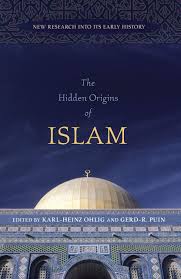
The Abbasid invention of Islam

Since many readers of this weblog have rather naive views of Islam and its interaction with the Indian subcontinent, I thought they might appreciate my post on my other weblog, The Myth Of Arabian Paganism, And The Jewish-Christian Origins Of The Umayyads.

It wasn’t emphasized in the piece, but I will make it clear here: the development of Sunni Islam as we understand it was strongly conditioned on the cultural influences from the matrix of Iranian-Indian religious and social thought which matured in Turan. In fact, one of the early Abbasids, the son of an Iranian mother, even considered moving the capital of the Caliphate to Central Asia, in particular, the city of Merv.

The aspects of Islamic thought most clearly a product of this period and place? I believe that this is the hadith culture embedded within the institutions of the madrassa. Many argue the madrassa is a modification of the Central Asia vihara, and the analysis of proper practice due to religious law was a major function of the religious within these viharas.

Hindu racism against Muslims

Tom Haverford

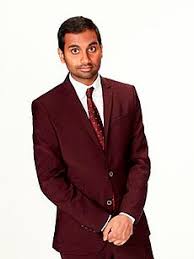
On the TV show Parks & Recreation Aziz Asnari’s character, Darwish Ghani, changes his name to Tom Haverford. The joke is that as a brown-skinned man he can change his name all he wants, but he’ll always be Darwish Ghani to the fair citizens of Indiana.

I thought of this while after I listened to Mindy Kaling on Fresh Air talking about her new show, Never Have I Ever, and a scene where aunties are ostracizing a woman who had married a Muslim. Kaling mentions offhand that the “racism” against Muslims is something that she remembers from her childhood. She uses the word racism, rather than prejudice, because for the predominantly white liberal/progressive listeners of NPR Muslims are a “race” after a fashion.

But if Darwish Ghani changed his name to Vikram Chokalingam, he would be able to “pass.”

Kaling’s peculiar interpolation of the Western view of Islam, as a “nonwhite religion,” has resonances in the Indian subcontinent with some Hindu nationalists, who view Muslims as an alien race, the scions of foreigners, and some Muslims, who proclaim their Arab, Iranian or Turkic antecedents. All the while, genetics and the plain evidence of our faces makes it clear we are basically all the same “race” (i.e., Punjabi Hindus and Punjabi Muslims aren’t really different except a tiny bit on the margins*).

* Muslims are more likely to have a bit of ‘exotic’ ancestry.

Never Have I Ever


The new series on Netflix about a young Indian American teen is pretty good. Despite attempts to write about it in a political frame, I don’t see that it’s a political show really. There is also an element of verisimilitude to the show because the non-Indian love interests are of East Asian, Jewish, or mixed East Asian backgrounds. Too often when talking about dating and love outside of one South Asian culture there’s a temptation to assume “American” means Sven and/or the St. Pauli Girl. Southern California, where the show is set, is way more diverse than that, and unlike 90s sitcoms like Friends and Seinfeld Never Have I Ever actually seems like it was set in and around suburban SoCal.*

Oh, and I have to observe, that the protagonist is complected like a lot of the Indian Americans I grew up around.

* The protagonist did say “Hella,” which is very NorCal. I have no idea how that got past the writers’ room.

Browncast Episode 96: From Vietnam with Phở

Another BP Podcast is up. You can listen on LibsynAppleSpotify,  and Stitcher (and a variety of other platforms). Probably the easiest way to keep up the podcast since we don’t have a regular schedule is to subscribe to one of the links above!

You can also support the podcast as a patron. The primary benefit now is that you get the podcasts considerably earlier than everyone else. This website isn’t about shaking the cup, but I have noticed that the number of patrons plateaued a long time ago.

I would though appreciate more positive reviews! Alton Brown’s “Browncast” has 30 reviews on Stitcher alone! Help make us the biggest browncast! At least at some point

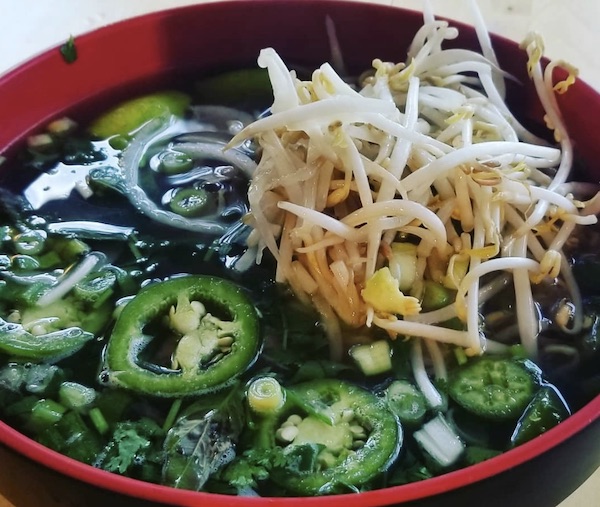
This episode is a discussion Jasper Gregory, an expat living in Danang. Having basically “beaten” Covid-19, is coming out of “lockdown.” We talk about how this happened, and what “normalcy” looks like.

Jasper and I also discuss the geopolitics, religion, and popular culture of Vietnam and Southeast Asia. Also, does he prefer northern or southern phở?

Extraction!


I just watched a somewhat silly film Extraction on Netflix. There’s not much plot. But some of the background is subcontinental. Some comments

* The translation of the Bengali elided quite a bit of flourish. For example, they didn’t translate “son of a bitch” from Bengali into English in the subtitles

* The dominance and impunity of organized crime in Dhaka seems implausible

* It was kind of funny watching Chris Hemsworth beat up guys a foot shorter than him

Browncast Episode 95: Stanford serological study incorrectly underestimates infection fatality rate

Another BP Podcast is up. You can listen on LibsynAppleSpotify,  and Stitcher (and a variety of other platforms). Probably the easiest way to keep up the podcast since we don’t have a regular schedule is to subscribe to one of the links above!

You can also support the podcast as a patron. The primary benefit now is that you get the podcasts considerably earlier than everyone else. This website isn’t about shaking the cup, but I have noticed that the number of patrons plateaued a long time ago.

I would though appreciate more positive reviews! Alton Brown’s “Browncast” has 30 reviews on Stitcher alone! Help make us the biggest browncast! At least at some point

This episode is a discussion with a person who was a participant in the Stanford serological study. Basically he talks about the selection bias in the study sample, and the wrong inferences we can make from that.

Brown Pundits