As someone who was raised in the United States as a person of brown complexion, I grew up as an “Indian.” This, despite the fact that the last time any of my ancestors were Indian nationals was before 1947. The main reason is that it is really hard to get people in 1980s America to know what “Bangladesh” was. Yes, there was a famine and a concert in the early 1970s, but this was not very well known. Since I had brown skin, and my parents ate spicy food, it seemed plausible to accept that I was Indian and just “go with it”.*
But, a problem with being Indian is that people assumed I was Hindu. I was raised Muslim (though never really a believer myself), so I had no ownership or connection to Hindu identity. Therefore, I would have to explain the religious discrepancy to my interlocutors. It wasn’t a major issue for me. After all, I wasn’t religious myself.
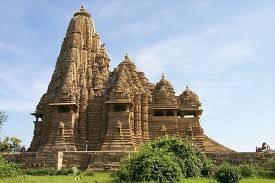 As a grown adult, with children of mixed background who find my exotic antecedents amusing, I have had to reflect more on the relationship between India and its native religious traditions and identities. Hindus often make the accusation to Indian Muslims and Christians that these religion’s holy sites are elsewhere. In contrast, southern Asia is the locus of “Hindu” spirituality. The sacred geography of Islam in Arabia, the Levant, and for Shia and Sufis more broadly across the Near East (with some expansion in other areas for Sufis, though these are secondary). For Christians, the locus is in the Near East and Europe. But I think this focus on Islam and Christianity takes the eyes off the major prize.
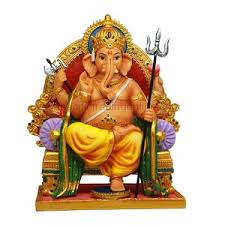 What does it mean to be Hindu?** I think that it is clear that Hinduism is a precipitation of the indigenous religious traditions of India, a fusion of numerous strands which are quite distinct. As a non-Hindu it is not my role to adjudicate on what is, or isn’t, Hindu, but it seems quite clear that there is something distinct from Islam and Christianity, and that that distinctiveness is usually due to indigenous aspects (some of which were exported through Buddhism out of India). Al-Biruni saw this. Hindus themselves saw this even if they did not think of themselves as a confessional religion.
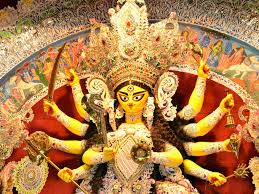 This doesn’t mean that non-Hindu Indians and subcontinentals are not distinctively South Asian. Look at a street scene in Pakistan, and it looks more like New Delhi than Tehran. The people, the color, the foods and density. But for various reasons Pakistanis have rooted their identity in Islam, and this makes identification as subcontinental awkward for many Pakistanis, because Hinduism suffuses subcontinental identity. The word Hindu after all originally just meant Indian.
Let’s use an analogy. Imagine that Iran was divided into multiple states. One to the west was mostly Shia. One to the east, inclusive of Tajiks, was mostly Sunni. Finally, in the middle was a numerically preponderant Zoroastrian state with a Muslim minority. I think it would be hard to deny that Zoroastrian Iranians would feel a stronger identification with being Iranian full-stop, because Zoroastrianism is a religion which emerged in an Iranian matrix (Bahai and secular Zoroastrians in the USA give their kids more “Iranian” names usually than even nominal Muslims). In contrast, Muslim Iranians would feel affinities with Arabs and Turks and other groups all around them through fellow-feeling of religious brotherhood.
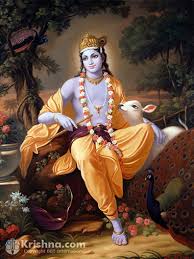 The point of this post is not to take a particular stance on whether India is or isn’t secular, or should or shouldn’t be secular (whatever that means in India, which is different from the United States). Rather, it’s to acknowledge the “elephant in the room.” Growing up around my parents’ Indian, Pakistani, and Bangladeshi friends, there was always the reality and tension that they had non-subcontinental attachments and identification, in theory. The theory part is made salient by the reality that my parents socialized with Hindu Indians and Bangladeshis (generally Bengali, but not always), but never with Muslims from other regions (the sole exception was when I had an Indonesian best friend, though my parents complained that the Indonesians weren’t very good Muslims anyway so what was the point?). They were foreigners in concrete terms, though there was an abstract brotherhood implied by faith.
Growing up in a family that is Muslim being exposed to the religion at the multiethnic masjid was a cosmopolitan experience. It was a West Asian dominated space. The difference with brown people that are Hindus is that with rare exceptions every religious space has a rootedness in being Indian. To be religious is to reinforce Indianness, subcontinentalness, South Asianness.
The title of the post is pretty explosive. But I am pretty sure none of my descendants that I will live to see (grandkids) will identify as Bangladeshi or subcontinent, so I think perhaps I can be a bit objective and detached. My legacy is going to be in North America, not South Asia. My family’s transition into being Muslim centuries ago opened up a whole new international world. But it also unmoored us from the soil in which we were nourished. Bangladeshi Muslims are still trying to deal with that and work through it.
* To be clear, I never said I was born and raised in India. I would simply say I was born in Bangladesh, which is near, and like, India.
** I can substitute “Dharmic” for Hindu and keep 90% of my argument the same