
Category: Archived Authors
Blasphemy and Blasphemy laws. The Big Picture
China’s coming dominance in science
http://www.businessinsider.com/chinas-scientific-dominance-is-a-done-deal-2014-6
Neti, Neti.. Left and Right in Trumpian America
By such sentences as “That thou art,” our own Self is affirmed.
Of the untrue and that of the 5 senses – the Sruti says, “Not this, not that” (Neti, Neti)
(Avadhuta Gita)
How liberals killed the freedom of movement
Bannon speaks
President Trump, the unknown unknowns..
Is Islam the rock on which the liberal order breaks?
Trump’s rise, elite’s fall, liberal order
Only people who are NOT Cis, White or Male can understand and express the real truth of oppressive society. IF this is true, there is no point in struggling within the US system (or even within the US) because more people ARE Cis, White or male. This will always be a minority effort, doomed to fail. IF it is not true, then it is pointless and self-defeating posturing.
My child, how can there be illusion and non illusion, shadow and lack of shadow?
All this is one Truth, all this is of the nature of space and without taint.
Harmless Secular Activists “Disappeared” in Pakistan
Anywhere from 4 to 9 “secular bloggers” and human rights activists have disappeared in Pakistan last week (the exact number is hard to ascertain because several families are apparently trying to keep a low profile, in the hope that this will lead to a more intact recovery of their loved ones. A very reasonable impulse).
At least 4 were kidnapped in various towns by multiple people riding in cars (with at least one case where it is confirmed that the number plates were fake), which makes people think these “disappearances” are the work of the world’s finest intelligence agency. The fact that these events took place in different cities at around the same time, and that there are no signs of criminal activity, also supports this guess. That some well known “analysts” have shown up on TV to say that “if the agencies did this, then they probably had good reasons” also makes the “agency picked them up” scenario more likely.
But why? And why now?
I am not asking this because this is the first time such a thing has happened. Everyone knows (or should know) about the fact that 100s of people have disappeared in Pakistan in the past (mostly, but not exclusively, in Balochistan) and it is assumed that most were guests of the finest intelligence agency. Many turned up dead, though others have been released after only mild torture and some (not a lot) have even been handed over to the legal system for processing. While one high profile killing (Saleem Shahzad) occurred in Punjab and one high profile anchor (Hamid Mir) was shot at in Karachi, most disappearances have been in the “periphery” (geographically or socially). Those activists who belong to Punjab or Karachi, who are well known in English speaking circles, and especially those who limit their activism to social media and English journalism, still seemed to have something of a presumption of safety. Someone like Mohammed Hanif could (and very regularly, did/does) criticize kill and dump policies and has not (yet?) been “picked up” for re-education, or worse). This is not to deny the immense courage of people like Mohammed Hanif; this presumption of safety is never complete and all activists take a risk when they criticize the deep state or its pet ideological proxies, but nevertheless, there is a general impression that they will have to do something rather extreme before the men in white pay them a visit. In addition, there had been no wide crackdown on lesser known bloggers and commentators whose work was mostly or completely confined to social media. But that presumption of (relative) safety may now be over.
What is hard to figure out though, is why? Why pick on these people, most of whom are low profile and relatively unknown? (Salman Haider is the best known of the lot, but even his role was relatively small and certainly seems to have posed no serious threat to the powerful state). Perhaps relatively modest targets were chosen in order to send a message without causing a bigger backlash? But even then, why the need to send this message at all? The really serious and significant conflicts in Pakistan are between various “stakeholders” in state power (e.g army versus PMLN) or between foreign powers (and their proxies), or between powerful Jihadist gangs and the state, and so on. None of them are much affected by the (worthy, highly admirable) efforts of a few dozen secular bloggers or liberal/leftist activists. For example, secular and liberal writers have been writing about disappearances in Balochistan for years now, and this has not caused the smallest change in state policy in that province. The army and the PMLN have played various games with each other and we cannot seriously say that the outcome was ever significantly influenced by these activists. And so on. These are harmless people. At best, they may introduce some mild liberalism and humanism into the Pakistani public space. At worst, they achieve nothing at all. In no way are they a threat to CPEC, or whatever other policy the deep state is working on right now. Why arrest these people? And why now? I am genuinely curious and look forward to enlightening replies.
There is a theory that this may be what the finest intelligence agency has wanted to do for ages, but they felt restrained by the threat of their “soft image’ in the West being undermined. This is not to say that illiberal actions in general necessarily lead to Western sanction (after all, the West has worked with much worse human rights abusers when they felt some “real” interests were at stake; sometimes the interests were nothing more than banana farms) but the theory here is that we are already half-working against the West and this is a very tricky balancing act; loss of “soft image” may tip the balance and lead to real consequences (like cuts in aid).
But if this theory is true, why is this threat no longer felt to be significant? Has confidence in China’s ability to foot the bills reached a high enough level, so don’t need to kowtow to the West? or is the election of Trump taken to mean that liberalism will no longer be paid even lip service by the West itself, so we can get away with more blatant suppression? In this case, not because we don’t need the West any more but because we expect that whatever deals we make with Trump will be more explicitly mercenary and neither party will have to waste time and energy on liberal pieties?
Another theory is that they are
Guide 1965
Kashmir: India Tries a Reset
India and Pakistan. Again at the
Mangal Pandey. Truth and Fiction
Mangal Panday – Film, Fiction & Facts
Hamid Hussain
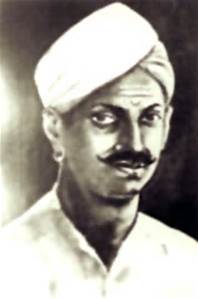
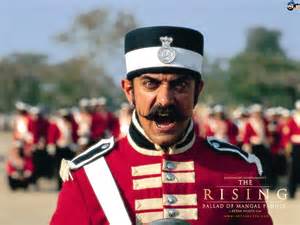
Mangal Panday – The Rising is a big budget Indian film and good research has been done about the history of this incident. Generally, a lot of cinematic license is used in most historical films but Mangal Panday has kept core historical facts intact. As expected, a lot of additional fictional material has been added to make it interesting. Films are essentially about entertainment and not substitutes for history books. There is quite a large body of written material available on the events of 1857. Colonial literature, post independence nationalist literature and leftist writers provide different interpretations of the events of 1857 uprising. I’ll limit myself only to the historical context.
Adrenaline vs. Accuracy
Scene 1– In the beginning of the movie, there is a scene of Afghanistan where Mangal saved his officer’s life during a fire fight. This is not correct. First Anglo-Afghan war was fought in 1839-42 and Mangal’s regiment 34th Bengal Native Infantry (BNI) didn’t serve in Afghanistan. In addition, Mangal was born in 1831 and joined his regiment in 1850, long after the first Anglo-Afghan war.
Scene 2– There is a scene of a British officer of 34th BNI saving a Hindu girl from burning at her husband’s funeral pyre (satti). There is no evidence of an officer of 34th BNI involved in such an affair; however there are reports of such incidents. The most famous one is related to founder of Calcutta Job Charnock. He saved a beautiful Bengali Hindu girl from the satti pyre and later married her. He adopted local customs often wearing native loin cloth (lungi) in public. George Lawrence (brother of famous John and Henry Lawrence) served for forty three years in India and as a young officer serving with 2nd Bengal Light Cavalry he was witness to a satti ceremony in Neemuch. The poor girl’s husband had died in a far off land and his body was not even there at the pyre. She was to be burned alive on the pyre while her departed husband was represented by some of his clothes. Young Lawrence was perturbed and seeing some of his own troopers among the crowd asked them if they would help him if he decided to rescue the girl. Lawrence approached the pyre and told the young girl that he was willing to save her life. The girl thanked him but refused the offer stating that she was willing to die.
Scene 3– Mangal using the new cartridge during firing practice biting it with his teeth. Practice for new cartridges was done at School of Musketry at Dum Dum and soldiers from different regiments were sent to Dum Dm. Drill Havaldar of 34th BNI Mookta Prasad Panday showed his reservation. On March 02, Major John Bontein of Dum Dum School of musketry wrote a letter that few Hindu sepoys have refused to use new cartridge. Soldiers of 2nd BNI (Grenadiers) and 7th BNI had no objection to use of cartridges but one sepoy Petum Singh showed hesitation.
There was serious reservation by many soldiers about new cartridges and reports started to appear in early January 1857 that sepoys were apprehensive about this issue. Many feared that it contained cow and pig fat and some thought it was a deliberate attempt to break their caste and ultimately convert them to Christianity. This feeling was strongest among high caste Hindu sepoys. They talked to British officers and suggested that either wax or oil be used instead of other material.
The Regiment
Film has done very good job at portraying the regimental uniforms and insignia as well as regimental life of the time period. A brief history of Mangal’s regiment 34th BNI can help to understand the background.
Mangal Panday; sepoy number 1446 belonged to the 5th Company of 34th Bengal Native Infantry (BNI). This regiment was raised in 1786. In 1844, several Bengal infantry regiments showed signs of unrest and protested about bhatta (Foreign Service allowance) when ordered to garrison newly conquered Sindh. Five regiments; 4th, 34th, 64th & 69th Bengal Native Infantry and 7th Bengal Light Cavalry showed signs of unrest. Authorities dealt leniently with all other regiments but it was decided to disband 34th BNI as it held on the longest and finally it was disbanded on March 27, 1844 at Meerut.
34th BNI was re-raised in July 1846 at Ludhiana. In 1857, this regiment was about a decade old and not as cohesive compared to an old regiment. In early 1857, the garrison of Barrackpore consisted entirely of native troops from four regiments; 34th BNI, 70th BNI (commanded by Colonel J.D. Kennedy), 43rd Light Infantry (Commanded by Major Matthews) and 2nd Native Infantry (Grenadiers). Garrison commander was Brigadier Charles Grant. Barrackpore was also headquarters of presidency division and commanded by Major General J.B. Hearsey. Native infantry regiments consisted of ten companies of about 100 soldiers each. Companies were mixed in contrast to later class companies.
Total strength of 34th BNI in March 1857 was 1089. Three companies were stationed in Chittagong while some small detachments were on guard duties at other stations. Class composition consisted of 335 Brahmin Hindus, 237 Khatri (spelled Chuttrees in old documents) Hindus, 231 inferior caste Hindus, 200 Muslims, 74 Sikhs and 12 Christians. Subedar Major was a Brahmin Ram Lall and out of four Subedars, two were Brahmins (Sewumbar Panday; I’m unable to find the name of the other Brahmin Subedar), one inferior caste Hindu (Lala Gopal) and one Muslim (Muddeh Khan). Regiment was commanded by Colonel Stephen Glyane Wheler (he didn’t belong to the regiment and had been posted recently to command the regiment). Battalion Adjutant was Lieutenant Bempde Henry Baugh, Quartermaster and battalion interpreter was Lieutenant F.E.A. Chamier and senior British Non-Commissioned Officer (NCO) was Sergeant Major James Thornton Hewson.
|
Lieutenant Colonel Stephen Glyane Wheler
Captain C.C. Drury
Captain W.W. Aubert
Captain P.H.K. Dewaal
Lieutenant Bempde Henry Baugh
Lieutenant F.E.A. Chamier
Lieutenant Stewart Allen
Lieutenant J.T. Liscombe
Lieutenant G.R. Hennessy
Lieutenant A.C. Bunbury
Dr. James Allen
James Thornton Hewson
Ram Lall
Sewumbar Panday
Lala Gopal
Muddeh Khan
|
Commanding Officer
Commanding Chittagong detachment of 3 Cos.
Adjutant
Quartermaster and Interpreter
5th Company Commander
Commanding Fort William detachment
Assistant Surgeon of the regiment
Sergeant Major
Subedar Major
Subedar
Subedar
Subedar
|
Table: 1 List of Officers of 34th Bengal Native Infantry. Not all officers were present at regimental headquarters. Some were commanding detachments at other stations while others were away.
34th was disbanded on May 06 after Mangal Panday incident. European soldiers consisting of 84th Foot (commanded by Colonel Reed), a wing of 53rd and two batteries of artillery surrounded the parade ground where 34th was disbanded. Only seven companies of the regiment were disbanded. On the day of disbandment, 414 soldiers were discharged. Three companies (2nd, 3rd & 4th) were stationed at Chittagong and survived disbandment. Soldiers who were not present with the regiment as well as many Muslims and Sikhs of the regiment survived the disbandment. After mutiny, Indian army was reorganized as large number of Bengal infantry regiments ceased to exist. Old numbers were allotted to newly raised irregular regiments during the mutiny and those who remained loyal. In 1861, Fatehgarh Levy raised by Captain Shakespear Sage was designated 34th BNI but this regiment was also disbanded in 1882. In 1885, 34th was re-raised by Lieutenant Colonel Arthur W. Crookshank.
The Spark
Scene 4 – The scenes of 34th refusing to use cartridges on a full parade, Colonel Wheler ordering artillery guns to be brought against the regiment, Mangal firing repeatedly at assembled British and native troops, 34th breaking the kote of arms and attacking British officers are all fictional. Some of these events are related to another regiment 19th BNI stationed at Barhampore. Captain William Gordon is also a fictional character and his duel with Mangal is also part of cinematic license.
There have been reports informing British officers that sepoys of different regiments were gathering and discussing their fears and rudimentary plans of how to protect their faith. Colonel Wheler was accused of preaching gospel to natives; a fact which he admitted later during inquiries. An anonymous letter to Commanding Officer of 43rd BNI Major Matthews summed up the fears of the sepoys. Sepoys expressed their fear in this letter that government was mixing bones in salt, flour and sugar, forcing people to eat together to break the castes, allowing Hindu widows to marry and all this was considered as an assault on the religion. The letter warned that ‘we will not give up our religion’ and that majority of the sepoys of Barrackpore garrison were of this opinion. A Jamadar of 34th BNI had warned his officers about general feelings among sepoys. General Hearsey had ordered a court of inquiry asking sepoys to express their grievances. Majority of soldiers expressed their suspicions about cartridges. These feelings were significant enough as General Hearsey wrote that ‘we have at Barrackpore been dwelling upon a mine ready for explosion’. Many British officers discussed frankly with their men at parades and in cantonment that British were not planning to interfere with their religion.
Immediate cause of trouble was 19th BNI. This regiment was stationed at Barhampore and commanded by Lieutenant Colonel W. St. L. Mitchell. Regiment’s Adjutant was Lieutenant J.F. McAndrew, Quartermaster and Interpreter Lieutenant James Vallings and Subedar Major was Shaikh Murad Bux. On February 25, an escort of 34th came from Barrackpore to Barhampore bringing convalescing Europeans and they had allegedly incited soldiers of 19th BNI. Earlier on February 18, another escort of 34th BNI had brought some stallions to Barhampore.
Soldiers of 19th refused to accept greased cartridges on February 27th and in view of absence of any European troops nothing could be done. Later, some soldiers broke into kote and took arms to their lines. Later, at the insistence of their officers arms were returned. This was a serious offence but there were no other troops available at Barhampore to tackle 19th BNI therefore regiment was ordered to march to Barrackpore to be disbanded on March 31st. (Ironically, orders were issued that regiment should be disbanded in the same manner that 34th was disbanded in 1844 in Meerut. In one of the strange coincidences of history, 34th was disbanded second time merely five weeks later and the fire of rebellion started in Meerut). 19th BNI was disbanded while surrounded by European and native troops and soldiers were escorted by a wing of 84th Foot to Chinsura from where soldiers went to their homes. They openly accused soldiers of 34th BNI for inciting them. 19th and 34th had been stationed together recently in Lucknow prior to their move to Bengal.
The incident of Mangal Panday’s firing on his officers occurred on Sunday March 29, 1857 between 4 and 6 pm. Mangal was high after having more than fair share of intoxicating ‘bhang’. Mangal was in front of the lines holding a loaded musket and a native sword (tulwar). He was wearing his red uniform jacket but loin cloth (dhoti) instead of uniform pants. He ordered drummer John Lewis to sound assembly. This sequence is accurately portrayed in film. Naik Emam Khan of the quarter guard rushed to Sergeant Major James Hewson’s quarters to inform him and he was the first European to reach the site. Mangal shot towards him but missed. Hewson took shelter behind the bell of arms. Havaldar Major Madhoo Tiwari rushed to battalion Adjutant Lieutenant Baugh’s residence to inform him. He arrived on the scene riding his horse. His orderly Sepoy Shaikh Paltoo of the Grenadier Company of the battalion was running after the horse. When Mangal saw Baugh approaching, he took cover behind the artillery gun in front of the quarter guard and fired his musket at Baugh and hit the horse. The horse fell and Baugh after disentangling himself fired his pistol but he also missed. Mangal didn’t have time to reload his musket as Baugh along with Sergeant Major Hewson with drawn swords were now almost on him. Mangal wounded both officers with his sword and the lives of both officers were saved by the heroic act of Sepoy Shaikh Paltoo who held Mangal from his waist. This gave enough time to both officers to retreat from the scene. During all this time, Mangal yelled at his fellow sepoys telling them to get ready. When no one joined him, angry Mangal abused them and said, “you have excited me to do this, and, now, you ban chutes (sister f******) you will not join me”. Jamadar Ganness Lalla and Color Havaldar Macklar Prasad Panday (both belonging to Mangal’s 5th Company) shouted at Mangal to throw his weapon and give himself up.
The guard of twenty sepoys under their Jamadar Ishwari Panday didn’t move. A crowd of about 400 sepoys in various dresses had gathered at the scene by this time. Only Sheikh Paltoo struggled with Mangal and held on him. Mangal had reloaded his musket by this time. Many soldiers of the regiment stood and none of them intervened to help their officers. Major General J. B. Hearsey arrived on the scene accompanied by his two sons’ Captain John Hearsey (38th BNI) and Lieutenant Andrew Hearsey (57th BNI) along with Assistant Adjutant General (AAG) Major Ross. Mangal shot himself but was wounded only in the right side of the chest ripping only muscles and also damaging shoulder and neck. His red coat caught fire at the entry wound that was put out. This minor detail is shown elegantly in the film with some close camera shots. Mangal was arrested and put in the quarter guard of 70th BNI. Later, he was treated by assistant surgeon of 53rd Foot Dr. T.B. Reid. Hearsey took his pistol out and ordered the guard to get back to their duty. He also promoted Shaikh Paltoo to Havaldar on the spot (he retired as Subedar). Most of the soldiers of the regiment simply watched the whole incident and did not make any attempt to restrain Mangal. However, few hit two British officers with musket butts when they were on the ground.
Mangal was tried on April 06 by a fourteen member native general court martial. All members were native officers and court was headed by Subedar Major Jawahar Lal Tiwari (43rd BNI). One member Subedar Sewambar Panday was from Mangal’s own 34th BNI. Mangal was charged with inciting mutiny and using violence against officers. Mangal did not cross examine witnesses and only said that ‘I did not know whom I wounded and whom I did not. What more shall I say. I have nothing more to say”. Court gave a unanimous guilty verdict and eleven out of the fourteen members recommended death penalty for Mangal. Mangal was kept in the quarter guard of HM 53rd Foot. After the announcement of sentence, field officer of the week, Major W. A. Cooke and Ensign Chamier (interpreter) visited him and asked him whether he acted of his own free will. He stated that he acted on his own free will and expected that he will die. He also stated that he had no specific grudge against any officer and would have shot anyone who came near him. He also admitted that he had been taking opium and bhang recently and previously he didn’t use these drugs. He said that he was not aware at that time what he was doing. Mangal was hanged on 08 April 1857.
Scene 5- In the end of the film, it is mentioned that an officer of 34th named Gordon was seen fighting alongside Indian sepoys. In the film, Gordon is the main English character. There was no officer named Gordon with 34th BNI. This is also a fictional tale. Mangal’s 5th Company commander was Lieutenant Stewart Allen. However, there were some Englishmen and many Anglo-Indians who fought alongside rebels. Some may have sympathized with rebel cause while others may have joined them to save their lives. One Scottish named Sergeant Major Robert Gordon fought alongside rebels at Delhi. Gordon was born in Scotland and came to India in 1840. He joined Bengal Artillery and rapidly rose through the ranks because he was literate. In 1852, he was appointed Sergeant Major of 28th BNI. In 1857, 28th BNI was stationed at Shahjahanpur (about forty seven miles from Bareli) and Captain Marshal James was the acting Commanding Officer. 28th BNI mutinied on May 31 killing their commanding officer and left for Bareli (about 100 Sikh soldiers remained loyal). Later, it arrived at Delhi along with the mutinous contingent from Bareli (18th BNI, 68th BNI and 8th Irregular Cavalry) under the command of Bakht Khan. 28th BNI came marching on the tunes played by the Anglo-Indian band of the regiment. In Delhi, Gordon was put in prison along with a handful of English and Anglo-Indians who had survived the massacre. Some accounts suggest that Gordon had converted to Islam and named Abdullah Khan. He served with rebel guns due to his training as a gunner. After the fall of Delhi, he surrendered to Brevet Major William Hodson at the tomb of Humayun. Hodson executed all Anglo-Indian band members after their surrender at Humayun tomb. A lengthy inquiry followed to ascertain whether Gordon worked with rebels under duress or willingly. Finally, it was recommended to discharge him from the army. In July 1859, he was put on a ship under arrest but after arriving in England, he was released. He disappeared from the pages of history after his arrival in England.
Sex & Raj
Scene 6- Film has a scene of the bazaar of prostitutes of the cantonment. A European doctor examining prostitutes is correct portrayal as these measures were taken to decrease sexually transmitted diseases among soldiers. In 1850s, there were seventy five military districts and in every district prostitution was supervised by authorities. All prostitutes were registered, minimum age for prostitutes was fifteen and women were provided with their own living quarters or tents that were regularly inspected. Some establishments were quite large and brothel in Lucknow had fifty five rooms. Prostitutes infected with sexually transmitted diseases were removed and not allowed to practice their trade until recovered. Both native and European soldiers used these bazaars; however sepoys were discouraged to visit those prostitutes preferred by European soldiers. Most British soldiers were from lower strata of the society and were not held to the standard of a British officer. British soldiers visited prostitutes more often than sepoys. One reason was that British soldiers were not married while sepoys were usually married men. These bazaars were called ‘lal bazaars’ (red streets). Both heterosexual and homosexual relations were common in mid nineteenth century. British regiments spent several years in India and many a times children were born of such relationships. Special houses and schools were assigned as early as eighteenth century for these children.
Scene 7- In the film, Captain William Gordon has an affair with an Indian girl Jawala. By the middle of nineteenth century, this trend had almost died down. In late seventeenth and eighteenth century, many Europeans kept native concubines as well as legally married local women both Muslim and Hindu. These women were kept in a separate house named Bibi Ghar. The practice was common enough that surviving wills from Bengal in the years 1780-85 show that one in three record bequest to Indian wives and companions. Some Englishmen retained their own religion and culture while others converted to Hinduism or Islam and became completely ‘native’. Some children of such unions roamed in two worlds comfortably while others drifted to one side. Some were educated in England and finally settled there while others grew up as natives in India. Few of the off springs of these unions even became celebrated poets and scholars of Urdu and Persian (Farasu, Shaiq, Sufi etc.).
Most Company employees both civil and military joined the service at the age of sixteen. Several factors such as very young age, prolonged stay of decades in India, posting to a far off station with very little contact with Europeans and influence of native consorts and wives resulted in complete ‘nativization’ of some of these Englishmen. Near the end of eighteenth century, Company laws and rise of Evangelical Christian activity severely restricted such encounters and by the middle of nineteenth century, it was a rare phenomenon.
British Resident in Delhi Sir David Ochterlony lived like an oriental nawab and had thirteen native consorts; the most famous one being Mubarak Begum. British Resident to the court of Marhattas in Pune General William Palmer married Begum Fayze Bakhsh of a prominent Delhi family. British Resident at Hyderabad Lieutenant Colonel James Achilles Kirkpatrick married Khair un Nissa; great niece of the Prime Minister of Hyderabad. James’s half brother William lived with his consort named Dhoolaury Bibi.
Major General Charles Stuart had practically became a Hindu and lived with his Hindu wife. He was nicknamed ‘Hindu Stuart’ and ‘General Pandit’. He was buried in Christian cemetery in Calcutta but with his Hindu gods. The commander of British troops in Hyderabad Lieutenant Colonel James Darlymple married the daughter of Nawab of Masulipatam Mooti Begum. William Linnaeus Gardner married the daughter of Nawab of Cambay Begum Mah Manzel un Nissa. After freelance service with Marhattas and Nizam of Hyderabad, he raised irregular cavalry regiment named Gardner’s Horse for East Company. This regiment still survives as 2nd Lancers of Indian army. Gardner lived happily on his wife’s estate near Agra (Mah Manzal was adopted daughter of Mughal Emperor Akbar Shah II). His son James married Begum Malka Humanee; a niece of Mughal Emperor (she was also sister in law of Nawab of Lucknow). William’s granddaughter was married to a Mughal prince Mirza Anjum Shikoh Bahadar. Another soldier of fortune Hercules Skinner married a Hindu Rajput lady and several children were born from this union (she committed suicide when Skinner tried to take their daughters out of purdah to be educated and married to Englishmen). Their son James Skinner raised the famous irregular cavalry regiment Skinners Horse nick named ‘Yellow Boys’. This is now the senior most cavalry regiment of Indian army; Ist Lancers. James had fourteen Hindu and Muslim wives and consorts. He lived like a Muslim but later in life regularly read Bible and buried in St. James Church in Delhi.
One of the last story of such love affairs is Colonel Robert Warburton of Bengal Artillery and Shah Jahan Begum; allegedly a niece of Amir Dost Muhammad Khan of Afghanistan. Warburton fought in First Anglo-Afghan war (1839-42) and was captured by Afghans. He fell in love with Shah Jahan Begum and married her. The offspring of this union was Robert Warburton; born in a fort near Gandamak in 1842 when his mother was on the run. He was fluent in English, Persian and Pushtu and served as Political Agent of Khyber Agency for eighteen years. In a strange irony, Warburton senior was born in Ireland and buried in Christian Cemetery of Peshawar while Warburton Junior was born in Afghanistan and buried in Brompton cemetery near London.
References:
1- George Bruce Malleson. The Mutiny of The Bengal Army: A historical Narrative (London: Bosworth and Harrison, 1857).
2- History of the Indian Mutiny of 1857–8, in six volumes.
Volumes I and II by Sir John William Kaye, edited by Colonel G. B. Malleson
Volumes III, IV, V and VI by Colonel G. B. Malleson, 1864
3- Appendix to Papers Relative to the Mutinies in the East Indies. Presented to both houses of parliament 1857 (London: Harrison & Sons, 1857)
4- Rosie Llewellyn Jones. The Great Uprising in India: Untold Stories; Indian and British (Woodbridge: Boydell Press, 2007)
5- Richard Forster. Mangal Pandey: Drug-crazed Fanatic or Canny Revolutionary? University of Hawai’i at Mānoa http://www.columbia.edu/cu/cujsas/Volume%20I/Richard%20Forster%20-%20Mangal%20Pandey.pdf
6- Ronald Hyam. Empire and Sexuality: The British Experience (Manchester: Manchester University Press, 1990)
7- Durba Ghosh. Sex and Family in Colonial India: The Making of Empire (New York: Cambridge University Press, 2006)
8- Nils Johan Ringdal. Love for Sale: A World History of Prostitution (New York: First Grove Press, 2004)
9- Lionel J. Trotter. The History of British Empire in India 1844-1862 (London: Wm. H. Allen & Co., 1866)
10- United Service Magazine, No.188, July 1844
11- William Darlymple. White Mughals. (London: Harper Perennial, 2003)
12- Philip Mason. A Matter of Honor (Norwich: Fletcher & Son Ltd, 1976)
Hamid Hussain
Defence Journal, November 2012