Thoughts on Section 377

I don’t usually like to type out posts on my cell but I’ll make an exception this time.

I first came to know about this on Karan Johar’s Instagram Feed then all the celebs followed.

India and Pakistan are going off on different trajectories. I do generally applaud the Indian model but does one have to be Western to be wealthy?

As a personal aside I’m generally in favour of licentiousness but I find the perennial identity wars in the West to be tiresome. It’s probably a side effect of the intense loneliness that liberal hyper capitalism brings about.

Culture can be more powerful than biology

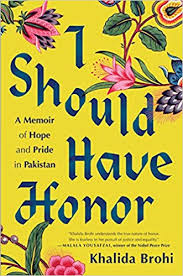
An interview with the author of I Should Have Honor: A Memoir of Hope and Pride in Pakistan. It’s a difficult listen. Basically illustrates how in some “traditional” cultures women are treated like disposable and fungible property.

As a geneticist and a father, one thing about “honor killing” that always strikes me is that it illustrates the power of environmental and cultural pressures in comparison to biology and genetics. When a father, or a brother, kills a daughter or a sister, they kill a part of themselves. Additionally, I don’t think the love and affection that fathers have toward their children is a culturally learned artifact, though some fathers are quite busy, with large broods, and distant.

And yet despite the reality of fatherly or brotherly affection, because of the cultural conditioning and incentive structures in extended family kinship networks, they still murder their daughters and sisters.

Human plasticity trumps biology!

Turan seeks peace..

ISLAMABAD, Pakistan — Concerned about Pakistan’s international isolation and faltering economy, the country’s powerful military has quietly reached out to its archrival India about resuming peace talks, but the response was tepid, according to Western diplomats and a senior Pakistani official.

The outreach, initiated by the army’s top commander, Gen. Qamar Javed Bajwa, began months before Pakistan’s national elections. Pakistan offered to resume on-and-off talks with India over their border dispute in the Kashmir region, which stalled in 2015 as violence flared up there.

A key objective for Pakistan in reaching out to India is to open barriers to trade between the countries, which would give Pakistan more access to regional markets. Any eventual peace talks over Kashmir are likely to involve an increase in bilateral trade as a confidence-building measure.

Pakistan’s Military Has Quietly Reached Out to India for Talks

The Roots of Indo-Iranian cultural genesis

Here is my take on the significance of South Asian aDNA from Eastern Iran and Central Asia during the Bronze Age –

The Chalcolithic contacts between South Asia and regions immediately to its East & North i.e. Eastern Iranian cultures such as Jiroft or Halil Rud (from sites such as Jiroft & Konar Sandal) & Helmand (Shahr-i-Sokhta) as well as Central Asia (from sites such as Geoksiur or Sarazm) are not so well documented. This is an unfortunate lacunae that needs to be filled up in the near future because the Chalcolithic appears to be a critical phase where the communication channels within this vast region are likely to have become more intensified leading to a process of urbanism and continuing well upto the downfall of these urban civilizations.

Nevertheless, there are some tantalising and very important clues for this period that can have larger repurcussions as more research is done but I will come to that later.

Let me first point out the archaeological and genetic evidence we have for the 3rd millenium BC.

First let us note the evidence of interaction between the Helmand civilization (exemplified by sites such as Shahr-i-Sokhta & Mundigak)

A series of artefacts found at Shahr-i Sokhta and nearby sites (Iranian Seistan) that were presumably imported from Baluchistan and the Indus domain are discussed, together with finds from the French excavations at Mundigak (Kandahar, Afghanistan) that might have the same origin. Other artefacts and the involved technologies bear witness to the local adaptation of south-eastern manufactures and practices in the protohistoric Sistan culture. While the objects datable to the first centuries of the 3rd millennium BCE fall in the so called “domestic universe” and reflect common household activities, in the centuries that follow we see a shift to the sharing of luxury objects and activities concerning the display of a superior social status; but this might be fruit of a general transformation of the archaeological record of Shahr-i Sokhta and its formation processes.

The above is part of the abstract from this paper –

https://www.harappa.com/sites/default/files/pdf/Indus-helmand2.pdf Continue reading The Roots of Indo-Iranian cultural genesis

How Buddhism spread in Asia and lessons for the Modern World

Buddhism is probably the best demonstration of Indian Soft Power ever. It’s fascinating though how quickly Buddhism detached itself from the Bihari(?) Motherland.

Shockingly I just noticed on the map that Mindanao Island was a focal point for Buddhism. In some way Hindu-Buddhist culture among the Malay peoples lay the foundation for Islam.

The Hindu-Buddhist cultural revolution was strongest in the coastal areas of the island, but were incorporated into local animist beliefs and customs tribes that resided more inland. The Rajahnate of Butuan, a fully Hindu kingdom mentioned in Chinese records as a tributary state in the 10th century AD, was concentrated along the northeastern coast of the island around Butuan.[15] The Darangen epic of the Maranao people harkens back to this era as the most complete local version of the Ramayana. The Maguindanao at this time also had strong Hindu beliefs, evidenced by the Ladya Lawana (Rajah Ravana) epic saga that survives to the modern day, albeit highly Islamized from the 17th century on wards.

Sultanates and Islam

The spread of Islam in the Philippines began in the 14th century, mostly by Muslim merchants from the western part of the Malay Archipelago. The first Mosque in the Philippines was built in the mid-14th century in the town of Simunul.[15] Around the 16th century, Muslim sultanates: Sulu, Lanao and Maguindanao were established from formerly Hindu-Buddhist Rajahnates.

As Islam gained a foothold over most of Mindanao, the natives residing within the Sultanates were either converted into Islam or obligated to pay tribute to their new Muslim rulers. The largest of the Muslim settlements was the Sultanate named after the Maguindanaoans. Maps made during the 17th and 18th centuries suggest that the name Mindanao was used by the natives to refer to the island, by then Islam was well established in Mindanao and had influenced groups on other islands to the north.[dubious ][citation needed]It intersected with another random thought of mine when I saw the below video (Happy Janmashtami):

https://www.facebook.com/soketu/videos/10157829243414251/

Osho talks about Lord Krishna’s “material detachment” (which to me sounds a bit stark) but I immediately guessed Osho was a UPite. I was right, he’s from MP and born to Jain parents (apparently there is a strain of Jainism in Bundelkand).

My intuition just came about because I feel there is a sweet spot for philosophical and religious development in the Hindi CowBelt (BIMARU). Extremely dense populations, relatively low material standards (compared to the coast) and insulated from foreign influences (when we think about westernised India, we mainly think Mumbai).

Like the oceanic churn of early Hindu mythology so in the same way this belt churns out religions and philosophies that “catch on” to the outer world.

It touches on as well about the “Inward Looking” nature of India in contrast to the more “Outward Looking” nature of Pakistan (the same terms apply in Academia as well). The rather frenetic nature of Pakistan struggling in the Great Geopolitical Games may echo its ancient geography as being a crossroads of sort; one of the many roads to India.

Due to the events of the last millennia when foreign incursions have shifted India’s geographic focus to the Punjab-Delhi axis it may be more worthwhile for India to start projecting as an “Indian Ocean Hegemon” as opposed to leaving it clear for the Chinese. Being caught up in Central Asian intrigue isn’t necessarily the most optimal path for India because the Islamic world forms an ideological wall to Indian/Hindu concepts in the way that the Far East doesn’t..

It parallels how keenly Indians are in emphasizing Pakistan’s (and sometimes Afghanistan) “Indianess” but seem extraordinarily ambivalent about Bangladesh (instead they complain about “Bangladeshi infiltrators”).

It makes me ponder that Pakistani Non-Muslims (of the upper and middle stratas) sometimes have it better than Indian Muslims. Pakistan is explicitly a Mughal-Muslim Republic and once one buys into that preliminary identity, it’s easy to become accepted (I’m excepting the lower stratas who have immense difficulties). However like Israel India is also trying to maintain it’s liberal credentials and therefore there is much majoritarian resentment towards the “privileges” of the minority. Therefore Muslims are always perceived as some sort of 5th column. If for instance the Bangladeshi emigrants in the North-East were never allowed the vote then it would be a Gulf Khaleej type situation where 80% of the population could be disenfranchised but no one would be too bothered about it because it was more about the economics than politics anyway. However India refuses to budge from it’s Nehruvian firmanents and that actually makes her susceptible to populism..

The Thought of You, Perfect 10 winner at the Mumbai Film Festival

Bollywood is experimenting with short independent films. This 15 minute feature is entirely in English and stars Kalki Koechlin.

I would give it at 6/10 because while the storyline is punchy I just didn’t recognise this India on show. Indian cinema and culture is undergoing/buckling under such a radical cultural transformation that maybe my Paki bias might be creeping in.

Incidentally to account for my “bias” I asked Vidhi for her rating and she gave 6/10 as well.

Takeaways from the golden age of Indian population genetics

There are lots of strange takes on the India Today piece, 4500-year-old DNA from Rakhigarhi reveals evidence that will unsettle Hindutva nationalists. I’m friendly with the author and saw an early draft. So I’m going to address a few things.

The genetic results are becoming more and more clear. A scaffold is building and becoming very firm. In the 2020s there will be a lot of medical genomics in India. But before that, there will be population genetics. Ancient DNA will be the cherry on the cake.

Here’s what genetics tells us. First, a component of South Asian ancestry, especially in North India, and especially in North Indian upper caste groups, seems to be the same as ancient agro-pastoralists who ranged between modern Ukraine and modern Tajikistan. Genetically, these people are very similar to certain peoples of Central and Eastern Europe of this time, though there is a varied dynamic of uptake of local Central Eurasian elements as they ranged eastward.

This ancestral component is often called “steppe.” This ancestral component is a synthesis of ancient European hunter-gatherer, Siberian, and West Asian. The steppe component seems to arrive in Central and South Asia after 2000 BC.

Second, another component of South Asian ancestry is very distinctive to the region. It is deeply but distantly related to branches of humanity which dominate Melanesia and eastern Eurasia, up into Siberia. The magnitude of the distance probably dates to ~50 thousand years ago, when the dominant element of modern humans expanded outward from West Asia, east, north, and west. These people are called “Ancient Ancestral South Indians,” or AASI. Their closest relatives today may be the natives of the Andaman Islands, but this is a very distant relationship.

AASI is the dominant component of what was once called “Ancestral South Indians,” or ASI. It turns out that “ASI” themselves were a compound synthetic population. This was long suspected by many (e.g., David W.). What was ASI a compound of? About ~75 percent of its ancestry was AASI, but the balance seems to have been a West Eurasian component related to farmers from western Iran. We can call this group “farmers.”
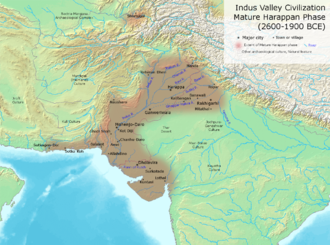
With a few samples from outside of the IVC region, and one (or two) samples from within the IVC region, geneticists are converging upon the likelihood that the profile in the greater IVC region before 2000 BC was a compound of these farmers with the AASI. But even within the IVC region, there seems to have been a range of variation in ancestry. The IVC was a huge zone. It may not have been dominated by a single ethnolinguistic group (even today there is the Burusho linguistic isolate in northern Pakistan). Note that the much smaller Mesopotamian civilization was multiethnic, with a  non-Semitic south and a Semitic north (Sumer and Akkad).

The key point is that it is very likely the IVC lacked the steppe ancestral component. That it did have AASI component. And, it did have a farmer component with likely ultimate provenance in western Iran. Additionally, there were smaller components derived from pre-steppe Central Eurasian people.

While the steppe people arrived in the last 4,000 years, and at least some of the ancestors of the AASI are likely to have been in South Asia for 40,000 years, the presence of the AASI-farmer synthesis genetically is conditional on when a massive presence of western farmers came to affect the northwestern quarter of South Asia. It seems unlikely to have been before Mehrgarh was settled 8,500 years ago. The genetic inferences to estimate the time of admixture between AASI and farmer are currently imprecise, but it seems likely to have begun at least a few thousand years before 2000 BC.  range of 8,500 and 6,000 years ago seems reasonable.

So 4,000 years ago the expanse of the IVC was dominated by a variable mix of farmer and AASI. One can call this “Indus Valley Indian” (IVI).

Just like ASI, there was an earlier abstract construct, “Ancestral North Indian” (ANI). Today it seems that that too was a compound. To be concise, ANI is a synthesis of steppe with IVI. The Kalash of northern Pakistan are very close genetically to ANI. This means that while ASI had West Eurasian ancestry, albeit to a minor extent. And ANI had AASI ancestry, albeit to a minor extent. The main qualitative difference is that ANI had a substantial minority of steppe ancestry.

To a great extent, the algebra of genetic composition across South Asia can be thought of as modulating these three components, farmer, steppe, and AASI.* Consider:

  • Bhumihar people in Bihar tend to have more steppe than typical, but not more farmer than typical, and average amounts of AASI.
  • Sindhi people in Pakistan tend to have lots of farmer, some steppe, and not much AASI.
  • Reddy people in South India have lots of farmer, very little steppe, and average amounts of AASI.
  • Kallar people in South India have some farmer, very little steppe, and lots of AASI.

For details of where I’m getting this, you can look at The Genomic Formation of South and Central Asia for quantities. But as a stylized fact farmer ancestry tends to peak around the Sindh. In Pakistan steppe ancestry increases as you go north. As you go east and south AASI increases pretty steadily, but there are groups further east, such as Jatts and Brahmins, who have a lot of steppe, almost as much as northern Pakistani groups. And curiously you get a pattern where some groups have more steppe and AASI, and less farmer, than is the case to the west (you see this in the Swat valley transect, as steppe & AASI increase in concert).

Going back to the history, by the time the steppe people arrived in South Asia, in the period between 2000 BC and 1000 BC, it may be that the IVI ancestry is what they mixed with predominantly. Though it is likely that the southern and eastern peripheries had “pure” AASI, by the time steppe people spread their culture to these fringes they were already thoroughly mixed with IVI populations, and so already had some AASI ancestry.

In contrast, the farmer populations likely mixed extensively with AASI in situations where the two populations were initially quite distinct.

Please note I have not used the words “Aryan” or “Dravidian.” The reason is that these are modern ethnolinguistic terms. Genetics is arriving at certain truths about population changes and connections, but we don’t have a time machine to go back to the past and determine what language people were speaking 4,000 years ago.

Our inferences rest on supposition, and a shaky synthesis of historical linguistics and archaeology and genetic demography, a synthesis which is unlikely to ever be brought together in one person due to vast chasm of disciplinary method and means.

It is highly likely that the steppe component is associated with Indo-European speaking peoples. Probably Indo-Aryan speaking peoples. The reason is that by historical time, the period after 1000 BC, Iran and Turan seem to already have been dominated by Indo-Iranian peoples. But, in the period around 2000 BC, western Iran was not Indo-Iranian. People like the Guti and the Elamites were not Indo-European, and they were not Semitic. We have some genetic transects which show that steppe ancestry did arrive in parts of Turan and Iran in the period after 2000 BC.

Where did the Dravidian languages come from? We don’t know. They could have been spoken by an AASI group. Or, they could be associated with farmers from the west. We don’t know. Ultimately, we may never know. Unlike Indo-European languages, there are no Dravidian languages outside of South Asia.

Various toponymic evidence indicates that Dravidian languages were spoken at least as far north and west as Gujurat. And Brahui exists today in Balochistan. Though I don’t have strong opinions, I think Dravidian languages probably are descended from a group of extinct languages that were present in Neolithic Iran.

Though unlike Indo-Aryan languages, Dravidian exploded onto the scene after a long period of incubation within South Asia, as part of at least one of the language groups dominant with the IVC and pre-IVC societies.

At least that’s my general assessment. I have strong opinions about the genetics. But am much more curious about what others have to say about linguistics and archaeology.

* Some groups, such as Munda and Indo-Aryan groups in Northeast India, have East Asian ancestry. Some groups in coastal Pakistan have African ancestry.

Why this kolaveri di on Indian genetics

I perused through the article linked in Razib’s previous post. I stumbled on this caption embedded in the beginning of the article:

NOT THE SAME: The Indus Valley people lacked the steppe and ancestry that marks many North Indian high castes today (Photograph by Bandeep Singh, for representational purpose only)
I find the association that the prototypical Indian is a high-caste Hindu to be in poor taste.
Brown Pundits